Consumption and Conservation
Nonrenewables
Renewables
Impacts
100
Describe the difference between renewable and nonrenewable energy sources. List an example of each.
Nonrenewable energy sources exist in a fixed amount and involve energy transformation that cannot be easily replaced. Ex:
Renewable energy sources can be replenished naturally, at or near the rate of consumption, and reused. Ex:
100
What are the 4 types of subsurface mining?

100
Compare and contrast passive vs active solar energy systems. Provide and example of each.
Passive solar = absorbs heat directly from the sun without using mechanical and electric equipment, and energy cannot be collected or stored.
Active solar = uses solar energy to heat a liquid through mechanical and electric equipment to collect and store the energy captured from the sun.
100
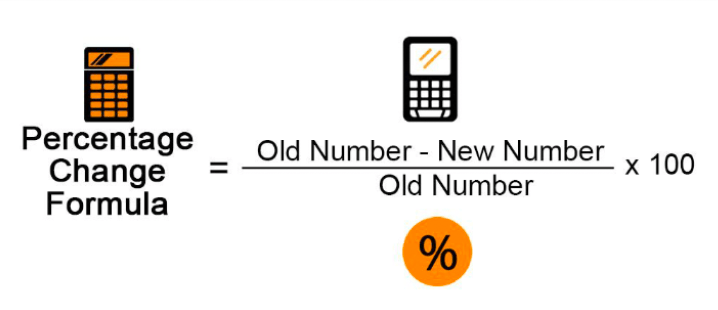
Experts estimate that for the US to reach 100% renewable energy in 2050, it will require $7.8 trillion. Calculate the percent change this would represent from the 2018 investment level of $46.5 billion.

200
Describe cogeneration.
Cogeneration occurs when a fuel source is used to generate both useful heat and electricity.
Ex: the heat produced from electricity generation is used to provide heat (air & hot water) to a building
200
What are some environmental benefits of using natural gas as a fuel compared to using coal?
• Fewer SOx are produced, resulting in less acid rain
• Fewer NOx are produced, resulting in less acid rain and less photochemical smog
• Less Hg is released
• Harmful mining techniques are avoided. Ex: no strip mining or mountaintop removal is required
• Fewer particulates (soot) are released.
• Less CO2 is produced.
200
Explain why the water in the storage reservoir has potential energy that is useful in hydroelectric power generation.
• The dam holds water at a higher elevation than the turbine and is allowed to flow downhill toward the turbine.
• Water has potential energy due to gravity allowing water to flow down toward the turbine when released.
• The greater the difference between the dam height (head) and position of the turbine, the more hydrostatic pressure is built up.
200
What are the environmental impacts of burning biomass?
Burning of biomass produces heat for energy at a relatively low cost, but it also produces carbon dioxide, carbon monoxide, nitrogen oxides, particulates, and volatile organic compounds. The overharvesting of trees for fuel also causes deforestation.
300
Describe the basic steps generally involved in electricity generation.
1) fuel is burned
2) steam is produced
3) steam turns turbine
4) turbine powers generator
5) electricity is produced and transmitted
300
Describe the process of nuclear fission.
Atoms of Uranium-235, which are stored in fuel rods, are split into smaller parts after being struck by a neutron. Nuclear fission releases a large amount of heat, which is used to generate electricity.
300
Explain why biodiesel fuels have a different effect on atmospheric carbon levels than fossil fuels do.
Biodiesel contains carbon that was recently present in the atmosphere rather than fossil-fuel carbon that was in the atmosphere long ago and has been sequestered beneath Earth’s surface.
Hence the burning of biodiesel does not contribute to a net increase in the amount of carbon dioxide currently circulating in the atmosphere, whereas the burning of fossil fuel does contribute to a net increase in the concentration of carbon dioxide in the atmosphere.
300
What are the impacts of mining?
• Rainwater carrier sulfuric acid into nearby streams, or infiltrates groundwater
• Can destroy habitats and lead to topsoil erosion
• Release dust particles (increases turbidity) and methane.
• Lowers pH of water, making toxic metals like mercury and aluminum more soluble in water sources (killing aquatic organisms)
400
As countries advance through the demographic transition model, energy consumption per capita a) ___________, total energy consumption b)_________ and we see an c) ___________ in fossil fuel reliance. The 3 factors that influence which energy sources people use and how they use them are d) ________________.
a) decreases
b) increases
c) increase
d) availability, price, and governmental regulations
400
Order the 3 main types of coal in order of most to least sulfur content.
Lignite --> bituminous --> anthracite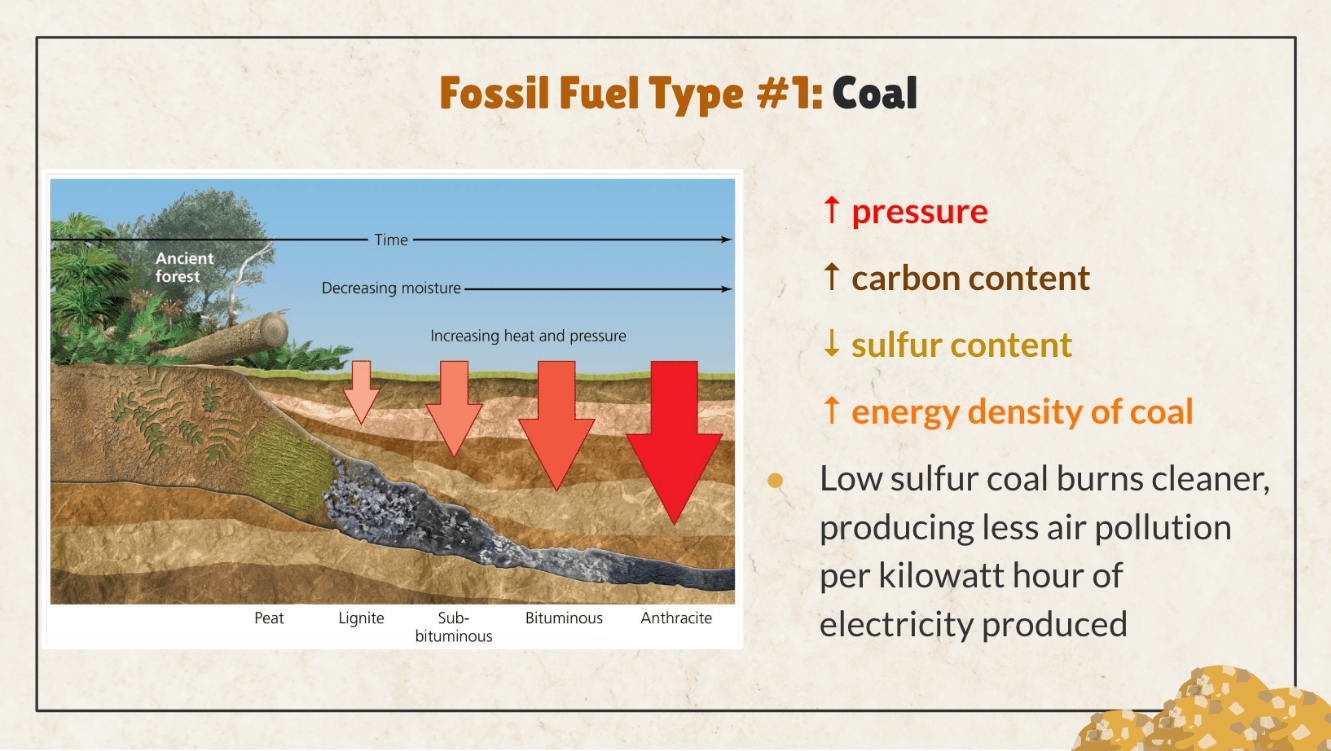
400
What are the product/s and reactant/s of hydrogen fuel cells?
Hydrogen fuel cells are an alternate to nonrenewable fuel sources. They use hydrogen as fuel, combining the hydrogen and oxygen in the air to form water and release energy (electricity) in the process. Water is the product (emission) of a fuel cell.
400
Explain one environmental consequence of tar sands petroleum extraction.
Destroys species habitat, wastes enormous volumes of water, pollutes air and water, and degrades and defiles vast swaths of land.
Lots of water needs to be heated (requiring energy) to create steam that’s piped down into the tar sand to melt the bitumen into a liquid that can flow up a pipe
Lots more water is used to separate the oil from all of the impurities (sand, clay) at the refinery
500
What are some ways to conserve energy in the small and large scale? Think home vs societal level.
Some of the methods for conserving energy around a home include adjusting the thermostat to reduce the use of heat and air conditioning, conserving water, use of energy-efficient appliances, and conservation landscaping.
Methods for conserving energy on a large scale include improving fuel economy for vehicles, using BEVs (battery electric vehicles) and hybrid vehicles, using public transportation, and implementing green building design features.
500
How does hydrologic fracturing work?
500
What are the 3 types of plate boundaries? How do plate tectonics relate to geothermal energy?
Convergent, Divergent, Transform.
Geothermal energy is energy from natural sources like hot water, steam, or naturally occurring heat, as well as the Earth's internal heat. Most geothermal resources are near tectonic plate boundaries, and the most active resources are usually found along major boundaries where most volcanoes are located.
500
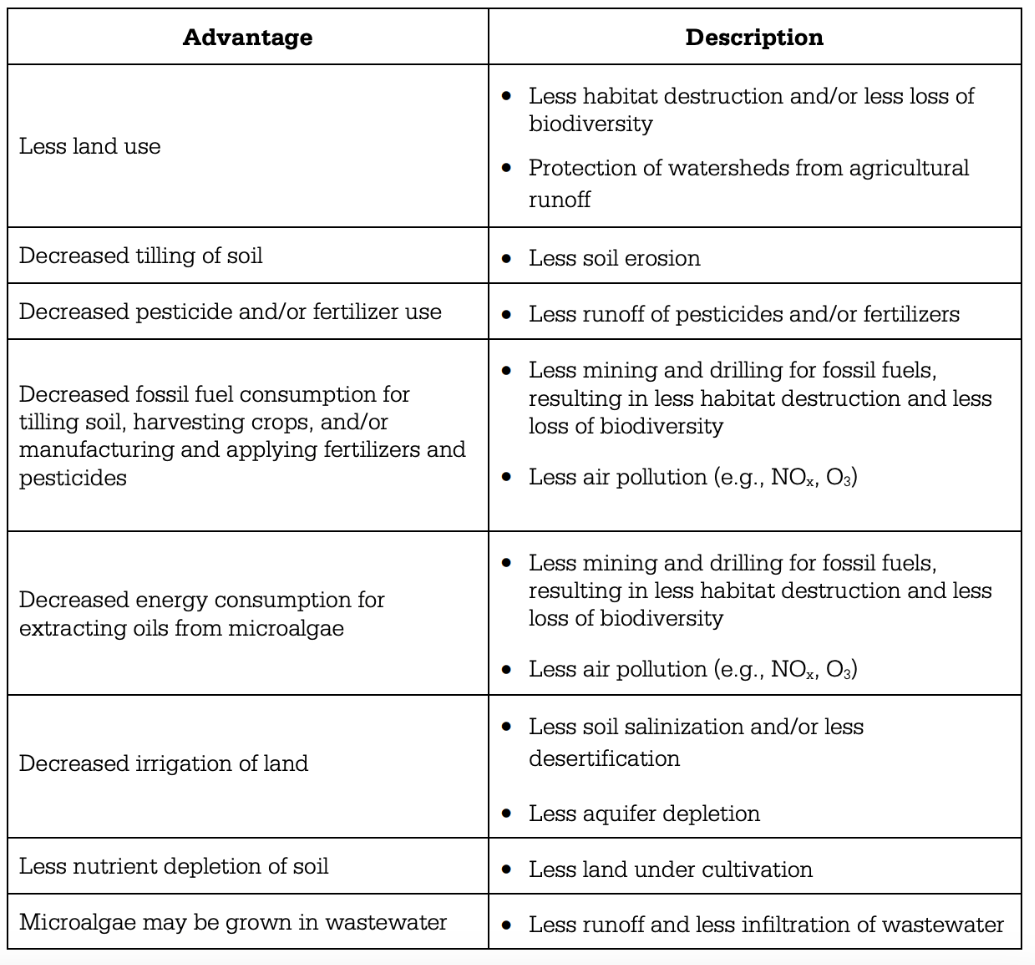
Describe TWO environmental benefits of using algae for biofuel production, rather than corn, palm oil, or sugarcane.