Antarctic
South America
Central America
Argentina
Maps
100
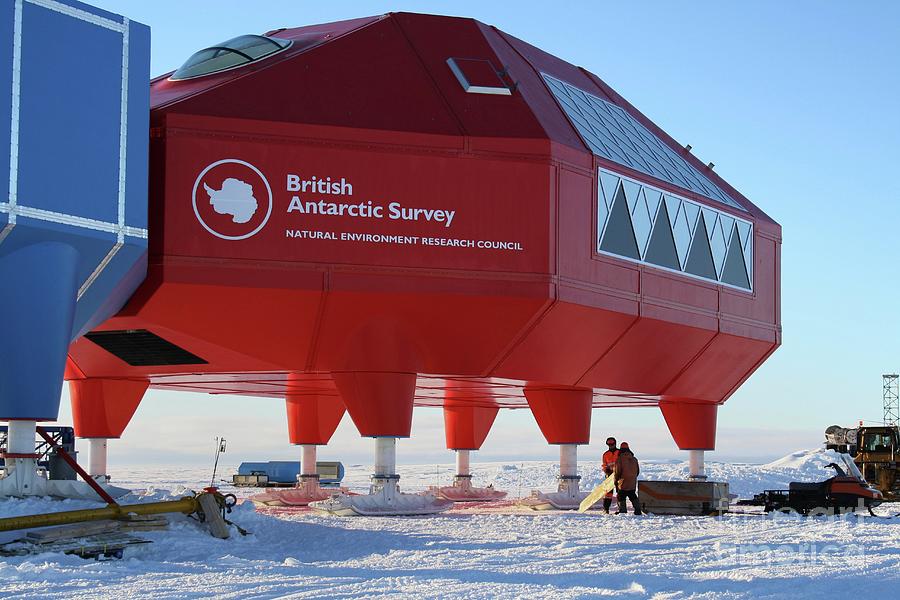
Who controls the continent of Antarctica?
The Antarctic Treaty of 1961 was made with the goal in mind to open the continent to scientific study so that no one country would have total sovereignty or develop any part of it for military advantage. The treaty recognizes seven countries as having a distinct claim, with the continent split between them (Argentina, Britain, Norway, Australia, France, New Zealand, and Chile). The treaty originally had twelve signing countries, but has since been agreed to and signed by 58 countries, the most recent of which was Saudi Arabia in 2024. Signed countries receive the benefit of having the option to build research stations in conjunction with one of the seven controlling nations. Thus other countries like the United States, Ukraine, South Africa, India, Russia, Japan, China, Italy, and Germany all have stations on the continent. There are currently about 70 stations run by about 55 of the treaty's signatories.
100
What mountain dwelling native Peruvians formed a powerful conglomerate of tribes in the early 15th century that ruled over a large swathe of South America, from Chile to Venezuela, in relative peace and prosperity until the early 16th century when the arrival of the Spanish brought disease and conquest that ended their rule.
The Inca Empire
Known for such technological advancements as complex mountain terrace projects for agriculture and a large network of well-maintained roads.

100
What sugarcane alternative is grown in Minnesota more than any other state in the US?
Sugarbeets

100
What has long been one of Argentina's key export commodities?
Beef

100
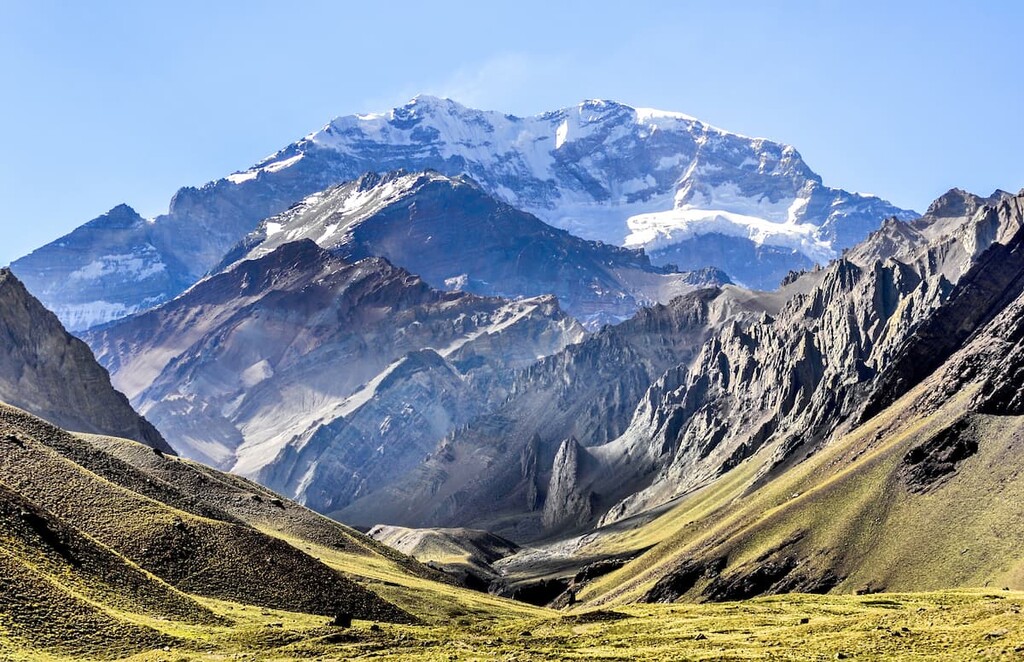
What mountain range spans the length of South America?
The Andes Mountains
200
What two men were leading separate teams for Britain and Norway in 1911 attempting to reach the South Pole? What happened to them?
Captain Robert Scott and Roald Amundsen.
Scott famously reached the pole after a harrowing and bitter journey of many weeks, only to find he had been beaten there by Amundsen and his team five weeks earlier. Even worse, Scott and his team died in the harsh elements on their return journey, leaving all the glory for Amundsen.

200
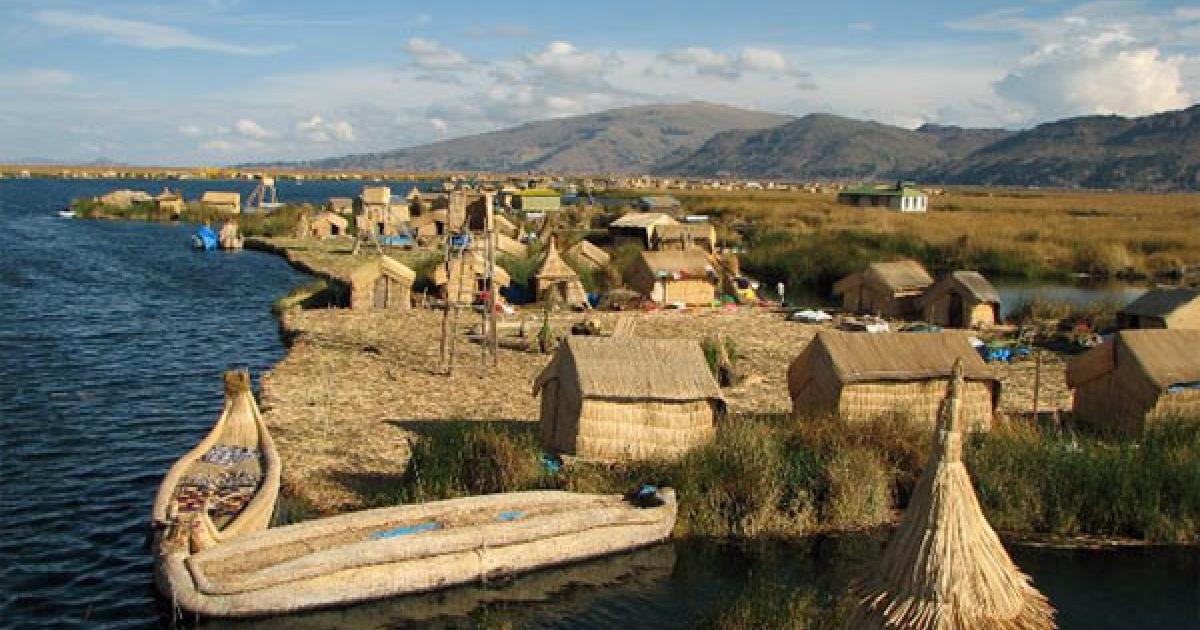
What native people group has traditionally lived on Lake Titicaca, and what are they best known for?
The Urus people.
They are best known for building floating islands out of reeds strong enough to hold houses and small village camps. The ancient people group settled near the lake over three thousand years ago, and still maintains the practice of living on the islands today.
200
The majority of African people who were enslaved and brought to the Caribbean, were brought there to do what?
BONUS: How did Haiti become a country?
They were brought there to harvest and process sugar, a physically demanding process in a hot climate under harsh and inhuman working conditions.
BONUS: In 1791 the population of the island was by far majority of African descent. The people rebelled and claimed their independence from France, which was finally granted to them in 1804.
200
What two things caused Argentina's economic downturn at the beginning of the 20th century?
The start of WW1 and the opening of the Panama canal, which occurred at the same time, plunging the whole world into wartime recession and rationing, while also bypassing Argentina as a major stop in worldwide trade.
200
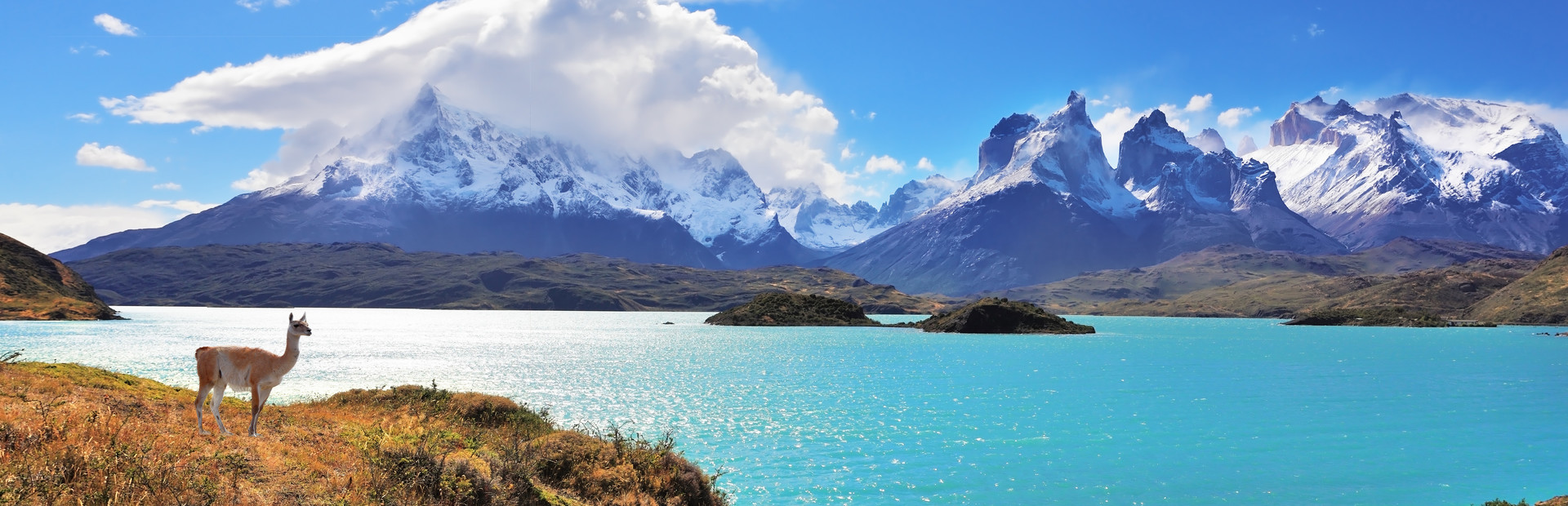
What is the name of the area in southern Argentina, known for its rugged coastal cliffs, fjords, and islands, wild deserts, and ragged icy mountains? Home to armadillos, pumas, the guanaco, the rhea bird, the pudu, elephant seals, right whales, and penguins.
Patagonia
300
In a global geographical sense, what purpose does the continent of Antarctica serve?
The continent plays a vital role in the Earth's heat balance, absorbing large amounts of solar energy and reflecting it back into space like a giant mirror, while also having a direct effect on the currents of the world's oceans, helping circulate vital nutrients around the world via the southern ocean's stormy, turbulent, and densely cold waters.

300
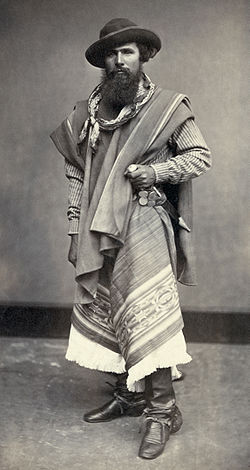
Who were the gauchos and what happened to them?
When Spanish settlers claimed massive portions of land in South America to raise cattle, they often did a poor job managing the animals. They came to rely on gauchos, skilled horsemen and cattle-wranglers who worked as the South American equivalent of cowboys.
The need for gauchos declined during the early nineteenth century when industrialization allowed for better fencing, more lucrative ways of farming the large plots of land, and using trains to transport cattle.
300
What was the Cuban Missile Crisis?
In 1962 the Soviet Union, utilizing its sympathetic ties to the communist regime in Cuba, attempted to install nuclear warhead in Cuba, clearly in order to put the weapons in close range of the United States. President John F. Kennedy ordered a navel blockade, preventing Russian ships from landing, ordering them to remove the nuclear weapons. A tense two week stand-off ensued until the Soviet Union backed down, in exchange for United States warheads being removed from Turkey.
300
Why were the 1930s called the Infamous Decade in Argentina?
"Argentina’s Infamous Decade refers to the period of time that began in 1930 with Jose Felix Uriburu’s coup d’etat against standing President Hipolito Yrigoyen and ended with Juan Peron’s rise to power after the military coup of 1943. The decade is marked by a significant rural exodus as many small rural landowners were ruined by the global depression, which ultimately pushed Argentina towards a policy of import substitution industrialization. The poor economic results of this policy and the popular discontent it engendered led directly to the military junta coup in 1943. The period was characterized by electoral fraud, the persecution of political opposition, and generalized government corruption."

300
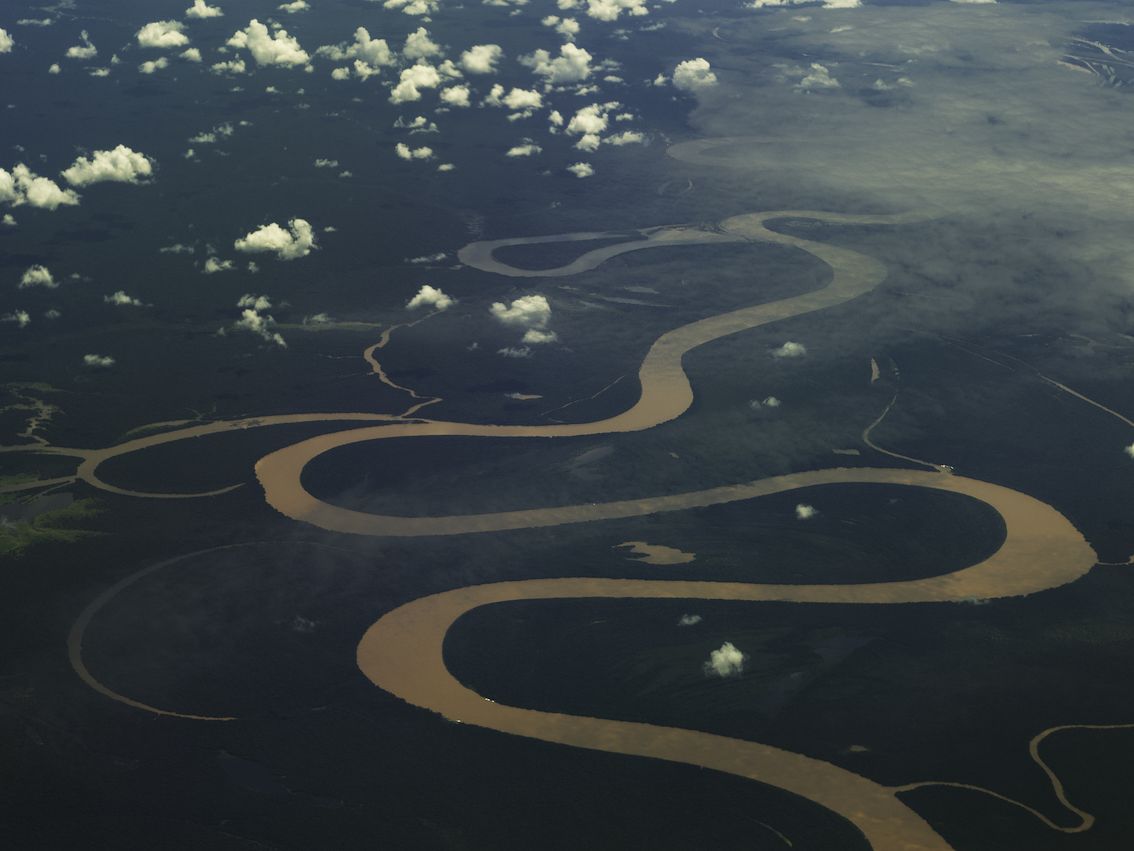
What percentage of the world's fresh water is contained in the Amazon River?
20%
The Amazon is the second longest in the world, only a couple hundred miles short of the Nile. It flows from the mountains in Peru, through the dense rainforest in Brazil and empties out into the sea near the city of Macapa.
400
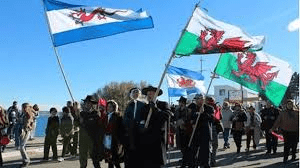
Why did Welsh people settle in Patagonia and what happened to them there?
The Industrial Revolution in Britain changed the economy of Wales, where once most had been working in agriculture, now many had to either rely on the poor working conditions found in factories or coal mines, or move away from Wales to the big cities found in England. Many Welsh nationalists feared that the exodus of people to the cities for work would result in the loss of Welsh identity, so many turned forming Welsh colonies to seek fortune elsewhere, while still retaining a strong Welsh identity.
Patagonia seemed lucrative as it was mostly unclaimed wilderness, and it promised to bear a similar terrain and climate to Wales, albeit on the other side of the globe.
The Welsh settlers found the environment harsher than expected, but an economic downturn in Wales during the 1870s increased immigration to the area, and soon the land was becoming productive and began to expand and grow. Immigrants began arriving from all around the world. Early in the 1900s the Welsh language was banned from being used in local governments and schools, so that today, while Welsh heritage is still strong in the area, the majority of the population are Spanish speakers.
400
Who were the rubber soldiers?
Rubber is derived from the latex sap of the rubberwood tree, which originates in the Amazon Rainforest. During the late nineteenth century a British explorer illegally exported rubberwood trees to Malaysia, where they could be grown under the control of the British Empire, which quickly became the world's leading producer of rubber, which was quickly becoming an essential commodity in an ever industrializing world.
After bombing Pearl Harbor, the Japanese seized Malaysia in 1941 at the start of WWII, stopping up the Allies' source of rubber. In response, President Franklin Roosevelt made a deal with Brazil, paying $145 million to the neutral country so they would have sole rights to Brazil's rubber industry. The Brazilian government allowed men to serve the war effort by waiving the draft in return for working in the jungle sapping trees. Ironically, sapping rubber trees was statistically more dangerous than fighting, with 50% of those who signed up dying due to disease, snakebite, and injury.

400
What started the Spanish American War, and how did it end?
In the late nineteenth century the island of Cuba had begun an independence movement, looking to overthrow the local Spanish government. The fighting had reached a peak when President William McKinley sent the battleship, USS Maine to Havana to protect American citizens living in Cuba. When the battleship was sunk and 260 Americans died, the US declared war on Spain in 1897. The majority of the fighting took place in Cuba, including Teddy Roosevelts famous rough rider charge up San Juan Hill. The US won with little effort, taking less than a year to force Spain to give up the remainder of its colonial holdings, including Cuba, Puerto Rico, the Phillipines, and Guam.
400
What is Peronism?
Based on the political legacy of former President Juan Domingo Peron and his wife, Eva Peron, Peronism is a "third position" ideology which emphasizes opposition to both communism and capitalism, seeing itself as beyond left or right wing politics while borrowing ideas from both.
It emphasized social justice, economic independence, and political sovereignty as its central ideals and has remained a popular and powerful movement in Argentina to this day.
Peronists claim the movement embodies the interests of the masses, and in particular, the most vulnerable members of society. Its detractors, however, view Peronism was an authoritarian ideology, compare Juan Peron to fascist dictators, and deride his policies as too populist.

400
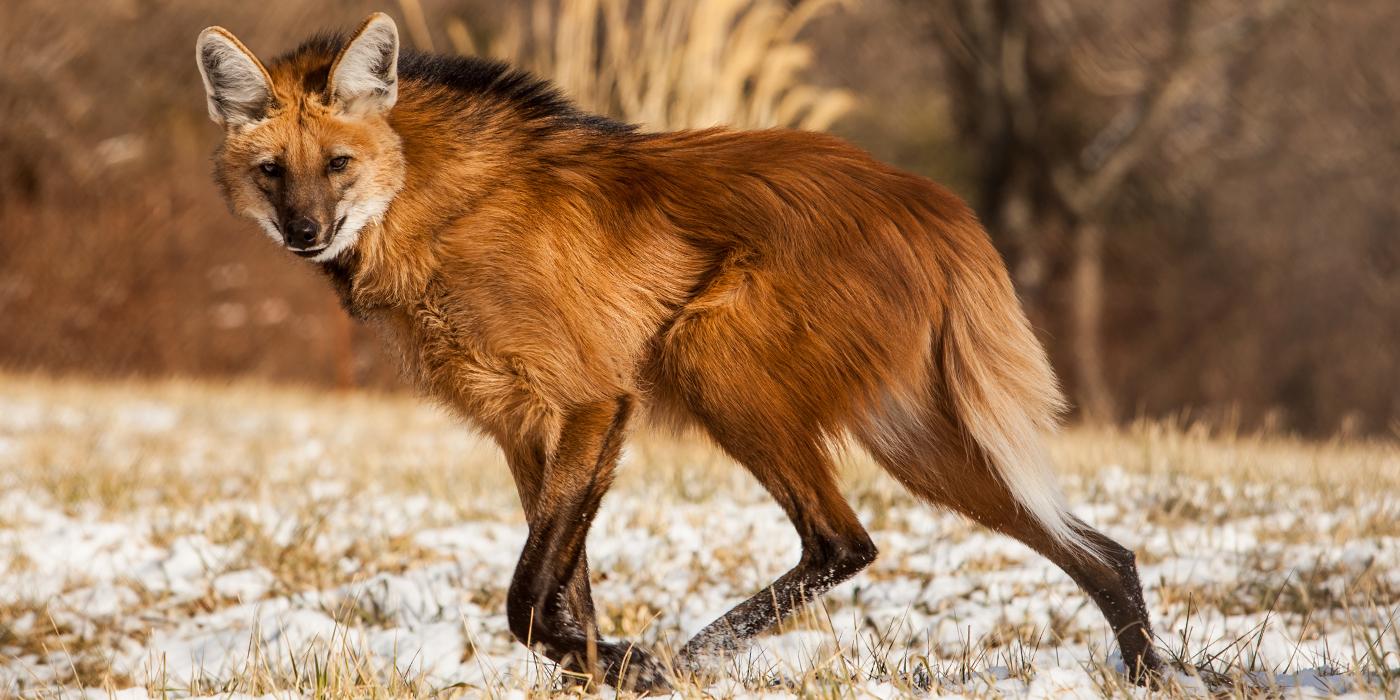
What temperate grassland region dominates central Argentina, as well as Uruguay and parts of southern Brazil and is home to the large shrubby ombu tree, the guanaco, and the maned wolf.
The Pampas
500
What caused the Falklands War, and how was it resolved?
Britain first claimed the island in 1592, while Spain made a claim to the island in 1766. Britain never gave up its initial claim and stationed a garrison on the island in 1833, despite the Spanish claim. However, when Argentina gained independence from Spain in 1824, it saw the islands as theirs by right, based on the Spanish claim, and resented the British presence.
Despite residents of the island being primarily British citizens, Argentina launched a campaign in 1982 to take the islands, led by the corrupt military junta of General Galtieri, looking for something to distract the Argentine populace from the government's corruption and create a focal point for Argentinian nationalism. Britain responded by sending army, navy, and air forces to the island. Britain's superior armaments resulted in a 10 week war with little contest. The Argentinians put up a good fight, sinking several British ships using their air forces, they eventually surrendered the island to the victors. To this day Argentina still expresses interest in obtaining the Falkands, but has agreed not to make war in order to achieve this goal. Britain still expresses no interest in letting go of the islands, which have become successful tourist destinations.
500
What did Spanish explorer Francisco de Orellana and his men see on their epic journey following the full course of the Amazon river in the 1540s?
BONUS: Why did he call it the Amazon?
Orellana's chronicle of his journey was long discredited by historians due to the exaggerated nature of many early explorer travelogues, that would either make themselves out to be great heroes, in the style of John Smith, or provide exciting tales of mythic creatures and strange peoples, as was often depicted in early maps.
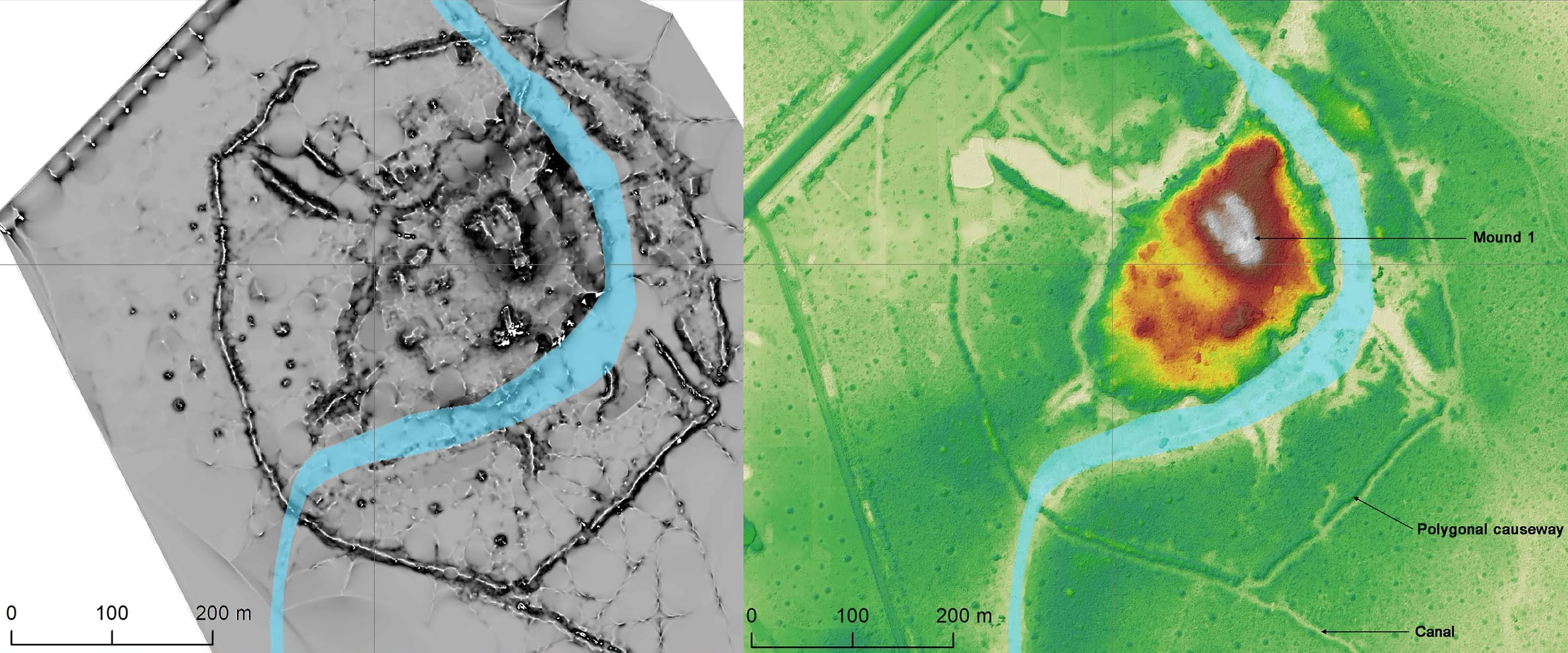
Most notably Orellana reported massive settlements of native people with large populations in well organized and advanced civilizations along the entire length of the river. The reports detail large wooden structures like castles on the river's edge, populations in the hundreds, making these villages more like small towns and cities, well trodden trade networks over the full course of the river, and vast swathes of the jungle cleared out for agricultural use. These claims were panned by later explorers since they found the Amazon to be virtually uninhabited and thickly overgrown. More recent scientific and archaeological work has given more credence to these claims, lidar scans revealing the kind of large settlements along the river that Orellana described. Modern historians believe that the cultures of the Amazon were as Orellana described, but were decimated by European disease, resulting in the loss of these successful cultures as nature reclaimed their achievements.
BONUS: One story that Orellana tells is of a tribe made entirely of women that they came across. Orellana, being a man of the Renaissance was familiar with ancient Greek myth, and compared these women to the Greek Amazons, a mythic race of warrior women.
500
Tell me something you learned about Guatamala, Costa Rica, or Belize.
Answers Vary
500
What were the military juntas in Argentina in the late 20th century, and how did they end?
The military juntas were a series of military takeovers between the 1940s and 1980s in Argentina, following the Infamous Decade of coups and governmental corruption. These juntas were at first led by the Peronists, but were later overthrown by a more radical Socialist power base. Peronist and other political entities were oppressed, forcing many into hiding in the jungle. As the 1970s rolled around these groups formed guerilla terrrorist cells that resulted a series of violent outbursts. Throughout the 1980s the military juntas performed a series of oppressive crackdowns on political dissidents, with arrests, tortures, mass killings, assassinations, in addition to imprisoning thousands in secret prison camps.
This violent regime resulted in a growing unpopularity as well as growing economic troubles. The final nail in the coffin was the Falklands War, which disgraced the junta military government and caused it to collapse, providing an opportunity for a more democratic system to take its place.
500
What is Bolivia's land dispute with Chile, and how did it come to be?
In the mid-nineteenth century Bolivia had the rights to a small strip of coastal land between Peru and Chile, including the port city Antofagasta. When Bolivia wanted to levy heavy taxes on Chilean mining companies operating in the area, Chile mustered an army and took the coast by force. A century and a half later and Bolivia still keeps a navy in the hopes that one day they will receive back lands they see as rightfully theirs.
