Vocabulary
Probability
Inequalities
Equations
Angles/Triangles
100
From this equation identify the variable, coefficient, and the constant:
4x+6=12
Variable = x
Coefficient = 4
Constant = 6 & 12
100
What kind of representation is this of a sample space
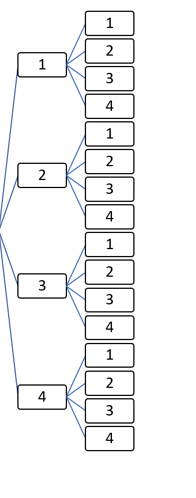
Tree Diagram
100
What does each symbol represent?
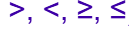
> Great than
< Less Than
> Greater than or equal to
< less than or equal to
100
When using inverse operation to solve for a variable:
what is the opposite of addtion:
multiplication:
subtraction:
division:
addition: subtraction
multiplication: division
subtraction: addition
division: multiplication
100
What is the total degree(interior angles) of a triangle?
180
200
The sum of this angle equals 180 degrees
Supplementary Angles
200
What is the difference between theortical probability and experimental probability?
Theoretical is created through sample space and shows the likeliness of something to happen.
Experimental when you actual try the situation and can sometimes have varying different answers.
200
From the 4 symbols which two represent closed when graphing on the number line?
less than or equal to & greater than or equal to
200
If 3=3 how many possible solutions can we have?
Infinite
200
What is considered the exterior angle?
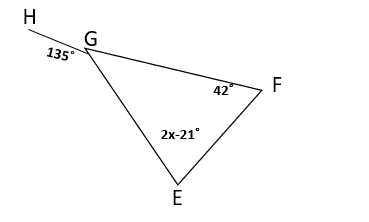
<G is the exterior angle and it equals 135 degrees
300
What is an example of a no solution
* Answers can vary
13=4
300
If spun 3 times what is the total amount of possiblitlies?
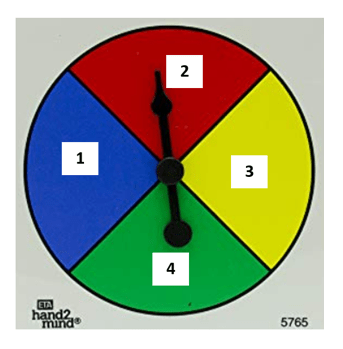
64 possibilities
300
Graph this inequality:
x>5

300
solve for x
2x+6+60=180
x=57
300
Find the missing angle :
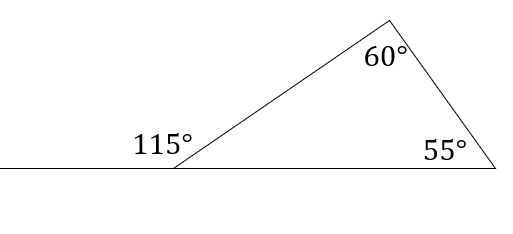
65
400
Vertical angles are what ?
They are on opposite sides and are always the same
400
True or false:
When creating the theoretical probability, it has to be the exact same for the experimental probability.
False
400
solve :
3x+6>2x+9
x>3
400
Solve for x
x=19.7
400
From the picture below what angles are adjacent and vertical to each other?
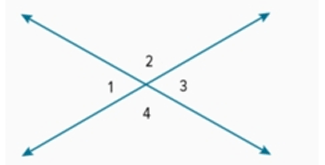
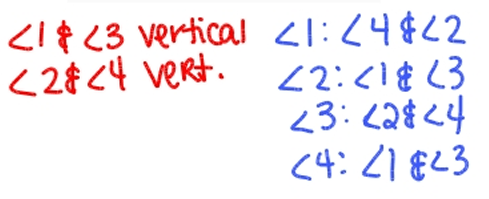
500
What is the formula to find the number of interior angles of any polygon shape?
(n-2) x 180
500
If we spin the wheel twice what is the probability that you will have RR?
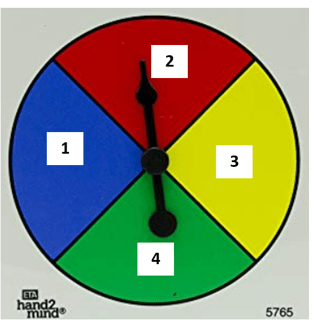
1/16
500
solve for y:
-3y-2-2y+3<16
y>-3
500
Solve for x:
-3(5x-2) =36
x=-2
500
Solve for x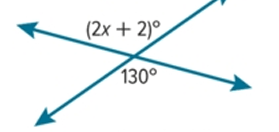
x=64