Constitutional Ideas
Supreme Court Cases
People to Know
60's and 70's
Major Ideas
100
Formally declaring that an elected official has broken the law (has happened 3x in US History: Andrew Johnson, Bill Clinton and Donald Trump)
impeachment
100
This court case stated that the Federal government ONLY had the power make treaties with Indian tribes (was ignored by Andrew Jackson)
Worcester v. Georgia
100
Civil rights leader that promoted nonviolence; organized Birmingham Campaign, Selma March, etc.
Dr. Martin Luther King Jr
100
Idea of easing tensions between the U.S. and Soviet Union from the late 1960's through the 1970's
Detente
100
The major focus of foreign policy from 1945 to 1989; goal was to stop the spread of communism (led to involvement in proxy wars like Korea and Vietnam)
Containment
200
The system that is used to actually determine who will become president. There has been debate over the this process and whether it should be reformed.
electoral college
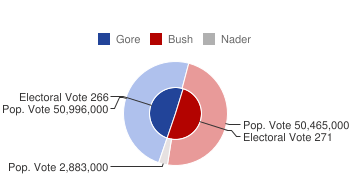
200
This case challenged the idea of segregation in schools and would lead to the African American Civil Rights Movement
Brown v. Board of Education
200
This person is responsible for the New Deal programs that emerge during the Great Depression, as well as Internment of Japanese Americans
FDR
200
plan created by LBJ to fight poverty, improve civil rights and improve cities; created Medicare and Medicaid; provided early schooling and access to tuition assistance for college; Civil Rights Act of 1964 and the Voting Rights Act of 1965; Environmental Protection (Clean Air Act, Clean Water Act)
LBJ's Great Society
200
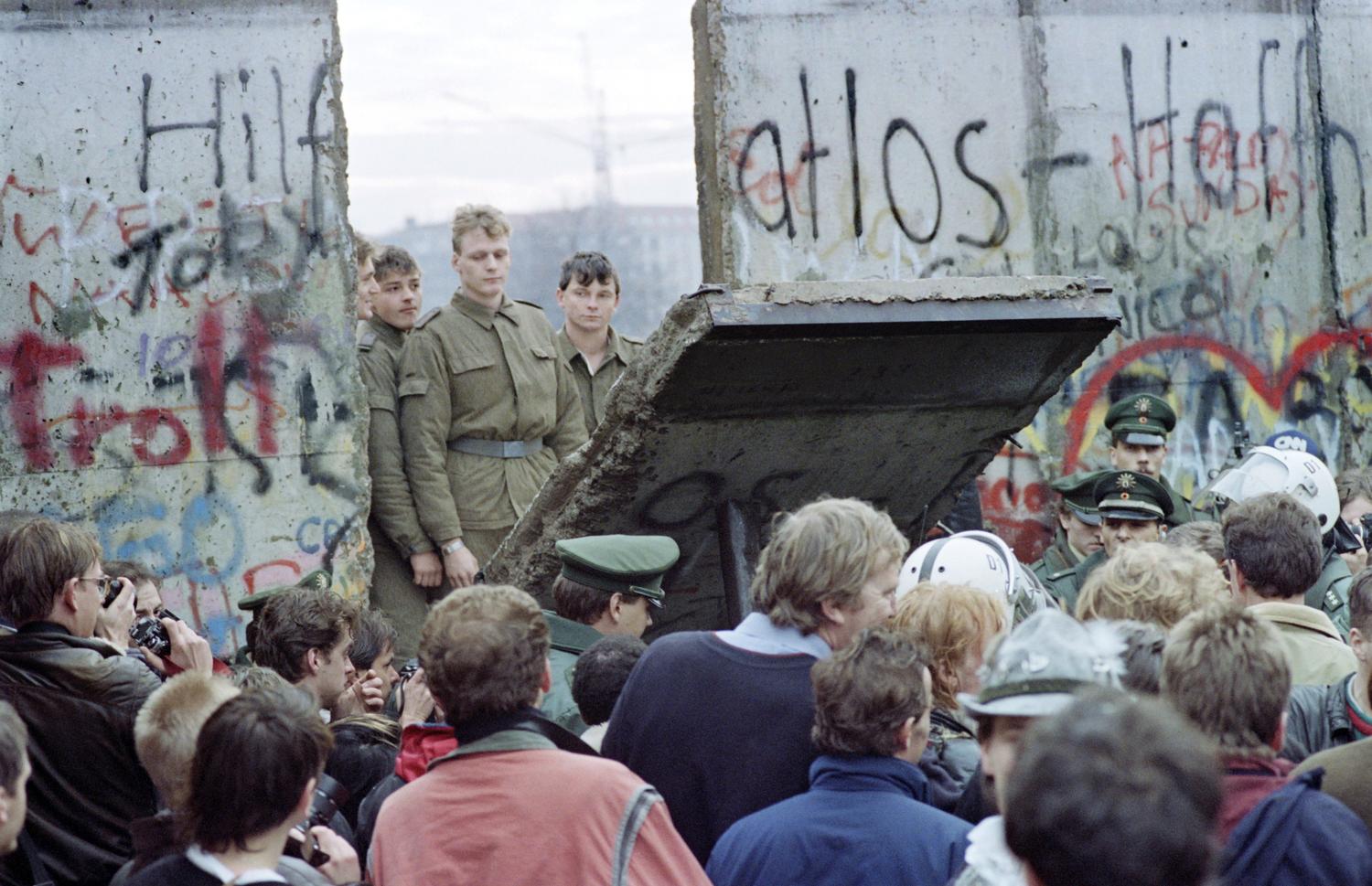 The event shown in the picture is most closely associated with which event?
End of the Cold War
300
idea that Congress has the right to make all laws that are necessary and proper for the running of the government (even if not explicitly written in the constittuion)
Elastic Clause
300
This case from 1944 stated that national security was more important than individual liberties, therefore making internment legal.
Korematsu v. United States
300
This person created the 14 Points for Peace plan after WWI, particularly focusing on the League of Nations
Woodrow Wilson
300
This was passed to limit the power of the president-- stated that the President has to notify Congress of troop involvement in a conflict, and has 60 days to ask for a declaration of war
War Powers Act
300
The name given to the period following WWI and WWII due to the fear of communism spreading; led to events like the Palmer Raids and McCarthyism
Red Scare
400
Process by which the Supreme Court can review a law and determine the constitutionality of it; idea was established by the case Marbury v. Madison
Judicial Review
400
This case from 1857 stated that enslaved persons were not citizens, but rather property. Therefore, they had no right to sue in a court of law.
Dred Scott v. Sanford
400
This person is known as the "trustbuster" due to his focus on breaking apart monopolies in the early 1900's; also passed the Meat Inspection Act
Teddy Roosevelt
400
Major event led by the U.S. (Jimmy Carter) between Israel and Egypt to negotiate peace between the two countries (Israel and many Arab nations had been fighting for 30 years)
Camp David Accords

400
Foreign policy idea that stated the U.S. could intervene "when necessary" in affairs in Latin and South America
Roosevelt Corollary
500
This amendment was the basis for challenges in Korematsu v. United States and Brown v. Board of Education, stating that equal protection was not afforded to individuals
14th Amendment
500
This case occurred during WWI, and established the "clear and present danger" precedent when determining if freedom of speech would apply.
Schenck v. United States
500
Responsible for creating the Great Society programs that included expanding healthcare, civil rights laws, and expanding education access; also know for U.S. escalation into Vietnam
Lyndon B. Johnson (LBJ)
500
event during Nixon's presidency which exposed abuse of power by the president; led to supreme court case Nixon v. US and established that the president is not above the law; led to Nixon's resignation in 1974
Watergate Scandal
500
What event is seen as the beginning of American Imperialism in the late 1800's and early 1900's, as shown in the political cartoon?

Spanish American War