Who Am I?
What Am I
Name the Document
What Am I 2
Misc.
100
An American Founding Father, the primary author of the Declaration of Independence, and the third President of the United States. A "Renaissance man" with diverse talents, he was a lawyer, diplomat, philosopher, and architect.
Thomas Jefferson
100
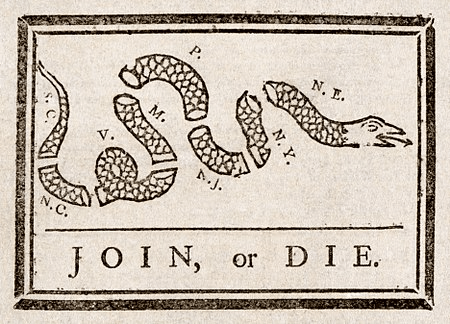
A rejected proposal to create a unified government for the thirteen British Colonies, suggested by Benjamin Franklin in July 1754.
The Albany Plan
100
"We hold these truths to be self-evident..."
The Declaration of Independence
100
It revolutionized the production of cotton by efficiently and quickly separating the cotton fibers from their seeds. It was invented and patented by American inventor Eli Whitney in 1794.
The Cotton Gin
100
In effect from its final ratification on March 1, 1781, until it was replaced by the U.S. Constitution in 1789. It created a weak central government that preserved the sovereignty and independence of the individual states in a "firm league of friendship."
The Articles of Confederation
200
An American statesman and Founding Father widely known as the "Father of the Constitution" for his pivotal role in drafting and promoting the U.S. Constitution and the Bill of Rights. He later served as the fourth President of the United States from 1809 to 1817.
James Madison
200
A landmark land deal in which the United States acquired approximately 828,000 square miles of territory from France for $15 million, effectively doubling the size of the young United States.
The Louisiana Purchase
200
This document formally ended the war between Britain and France, known in the colonies as the French & Indian War. The YEAR is Important!!
The Treaty of Paris 1763
200
The dominant economic theory and practice in Europe from the 16th to the 18th centuries advocated for maximizing a nation's wealth and power by encouraging exports and minimizing imports.
Mercantilism
200
A major political protest occurred on the night of December 16, 1773, at Griffin's Wharf in Boston, Massachusetts.
The Destruction of the Teas, or the Boston Tea Party
300
An American businessman and politician best known as the plaintiff in a landmark 1803 Supreme Court case. The case that established the critical principle of judicial review, which grants the Supreme Court the authority to declare laws unconstitutional.
William Marbury
300
This served as the first constitution of the United States, in effect from its ratification in 1781 until it was replaced by the U.S. Constitution in 1789. Drafted during the Revolutionary War, it created a weak national government with limited powers, as the states were wary of the strong, centralized authority they had just fought against under British rule.
The Articles of Confederation
300
The primary purpose of this document is to limit the powers of the federal government and guarantee fundamental civil rights and liberties to all citizens, residents, and visitors in the United States.
The Bill of Rights
300
A historical trade system that operated primarily between Europe, Africa, and the Americas from the 16th to the 19th centuries. This network formed a three-part route across the Atlantic Ocean, facilitating the exchange of raw materials, manufactured goods, and, most notably, millions of enslaved people, which generated immense wealth for European powers and their colonies at a horrific human cost.
Triangular Trade
300
Spanning from 1786 to 1787, this was an armed uprising by debt-ridden farmers in Western Massachusetts against the state government's severe tax collection policies and economic injustices.
Shays' Rebellion
400
An American military leader, statesman, and Founding Father who served as the first President of the United States from 1789 to 1797. He is often called the "Father of His Country" for his pivotal role in achieving American independence and establishing the U.S. government.
George Washington
400
A comprehensive early 19th-century U.S. economic plan, primarily advanced by Kentucky statesman Henry Clay and the Whig Party, was designed to promote national growth and self-sufficiency after the War of 1812. The goal was to harmonize and balance the nation's agriculture, commerce, and industry through a system of sectional economic interdependence.
The American System
400
A hugely influential pamphlet written by Thomas Paine, published anonymously on January 10, 1776. It provided a powerful and accessible argument for the American colonies to declare immediate independence from British rule, at a time when many were still hoping for reconciliation.
Common Sense
400
A major religious revival movement that swept across the American colonies in the 1730s and 1740s. It was a response to the growing influence of the Enlightenment's secular rationalism and a perceived decline in religious piety, emphasizing personal faith and emotional conversion over formal church doctrines and rituals.
The 1st Great Awakening
400
A violent tax protest by farmers and distillers in Western Pennsylvania from 1791 to 1794 against the federal government's first nationwide internal revenue tax, an excise tax on distilled spirits.
The Whiskey Rebellion
500
An English philosopher and physician, widely recognized as one of the most influential Enlightenment thinkers and often called the "Father of Liberalism. His ideas on natural rights, government by consent, and the human mind profoundly influenced the U.S. Founding Fathers and modern democratic thought.
John Locke
500
This term refers to two closely related historical groups in the early history of the United States:
1. The movement that supported the creation and ratification of the U.S. Constitution.
2. A political party active from the 1790s to the 1810s that advocated for a strong national government, a loose interpretation of the Constitution, and commercial interests.
Federalists
500
This treaty formally ended the American Revolutionary War, recognized the United States as a free and independent nation, and established its initial borders.
The Treaty of Paris, 1783
500
A landmark act passed by the Confederation Congress that established a system for the admission of new states on equal footing with the original thirteen states. It also banned slavery in this area.
The Northwest Ordinance.
500
Proposed by Alexander Hamilton and was highly controversial at the time. A modern equivalent is the Federal Reserve System, established in 1913.
The Bank of the United States
600
An influential French Enlightenment political philosopher, judge, and historian. He is best known for his theory of the separation of powers, which profoundly influenced the framers of the United States Constitution.
Montesquieu
600
This unofficial policy allowed the colonies considerable freedom in economic and political matters, which inadvertently fostered a strong sense of independence and self-governance among the colonists.
Salutary Neglect.
600
Signed by 41 adult male passengers on November 11, 1620, while the ship was anchored at Cape Cod, it was a foundational agreement for self-governance in the New World, born out of necessity when the colonists landed outside the jurisdiction of their original Virginia Company charter.
The Mayflower Compact
600
- The initial factions were led by Alexander Hamilton, who favored a strong central government and a national bank, and Thomas Jefferson and James Madison, who advocated for states' rights and a more decentralized, agrarian government.
The Federalists and Anti-Federalists
600
On December 3, 1773, thirteen days before tea was dumped into Boston Harbor, an initial act of civil disobedience successfully prevented the unloading and sale of taxed British tea in which American city?
Charleston, South Carolina