Diseases of rabbits
Diseases of ectotherms
Diseases of birds
Diseases of wildlife/zoo species
Miscellaneous
100
What species are affected by tularemia? How is it transmitted?
Deadly to rabbits, rodents, and many other mammals including carnivores, humans.
Primarily spread by ticks.
100
Which two diseases that we discussed can cause neurologic signs in snakes and what species does each affect?
Inclusion body disease of boas - affects boas and pythons, with pythons having faster progression.
Ophidian Paramyxovirus - most common in vipers.
100
What species are particularly susceptible to aspergillosis?
Is this a contagious pathogen?
African grey parrots; raptors; penguins
It is not contagious; it's everywhere in the environment
100
What disease is shown here? What are the two syndromes seen?
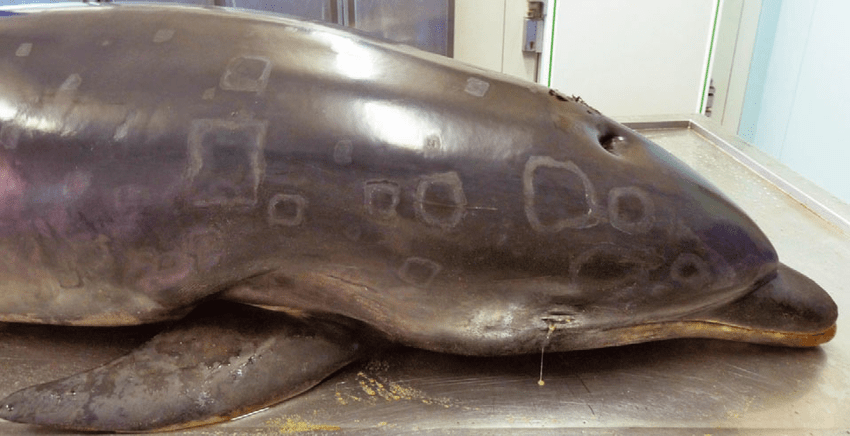
Erysipelas
It has a chronic skin form and an acute septicemic form
100
What is the difference between the incubation period and infectious period of a disease?
Incubation period = time between infection and onset of clinical signs
Infectious period = how long the animal is contagious/sheds the pathogen
200
Is syphilis a serious disease in rabbits?
How is it treated?
It is a skin disease and does not cause systemic illness.
It is treated with injectable penicillin.
200
What parasite is of significant importance in honeybees and why?
Verroa mites
Infestation causes disease in and of itself, but also spread deformed wing virus. It is reportable.
200
Does Psittacine Beak and Feather Disease cause systemic illness in birds?
What species gets a very severe acute form?
Yes; it is attacks the immune system and is fatal in most cases.
African grey parrots get a septicemic form
200
How are humans exposed to Herpes B? What type of tissue is affected?
Exposed via macaques; nearly all (but not all) cases have been from laboratory macaques
It is a neurologic disease in humans and is fatal once neuro signs develop
200
Why do we care whether a virus is enveloped or non-enveloped?
Non-enveloped viruses are harder to kill with disinfectants and can be more virulent.
300
What disease causes this appearance in rabbits?
Does this pathogen cause disease in all rabbits?
What is the historical significance of this disease?
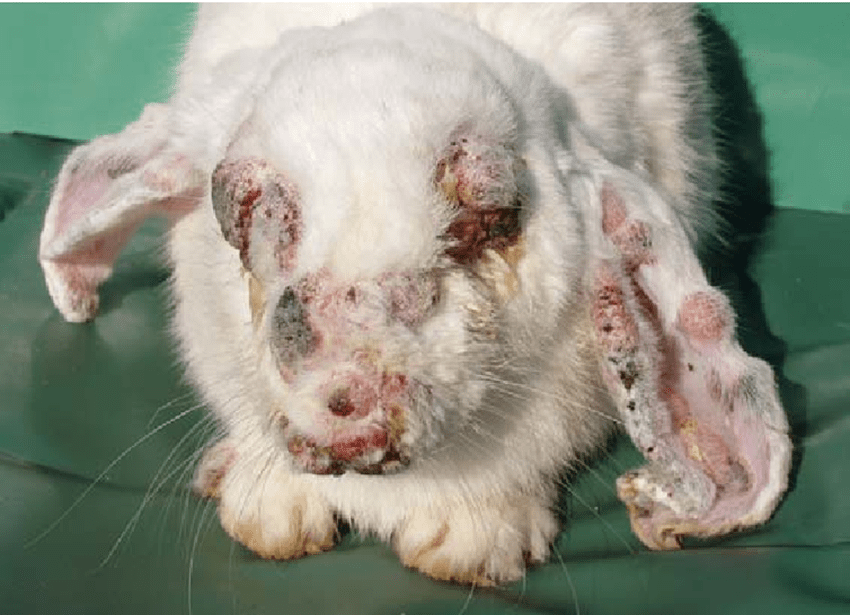
"Big head" or myxomatosis.
Deadly to European rabbits; wild American rabbits are resistant.
Purposefully released in Australia to control invasive rabbit population.
300
What are the 2 agents that we discussed that may cause upper respiratory disease in tortoises/turtles?
What similarities and differences do they have?
Mycoplasma and Herpesvirus.
Mycoplasma is caused by a bacteria while Herpes is a virus.
Herpes can cause more serious lesions such as diphtheritic membranes in the throat, mortality in novel species.
Neither can be "cured."
300
What disease causes signs like this in birds? What type of pathogen is it caused by and what is its public health significance?
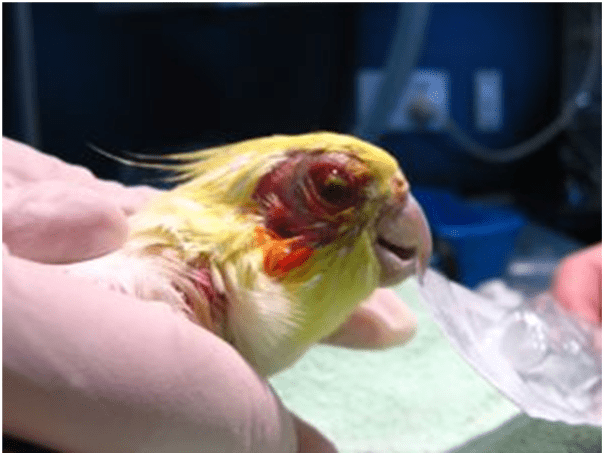
Chlamydia (psittacosis).
Bacterial infection
Zoonotic risk; people often exposed when cleaning bird cages
300
Which species of elephant is usually an asymptomatic carrier vs. becoming clinically ill with EEHV? What age group does this disease impact?
Is there anything new with this disease?
African elephants can carry it; it primarily affects juvenile Asian elephants and is often fatal
There is a new vaccine that shows promise.
300
What novel species have been affected by the current avian influenza outbreak?
Dairy cattle
Cats
Pinnipeds (seals/sea lions)
400
How does Rabbit Hemorrhagic Disease often present?
Is this a disease of wild or domestic rabbits?
Sudden death is common, +/- hemorrhage.
It causes disease in BOTH domestic and wild rabbits.
400
What viral disease causes severe gill lesions and mortality in koi? Can fish that recover be left in the system?
What is a unique method of control?
Koi Herpesvirus
Survivors are chronic carriers and should be culled
Clinical signs can be controlled with temperature (but it does not mean the virus went away)
400
What does PDD stand for and what type of tissue does it infect?
Proventricular dilatation disease
It is a disease of the nervous system; the GI signs occur because of nervous tissue in the GIT.
400
Where in the world does melioidosis occur?
What species become very ill with this disease?
What is the characteristic history?
Southeast Asia and Australia
Marine mammals, humans
Fever +/- lethargy after a heavy rainstorm
400
What are characteristics of a good screening test?
Highly sensitive
Minimally invasive
Cheap
Simple
500
How does E. cuniculi affect rabbits?
What type of organism causes this disease?
It causes neurologic, ocular, and renal signs. Neuro is the most common.
It is caused by a fungus.
500
How does the presentation of mycobacteriosis differ between amphibians and fish?
How do we test for it (initial in-clinic test)?
Often causes skin lesions in amphibians
Systemic diseases with abscesses/granulomas in fish
Acid-fast stain is a quick initial diagnostic test (must be confirmed)
500
Describe the cycle of botulism in waterbirds.
Decaying carcasses provide an anerobic environment that allows a bloom of the clostridial bacteria, toxin is produced
Maggots ingest the toxin
Birds are exposed by eating maggots and by eating other species that concentrate the toxin (i.e. fish)
500
Which other 2 diseases are caused by the same family of viruses as Epizootic Hemorrhage Disease and what is the vector they all have in common?
What type of animals does this disease affect?
Bluetongue and African Horse Sickness
Culicoides midge vector
Affects cervids, i.e. deer, elk
500
In our discussions about two cases of Valley Fever in primates, what body systems were affected?
One animal was more severely affected and required surgery. What was the surgical procedure?
Respiratory and neurologic
The animal with brain lesions developed hydrocephalus and required a shunt