Elements
Principles
Composition
Aesthetic Qualities
Spot it!
100
This art element refers to the path created by a moving point and can be straight, curved, thick or thin.
What is line?
100
This art principle refers to creating a focal point that draws the viewer’s attention to a particular area of an artwork.
What is emphasis?
100
This term refers to the way visual elements are arranged within an artwork.
What is composition?
100
An artwork uses a limited colour palette, simple geometric forms and large areas of empty space. What aesthetic quality is created?
What is minimalist / restrained?
100
Which art element is strongly emphasised by the thick black divisions throughout the artwork?
What is line?
200
This art element refers to the lightness or darkness of a colour or area.
What is tone?
200
This art principle occurs when visual elements are repeated to create a sense of pattern or beat.
What is rhythm?
200
This term describes the area of an artwork that attracts the viewer’s attention first.
What is a focal point?
200
An artist deliberately leaves visible brushstrokes, drips and uneven surface textures rather than creating a smooth finish. What aesthetic quality does this create?
What is expressive / painterly?
200
The two figures are positioned on either side of the centre and create a strong sense of visual stability. Which art principle is evident?
What is balance?
300
This art element describes how a surface appears or feels, such as rough, smooth, soft or coarse.
What is texture?
300
This art principle refers to the distribution of visual weight within an artwork and can be symmetrical or asymmetrical.
What is balance?
300
The large wave dominates the foreground while Mount Fuji appears much smaller in the distance. What compositional device creates this sense of depth?
What are foreground, middle ground and background?
300
The swirling lines, strong colour contrasts and energetic brushwork create this overall aesthetic quality.
What is dynamic / expressive / energetic?
300
The architectural lines of the room direct the viewer’s eye towards Christ. What compositional technique is being used?
What are leading lines / linear perspective?
400
Look at Claudia Wieser’s Untitled. Which art element is most strongly demonstrated through the repeated enclosed triangular areas?
What is shape?
400
Which art principle is strongly created through the swirling, directional arrangement of the landscape?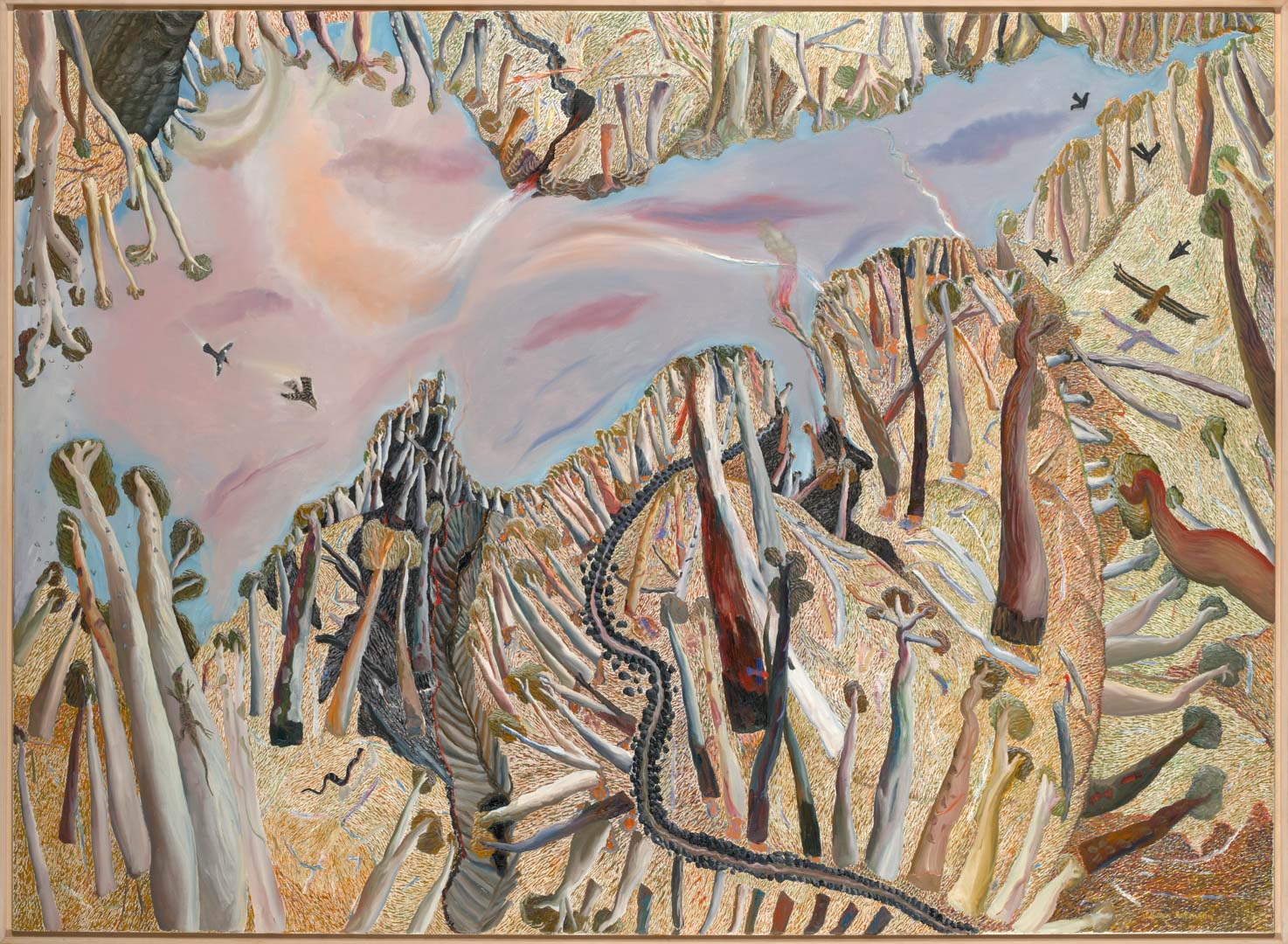
What is movement?
400
The photograph is tightly framed around the mother and children, removing much of the surrounding environment. What compositional technique is being used?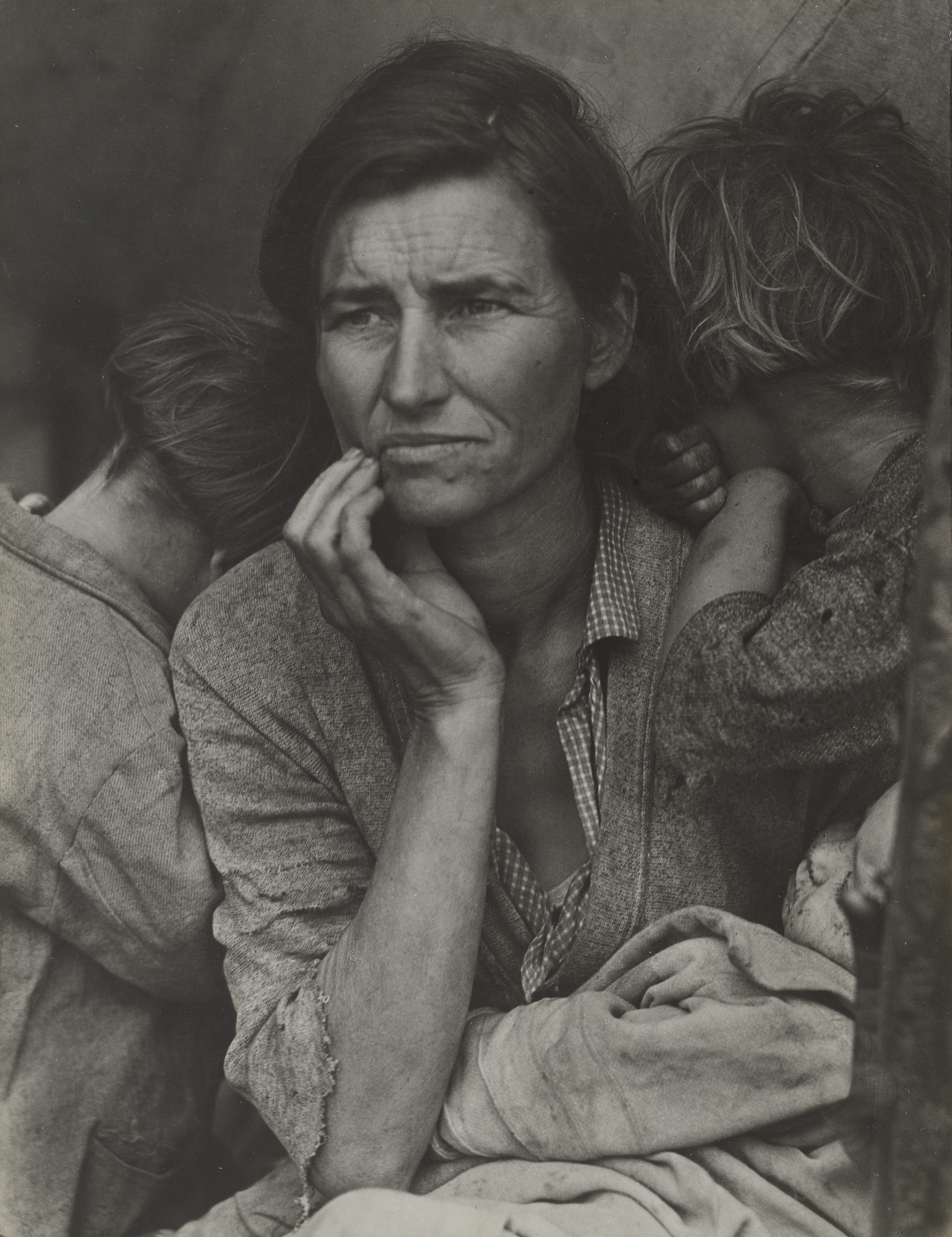
What is cropping / tight framing?
400
The soft colour transitions, loose brushwork and reflected light create this overall aesthetic quality.

What is calm / tranquil / harmonious?
400
A dramatic beam of light separates illuminated figures from deep areas of darkness. Which art element is being used particularly strongly?
What is tone?
500
Unlike shape, this art element refers to three-dimensional qualities such as height, width and depth.
What is form?
500
Look at this artwork. Which art principle is created through the strong differences in colour, imagery and surface treatment?
What is contrast?
500
The viewer appears to observe the figures from outside the diner, looking in through the large glass window. What compositional choice determines the position from which we see the scene?
What is viewpoint?
500
Its highly polished surface reflects and distorts the surrounding environment and viewer. What aesthetic quality is created by this surface?
What is reflective / sleek / immersive?
500
Kahlo’s centrally positioned face, direct gaze and surrounding imagery make her the dominant area of attention. Which art principle does this demonstrate?
What is emphasis?