Scene Size Up
Primary Assessment
Secondary Assessment
Pt. Monitoring Technology
History Taking
100
A book that should be kept in every squad. It will help to quickly identify hazardous materials and what safety measures to take.
Emergency Response Guidebook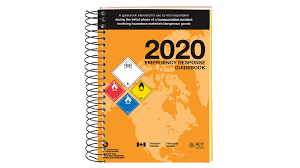
100
Your first intuitive evaluation of the patient. Known as your "view from the door"
general impression
100
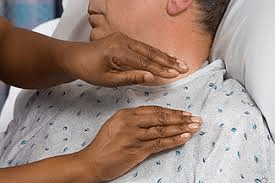
You evaluate the patient's chest by listening to the sound made when resting my hand on the patient's chest and tapping the fingers with my other hand.
Percussion
100
When placing EKG leads, where do I place the red lead?
left flank or leg
100
A list of possible causes of your patient's problem.
Differential Diagnosis
200
To help keep you safe, you where should you stand when knocking on a door when first approaching a scene.
Stand off to the side.
200
When checking a pulse on an infant, check this arterial pulse location
brachial
200
I should reevaluate vital signs of my critical patient every ____ minutes?
5
200
Pulse oximetry measures the oxygen saturation of _________
hemoglobin
200
Your patient has a history of smoking two pack per day for twenty-five years. Therefore, he is a _____ pack/year smoker.
25
300
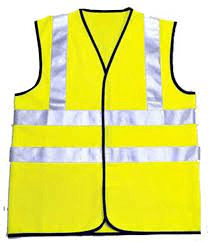
When working on a roadway, wearing this will help make you visible to others.
Safety vest. High vis vest. Yellow vest
300
When evaluating painful stimulus of a patient, they extend their arms and legs. What type of posturing is this?
decerebrate
300
Intraabdominal hemorrhage may be noted by dark bruising over the umbilicus (late sign)
Cullen's sign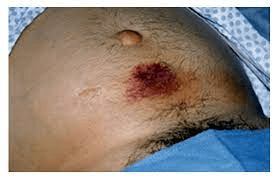
300
Measuring end tidal CO2 with a device that displays a waveform is known as _____________
Capnography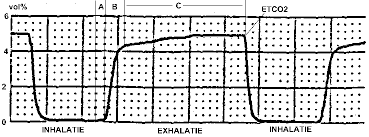
300
When obtaining history about a patient's drinking habit, you may use this type of questioning (acronym)
CAGE
cut down
annoyed
guilty
eye opener
400
When working a water rescue, your options are
Reach, throw, row or _____ as a last resort.
GO!
400
A sound caused by upper airway obstruction. It is a high pitch inspiratory screech
Stridor
400
Intraabdominal hemorrhage may be noted by dark bruising of the patient's flanks (late sign)
Grey Turner's sign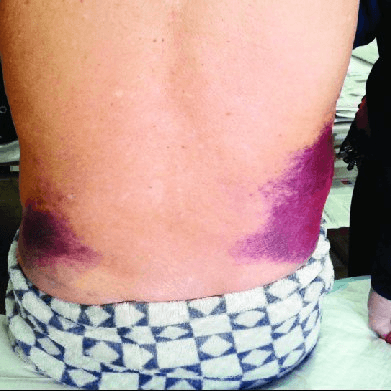
400
A glucometer measures glucose (mg) in how much blood
dL deciliters
400
The acronym HEENT stands for what?
Head eyes ears nose throat
500
When evaluating an injury, it is important to identify this. It is the combined strength, direction and nature of forces that injured the patient.
Mechanism of injury.
500
An adult should be transported to a trauma center if they fall more than how many feet?
20
500
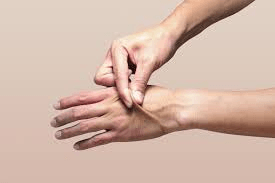 I can evaluate for dehydration by testing the patient's skin elasticity. This assesses skin _______
turgor
500
When obtaining blood tubes, I shook the tube too vigorously and cause hemolysis. What is this?
Destruction of red blood cells.
500
Gravida 3 Para 2 means what?
3 pregnancies and 2 viable births