Anesthetic Machine
Anesthetic Depth
ECG and Circulation
Respiratory
Induction to Intubation I
All mixed up
Induction and Intubation II
ECG and Capnographs
100
This component shows breathing-circuit pressure in cm H2O.
What is the pressure manometer?
100
This stage contains the planes used for surgical anesthesia.
What is Stage III?
100
This ECG complex represents ventricular depolarization.
What is the QRS complex?
100
This monitor estimates the percentage of arterial hemoglobin binding sites occupied by oxygen.
What is a pulse oximeter?
100
Before induction, this step builds a lung oxygen reserve and buys time if apnea occurs.
What is pre-oxygenation?
100
Define anesthetic protocol.
What is a written list of pre-meds, anesthetics, and fluid rates prescribed for a patient?
100
The type of anesthetic induction where the anesthetist has the most control.
What is IV induction?
100
Rate varies with respiration and can be a normal finding in dogs.
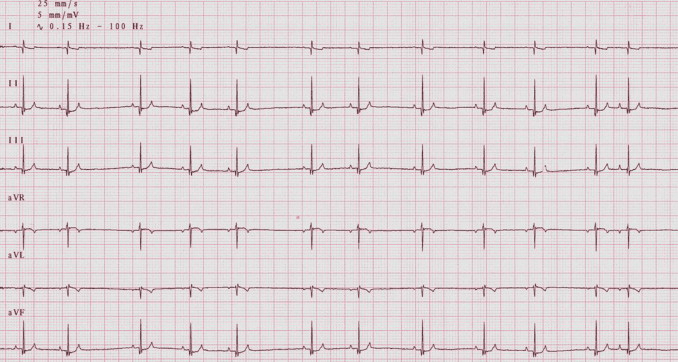
What is a (respiratory) sinus arrythmia?
200
This circle-system component chemically removes CO2 before gas returns to the patient.
What is the CO2 absorber?
200
An unconscious patient paddles and vocalizes during induction. This excitement stage is the likely explanation.
What is stage II?
200
The heart beats 120 times per minute, but only 90 peripheral pulses are palpable.Name this mismatch.
What is a pulse deficit?
200
A capnogram’s inspiratory baseline is 0 mmHg and its end-expiratory peak is 42 mmHg. This is the ETCO2 to record.
What is 42 mmHg?
200
An induction drug is given in small increments until the desired clinical endpoint occurs. This dosing approach has a name.
What is titration?
200
The anesthetic stages between which patients lose consciousness.
What is between stage I and stage II?
200
Main reason why anesthetic face masks must be tight fitting.
What is exposure to anesthetic gases for the staff? (and potential for more anesthetic th;an necessary due to escaped gases).
200
No ventricular electrical activity. Confirm immediately on patient. 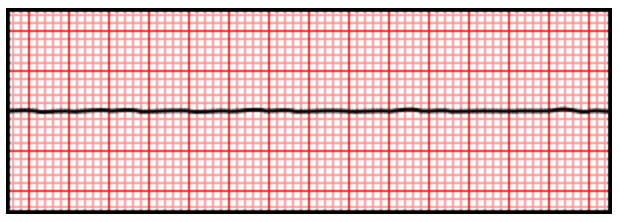
What is asystole?
300
During a manual breath, this valve may be closed briefly. Immediately afterward, it must reopen.
What is the APL (Adjustable Pressure limiting) or pop-off valve?
300
In a dog, central eyes can occur at both a light and a deep plane. Name TWO other findings to help distinguish them.
What are jaw tone, reflexes, respiratory pattern, pulse quality, or blood pressure?
300
Some P waves appear without a following QRS complex. This degree of AV block best fits.
What is second-degree AV block?
300
Increase in baseline of CO2, waveform does not go back to zero. Name the most likely cause of this finding.
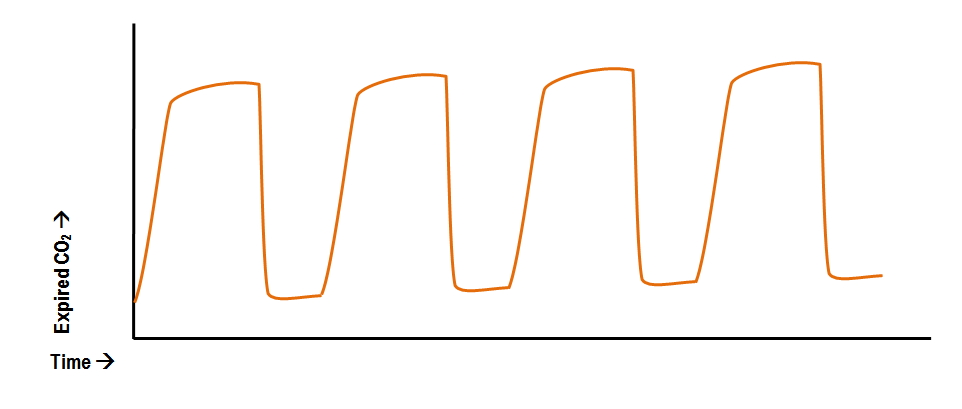
What is rebreathing of carbon dioxide?
Consider saturation of CO2 absorbent, problem with unidirectional expiratory valve, or inadequate fresh gas flow.
300
An estimated ETT size is 6.0 mm. Under the three-tube rule, these other TWO sizes should also be ready.
What are 5.5 mmID and 6.5 mmID?
300
Formula used for calculating a rebreathing bag.
What is 60 ml/kg? Always round up to the nearest sized bag.
300
The 2 structures used to measure the proper length for an ETT.
What are the muzzle and the thoracic inlet?
300
Early, wide QRS with an abnormal shape. Monitored for post GDV and splenectomy surgeries
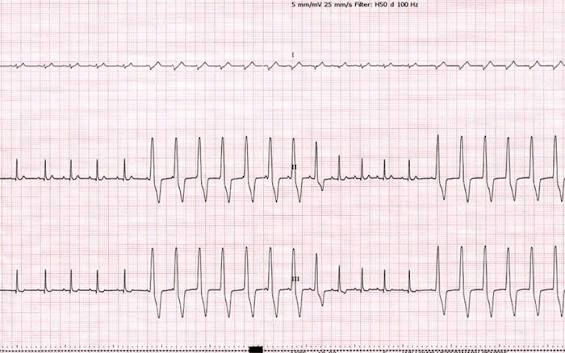
What are ventricular premature contractions or ventricular premature complexes? (VPCs).
400
Using 60 mL/kg, an 18-kg dog needs at least 1,080 mL of reservoir-bag volume. Of the following bags, this one should be chosen. 0.5L, 1.0L, 2.0L, 3.0L
What is 2-L bag?
400
A dog begins moving during tissue manipulation. Jaw tone increases, and HR and BP rise together. Assess these TWO parts of the anesthetic plan.
What are anesthetic depth and analgesia?
400
The systolic blood pressure in dogs that roughly correlates with a MAP of 60.
What is 90?
400
A slanted expiratory rise creates a shark-fin capnogram. This mechanical airway problem should be checked promptly.
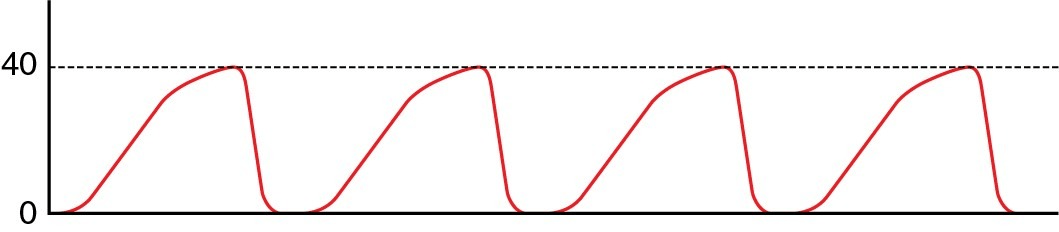
What is a kinked or partially obstructed ETT or breathing circuit?
400
A cat’s vocal folds close when touched during intubation. Name the complication and one safe next step.
What is laryngospasm, followed by stopping the attempt and reassessing depth or using prescribed topical lidocaine?
400
Approximate time period after IM induction of anesthesia for peak effect.
What is 15-20 minutes?
400
A properly placed endotracheal tube is advanced through this anatomic structure.
What is the glottis?
400
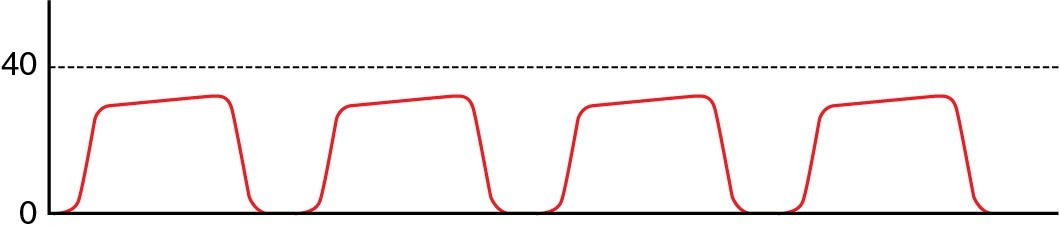 Decreased ETCO2 with normal capnograh. Name and 2 potential causes.
What is hypocapnia (abnormally low end tidal CO2 level). Possible causes include hyperventilation (insufficient anesthetic depth or pain), hypothermia, reduced cardiac output, excessive mechanical ventilation.
500
Before connecting a patient, the circuit reaches 25 cm H2O but loses pressure with flow off and the patient port occluded. This is the next step before use.
What is locate and correct the leak prior to starting the procedure?
500
After an inhalant increase, a dog develops flaccid jaw tone, shallow breaths, weak pulses, and MAP 46 mmHg. Name the likely problem and an immediate response.
What are excessive anesthetic depth and prompt reduction of inhalant with veterinary notification?
Also consider flushing the system with 100% oxygen (with patient disconnected)
500
A limb circumference is 15 cm. Using the course guideline of about 40%, this is the appropriate BP cuff width.
What is 6cm cuff?
500
SpO2 is 99% on oxygen, but shallow breathing accompanies ETCO2 of 66 mmHg. Medical term for this value and why the oxygen reading does not make ventilation adequate.
What is hypercapnia. Oxygen saturation can remain high while inadequate ventilation allows CO2 to accumulate?
500
Name TWO distinct problems: the ETT tip extends too far into the chest, and unnecessary tube length projects beyond the muzzle.
What are mainstem bronchial intubation and increased apparatus dead space?
500
Reason why patients with an IM anesthetic induction protocol may take longer to recover.
What is slower redistribution and longer liver metabolism time?
500
Name at least 3 potential complications of chamber anesthetic induction.
What are high patient stress, trauma from thrashing, vomiting with airway blockage, and inability to assess critical patient vitals including muscle tone, HR, and eye positions. Also exposure to staff of waste anesthetic gases when chamber opened.
500
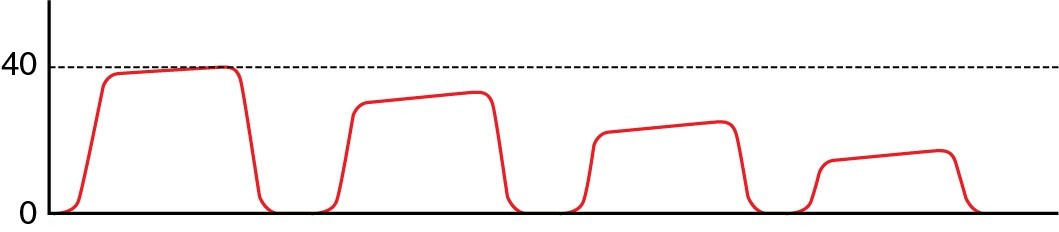
Sudden decrease in ETCO2. Name at least 2 possible causes for this finding.
What is sudden hypotension, severe blood loss, pulmonary embolism and impending cardiac arrest?