Wave Anatomy
The Spectrum
Atmosphere
Wave Concepts
Velocity Formula
100
Looking at the image, identify part A.
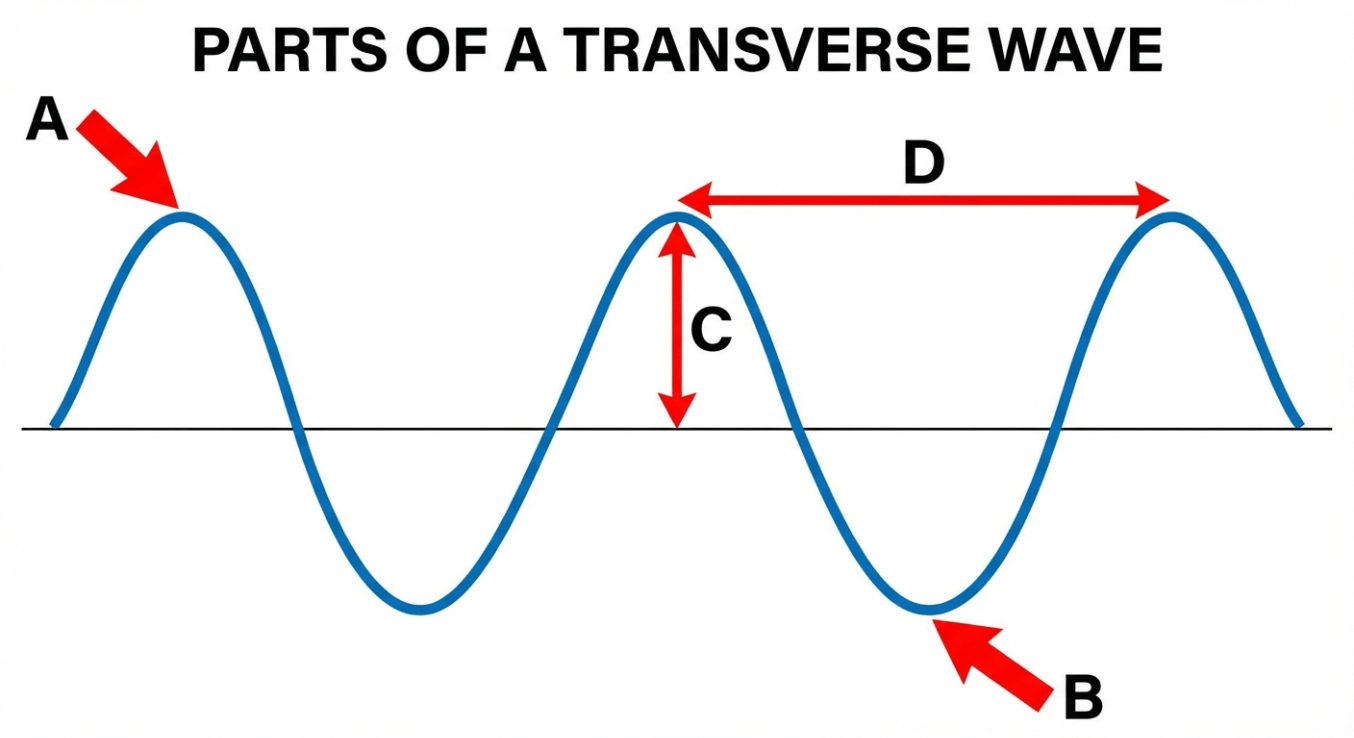
Crest (or Peak)
100
Name the three main types of electromagnetic waves the sun sends to Earth.
UV, Visible, and Infrared
100
This specific gas in the upper atmosphere protects us from UV radiation.
Ozone
100
The material (solid, liquid, or gas) that a wave travels through.
Medium
100
Frequency is 5 Hz, Wavelength is 4 m. What is the Velocity?
20 m/s
200
Looking at the image, identify part B.
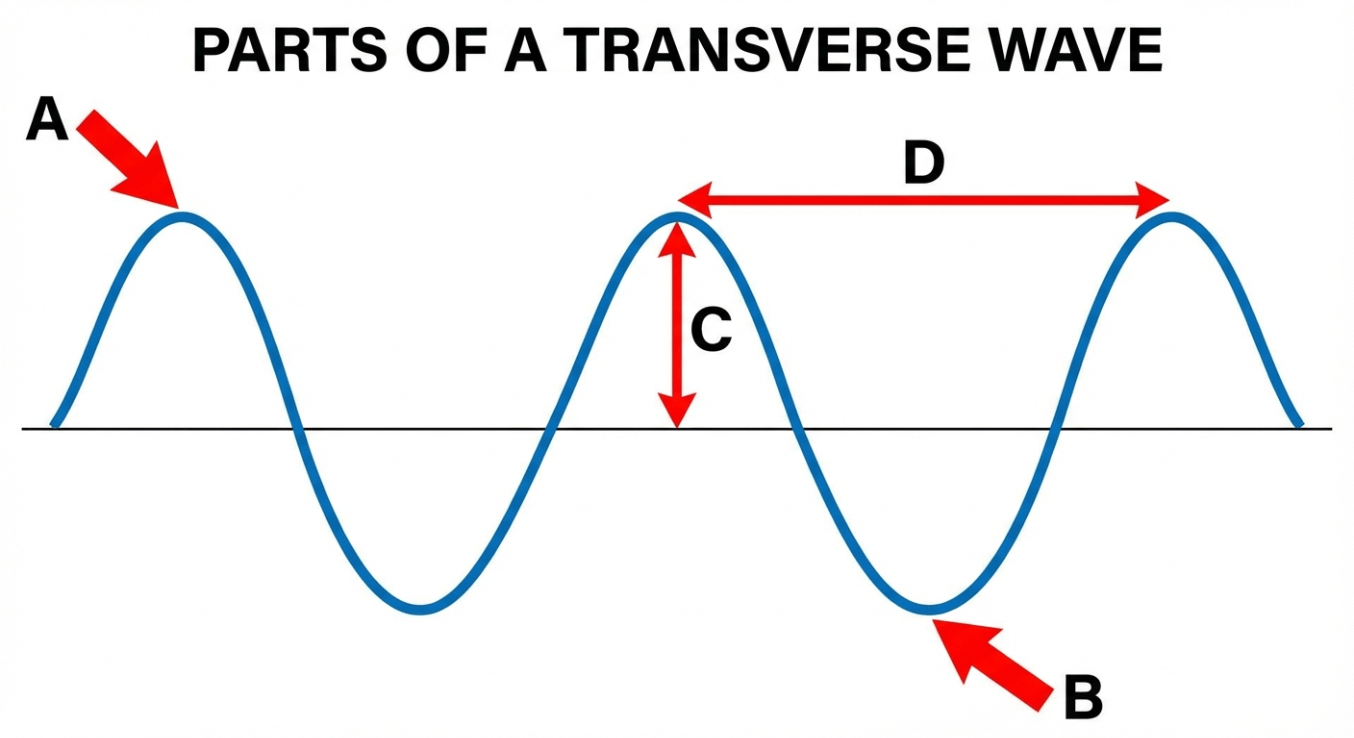
Trough
200
Which color of visible light has the longest wavelength?
Red
200
Is it usually hotter on a sunny day or a cloudy day?
Sunny day
200
The name of the Greek symbol used to represent wavelength.
Lambda
200
Velocity is 10 m/s, Frequency is 2 Hz. What is the Wavelength?
5 meters
300
Looking at the image, identify part C.
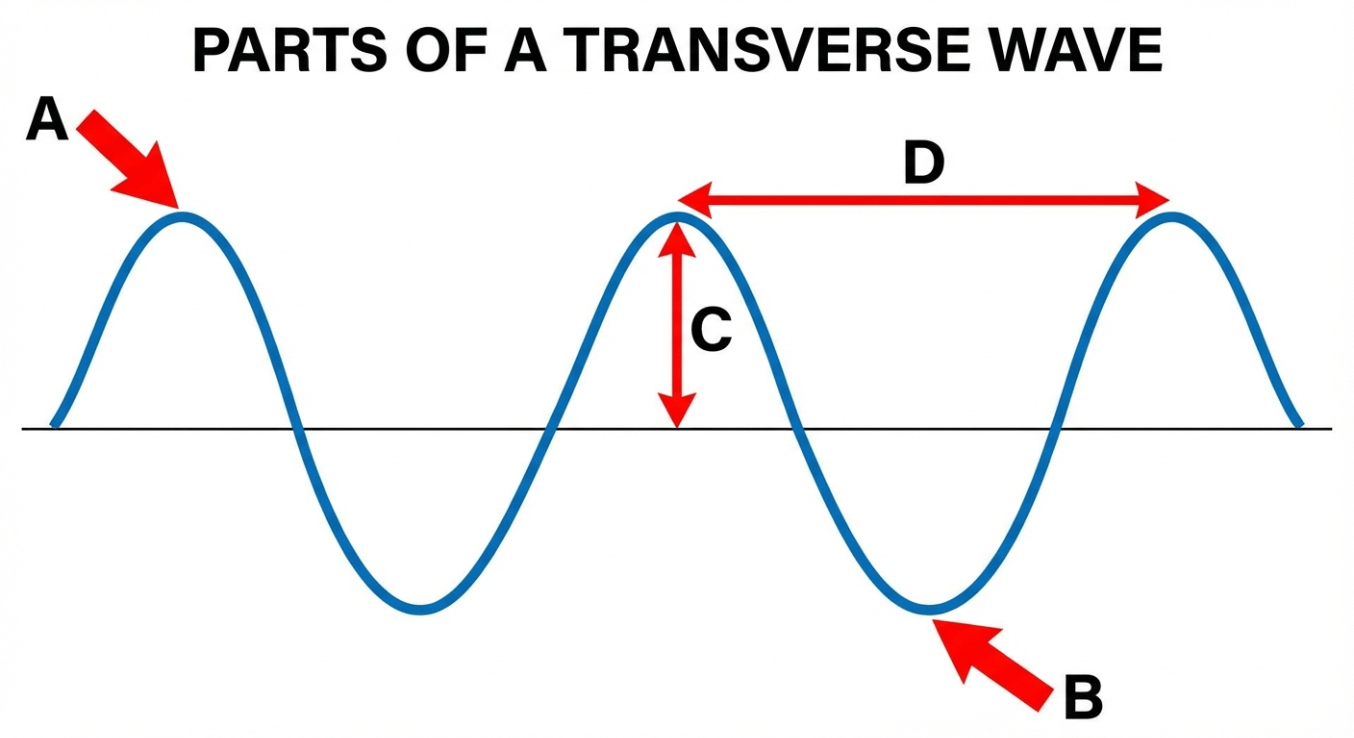
Amplitude
300
Which has a longer wavelength: UV radiation or Visible light?
Visible light
300
Is it usually hotter on a clear night or a cloudy night?
Cloudy night
300
The formula for finding the velocity of a wave.
Velocity = frequency x wavelength
300
Wavelength is 10 m, Frequency is 0.5 Hz. What is the Velocity?
5 m/s
400
Looking at the image, identify part D.
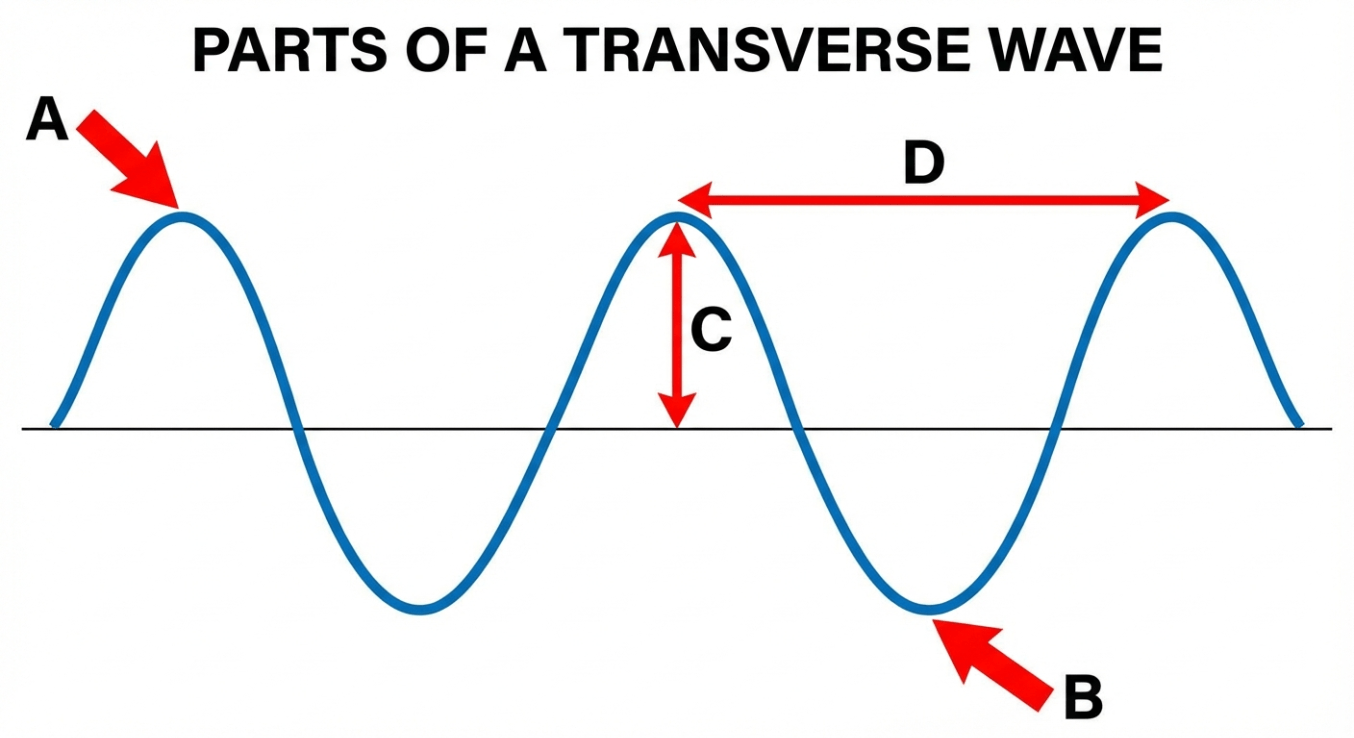
Wavelength
400
Which has a longer wavelength: Infrared radiation or Visible light?
Infrared
400
The process where the atmosphere traps heat to keep the planet warm.
Greenhouse Effect
400
Looking at the second image, the top wave has a higher _____ than the bottom wave.
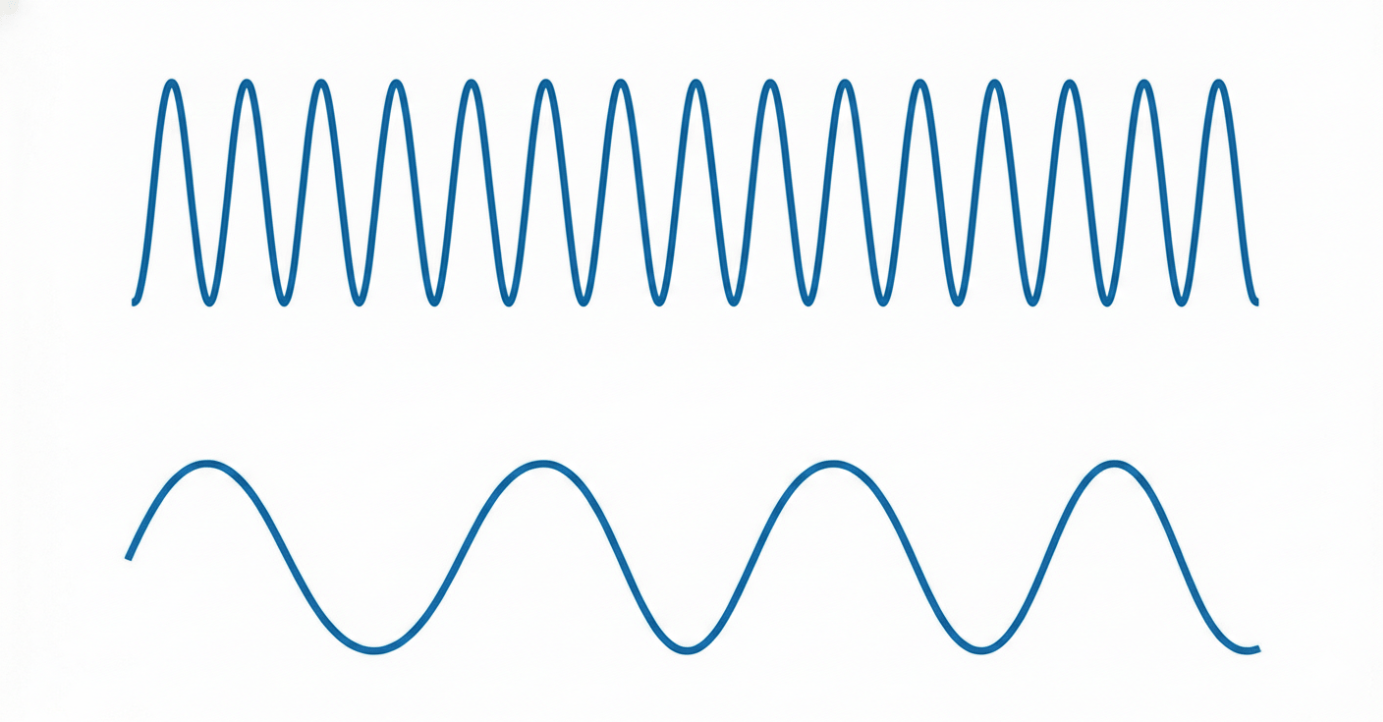
frequency
400
Velocity is 340 m/s, Wavelength is 2 m. What is the Frequency?
170 Hz
500
A wave where particles move back and forth in the same direction as the wave's energy.
Longitudinal Wave
500
On the spectrum, as wavelength decreases, this property increases.
Frequency (or Energy)
500
Name two greenhouse gases found in our atmosphere.
Carbon Dioxide, Methane, or Water Vapor
500
The standard unit used to measure frequency.
Hertz (Hz)
500
Velocity is 1,000 m/s, Frequency is 250 Hz. What is the Wavelength?
4 meters