Vocab
Trends
Groups/Families
Periodic Sections
Random
100
How many protons an atom has.
What is atomic number?
100
A trend that increases down a group.
What is shielding, atomic radius, or effective nuclear charge?
100
The first three elements of the halogen group.
What are fluorine, chlorine, and bromine?
100
Conductive, shiny, malleable, and ductile. Found on the left side of the periodic table.
What are metals?
100
This is the current organization of the periodic table.
What is increasing atomic number?
200
They organized the first periodic table by increasing atomic mass.
Who is Dmitri Mendeleev?
200
The alkaline Earth metal with the highest ionization energy.
What is beryllium?
200
The group where the first element is oxygen.
What is the oxygen group or group 6?
200
They are found along the zigzag line starting at (but not including) aluminum.
What are the metalloids?
200
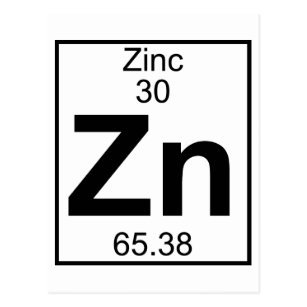
The bottom number in this box.
What is the average atomic mass?
300
The vertical columns on the periodic table.
What are groups or families?
300
Valence electron distance from the nucleus and shielding causes this to increase across a period and decrease down a group.
What is ionization energy?
300
This group contains the elements lithium, potassium, and sodium.
What are the alkali metals?
300
These elements are located below the main section of the periodic table.
What are the inner transition metals or rare earth metals?
300
The amount of valence electrons in iodine (I).
What is 7?
400
The horizontal rows on the periodic table.
What are periods?
400
This element has the highest electronegativity value on the periodic table.
What is fluorine?
400
Similar properties down a group allowed Mendeleev to predict the existence of these.
What were undiscovered elements?
400
These are classified as metals and found in the d-block of the periodic table.
What are the transition metals?
400
This element has the smallest atomic radius in 4th period.
What is krypton?
500
The negatively charged subatomic particles that occupy the outermost energy level.
What are valence electrons?
500
This stays the same across a period and helps describe why atomic radii decreases and effective nuclear charge increases across a period.
What is shielding?
500
This element is a noble gas that does not have eight valence electrons.
What is helium?
500
All nonmetal elements are located in this block of the periodic table.
What is the p-block?
500
He came up with the current organization of the periodic table.
Who is Henry Mosely?