Stick Your Neck Out
Gag Orders & Trumpets
Passing Gas
Alphabet Soup
The "Complaint" Department
Et Tu, CO2?
Catching Waves
Lung Story Short
Say What?
Down the Wrong Pipe
100
This two-part manual maneuver requires placing one hand on the patient's forehead and two fingers of the other hand under the bony part of the chin to open the airway of a non-trauma patient
What is the Head-Tilt/Chin-Lift?
100
This semicircular plastic device helps hold the tongue away from the posterior pharynx but is strictly indicated only for patients who have no gag reflex
What is an Oropharyngeal Airway (OPA)?
100
Distinguished by its reservoir bag and one-way side ports, this mask delivers the highest oxygen concentration of all available delivery devices
What is a Nonrebreather Mask?
100
In the standard trauma history mnemonic SAMPLE, the "A" reminds the paramedic to ask about these, which might also be identified by checking for medical alert jewelry.
What are Allergies?
100
Usually the first thing recorded, this is defined as the pain, discomfort, or dysfunction that caused the patient to request help.
What is the Chief Complaint?
100
For a healthy patient, the normal range for end-tidal carbon dioxide (EtCO2) falls between these two numbers.
What is 35–45 mmHg?
100
If your capnography monitor suddenly shows a "flat line" or zero reading during airway management, it indicates apnea or this specific type of misplaced intubation.
What is esophageal intubation?
100
Found at the end of the alveolar ducts, these tiny sacs are the primary sites of gas exchange between the air and the blood.
What are alveoli?
100
While an "open" version involves extended arms and relaxed muscles, this type of stance involves arms crossed tightly over the chest and suggests defensiveness or a lack of cooperation.
What is a closed stance?
100
While trauma, vomit, and foreign bodies are dangerous, this muscular organ is actually the most common cause of airway obstruction.
What is the tongue?
200
When a patient has a suspected cervical spine injury, you should use this maneuver, which involves lifting the mandible angles without tilting the head or extending the neck
What is the Jaw-Thrust Maneuver?
200
Often referred to as a "nasal trumpet," this soft rubber uncuffed tube is designed to follow the curvature of the nasopharynx
What is a Nasopharyngeal Airway (NPA)?
200
While a nasal cannula is a low-flow device, this specific type of mask uses a system to deliver precise, controlled oxygen concentrations to the patient
What is a Venturi Mask?
200
When using OPQRST to assess a patient's pain, the "Q" stands for this term, which asks the patient to describe what the pain feels like (e.g., stabbing or crushing).
What is Quality?
200
Beyond checking for hereditary diseases, this portion of the history review involves asking about the patient's diet, living situation, and use of substances like tobacco or alcohol.
What is the Family/Social History?
200
If a patient is hyperventilating, they are blowing off too much carbon dioxide, causing their EtCO2 levels to drop below this specific number.
What is 35 mmHg?
200
Often seen in patients with asthma or COPD, a waveform with a sloped, jagged appearance is classically described as looking like this ocean predator’s fin.
What is a shark fin?
200
During inspiration, the intercostal muscles and this primary muscle of respiration contract to change the size of the intrathoracic cavity.
What is the diaphragm?
200
This specific "zone" of interpersonal space ranges from 1.5 to 4 feet and is where the majority of a patient interview usually takes place.
What is personal distance (or personal space)?
200
If you insert an endotracheal tube and receive a "flat line" or zero reading on the capnograph, you have likely placed the tube in this structure instead of the trachea.
What is the esophagus?
300
It’s not just for smelling flowers; this position is achieved when a non-obese patient is placed so their ear-to-sternal notch axis is aligned to improve ventilation
What is the "Sniffing Position"?
300
To properly position an OPA, you insert it with the tip facing the soft palate and then perform this specific maneuver to place it beneath the tongue
What is Rotate (or turn) it 180 degrees?
300
To avoid over-ventilating a pediatric patient with a BVM, you should follow this rhythmic three-word cadence to maintain the proper rate
What is "Squeeze, Release, Release"?
300
During the Review of Body Systems (ROS), this five-letter acronym guides the paramedic to inspect the Head, Eyes, Ears, Nose, and Throat.
What is HEENT?
300
When conducting a Review of Body Systems (ROS) on the upper respiratory and cranial region, paramedics use the acronym HEENT, which stands for these five anatomical parts.
What are Head, Eyes, Ears, Nose, and Throat?
300
During cardiac arrest, observing a sudden, sustained spike in the EtCO2 level is a reliable indicator of this positive event.
What is ROSC (Return of Spontaneous Circulation)?
300
If you see the waveforms getting progressively smaller and shorter over time, the patient is blowing off too much CO2, indicating this ventilatory status.
What is hyperventilation?
300
This membranous connective tissue comes in two layers: the visceral layer that covers the lungs and the parietal layer that lines the chest wall.
What is the pleura?
300
When communicating with this specific age group (13 to 18 years old), it is important to respect their strong desire for modesty and avoid speaking to them as if they are children.
What are adolescents?
300
Because the trachea divides at the carina, aspirated foreign bodies are most likely to end up in this specific bronchus because it is straighter and wider.
What is the right mainstem bronchus?
400
Because the ear-to-sternal notch axis is not horizontal in obese patients when they lie supine, you must place them in this position to properly align the airway
What is the Ramped Position?
400
Unlike the OPA which sits in the mouth, the NPA passes through the nose and extends from the nostril to this anatomical space located below the base of the tongue
What is the Posterior Pharynx?
400
Unlike CPAP, which maintains a steady pressure, this device maintains a higher level of pressure during inhalation and a lower level of pressure during exhalation
What is BiPAP (Bilevel Positive Airway Pressure)?
400
The expanded history mnemonic OPQRST-ASPN includes "PN," which stands for these specific findings—signs that are expected given the complaint but are notably absent.
What are Pertinent Negatives?
• OPQRST–ASPN – Onset – Provocation/Palliation – Quality – Region/Radiation – Severity – Time – Associated Symptoms – Pertinent Negatives
400
When forming a differential diagnosis, the paramedic uses clinical reasoning to narrow down the list of potential diagnoses from "possibilities" to these.
What are Probabilities?
400
On a normal capnogram, Phase III represents the exhalation of CO2 from the alveoli and is commonly referred to by this "flat" geographic name.
What is the alveolar plateau?
400
If Phase IV of the waveform fails to return to zero, resulting in an elevated baseline, it indicates the patient is doing this with their carbon dioxide.
What is rebreathing?
400
The pharynx is divided into three sections: the nasopharynx, the oropharynx, and this lowest portion, also known as the laryngopharynx.
What is the hypopharynx?
400
To avoid putting a patient on the defensive during an interview, a paramedic should avoid asking questions that begin with this three-letter word, which can imply blame.
What is "Why"?
400
If the capnography waveform shows a specific variation or sudden decrease (not to zero), it often indicates a leak in the breathing circuit or a failure of this balloon-like component of the endotracheal tube.
What is the cuff (or ET tube cuff)?
500
While not used for rapid sequence intubation, this technique involves applying firm downward pressure to the anterolateral aspect of the cricoid cartilage to prevent gastric insufflation during BVM ventilation
What is Cricoid Pressure?
500
When inserting an OPA, you must ensure the tip is initially facing towards this specific "roof" structure of the mouth before you rotate the device into its final position
What is the Soft Palate?
500
While Positive End Expiratory Pressure (PEEP) helps keep alveoli open, high levels of it can be dangerous because it impedes left heart filling volumes, leading to a decrease in this vital metric
What is Cardiac Output?
500
In the CAGE questionnaire used to assess alcohol use, the "A" stands for this word, asking if people have ever made the patient feel this way by criticizing their drinking.
What is Annoyed?
• Components of the family/social history (continued): – CAGE questionnaire
▪ Cut down ▪ Annoyed ▪ Guilty ▪ Eye-opener
– Ask about blackouts, accidents, injuries that happened while drinking
500
Distinct from the chief complaint, which is why the patient called, this specific term refers to the underlying principal medical cause of that complaint.
What is the Primary Problem?
500
While we measure CO2 as a gas, 70% of it is actually transported through the bloodstream in this chemical form.
What is bicarbonate
500
Named after a specific neuromuscular blocker, this "cleft" or notch in the alveolar plateau indicates that paralytics are wearing off and the patient is fighting the ventilator.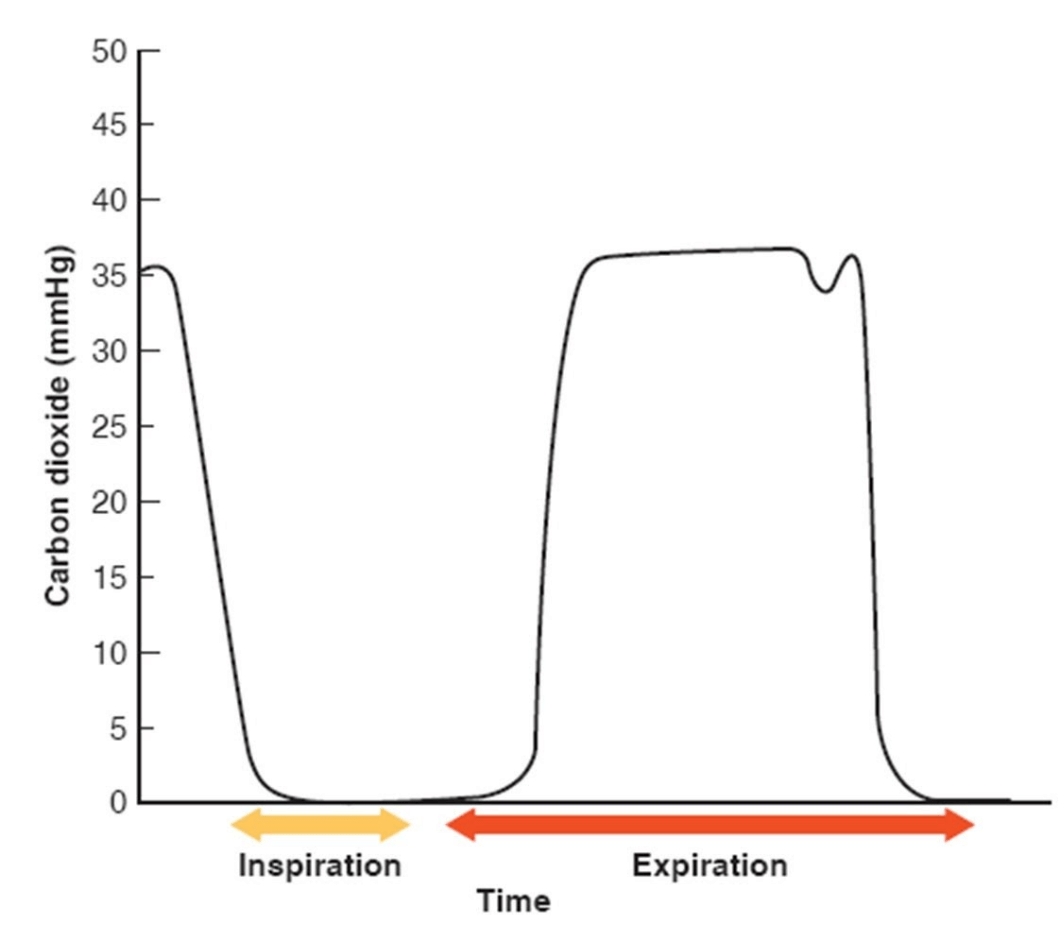
What is a curare cleft (or curare notch)?
500
To keep the lungs open, alveoli are coated with this substance which reduces surface tension and prevents atelectasis (alveolar collapse).
What is surfactant?
500
When communicating with a patient exhibiting confusing behavior, it is important to distinguish dementia, which is typically chronic, from this acute, shorter-term condition related to cognitive function.
What is delirium?
500
This specific "notch" in the alveolar plateau appears when a patient on a ventilator attempts to take a breath because their neuromuscular blocking agents are wearing off.
What is a curare cleft (or curare notch)?