Nutrition
Nutrition, Canada Food Guide, Diets & Fluid Balance
Scales and Chains
By the Skin of Your Teeth
This and That!
100
What is Ingestion, Digestion & Absorption......
Ingestion
• Process of taking food and fluids into the body
Digestion
• Process of physically and chemically breaking
down food so that it can be absorbed for use by
the cells.
Absorption
• Process by which substances pass through the
intestinal wall into the blood
100
Why are minerals needed for your health?
Minerals
•Minerals-Chemical substances found plant and
animal foods
•Each mineral is needed for a specific body
function
•Calcium and phosphorus used to form strong
bones and teeth
Minerals (Herlihy page 453 Table 23.3)
Calcium
Function
◦ Teeth & bone formation
◦ Blood clotting
◦ Heart and nerve function
◦ Muscle contraction
Sources:milk and milk products, green leafy veg., whole grains, egg yolk, nuts
Phosphorus
Function
◦ Formation of bones and teeth
◦ Use of proteins, fats and CHO
◦ Nerve and muscle function
Sources: meat, fish, poultry milk and milk products, nuts, egg yolk, dried peas and beans
Iron
Function
Component of red blood cells
◦ Sources: liver, meat, eggs, leafy greens, breads and cereals, dried peas, and beans
Sodium
Function
◦ Fluid balance
◦ Nerve and muscle function
◦ Sources: Most foods
100
What is the Bristol Scale?
Bristol scale medical tool that classifies human feces into categories based on form/shape and consistency
helps diagnose conditions like constipation and diarrhea
100
What is Albinism?????
Albinism is.....
A non-contagious genetic condition that reduces or eliminates the production of melanin
occurs across all races and ethnic groups
beyond appearance, primarily affects vision (not fully corrected by glasses)
common to have hypersensitivity to bright light and glare
100
What is respiratory etiquette?
Respiratory etiquette is
daily simple infection practices to limit the spread of respiratory pathogens including
use tissue to cover mouth and nose when coughing/sneezing
cough or sneeze into elbow if no tissue
hand hygiene,,wear a mask, stay home
200
What is the PSW's role related Nutrition?
What is......
• Assist with serving food and fluids to clients
• Assist with eating
• Documentation and reporting- what does
that look like?
• Preparation of meals for clients
• nutritious
• store and handle food safely
• follow a recipe
• presentation
• menu prep
200
How do the old and new Canada Food Guides differ?
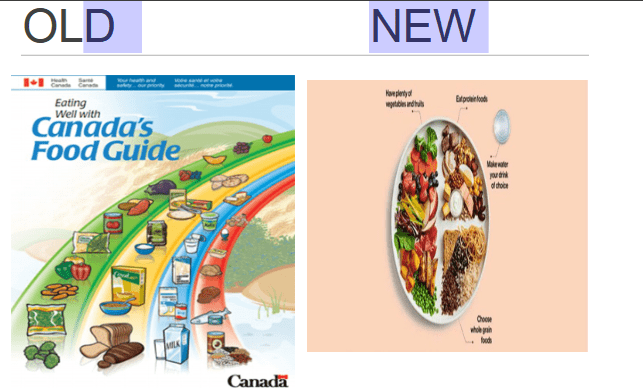
OLD Canada’s Food Guide- focus on serving sizes
Serving Sizes
Adult
6 -8 servings of grain products
7-10 servings of fruits and vegetables
2-3 servings of milk products
2-3 servings of meat and alternatives
New Canada’s Food Guide 2019(Health Canada Website)
3 MAIN SECTIONS
Vegetables/fruit
Whole grains
Proteins
• Less processed foods
• No separate section for meat/alternative and
milk
• High plant-based protein
• Unsaturated vs saturated fat
• 3 main sections
• Vegetables/fruit
• Whole grains
• Proteins
OLD Canada Food Guide (Health Canada Website)
• Focus on serving sizes- rainbow
• Protein from animal sources- separate
section of the food guide
NEW Canada Food Guide (Health Canada Website)
• Focus on proportions- plate
• Protein from plant- based sources- displayed on ¼ of the plate
Healthy Cooking Tips
• Trim fat
• Bake, broil, roast, or microwave
• Gravies and sauces add fat
• Fish- 2 servings per week
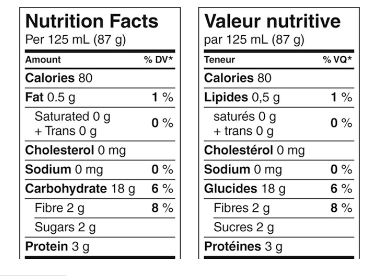
Food Labels
Mandatory on packaging
3 components:
1. List of ingredients: starts with major ingredient
2. Nutrition Facts
◦ Contains info on calories and nutrients
◦ DV daily value –how the serving fits into diet (%)
3. Nutrition Claims- Low in fat, high in fibre
200
What is the Braden Scale.....?
Clinical tool used to assess a patient's risk of developing pressure injuries
scores include- sensory perception (able to respond to relieve pressure related discomfort), moisture (skin exposure to moisture, e.g., incontinence, sweat), activity (bedbound vs walks frequently), mobility (ability to change and control body position), nutrition, and friction& shear (amount of assistance and degree of sliding on beds, chairs)
A high score
200
What are functions of the integumentary system?
What are.....
MECHANICAL BARRIER-protection (first line of defense against UV radiation, bacteria, injury, dehydration)
thermoregulation (sweating to cool down & constricting blood vessels to retain heat)
Sensation - nerve receptors for touch, pressure, and temperature
Vitamin D is synthesized when exposed to sunlight (essential for bone health and calcium absorption)
Fluid balance - prevents excessive water loss
Hypodermis stores fat (energy and protects/cushions internal organs)
FIRST LINE OF DEFENSE (immune response)
Excretory function- insensible perspiration 500 ml/day
200
What is a pathogen.....................
A pathogen is.....
bacteria, virus or other microorganism that can cause disease/illness
300
What are Nutrients?
Nutrients:
Contained in food and fluids
Ingested, digested, absorbed and used by the body
◦ Protein
◦ Carbohydrate
◦ Fat
◦ Vitamin
◦ Mineral
◦ Water
300
What is the relationship between Nutrition and Energy?
Nutrition = Energy
essential to:
◦ providing body with power
◦ maintains body temperature
Energy is measured in units called
kilocalories (kcal)
One calorie is the amount of energy
required to raise the temperature of 1kg of
water by 1 degree Celsius
Energy Balance
• input of energy (food) equals the output of energy (energy expenditure)
•Balanced is not always achieved
food intake > energy expenditure=stored as fat=weight gain
food intake < energy expenditure= weight loss
300
What does a score of 20 on a Braden Scale mean?
Braden scale scores- the higher the score, the lower the risk for developing pressure ulcers. skin breakdown
19-23: No risk
15-18: Mild risk
13-14: Moderate Risk
10-12: High risk
9 or less: Severe/Very High Risk
300
Where are blood vessels located in the integumentary system?
dermis and hypodermis
300
What makes a person more susceptible to infection....
What is......
catheters, stents, implants (medical devices)
weakened immune system (transplant recipient, HIV, chemotherapy)
skin damage
poor nutrition
crowded environment (congregate setting/LTC/School etc)
high stress
chronic illness (heart disease, diabetes)
age (very young/elderly)
400
What are Proteins, Carbohydrates, and Fats
What are Proteins, Carbohydrates, and Fats ......
nutrients found in food gives fuel for energy (“GAS” in a car)
Calorie is the amount of energy produced as the body burns food
Protein
•Needed for tissue growth and repair (fish, meat,
poultry, eggs, milk, cereals, beans, nuts, peas
•Needed for tissue growth and repair (fish, meat,
poultry, eggs, milk, cereals, beans, nuts, peas
Best source of protein= Animal products
•Must consume protein from plants (beans, peas, rice)if do not eat animal products
•Protein deficiency can result in severe
malnutrition
Protein Building blocks are several amino acids (amino acids linked = peptide); Many peptides together form a polypeptide;Proteins are very long polypeptide chains
•To be absorbed across the digestive tract and, the chains must be broken down into small peptides and amino acids
•Enzymes secreted from stomach, intestinal cells and
pancreas digest protein
•HCL acids aids protein digestion- it unravels it and
makes it more sensitive to the other enzymes
Carbohydrate-CHO
Provide energy and fibre for bowel elimination
Most CHO come from plants (potatoes, rice, beans,
pasta)
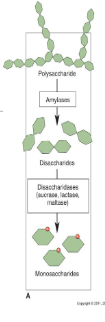
Composed of carbon, hydrogen and oxygen Classified according to size;
1. Monosaccharides- single (mono) sugars- glucose and fructose.
2. Disaccharides- double sugars - sucrose (table sugar), lactose
Shorter mono and disaccharides= SUGARS (Simple sugars-table sugar, fruit, and fruit juice)
3. Polysaccharides- many (poly) sugars linked- starches (pasta)
Longer chains- polysaccharides=STARCHES
◦ Starches-Found in bread, pasta, rice and potatoes
Cellulose (carbohydrate) cannot be digested, pass through the intestines undigested (provides fibre but no direct nutritional nourishment) - Found in bran, nuts, seeds, and raw fruits with skins
During digestion, most carbohydrates except
fibre, are broken down into sugars, which are
then absorbed into the bloodstream
Fat
•Composed of carbon, hydrogen and oxygen
•Provides energy, helps the body use certain vitamins (DEAK-fat soluble vitamins)
•Add flavour to food
•Some fat necessary in diet if not needed stored as body fat
•Enzymes called lipases digest fat- most
important is pancreatic lipase
•End products of fat digestion are fatty
acids and glycerol
Fats not soluble in water (clump together into large fat globules when added to water
•Bile (produced by liver, stored in gall bladder) splits large fat into tiny fat globules and prevents the fatty acids from reforming large fat globules in the
intestine before they can be absorbed
•Bile salts help the absorption of the fat-
soluble vitamins (DEAK)
Dietary Fat
From both animals and plants
Fatty acids- classified as saturated or unsaturated
Saturated-is solid at room temperature; primarily from animal sources
(Butter, lard, margarine -artificially hardened)
Unsaturated-is liquid (oil) at room temperature ( Coconut oil, olive oil, avocado oil)
Types of Dietary Fat
Saturated Fat (Unhealthy Fat)
◦ Found in animal and diary products (milk, butter, cheese, meat)
Unsaturated Fat (Healthy Fat)- mono and polyunsaturated fats ( fish and vegetable oils eg.canola and olive)
Trans Fat (Unhealthy Fat)-processed or hydrogenated good fat (margarine, shortening, cookies)
Liquid oil is chemically altered=more solid substance.
◦ Increases flavour and shelf life
Unsaturated is healthier than saturated and trans FAT
Health Canada recommends 20-35% total fat (poly, mono
400
What is BMR?
BMR = Basal Metabolic Rate
The amount of energy the body requires per unit time
to perform essential activities at rest is the basal metabolic rate (BMR)
resting metabolic rate (BMR)
•Breathing
•Kidney function
•Cardiac muscle contraction
Muscle mass, emotion, illness impacts your BMR
400
What is the Chain of Infection?
Chain of infection is:
chain of transmission that describes how infections spread
Pathogen Reservoir Portal of Exit (sneezing, mosquito/animal bite) Mode of Transmission (direct contact (shake hands, touch surface), droplets (short range spray), airborne (suspended in air) Portal of Entry (how pathogen enters body) Susceptible Host
400
What is melanin?
Melanin is
produced by melanocytes (in epidermis)
responsible for colour of skin, hair and eyes
increased secretion of melanin to protect from UV radiation (sunburn. tan)
400
What type of immunity are B and T cells part of.....
What is..
500
What is the function of vitamins?
Vitamins
•Needed daily for normal function and growth
•Help to regulate cell metabolism.
•Do not provide calories.
•Fat soluble vitamins- DEAK, body stores fat soluble vitamins, risk of toxicity
•Water soluble vitamins-Vit B (s), Vit C- most often not stored by the
body but excreted in the urine
Caution- mega dosing with water soluble (vitamin C) can lead to toxicity
• Each vitamin is needed for a specific body
function
• Essential part of a healthy diet
• Lack of specific vitamin = illness (Scurvy, Pellagra, Rickets)
• Elderly are at risk of vitamin deficiency
because the body has reduced ability to
absorb certain vitamins
Vitamins
Herlihy pg. 452 Table 23.2
Folic Acid-Formation of RBC, intestinal function
Vit. C-healthy blood. vessels, skin, gums, bones, teeth, wound healing, resistance to infection
Vit D-Absorption and metabolism of Calcium and Phosphorus, healthy bones
Vit E- normal reproduction, formation of RBC, muscle function
Vit K-Blood clotting
Vit A-growth, vision, skin, hair, immune system
Vit B1-muscle tone, nerve function,
digestion, appetite, normal elimination
Vit B2-growth, vision, protein and CHO metabolism
Vit B3 (Niacin)-healthy skin and mucous membranes
Vit B12-formation of RBC, nervous system function
500
Identify three 3 general nutrition facts.........
General Nutrition Facts
1. Low sodium, high potassium- May reduce the risk of high blood pressure
2. Adequate calcium and Vit D-May reduce the risk of
Osteoporosis
3.A healthy diet low in saturated fat and trans-fat reduce the
risk of heart disease
4. A healthy diet rich in vegetables and fruit- May reduce the risk of some cancers
5. Caffeine Intake
Health Canada recommendations? (400 mg or 3 cups per day- adult) (Government of Canada 2022)◦
6. Food Allergies: Always ask "Do you have food allergies
or sensitivities?
500
How can you break Chain of Infections?
Hand hygiene
Vaccination
PPE
Environmental cleaning (High Touch)
Respiratory Etiquette (Covering coughs or sneezes)
500
What are liver spots?
Liver spots are....
flat, brown or black spots on skin frequently exposed to sun
have nothing to do with the liver (similar in colour to liver)
500
What is an example of an environmental reservoir in the chain of infection.....
What is....where a pathogen can live and multiply
on environmental surfaces, equipment, body fluids (blood, saliva, urine, feces), people (carriers, sick individuals), soil, water, food, animals and contaminated medical equipment
600
What factors affect eating and nutrition across the life span?
•Personal choice
•Allergies
•Food intolerances
•Culture
•Religion
•Finances
•Appetite
•Illness
•Age
600
List three (3) terms related to Nutrition.......
Terms related to Nutrition
1. Malnutrition- starvation or profound weight loss caused by a calorie deficiency
2. Cachexia- extreme wasting
◦ Often seen in clients with terminal illnesses example Cancer
3. Severe anorexia, bulemia and altered metabolism
depletion of fat and protein stores=results in dramatic weight loss and starvation
700
What are the PSWs responsibilities when caring for a client with dysphagia?
Dysphagia means difficulty swallowing.
◦ Food thickness is changed to meet the
client’s needs.
◦ The doctor, speech-language pathologist,
occupational therapist, dietitian, and nurse
choose the right food thickness.
When feeding the client with dysphagia, you
must:
1. Know the signs and symptoms of dysphagia.
2. Feed the client according to the care plan.
3. Follow aspiration precautions.
4. Report changes in how the client eats.
5. Report choking, coughing, or difficulty
breathing during or after meals at once.
6. Report abnormal breathing or respiratory
sounds at once.
7. Maintain in upright position for 1 hr pc meals.
700
What are three (3) facts about nutritional nutritional needs across the Lifespan?
Facts about Nutritional Needs Across the Lifespan
1.Infancy
◦ Rapid growth and development
◦ Breast or bottle fed
◦ Finger foods by 1 yr.
2.Childhood
◦ May have likes and dislikes
◦ Fat is needed for brain development and energy
3.Adolescence
◦ Biggest growth spurt after infancy- require increased nutrients
4.Young and Middle Adulthood
◦ Nutritional requirements depend on age,
gender, body size and activity
5.Pregnancy
◦ Require nutrient rich food and approximately
500 additional calories per day
◦ Recommend increase in folic acid, iron and
calcium intake before and during pregnancy
800
What should the PSW consider when assisting with Meal Planning?
Meal Planning Questions to Consider?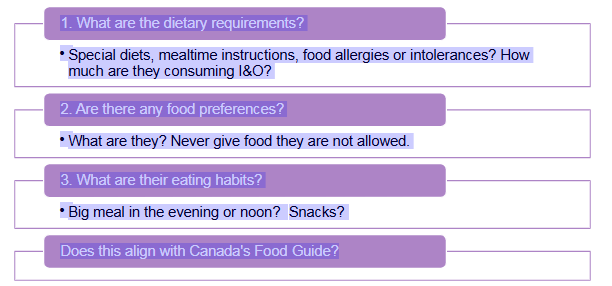
800
What factors impact the nutrition of the elderly?
Facts to consider:
1. Interest/appetite
2. Ability of getting food
◦ illness
3. Income
4. Likes/dislike if in LTC
5. Culture/religion
6. Normal losses related to aging-smell, taste, chewing, dysphagia, reduced saliva
7. Allergies/Intolerances
8. Diseases
9. Lower energy levels-fewer calories needed to sustain weight
10.Nutritional requirements remain high-may not absorb vit B12 and Iron and Ca as efficiently due to reduced digestive enzymes
11. High protein-tissue growth and repair
12. Calcium-bone health
13. Fibre-avoid constipation 14. Fluid intake d/t decreased thirst -dehydration. swallowing, constipation
900
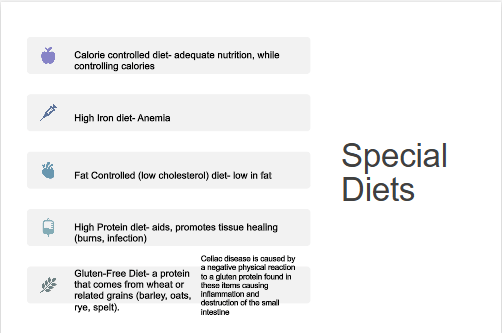
Provide examples of three special diets ordered because of nutritional deficiency, weight or disease.
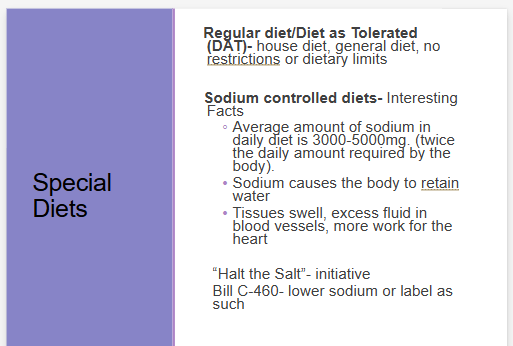
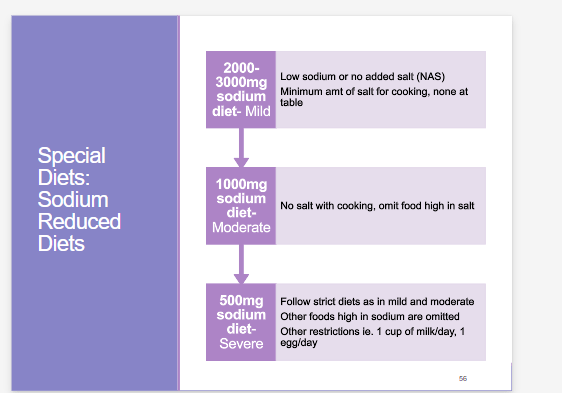
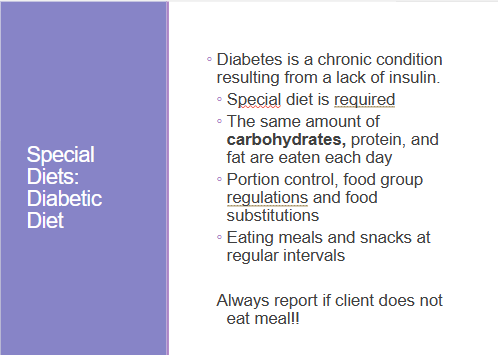
Special Diets:
900
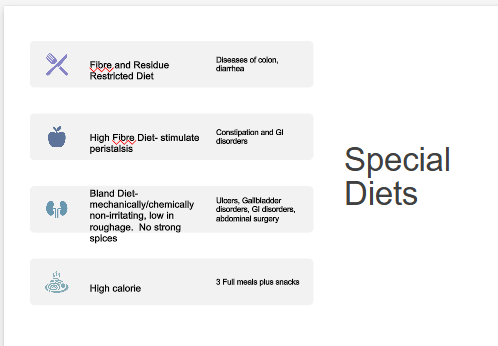
Identify at least the rational for 8 other special diets.....
1000
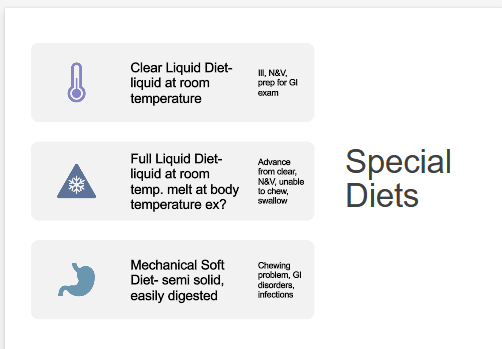
Identify differences between clear liquid diet, full liquid diet and mechanical soft diet and the reasons for prescribing these diets....
1000
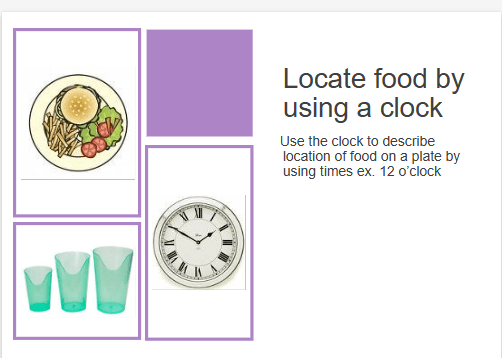
How would you set up food for a client who has significant visual impoairment?
1100
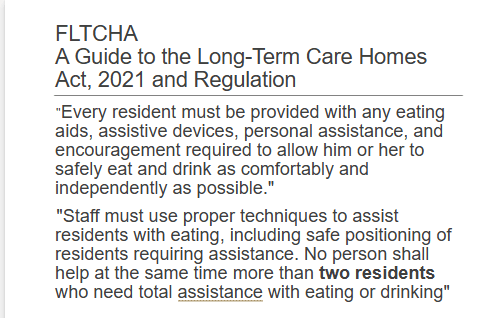
How many residents does the Ontario, Ministry of Long-term Health Care (MOLTHC) regulations indicate that a PSW can assist and feed at a time?
1100
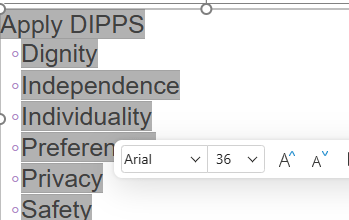
DIPPS means .......
DIPPS describes the PSW's role when supporting client nutrition
1200
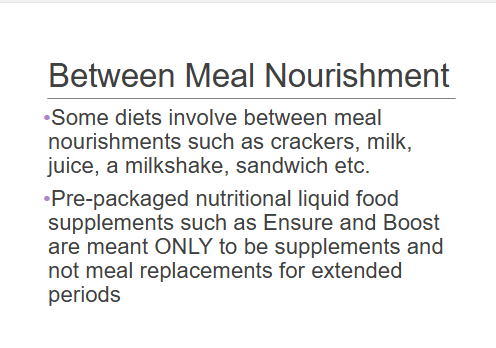
Boost and Ensure are meal replacements for extended periods.
True
False
False
1200
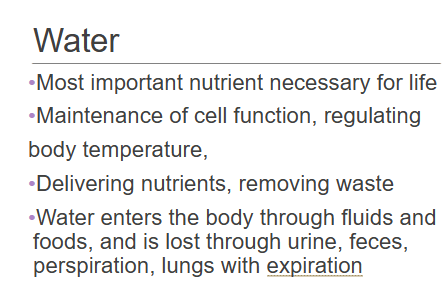
Water is not an important nutrient for life.
True
False

1300
A PSW does not need to know how to monitor fluid balance when when providing patient care.
True
False
False
1300
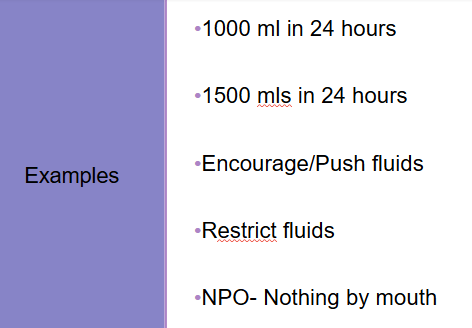
What is the daily fluid requirement for an adult?
What is....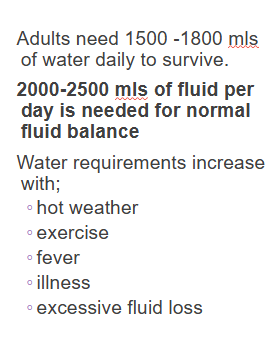
1400
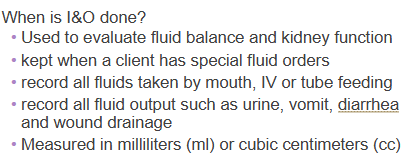
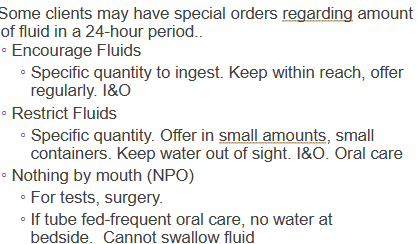
When is fluid intake and output monitored?
1400
Mrs. Carver (8-Hour Shift: 0800–1600)
Mrs. Helen Carver, an 82-year-old resident in a long-term care facility, is assigned to you for the 0800–1600 shift. She has an indwelling Foley catheter due to chronic urinary retention. She is oriented to self only and requires full assistance with activities of daily living. Her daily fluid goal is 1500 mL.
At 0800, you administer her morning medications. She drinks 120 mL of water with her pills.
Around 0900, breakfast is served. With her meal, she drinks a 240 mL cup of coffee and a 180 mL glass of orange juice.
At 0830, you check her Foley catheter. The drainage bag contains urine that you empty and measure at 250 mL. The urine appears clear yellow.
Before lunch, at 1130, the catheter bag is fuller again. You empty and measure 300 mL of pale yellow urine.
Lunch arrives at 1200. She drinks a 240 mL glass of iced tea and consumes a 180 mL bowl of broth-based soup, which should be counted toward her fluid intake.
At 1300, she has a soft, formed bowel movement. You document it, but it does not count toward intake or output totals.
At 1400, she accepts an additional 120 mL of water when you offer fluids.
At 1500, you check her catheter again. The urine appears slightly darker than earlier. You empty and measure 200 mL.
She has no vomiting, no wound drainage, and no IV fluids running this shift.
Calculate:
Total fluid intake for the shift (mL)
Total urinary output for the shift (mL)
Net fluid balance (intake minus output)
Total Intake: 1,080 mL
Total Output: 750 mL
Net Balance: +330 mL