Read the Map
Latitude and Longitude
Seasons
Geography 101
100
What number is at 30 N and 100 W?

1
100
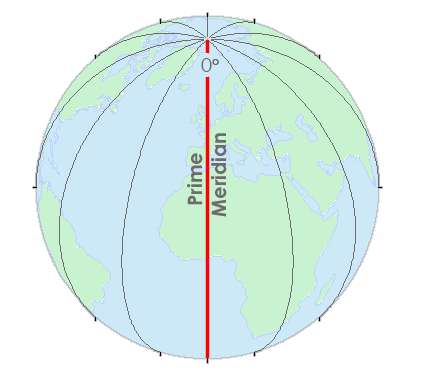
True or False: The dividing lines between the Eastern Hemisphere and Western Hemisphere are the prime meridian and the 180th meridian.
True
100
True or False: In July, the Northern Hemisphere is pointed away from the sun.
False.
In July, the Northern Hemisphere would be pointed toward the sun because it would be our summer.
100
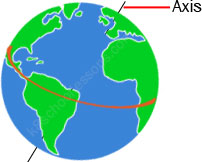
True or False:
An imaginary line from North to South through the earth's center is called an AXIS.
True.
200
What number is at 45 N and 20 E?
4
200
What letter represents the North Pole?

A
200
True or False: The spring equinox is May 22.
False
It is March 21.
200
The deepest floor of the ocean is the ______________Trench.
a. Nairobi
b. Victorian
c. Marianas
d. Apollo
c. Marianas
300
What number is at 30 N and 20 E?
3
300
What letter represents the South Pole?
I
300
True or False:
The shortest day of the year in the Northern Hemisphere is December 21.
True.
On December 21, the Northern Hemisphere is tilted away from the sun.
300
The contiguous United States has ____ time zones.
a. 1
b. 4
c. 2
d. 3
b. 4

400
What number is at 45 N and 80 E?
6
400
What letter represents the Prime Meridian?
L
The Prime Meridian is at 0 degrees longitude.
400
True or False:
Leap year occurs every 4 years.
True.
We have to add an extra day every four years because it takes the earth 365 1/4 days to make a complete revolution around the sun.
400
What is the imaginary line called that separates two consecutive calendar days and is located at 180 degrees longitude?
a. Daylight Saving Line
b. International Date Line
c. Prime Meridian
d. Equator
b. International Date Line

500
What number is at 30 N and 20 W?
2
500
Lines of latitude and longitude are also called:
a. lats and longs
b. parallels and meridians
c. contour and convex lines
b. parallels and meridians
500
The earth's axis, which determines the seasons, is tilted at ______________ degrees.
a. 26 1/2
b. 24 1/2
c. 32 1/2
d. 23 1/2
d. 23 1/2 degrees
500
Which is NOT one of the benefits of Daylight Saving Time?
a. saves energy
b. prevents crime
c. prevents traffic injuries
d. people stay home more
d. people stay home more