Phase Change
Particle Model
Physical vs. Chemical Change
Patterns, Trends and Anomalies
100
Classify the phase change when water is placed in the freezer.
Freezing.
100
Classify the following state of matter from the particle diagram:
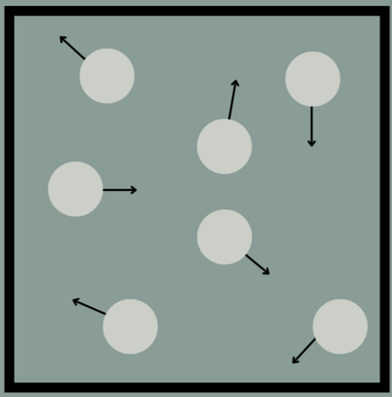
Gas
100
Classify if condensation is a physical or chemical change.
Physical.
100
Classify what an anomaly is.
Data that deviates (is different) from the trend/what is expected.
200
During a phase change, identify what happens to the temperature of the solution:
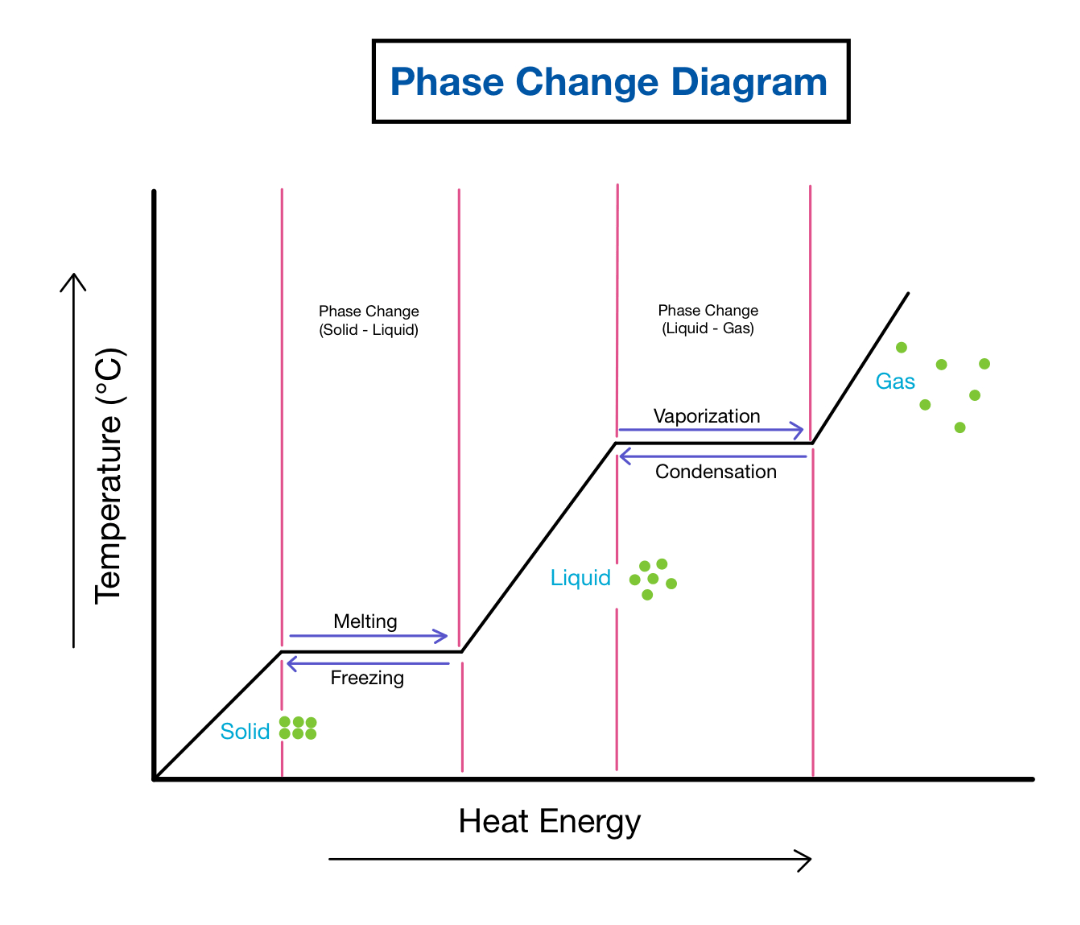
It stays the same.
200
Classify what happens to gas particles when they are placed in a larger container:
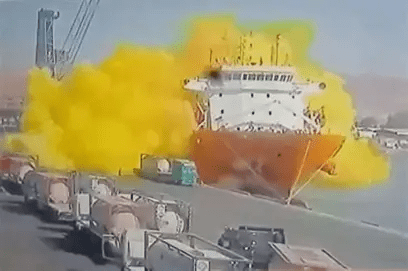
They expand to fill the new container/space.
200
Identify the four indicators of a chemical change.
Temperature change, colour change, gas production and precipitate forming.
200
Identify the anomaly in graph 2 based on graph 1 data:
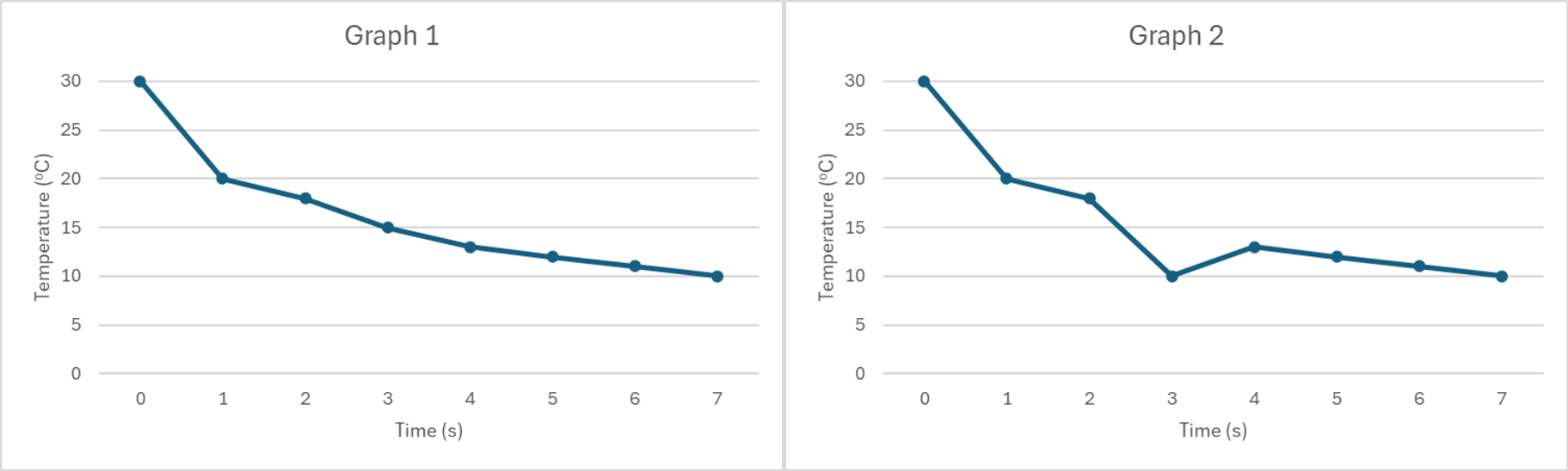
The anomaly occurs at 3 seconds where graph 2 is significantly lower than graph 1.
300
Classify the 6 phase changes discussed this term.
Melting, Freezing, Evaporation, Condensation, Sublimation, Deposition.
300
Identify the temperature where water particles lose/gain enough energy to: a) freeze and b) evaporate.
0oC and 100oC.
300
Iron was reacted with hydrochloric acid in a test tube. The iron changed colour from grey to brown and bubbles were observed. The test tube also felt warm. Classify the change as physical or chemical, using evidence to support your answer.
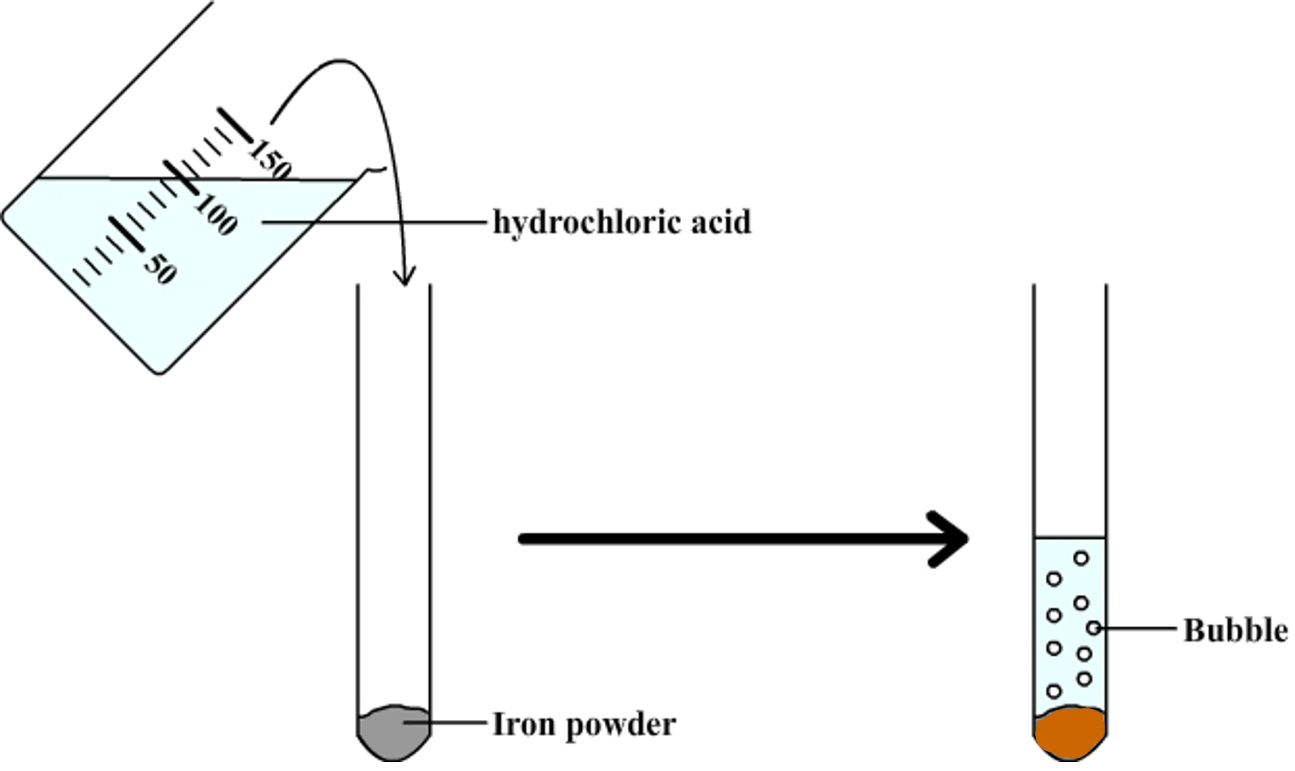
The reaction is chemical. The bubbles represent gas being produced, while the colour change and temperature increase are also indicators of a chemical reaction. This is an exothermic reaction as heat is released.
300
Identify the features of a graph that can make it inaccurate:
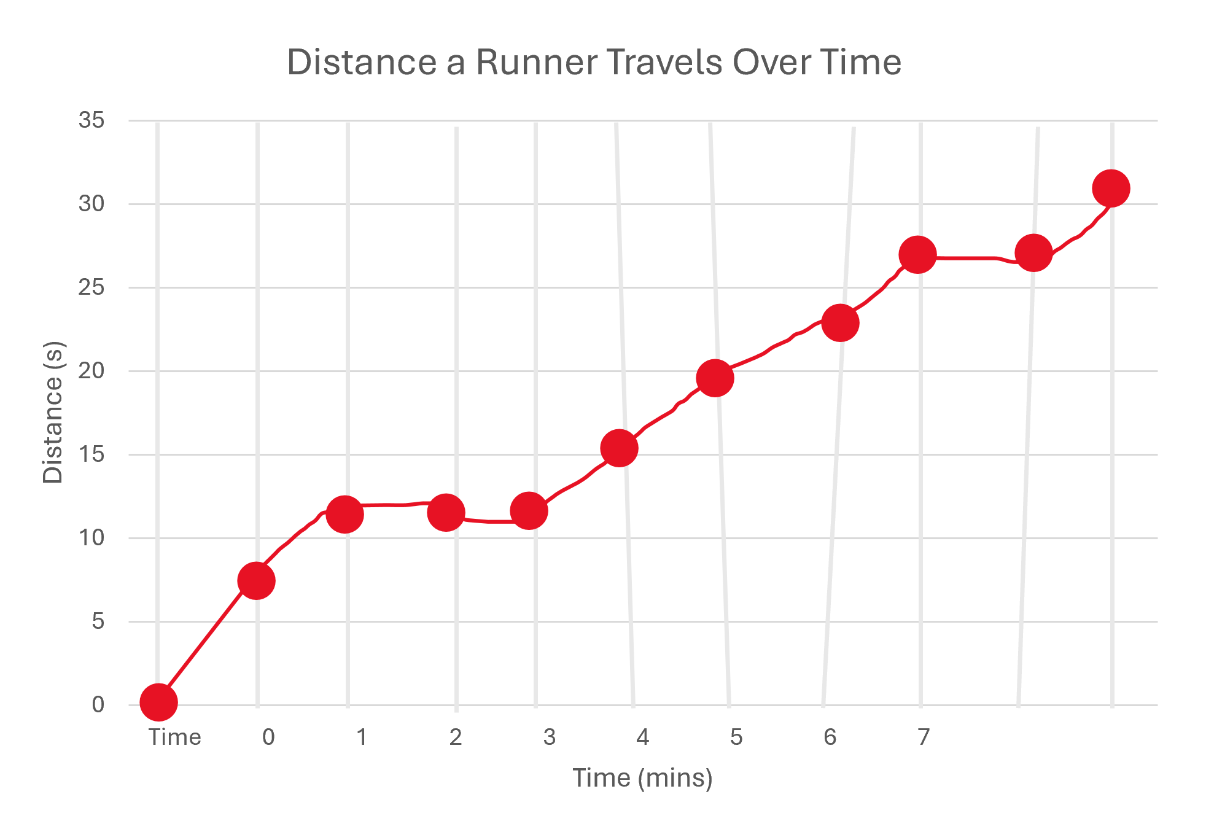
Hand drawn, inconsistent axis, incorrect/missing labels, curved lines joining points
400
Classify the following phase change:
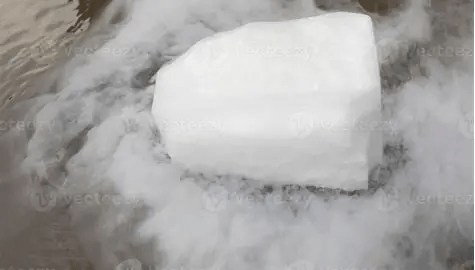
Sublimation.
400
Identify the three types of phase change where the following description of particles would apply:
"Particles gain energy and move further apart."
Melting, Evaporation and Sublimation.
400
Explain why temperature alone is an unreliable indicator of whether a reaction is physical or chemical.
Both chemical and physical reactions can change temperature, the difference being physical reactions require a heat source.
400
Identify if the graph is proportional or not. Use evidence to explain your answer.
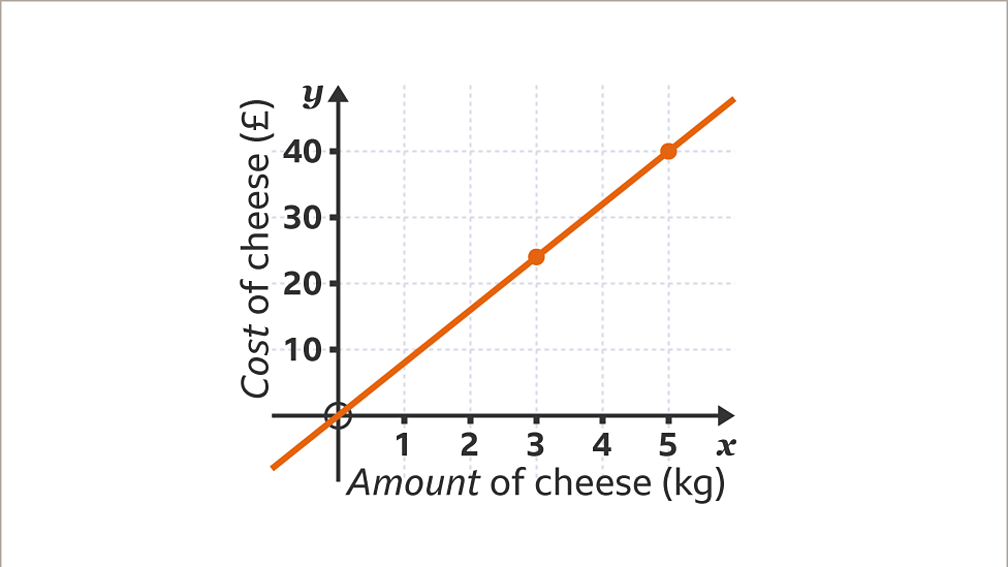
The graph is proportional as it increases at the same rate, meaning it looks like a straight line.
500
Classify the phase change when particles in a gas lose enough energy to become a solid straight away.
Deposition.
500
Explain what happens to the particles of water vapour during the condensation process.
They lose energy, slow down and move closer, causing them to transition from a gas to a liquid.
500
A car burns petrol, producing light and heat in the engine during combustion. Use evidence to evaluate whether this is a physical or chemical change.
This is a chemical change. Heat is produced without a heat source, meaning an energy change has occurred. This is an exothermic reaction. Energy is also released as light.
500
Analyse the graph and describe the pattern and trend in the data:
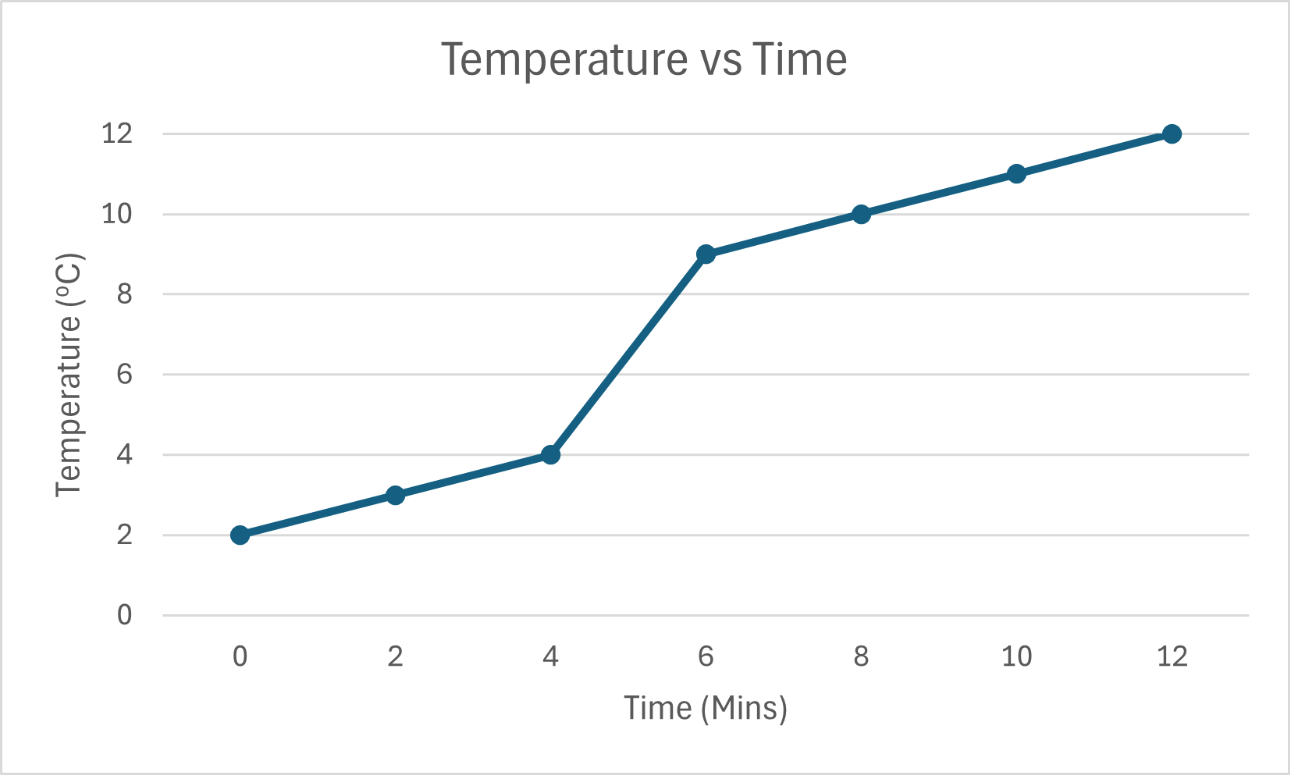
Trend - temperature increases over time from 2oC to 12oC.
Pattern - from 4-6 minutes the temperature rises rapidly, increasing from 4oC to 9oC which is significantly more rapid than the rest of the graph.