Astronomical Seasons
Noongar Seasons
Tides
Moon Phases
Eclipses
10
Earth spinning on its axis is called...
Double Point Bonus: How long does one full spin take?
Rotation
DPB: 24hours
10
How many seasons are there in the Noongar Calendar
6
10
What causes tides?
The moon's gravity pulling on Earth's oceans
10
What causes day and night?
DPB: What is Earth's tilt?
The rotation of the Earth
DPB: Earth’s tilt (also called its axial tilt) is the angle between Earth’s rotational axis and an imaginary line perpendicular to its orbit around the Sun. Earth's tilt is ~23.5 degrees.
10
What type of eclipse is this?
DPB: When can this type of eclipse occur?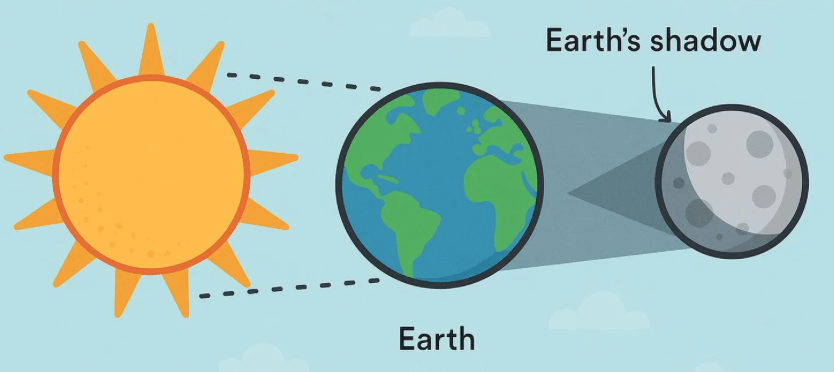
Lunar Eclipse
DPB: During a Full Moon
15
One full orbit of the sun is called...
Double Point Bonus: How long does it take for Earth to complete one orbit?
A revolution
DPB: 365.25 Days
Extra bonus 15 points: What are leap years and why do they occur?
15
Name each of the Noongar Seasons
Double Point Bonus: Also give the months of each season
Birak - DEC/JAN
Bunuru - FEB/MAR
Djerba - (APR/MAY)
Makuru - (JUN/JUL)
Djilba - (AUG/SEP)
Kambarang - (OCT/NOV)
15
Most places on Earth experience how many high tides every day?
Double Point Bonus: give a definition for 'high tide'
2
DPB: High tide is the daily cycle when the Earth's ocean waters rise to their highest level.
15
What is the term used to describe the moon moving from a new moon to a full moon?
DPB: What is the term used to describe the moon moving from a full moon to a new moon.
Waxing
DPB: Waning
15
What kind of eclipse is this?
DPB: What is the name for the darkest part of the moon's shadow and the lighter part of the shadow?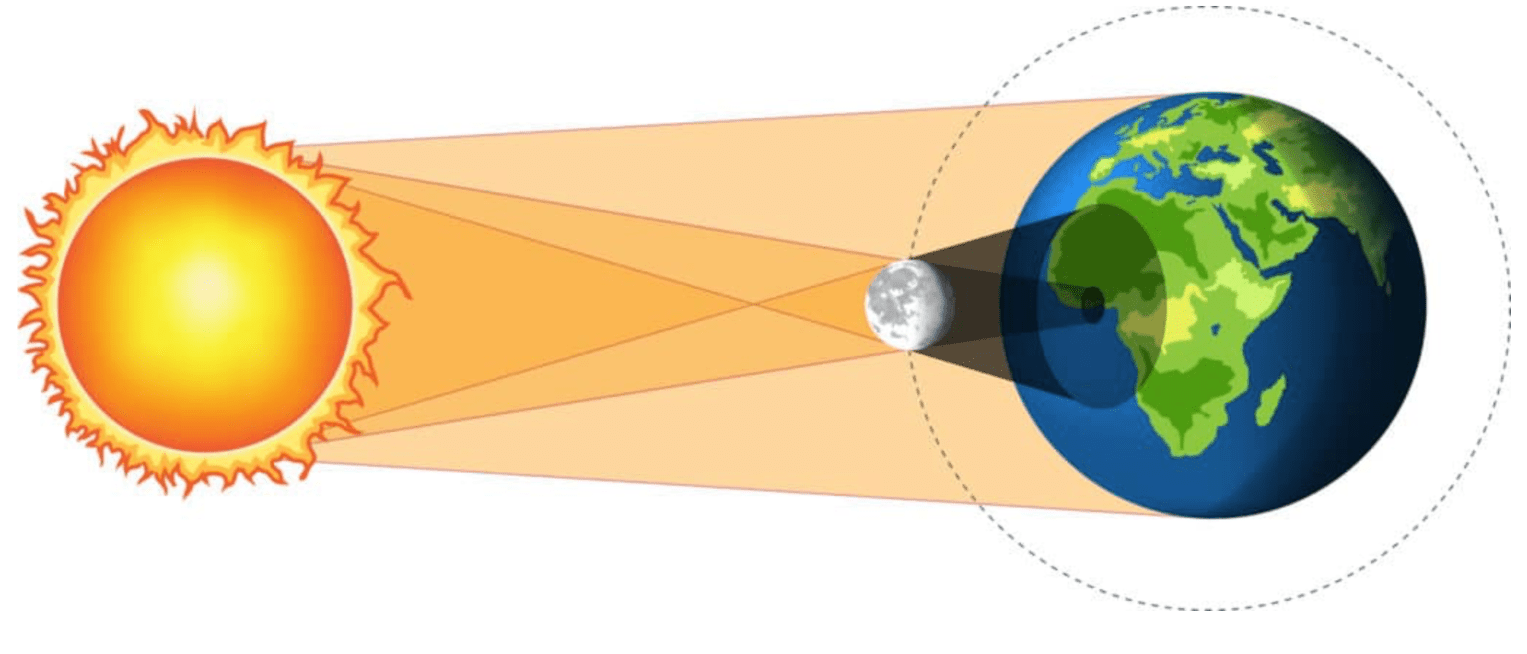
Solar Eclipse
DPB: Umbra (darkest), penumbra (lighter)
20
Which season is the Northern Hemisphere experiencing? (DBP: Explain why)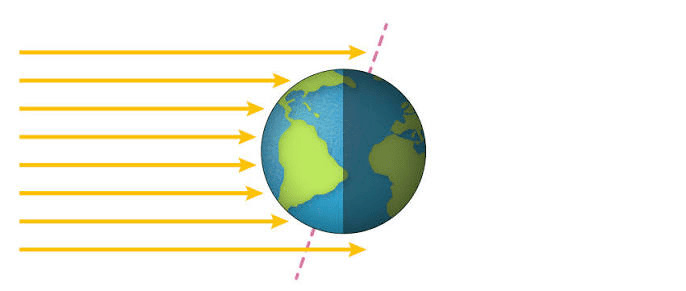
Winter
DBP: the northern hemisphere is tilted away from the sun and so receives less direct sunlight/solar energy.
20
Which season is this?
Night-time temperatures begin to drop and conditions become more humid, with a mix of cool, wet days returning. During this period, traditional shelters were often maintained and reinforced, ensuring they were properly weatherproofed and positioned correctly in preparation for the colder, wetter months ahead.
Djeran
20
Show where the moon would be during a Neap Tide.
DPB: State which phases of the moon are associated with neap tides
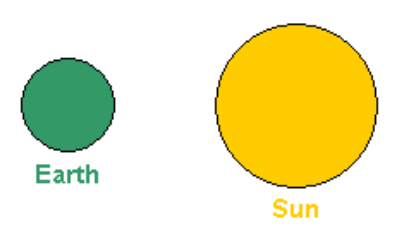
At a right angle to the sun (either directly above or below the moon)
DPS: First and Third Quarter
20
How long does it take for the Moon to orbit the Earth?
DPB: Explain why only one side of the moon is ever seen from Earth.
~29 days
DPB: The rotation and revolution of the moon are the same length. This means that as the moon revolves around the Earth its rotation keeps the same side of the moon facing Earth.
20
Explain the difference between a total and partial eclipse.
DPB: how long does a total solar eclipse last compared to a total lunar eclipse?
A total eclipse occurs when one celestial body completely blocks the light from another. In a solar eclipse, the Moon fully covers the Sun as seen from Earth, placing the observer in the umbra (full shadow). This causes the Sun to be entirely obscured for a short time.
A partial eclipse occurs when only part of the light source is blocked. In a solar eclipse, the Moon covers only a portion of the Sun, so the Sun remains partly visible. Observers are located in the penumbra (partial shadow), where only some of the Sun’s light is blocked.
In summary, the key difference is:
- Total eclipse = complete blocking of the light source (umbra)
- Partial eclipse = only part of the light source is blocked (penumbra)
DPB: SE: ~7min LE: ~1 hour
25
Label the seasons in the Southern Hemisphere
DPB: Explain why the seasons are opposite in the Northern Hemisphere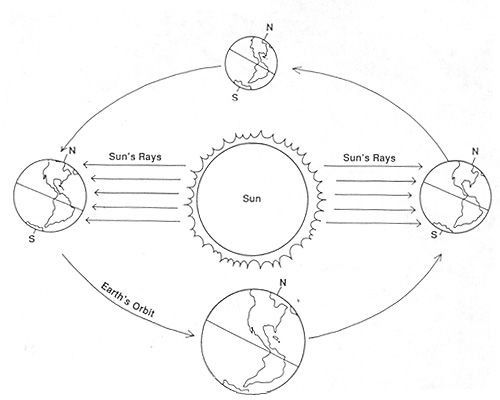
Starting from the top: autumn, winter, spring, summer.
DPB: Seasons are opposite in the Northern Hemisphere because Earth is tilted on its axis. As Earth orbits the Sun, one hemisphere tilts toward the Sun and gets more direct sunlight (summer), while the other tilts away and gets less sunlight (winter). Half a year later, they switch, so the seasons are reversed between hemispheres.
25
Which season is it?
"Rainfall starts to decline and the warmer weather steadily becomes more established. In the afternoons, cooling breezes commonly move in from the southwest, helping to moderate the temperature. This time was also recognised as a fire season, when Country was traditionally burned in carefully managed mosaic patterns to care for the land and support regeneration."
Birak
25
Define the term spring tide and explain why they only occur during the Full Moon or the New Moon
Spring tides occur during the Full Moon and New Moon because of how the gravitational forces of the Moon and Sun align with Earth.
During these two lunar phases, the Sun, Earth, and Moon are in a straight line:
- At a New Moon, the Moon is between Earth and the Sun.
- At a Full Moon, Earth is between the Moon and the Sun.
This combined pull causes the strongest tidal effect, producing:
- Higher high tides
- Lower low tides
This is why spring tides are more extreme and only happen during the Full Moon and New Moon phases.
25
This word is used to describe the moon when exactly half of the face appears lit up when seen from Earth.
DPB: How many times does this happen in one Moon Cycle? What are the full names of these moon phases?
Quarter.
DPB: Twice. First Quarter when the moon is waxing and Third Quarter when the moon is waning.
25
Why do annular eclipses occur?
Annular eclipses occur during a solar eclipse when the Moon passes directly between Earth and the Sun but does not completely cover the Sun’s disk.
This happens because the Moon’s orbit around Earth is slightly elliptical, meaning its distance from Earth changes. When the Moon is near apogee (its farthest point from Earth), it appears smaller in the sky. As a result, even when it is perfectly aligned with the Sun, it is not large enough to fully block it.
Instead, the outer edges of the Sun remain visible as a bright ring, known as the “ring of fire” or annulus.
30
What is an equinox? Explain how it relates to seasons
An equinox is a point in Earth’s orbit around the Sun when the Sun is positioned directly above the Equator, resulting in nearly equal amounts of daylight and night (about 12 hours each) across the world. This occurs twice a year, in March and September.
Equinoxes are important for seasons because they marks the transition between Summer and Winter. In the Southern Hemisphere, the March equinox occurs during autumn and the September equinox occurs during spring. Both hemisphere receives equal solar energy resulting in warming of the region after the winter season or cooling after the summer season.
30
Explain which Noongar season is most similar to the European understanding of Spring.
Djilba is most like European spring. In Djilba the weather is cool at the start but gradually becomes warmer and drier, similar to spring in Europe where temperatures increase after winter.
During Djilba, plants begin to flower and grow again, and animals become more active, providing resources such as fresh plant foods, seeds, and increased animal food sources.
A good place to live during this season is near wetlands and river systems, where water is still available but the land is beginning to dry and food resources are increasing.
30
What do the terms "average tides" and "extreme tides" mean?
Average (or Moderate) tides refer to the normal daily tidal conditions where the difference between high tide and low tide is neither very large nor very small (small tidal range). This usually happens during neap tides, when the gravitational pulls of the Moon and Sun are acting at right angles to each other, partially cancelling each other out.
Extreme tides refer to tides with a much larger difference between high and low tide (large tidal range). These occur during spring tides, when the Sun, Earth, and Moon are aligned and their gravitational forces combine to create a stronger tidal pull.
30
Label the moon phases:

30
Why do eclipses only have a chance to occur a couple of times each year, even though the Moon orbits Earth every month?
Eclipses only occur at most a few times a year because the Moon’s orbit around Earth is tilted by about 5° relative to Earth’s orbit around the Sun. This means that most of the time, the Sun, Earth, and Moon are not perfectly aligned, so the Moon’s shadow usually passes above or below Earth (for a solar eclipse) or Earth’s shadow misses the Moon (for a lunar eclipse).
For an eclipse to happen, the Moon must be at or very close to one of the two points where its orbit crosses Earth’s orbital plane, and it must also be a new moon (solar eclipse) or full moon (lunar eclipse). These precise alignment conditions only occur during specific periods called eclipse seasons, which happen about twice a year.
That is why, even though the Moon orbits Earth every month, eclipses are relatively rare and can only happen a limited number of times each year.
35
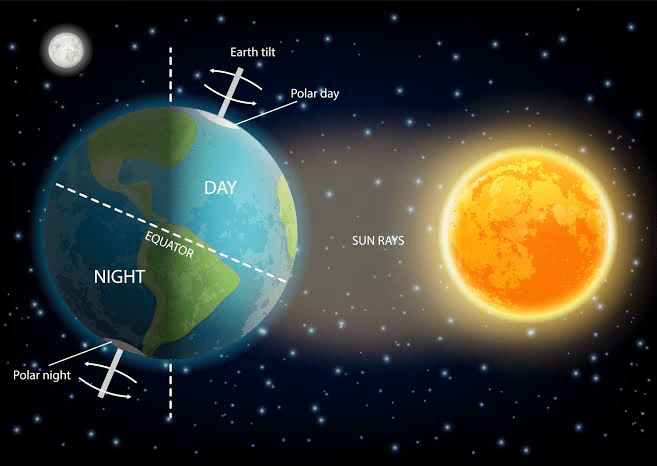
What is Polar Day and Polar Night and why do they happen?
Polar Day happens during a hemisphere's summer. That pole is tilted toward the Sun, keeping it above the horizon all day and night.
Polar Night happens during a hemisphere's winter. That pole is tilted away from the Sun, meaning it never rises above the horizon.
35
Explain which Noongar season is most similar to the European understanding of winter.
Makuru is most like European winter. During Makuru the weather is cold, wet, and windy, similar to winter in Europe where temperatures drop and there is frequent rain.
During this season, water becomes abundant as rivers, swamps and wetlands fill, making it easier to access freshwater and food resources such as fish, frogs, and waterbirds.
Because of the wet conditions, a good place to live is near higher, well-drained ground rather than low-lying flood areas. People would also use sheltered areas away from strong winds and flooding.
35
On the graph mark the tide types and phases of the moon
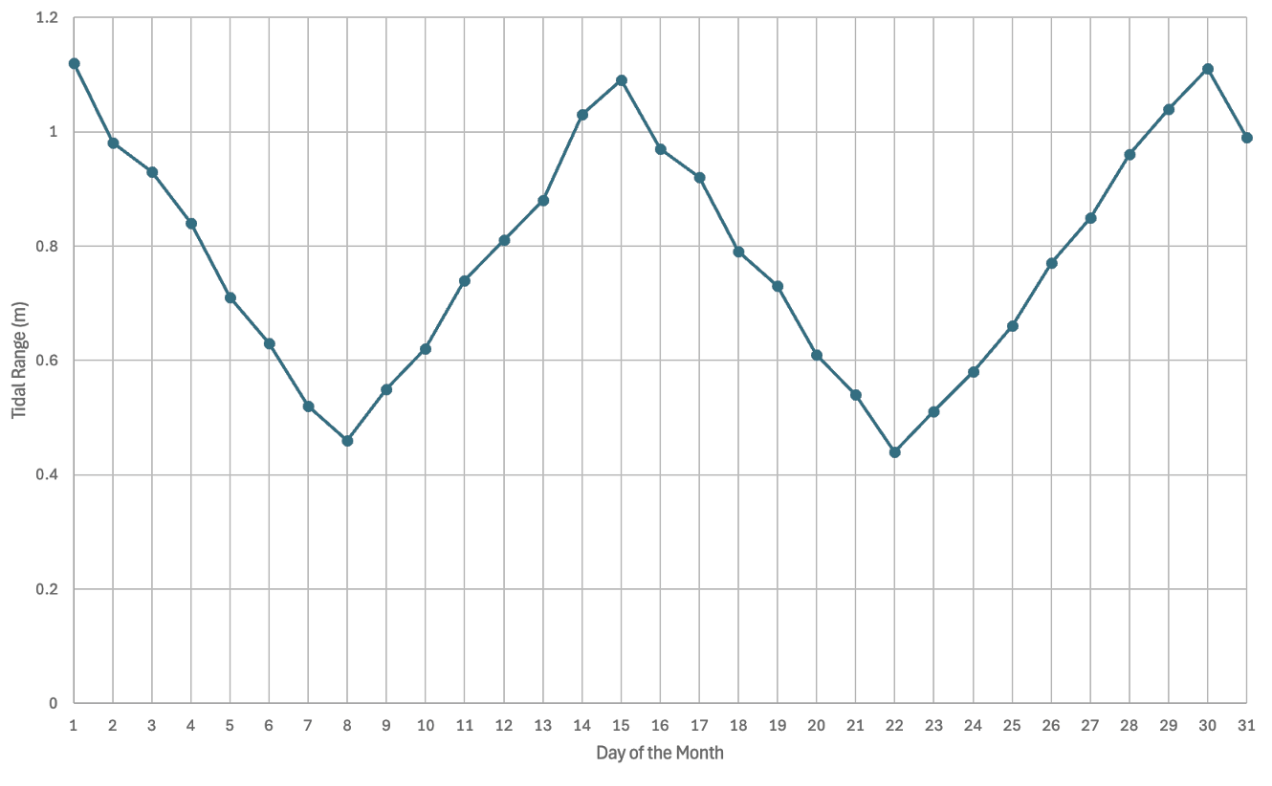
Teacher to mark
35
Explain why the phases of the moon look different from the Northern Hemisphere.
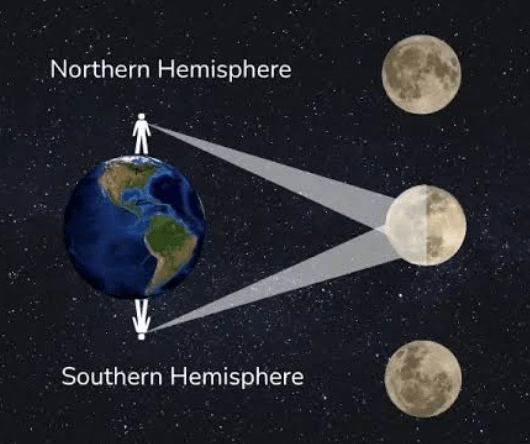
35
Explain why the shadow during an eclipse has an umbra and penumbra.
The shadow during an eclipse has an umbra and a penumbra because the light coming from the Sun is coming from a large light source, not a single point.
The umbra is the central part of the shadow where the light source is completely blocked. In this region, the Sun is fully covered by the Moon (solar eclipse) or Earth (lunar eclipse), so it appears very dark and produces a total eclipse if you are located there.
The penumbra is the outer part of the shadow where the light source is only partially blocked. In this region, only part of the Sun is obscured, so some light still reaches the observer, resulting in a partial eclipse.
Because the Sun has a wide disk in the sky, its light is blocked in different degrees depending on position, creating these two distinct shadow regions.