Science Inquiry Skills
Pure substances and mixtures
Separation techniques
Planets, moon and stars
Earth interactions
100
define independent, dependent and controlled variables within an investigation
independent- variable that is changed
dependent- variable that is measured
controlled - variables that remain the same throughout all trials to ensure a fair test
100
what is the difference in separation between pure substances and mixtures?
pure substances are either an element or compound. Mixtures can be physically or chemically separated
100
1. how does filtration work as a separation technique?
2. What do we call the liquid that passes through filter paper?
3. What do we call the solid left behind on filter paper?
1. Filtration using a medium to seperate larger particles from smaller ones.
2. filtrate
3. residue
100
Name the eight planets in order from the Sun.
Mercury, Venus, Earth, Mars, Jupiter, Saturn, Uranus, Neptune.
100
What causes day and night on Earth?
How long does it take Earth to rotate once on its axis?
1. rotation
2. 24 hours
200
A student investigated how the rate of a reaction was affected by temperature. Name the indepedent and dependent variables
independent: temperature
dependent: rate of reaction
200
1.What is the name for the substance that gets dissolved in a solution?
2. What is the name for the liquid that does the dissolving?
1. solute
2. solvent
200
How would you separate salt from salt water if you only want to recover the salt?
Evaporation (heat the solution until water evaporates, leaving salt behind).
200
What does “elliptic path” mean when talking about a planet’s orbit?
The orbit is oval-shaped, not a perfect circle.
200
1. what is a revolution?
2. how long does it take
1. a full orbit around the sun
2. 365 days
300
When designing a fair test, why is it important to change only one independent variable at a time?
so we only test the effect of the variable that is being changed
300
Is milk a solution, suspension, or colloid? Explain.
Colloid (particles are intermediate size; don’t settle but scatter light).
300
What is the difference between evaporation and distillation?
Evaporation: only recovers the solid solute. Distillation: recovers BOTH solvent (by condensing vapour) and solute.
300
What does it mean when a planet has “cleared its orbit”?
it has comepleted a full proper lap around the sun
300
why do we have leap years?
a revolution around the sun takes 365.25 days. every 4 years we compile the days and have an year with 366 days
400
A student draws a line graph of how the speed of a toy car changes over time as it rolls down a ramp. What belongs on the horizontal (x) axis of the graph?
time taken to roll
400
Explain why you can’t separate the components of a pure substance by physical methods.
Pure substances are held together by chemical bonds; physical methods can’t break chemical bonds.
400
Describe how you could use DIFFERENT separation techniques at home to make a cup of tea from tea leaves and hot water.
1) Steep tea leaves in hot water (dissolving/extraction).
2) Use a tea strainer or filter paper to separate leaves from liquid (filtration).
3) If you added sugar, it dissolves (solution).
4) If you over-steeped and have particles, let them settle then pour carefully (decanting).
400
Why do stars appear to move across the sky during the night?
Earth is rotating.
400
Explain how rotation, revolution, and Earth’s tilt work together to affect what we see in the sky.
Rotation causes day and night, revolution changes the star patterns we see through the year, and tilt affects seasons and how the Sun appears in the sky.
500
A student collects data on how many drops of water different brands of paper towel can hold before tearing. Which type of graph would be most suitable to display and compare the results for each brand?
bar graph- as the data is categorical not numerical
500
What are the missing terms from this tree- name and describe them
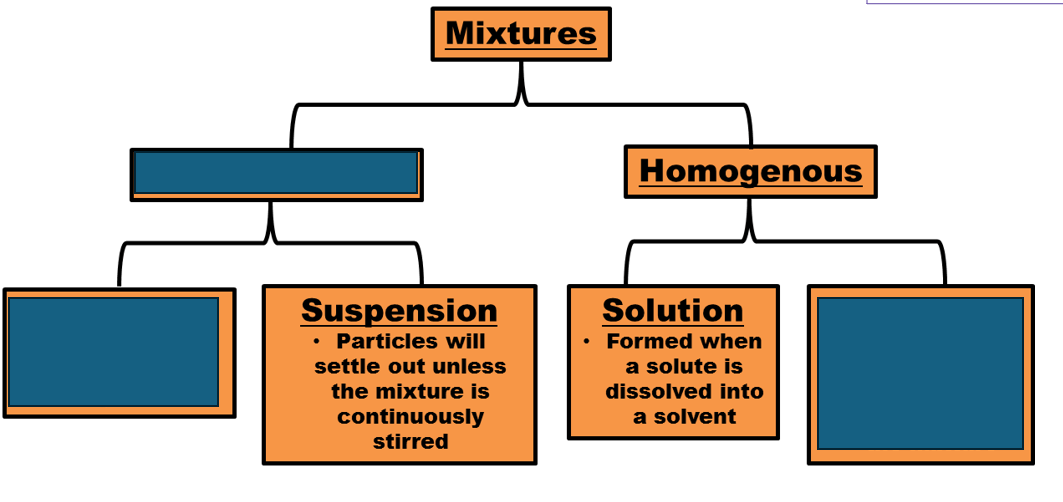
heterogenous
mechanical mixture - separated by hand
colloid- particles remain suspended in the mixture
500
Explain how particle size determines whether you use filtration, sedimentation/decanting, or distillation.
Large insoluble particles → filtration. Medium particles that settle → sedimentation/decanting. Dissolved particles (molecular size) → distillation.
500
why does earth orbit the sun and not other close-by surrounding planets with a large mass?
the sun contains 99.8% of all the mass in the solar system. Because of its large mass it has a higher gravitational pull, so the pull of the sun is greater than the pull of the planets surrounding earth
500
Why do different parts of Earth experience day and night at different times?
Because Earth is rotating, so different places face the Sun at different times.
600
What are the trends or patterns you see within this graph?
What does this pattern tell you about the relationship between day and hot dogs sold?
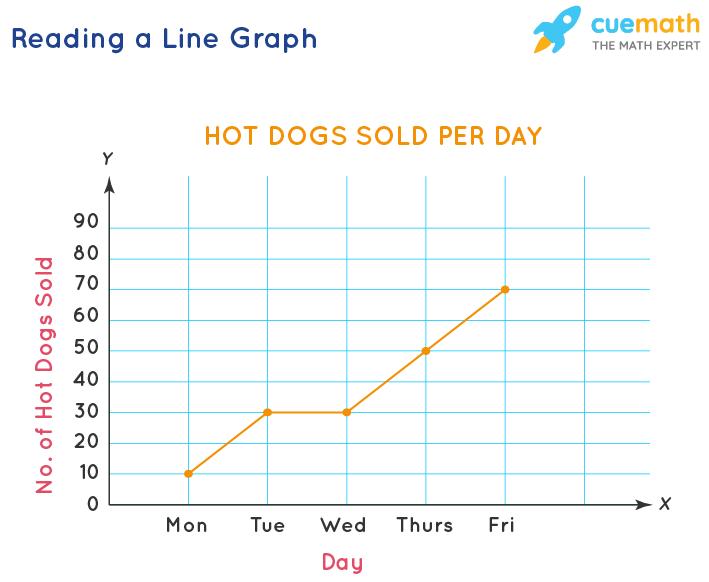
there is a steady increase of sales from Monday- Friday. With Friday peaking at 70 hot dogs sold. This tells us that Friday is a popular day for hot dog sales
600
A cloudy mixture becomes clear after 2 hours with particles at the bottom. What type is it? Why?
Suspension. Particles are large enough to settle due to gravity.
600
Why is chromatography used in forensic science to analyse ink from a ransom note?
Different inks separate into unique patterns of colours, allowing comparison to match or rule out specific pens.
600
Why is the Sun called a star and not a planet?
It makes its own light and heat, while planets reflect light from the Sun.
600
as the earth rotates on its axis, different parts of the sky become visible
700
What do all graphs need?
- title with IV and DV in name
- axis titles with units
- accurate scale
- data plotting
700
Which of these two solutions are closer to saturation point? How do you know? use the words particle, concentrated, dilute, solvent and solute in your answer.
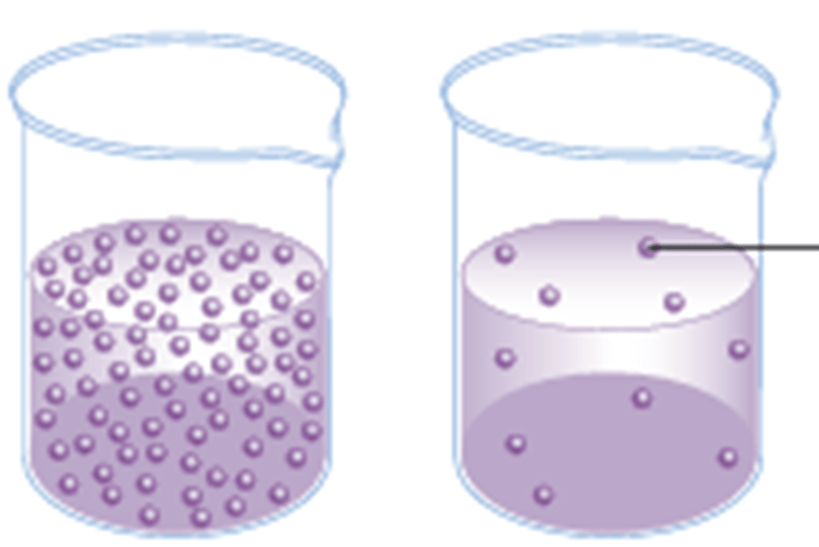
the beaker on the left is closer to saturation point. It has more particles of the solute within the solvent making it more concentrated than the beaker on the right. Saturation point is when no more solute can possibly dissolve within the solvent
700
Separate: salt, sand, iron filings, sawdust and water. Give complete procedure with reasoning.
1) Magnet → remove iron (magnetic). 2) water → salt dissolves. 3) Skim sawdust (floats). 4) Filter → remove sand. 5) Evaporate/distill → recover salt
700
what is the deciding factor in a stars life cycle? what do stars become as they age?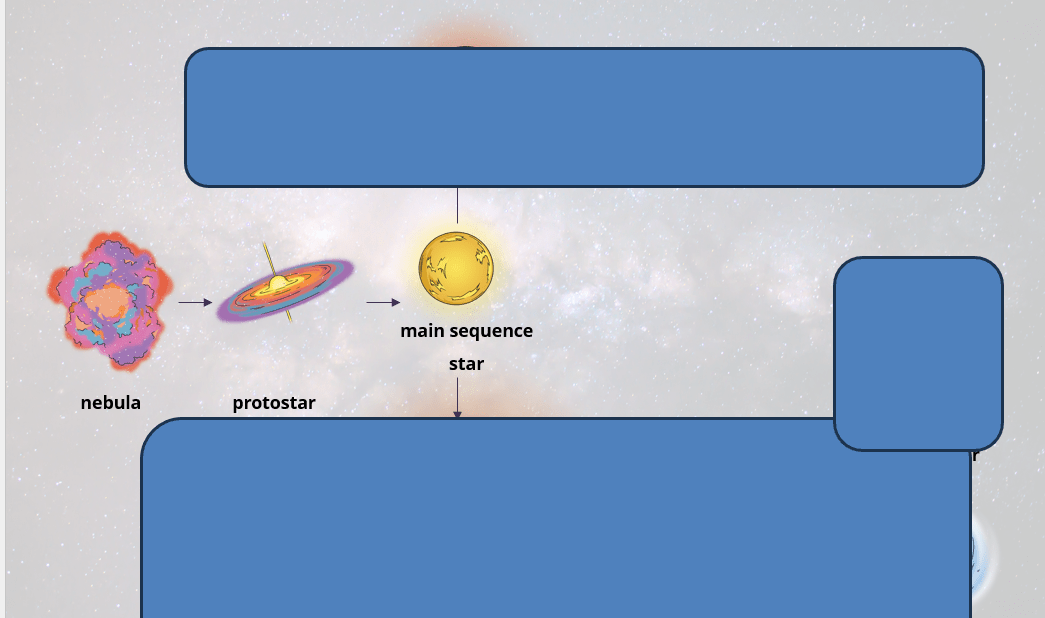
size is the deciding factor, large stars become supernovas, small stars become dwarfs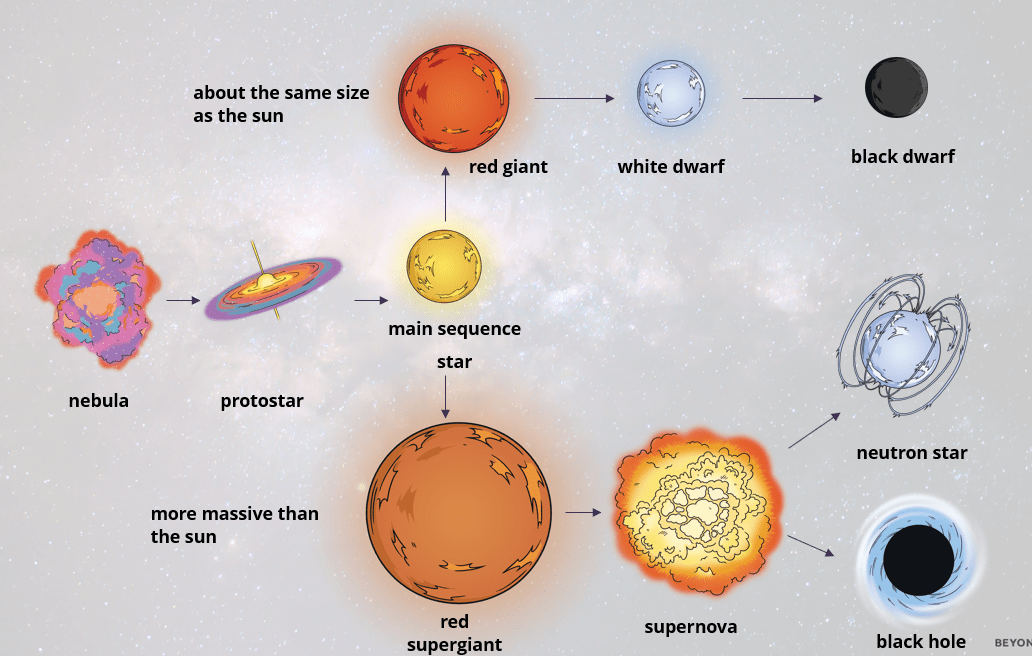
700
If Earth stopped rotating but kept revolving around the Sun, what would happen to day, night, and seasons? Explain your answer.
There would be no normal day-night cycle because rotation causes day and night. Earth would still have seasons because revolution and axial tilt would still affect how sunlight reaches different parts of Earth.