ЛЮДИ
ФАКТЫ
200
Кто такой Рюрик? Что вы о нём знаете
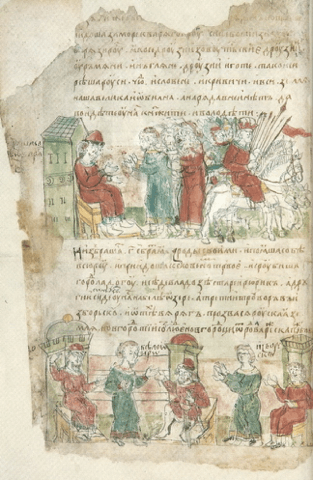
The leader of Vikings, founded a dynasty that would rule for more than 700 years. He
established himself in Novgorod, approximately 100 miles south of modern-day Saint
Petersburg, and placed relatives in charge of other towns, such as Pskov, Rostov, and Kiev. 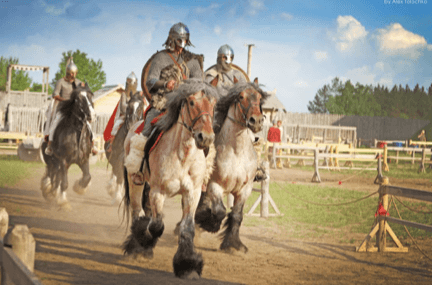
200
1. When does early Russian history begin?
2. What are the two most significant events that took place in that century?
1. It is the 9th century that is significant as the chronological cradle of Russian history.
2.
Two major events were noteworthy in
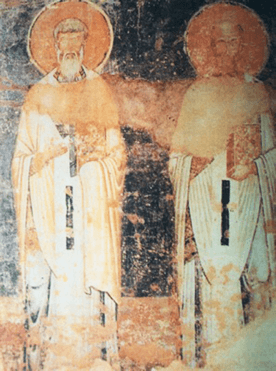
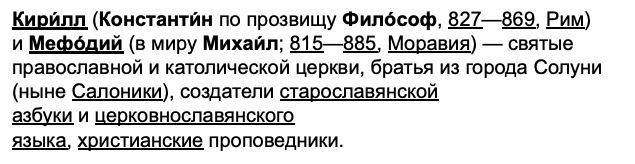
9th century Russia: The first was the spread of Christianity and the introduction of an alphabet by two missionaries from Byzantium, Cyril and Methodius.
The second was the beginning of Varangian Rule. This was a period of Slavic tribal disunity.
200
Кто такой Князь Владимир Красно Солнышко? Как его правление в 900-х годах повлияло на развитие России?
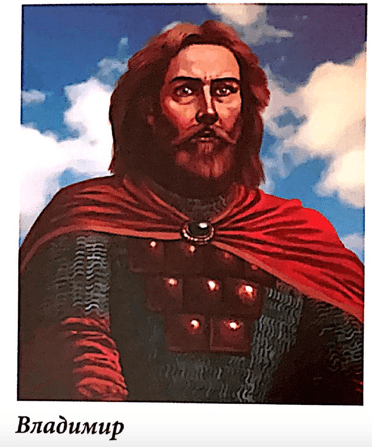
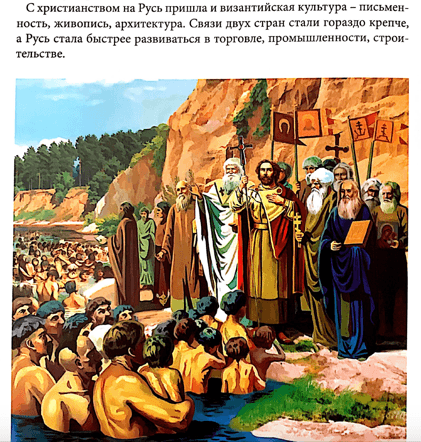
Around
988, Russian Prince Vladimir officially introduced Christianity to Russia and the inhabitants of Kiev were baptized in 990. For many centuries Byzantine culture and politics would influence
Russian life. In addition to the large ecclesiastical establishment, Russia inherited from Kiev agricultural, monetary and economic systems, military science, art, architecture, and literature.
200
3. Who founded the first dynasty that then ruled for 700 years?
4. What cities were parts of Kievan Rus’?
3. Varangian leader, Rurik, founded a dynasty that would rule for more than 700 years.
4. Rurik established himself in Novgorod, and placed relatives in charge of other towns, such as Pskov, Rostov, and Kiev.
200
Кто такие Кирил и Мефодий?
200
5. What was the “Golden Horde” and what were its claims with regard to Russia?
6. What was the role of the Battle of Kulikovo in the development of the State of Muscovy?

In 1223, Asians (Mongols and Tatars) swept over the land. The "Golden Horde", as they were called, was led by successors of Genghis Khan.
The Golden Horde exercised sovereign rights over Russia and they were ruthless in their treatment of Russia and Russians. They destroyed cities, slaughtered and enslaved citizens, and forced princes to swear allegiance to the Khan and to collect taxes for his treasury and recruits for his army. The Mongols' aim was to maintain social control and exploit the wealth of the country.
6. The victory over the Horde at the Battle of Kulikovo on the Don River, which took place in September of 1380, was an historically momentous event. Led by the Prince of Moscow, Dmitry Donskoy, the Russian army defeated the Mongols and their commander Momai. The victory was critical to the development of the State of Muscovy. Dmitry Donskoy is also venerated as a saint in the Russian Orthodox Church.
400
Кто такой Ярослав Мудрый? Как он повлиял на развитие Российского Государства?
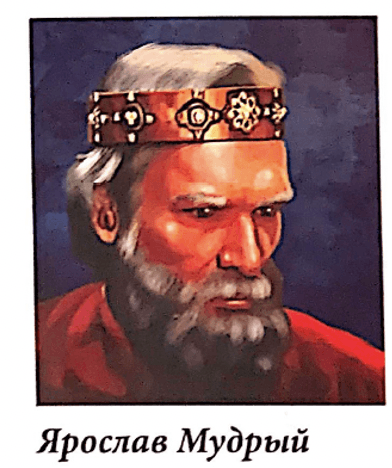
Правитель (Князь) Киевской Руси (1019 - 1054).
Россия одно из сильнейших государств в европе.
Развитие торговли и образования.
Установление политических связей с Францией, Венгрией, Норвегией
Первый свод законов (code of Laws) - Русская Правда
400
8. When did Ivan the Terrible come to power and how long did he rule the county?
9. Who were the Ophrichniki (members of the Oprichnina) and what was their role?
16th century Russia was dominated by Ivan IV, better known as "Ivan the Terrible",
whose reign lasted from 1533 to 1584. Historians assign him a most prominent role in Russian
7
V. Vasnetsov, Tsar Ivan The
Terrible
history. He was crowned the Tsar of all Russia and ruled with an iron fist. For 47 years he was a
.complete autocrat, running the country as if it were his private estate, changing its size, shape
and political structure. On the international scene Ivan established close commercial ties with England and waged constant wars with neighboring states in order to expand Russia’s territory.
9.
Ivan formed a six-thousand-man secret police force called the Oprichnina (опри́чнина). This predecessor of the soviet era KGB answered only to the Tsar. They ravaged the country, confiscating land from aristocrats, terrorizing and tracking down “traitors,” and conducting public executions. The word “traitor” was applied loosely and arbitrarily.
400
Кто такой Александр Невский?
С какими военными событиями связано его имя?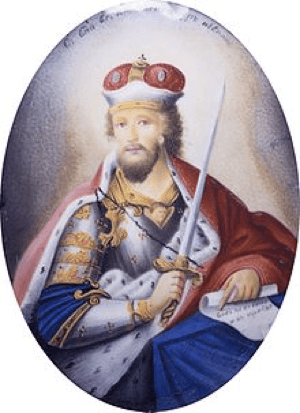
400
10. Why did Poland and Sweden see an opportunity to interfere in Russian affairs in 1610?
Shortly before his death Ivan the Terrible struck
and killed his own son and intended heir, an event that
had far-reaching effects on the future development of Russia. Ivan's other son Fyodor died without an heir, ending the Rurik dynasty, and setting the stage for the “Time of Troubles” (Смута) - a dynastic struggle.
Poland and Sweden both saw this time of instability as an opportunity for territorial gain and in 1610 they both made grabs for power on Russian lands.
400
Что вы знаете об Иване Грозном?
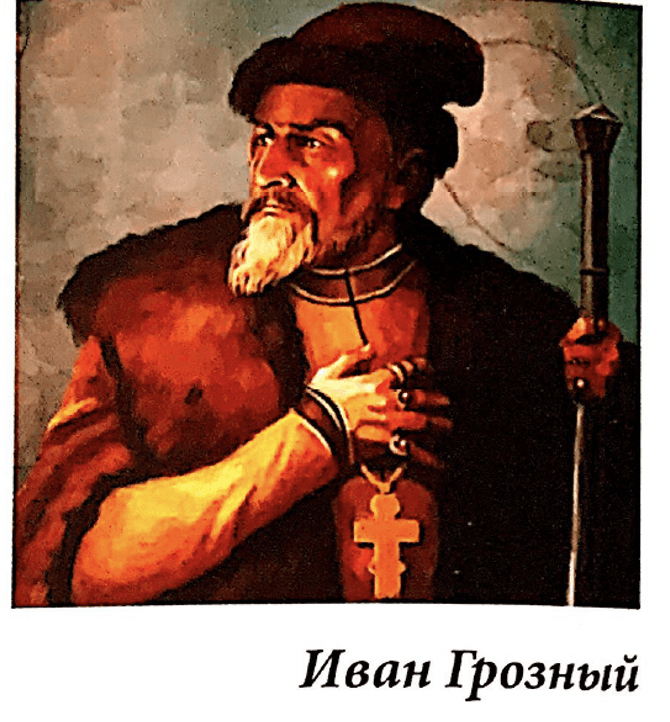
Historic sources present disparate accounts of Ivan's complex personality. He was described as intelligent and devout but also prone to paranoia.
The early part of Ivan's reign was one of peaceful reforms and modernization.
1.Ivan revised the law code, creating the Sudebnik of 1550,
2.founded a standing army (the streltsy)
3. established the Zemsky Sobor (the first Russian parliament)
4.confirmed the position of the Church with the Council of the Hundred Chapters (Stoglavy Synod), which unified the rituals and ecclesiastical regulations of the whole country.
5.He introduced local self-government to rural regions.
6.Ivan ordered in 1553 the establishment of the Moscow Print Yard, and the first printing press.
7.Ivan had St. Basil's Cathedral constructed in Moscow to commemorate the seizure of Kazan.
8.There is a legend that he was so impressed with the structure that he had the architect, Postnik Yakovlev, blinded so that he could never design anything as beautiful again. However, Postnik Yakovlev really went on to design more churches for Ivan and the walls of the Kazan Kremlin in the early 1560s
9. Other events - introduction of the first laws restricting the mobility of the peasants, which would eventually lead to serfdom.
400
What was the name of the new dynasty of tsars that was chosen in 1613 and how long did this dynasty remain on the throne?
In 1613, the Zemsky Sobor (a land assembly) chose the 16-year-old Michael Romanov to be the first Tsar of the new dynasty that would rule in Russia for 304 years.