The Nervous System
Rates of Reaction
Forces and Changing Shape
Forces and Motion
Pot Luck
100
Are the cells produced by Mitosis Genetically Identical or Genetically Different?
Genetically Identical
100
A suitable piece of lab equipment to measure the volume of gas produced in a chemical reaction.
Gas Syringe
100
What is the Unit for Force?
Netwons (N)
D/N
100
Outline the difference between scalar and vector quantities.
Scalar: Magnitude Only
Vector: Magnitude & Direction
100
Name three 'common' lab safety rules.
x
D/N
200
Name the 4 stages of Mitosis.
Prophase, Metaphase, Anaphase, Telophase.
D/N
200
The three factors that affect the rate of a chemical reaction.
Concentration, Surface area, Temperature
Wheel
200
The three ways an object can change shape when a force is applied.
Bending, Stretching, Compressing.
200
What is the name of Newton's first law?
Inertia
200
What piece of equipment is used to accurately measure the volume of liquids?
Measuring Cylinder
300
Name Part 5 of this Neurone.
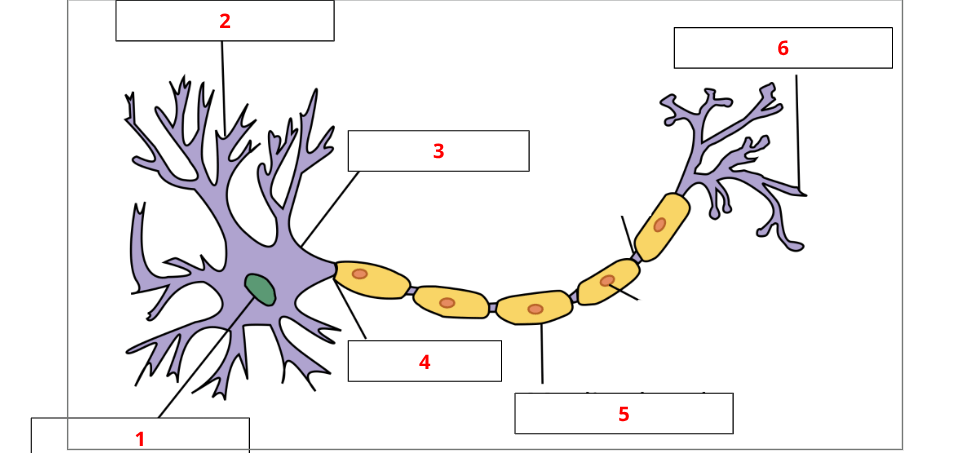
Myelin Sheath
Wheel
300
A chemical reaction that releases thermal energy into the surroundings.
Exothermic Reaction
300
Occurs when objects return to their original shape when the stretching force is removed.
Elastic Distortion
300
Recall 3 scalar quantities:
Distance, Speed, Mass, Energy, Volume, Temperature, Density
D/N
300
Name the following piece of equipment:
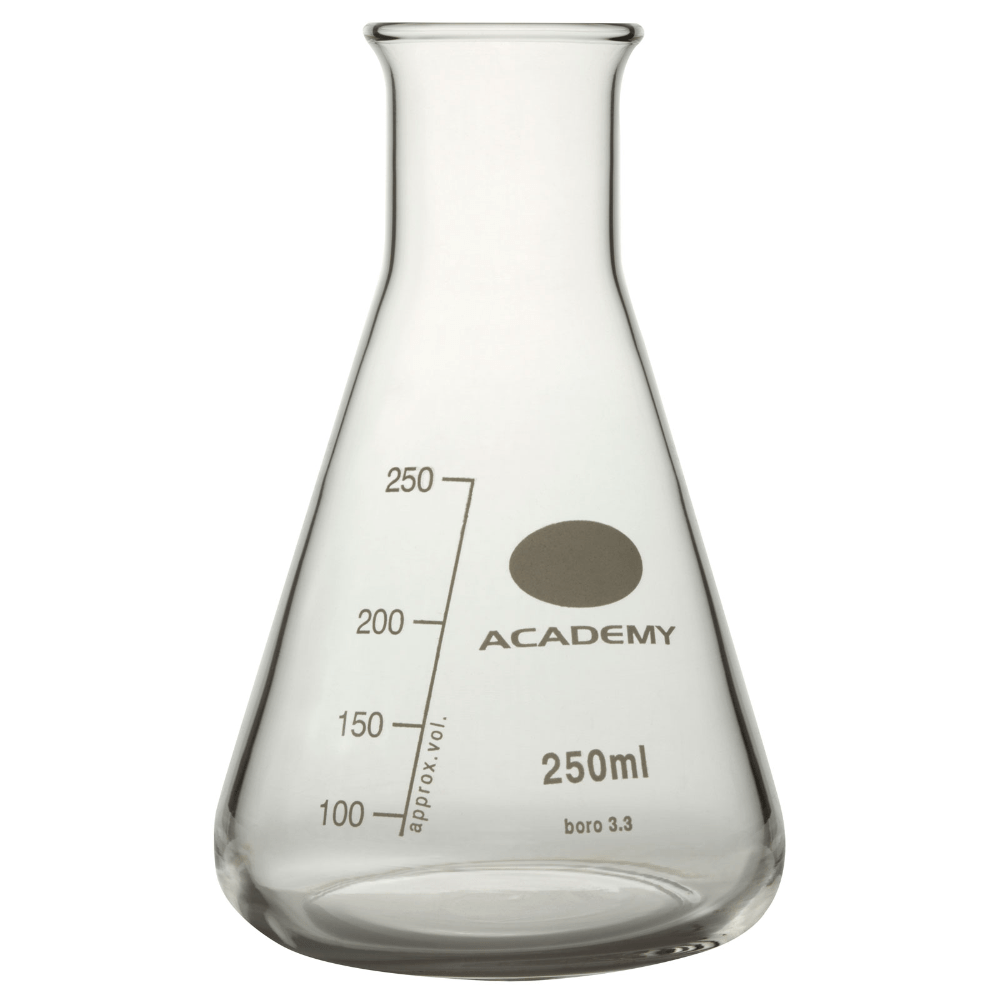
Conical Flask
Wheel
400
What is a stem cell?
An unspecialised cell that can differentiate into other types of cells.
Wheel
400
A substance that enables a chemical reaction to proceed at a usually faster rate or under different conditions.
Catalyst
D/N
400
Occurs when objects remain stretched and do not return completely to their original shape even when the stretching force is removed.
Inelastic Distortion
400
State the formula for calculating speed.
Speed = Distance / Time
Wheel
400
Name one difference between a plant and animal cell.
- Chloroplast
- Vacuole
- Cell Wall
500
What are the three types of neurons?
Sensory, Relay, Motor
500
What must happen in order for a reaction to occur.
Successful Collisions between particles.
D/N
500
State the formula for Hooke's Law using Force, Spring Constant, and Extension
Force (F) = Spring Constant (k) x Extension (X)
500
A bus is turning a corner at a speed of 30mph. Outline why the velocity changes.
Velocity is a vector quantity, and as the direction changes so does the velocity.
Wheel
500
What is the charge of Protons, Neutrons, and Electrons?
Proton: +1
Neutrons: 0
Electrons: -1