Aquatic
Insects/Arthropods
Land
Long moving things
Presentation
100
Q: How many fatal piranha attacks on humans have been confirmed?
A: Virtually undocumented. While piranha bites occur, confirmed fatalities on healthy adults are essentially nonexistent. Most incidents involve already deceased or incapacitated individuals.
Sources:
- Haddad V Jr, Sazima I. "Piranha attacks in humans in southeast Brazil." Wilderness & Environmental Medicine (2003) - PubMed
- SEA LIFE Manchester Aquarium: "Are Piranhas Dangerous?"
100
Q: How many Americans do spiders kill on average per year?
A: About 3-7 per year. Most spider bites cause mild irritation at worst. Only ~30 of the 40,000+ spider species worldwide have been responsible for human deaths.
Sources:
- Boston Children's Hospital: "Less than three deaths per year occur from spider bites"
- Sage Pest Control: "On average, 7 people in the US die each year"
- Merck Manual: "Almost all 40,000 species are venomous"
100
Q: How many fatal wolf attacks occur on humans per year worldwide?
A: Fewer than 2 per year on average. Between 2002-2020, researchers documented only 26 fatal wolf attacks worldwide (~1.4/year), of which 14 were due to rabies.
Sources:
- Linnell JDC et al. "Wolf attacks on humans: an update for 2002-2020." NINA Report 1944 (2021)
- The Wildlife Society: "Report documents wolf attacks around the world" (May 2021)
- International Wolf Center: "Are wolves dangerous to humans?"
100
Q: What are the verified sizes of the world's longest snake (reticulated python) vs. the heaviest snake (green anaconda)?
A:
- Reticulated Python: Medusa holds the Guinness World Record at 7.67m (25 ft 2 in) and 158.8 kg (350 lbs). An unverified 10m specimen was reported in Sulawesi, Indonesia in 1912.
- Green Anaconda: The heaviest snake, with females reaching 6-8m (20-26 ft) and weighing up to 250+ kg (550 lbs). Exceptional specimens may exceed 300 kg.
Sources:
- Guinness World Records: "Longest snake in captivity ever" - Medusa at 7.67m
- Guinness World Records: "Heaviest species of snake" - green anaconda 300+ kg
- National Geographic: "Green Anaconda" - "more than 29 feet, weigh more than 550 pounds"
- Natural History Museum (UK): "What is the biggest snake in the world?"
100
Introduction
Rules:
2 teams
In each round, each team will select one question to answer (order determined by rolling dice: odd numbers = team 1, even numbers = team 2). Every team may raise their hands to answer the question. The team of the correct responder or closest answer will earn points. If both teams answer the same, the faster one will get the points.
200
Q: What are your odds of being bitten by a shark?
A: Roughly 1 in 3.7 million chance of being bitten. In 2024, there were only 47 unprovoked shark attacks worldwide-a 28-year low-with just 4 fatalities.
Sources:
- Florida Museum ISAF: 2024 Yearly Worldwide Summary
- Science Daily: "Unprovoked shark bites plummeted in 2024" (Feb 2025)
Bonus: Humans kill over 100 million sharks annually.
- Science: "Global catches, exploitation rates, and rebuilding options for sharks" (2013)
200
Q: What insect is officially classified by the CDC as "the world's deadliest animal"?
 A: The mosquito.
Sources:
- CDC Global Health: "Fighting the World's Deadliest Animal"
- Statista (2024): "Deadliest animals to humans" - "around one million deaths per year"
200
Q: Between 2000-2015, how many fatal grizzly bear attacks occurred in North America?
A: About 24 total over 15 years-roughly 1.6 deaths/year. The per capita risk in Yellowstone is 1 fatality per 26.2 million park visits.
Sources:
- PetPedia: "Bear Attack Statistics" - "183 bear attacks 2000-2015"
- Gunther KA. "Bear-caused human fatalities in Yellowstone." Human-Wildlife Interactions (2022)
- Stringham SF et al. "Have Bears Become More Dangerous?" WildWatch Research (2019)
200
Q: What hunting strategy do pythons and anacondas share that makes them unlikely to actively pursue humans?
A.Ambush Hunting (sit and wait strategy) B. Pursuit Hunting (actively attack)
C.Lure Hunting (Trap) D. Pack Hunting(cooperative)
A: Ambush predation (sit-and-wait strategy)-they wait for prey to come to them rather than actively hunting. Their eyes and nostrils are positioned on top of their heads, allowing them to remain nearly submerged while waiting.
Sources:
- Hanscom RJ et al. "Ambush Hunting in Snakes: Behavior, Function, and Diversity." Snakes: Morphology, Function, and Ecology (2023): ResearchGate
- GBIF: Malayopython reticulatus - "an ambush predator"
- National Geographic: "Green Anaconda" - "lay in wait for prey"
200
What invasive species in Florida has killed ZERO humans, yet receives more media coverage than the Portuguese man o' war, which causes thousands of painful stings annually?
A. King Cobra B. Burmese Python
C. Green Anaconda D. Reticulated Python
B. Burmese Python
Sources:
- Florida Fish and Wildlife Conservation Commission: Burmese Python - established invasive species with no documented human fatalities
- Sun-Sentinel: "Portuguese man-of-war have stung hundreds" - over 1,000 stings reported in Miami Beach in one weekend alone (Dec 2015)
300
Q: Piranhas are often portrayed as flesh-eating killers. In reality, what do they primarily eat?
A: Fish, smaller aquatic animals, and carrion (dead animals). They are largely scavengers and opportunistic feeders, not the aggressive man-eaters portrayed in movies.
Sources:
- SEA LIFE Manchester: "Are Piranhas Dangerous?"
- Live Science: "Piranhas swarm tourists-experts say 'mistaken identity'" (2023)
- USGS: Red Piranha Species Profile
300
Q: When was the last recorded spider bite death in Australia?
A: 1979-over 45 years ago, despite Australia hosting some of the world's most venomous spiders.
Sources:
- Wikipedia: "List of medically significant spider bites" - "not one in Australia since 1979"
- Australian Museum: Antivenom development has eliminated spider fatalities
300
Q: According to the Alaska Dept. of Fish and Game, what animal injures more people in Alaska than bears and wolves combined?
A: Moose.
Sources:
- Alaska DFG: "What to Do About Aggressive Moose" - "more people in Alaska are injured by moose than by bears each year"
- Alaska DFG: "Driving in Moose Country"
300
Q: After consuming a large meal, how long can a python or anaconda go without eating again?
A: Weeks to months, depending on meal size. Large meals can sustain them for 4-6 weeks or longer, making frequent attacks biologically unnecessary. Some snakes can survive up to 2 years without food in extreme cases.
Sources:
- San Diego Zoo Wildlife Explorers: "Anaconda" - "can go weeks or months without eating after a big meal"
- A-Z Animals: "How Long Can a Snake Go Without Eating?" - "up to 2 months... some up to two years"
- Reptile Craze: "How Long Can Snakes Survive Without Food?"
300
According to UNODC, approximately how many humans are intentionally killed by OTHER HUMANS each year worldwide?
~400,000-450,000 homicides per year — making Homo sapiens the second deadliest animal to humans after mosquitoes.
Sources:
- UNODC: Global Study on Homicide - comprehensive international homicide data
- UNODC Data Portal: Intentional Homicide Statistics
400
Q: What nearly transparent creature is responsible for an estimated 50-100 deaths per year?
A: The box jellyfish (Chironex fleckeri). Its venom attacks the heart, nervous system, and skin cells simultaneously. Some sources estimate 20-40 deaths annually in the Philippines alone.
Sources:
- Live Science: "How Deadly Is the Box Jellyfish?" - "dozens and perhaps more than 100 die each year"
- Thaikruea L, Siriariyaporn P. "The magnitude of severe box jellyfish cases." BMC Research Notes (2016): PMC4751727
400
Q: What mosquito-transmitted disease causes approximately 600,000 deaths annually?
A: Malaria - 569,000 deaths in 2023 (WHO), primarily affecting children under 5 in Africa. Mosquitoes also transmit dengue, Zika, yellow fever, and West Nile virus.
Sources:
- WHO World Malaria Report 2024: 569,000 deaths in 2023
- CDC: "Malaria's Impact Worldwide" - "249 million cases... 608,000 deaths" (2022)
400
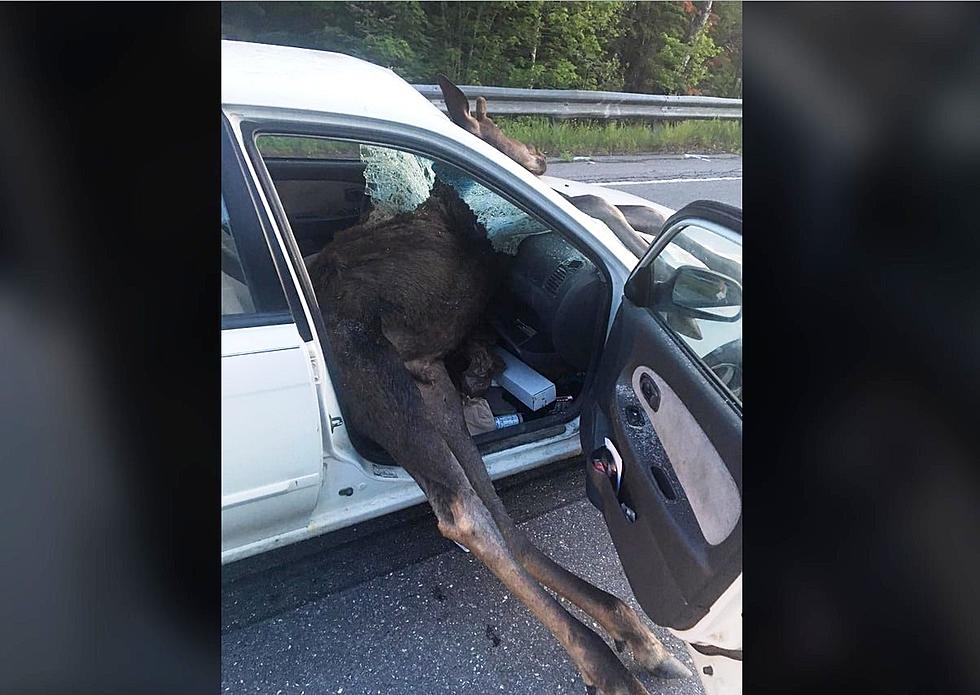 Q: How many vehicle collision injuries do moose cause annually?
A: Over 1,000 crashes annually in Canada and northern New England combined. Moose weigh up to 1,800 lbs and their legs position their body at windshield height.
Sources:
- Clark DE et al. "Moose-Motor Vehicle Collision." Journal of the American College of Surgeons (2019): EurekAlert
- BCMJ: "Injury patterns in moose-vehicle collisions" (2022)
400
Q: How many confirmed fatal attacks by wild green anacondas on adult humans have occurred throughout recorded history?
A: Essentially zero confirmed. While anacondas can theoretically consume a human, there are no well-documented cases of wild green anacondas deliberately killing and eating healthy adult humans. You've been tricked by the Hollywood movie Anaconda!
Note: Reticulated pythons have killed humans (at least 7 confirmed cases of consumption), but anacondas have not.
Sources:
- Discover Wildlife (BBC): "Can a green anaconda swallow a human?" - attacks are extremely rare
- University of Michigan Animal Diversity Web: Eunectes murinus
- Wikipedia: "Green anaconda" - no confirmed human predation
400
Dogs are beloved pets. But when we count deaths the same way we count mosquito deaths (including diseases they transmit), how many people do dogs kill globally per year?
~25,000 deaths per year — almost entirely from rabies transmitted through dog bites. Just like mosquitoes "kill" through malaria, dogs "kill" through rabies. In the US, where pets are vaccinated, dogs cause ~43 direct attack deaths/year. But globally, rabies (mostly from dogs) kills 25,000+ people annually, primarily in Africa and Asia.
For comparison: All "scary" wild predators (sharks, wolves, bears, big cats) combined kill fewer than 500 people per year globally.
Sources:
- WHO: "Rabies" - "up to 59,000 deaths annually, 99% from dog bites"
- CDC MMWR: "QuickStats: Number of Deaths from Dog Attacks" - ~43 deaths/year in US (direct attacks only)
- Statista: "Deadliest animals to humans" - dogs/rabies ~25,000 deaths/year globally
500
Q: How do shark deaths compare to box jellyfish deaths annually?
A: Sharks kill roughly 5-10 people per year (4 in 2024); box jellyfish kill 50-100+ annually-and you can't even see them coming.
Sources:
- ISAF 2024: 4 fatal shark attacks in 2024
- US National Science Foundation: "20-40 deaths from box jellyfish annually in Philippines alone"
Fun fact: Vending machines kill ~13 people/year in the US (CPSC data)
500
Q: What is the death ratio between spiders and mosquitoes annually?
A: ~3-7 spider deaths (US) vs. ~1 million mosquito deaths per year globally-a ratio of approximately 1:140,000.
The mosquito is responsible for more human deaths than any other animal in history.
Sources:
- CDC: "Fighting the World's Deadliest Animal"
- Mosquito Reviews: "Statistics for Mosquito-Borne Diseases"
500
Q: How do wolf deaths compare to moose-caused injuries annually?
A: Wolves average <2 deaths/year globally; moose cause hundreds of injuries annually through vehicle collisions alone. Moose-vehicle collisions are 13 times more likely to result in human death than deer collisions.
Sources:
- J. American College of Surgeons (2019): "13 times more likely to result in human death"
- NINA Report 1944: Only 26 fatal wolf attacks worldwide from 2002-2020
- Alaska DFG: "Moose can become aggressive"
500
Q: What are the differences in the reproductive methods of anacondas and pythons?
A:
- Pythons are oviparous (egg-laying). Female pythons lay 12-100 leathery eggs, then coil around them and regulate temperature through muscle contractions ("shivering thermogenesis") until hatching.
- Anacondas are ovoviviparous (live birth). Eggs develop and hatch inside the mother's body, and she gives birth to 20-40 fully formed young. No placental connection exists-unlike mammals.
Sources:
- Live Science: "Anaconda Mom Gives Birth to Baby Clones" - "anacondas don't lay eggs, instead having live births"
- Britannica: "Ovoviviparity"
- Encyclopedia Britannica: "Green anaconda" - reproductive biology
- ScienceDirect: "Oviparity or viviparity? That is the question..."
500
Rank these in order of how many Americans they kill per year: bees/wasps, cows, vending machines, sharks.
- Bees, wasps, and hornets (~72 deaths/year in the US)
- Cows (~22 deaths/year in the US)
- Vending machines (~2-3 deaths/year in the US)
- Sharks (~0-1 deaths/year in the US)
- CDC MMWR: "QuickStats: Number of Deaths from Hornet, Wasp, and Bee Stings" - "788 deaths... average of 72 deaths per year" (2011-2021)
- Defenders of Wildlife (citing CDC NIOSH): "Cows are responsible for an average of 22 human deaths in the U.S. each year"
- CPSC: "Soda Vending Machine Industry Labeling Campaign" - "at least 37 deaths... since 1978" (~2-3/year)
- JAMA: "Soda Pop Vending Machine Injuries" (1988) - peer-reviewed medical documentation
- Book of Odds: "The Sharks and the Vending Machines" - statistical odds analysis
- Florida Museum ISAF: 2024 Worldwide Summary - US typically has 0-1 shark fatalities/year