Causes of the French Revolution
Key Events of the French Revolution
Nationalism Concepts
National Identity
Source Analysis
100
This social system divided France into three groups: clergy, nobility, and everyone else.
What is the Estate System (Ancien Régime)?
100
In 1789 the Third Estate formed this new governing body.
What is the National Assembly?
100
Loyalty and devotion to a nation is known as this.
What is nationalism?
100
A shared language, culture, or history can help form this.
What is national identity?
100
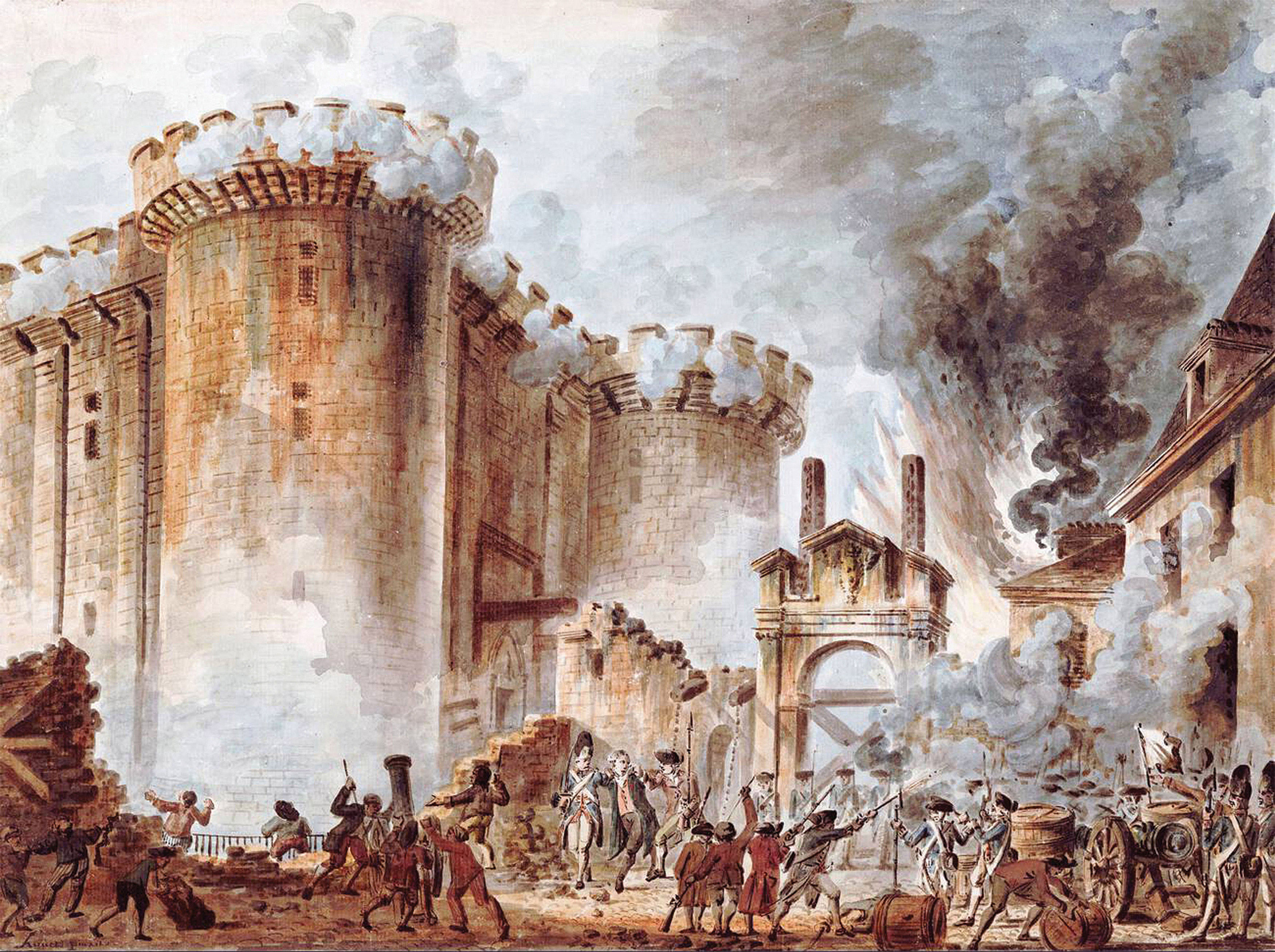
Looking at the image, identify two things you SEE happening.
Examples:
A crowd attacking a fortress
Weapons being used
Smoke or fighting
A large group of people gathered
(Students only describe observations.)
200
This estate made up about 97–98% of the population but had the least political power.
What is the Third Estate?
200
The Tennis Court Oath was a promise by revolutionaries to do this.
What is not separate until a constitution was created?
200
A country where citizens share common language, culture, or identity is called this.
What is a nation-state?
200
Love and pride for one’s country is called this.
What is patriotism?
200

What might this image MEAN about French society before the Revolution?
It suggests that the Third Estate carried the burden of taxes while the clergy and nobility benefited from privileges.
(This reflects inequality in the Estate system.)
300
Enlightenment thinkers promoted this idea that political power comes from the people rather than a king.
What is popular sovereignty?
republic
democracy
self-determination of a nation - people led
300
This event on July 14, 1789 symbolized the people rising against royal power.
What is the Storming of the Bastille?
300
The revolution helped shift loyalty from the king to this new idea.
What is the nation?
300
This Canadian WWI battle is often considered a moment of national unity.
What is Vimy Ridge?
300

What might the wearing of this symbol MEAN about someone’s political beliefs during the Revolution?
A cockade is a decorative knot of ribbons, rosette, or badge worn on a hat to signify military rank, political allegiance, or national identity. Originating as a 15th-century field sign, it evolved into a symbol of loyalty, with common examples including the French tricolor, the black cockade of the American revolution, or, for servants, a, badge attached to livery.
It shows support for the revolution and loyalty to the new French nation rather than the monarchy.
400
This economic crisis helped trigger the revolution, including bad harvests and rising bread prices.
What is food shortages and economic collapse?
400
This document declared freedom, equality, and rights for citizens.
What is the Declaration of the Rights of Man and of the Citizen?
400
This concept means people have the authority to rule themselves.
What is self determination?
400
When people feel connected through shared language and culture, nationalism can be described as this type.
What is ethnic nationalism?
400

Why does this event MATTER in the history of the French Revolution?
It marked the moment when the Third Estate challenged the king’s authority and declared that political power should come from the people.
500
Explain why the Estate System created resentment among the Third Estate.
Because the 1st and 2nd Estates had privileges and paid fewer taxes while the Third Estate paid most taxes but had little power, creating major inequality.
500
Why was the Storming of the Bastille more important symbolically than militarily?
Because it represented the people overthrowing royal authority and showed power shifting from the king to the nation.
500
Explain one way the French Revolution helped create modern nationalism.
It promoted ideas like citizenship, national identity, and political power belonging to the people, uniting individuals as members of a nation rather than subjects of a king.
500
Explain how language can contribute to a sense of nation.
A shared language helps people communicate, share culture, and develop a collective identity, strengthening national unity.
500
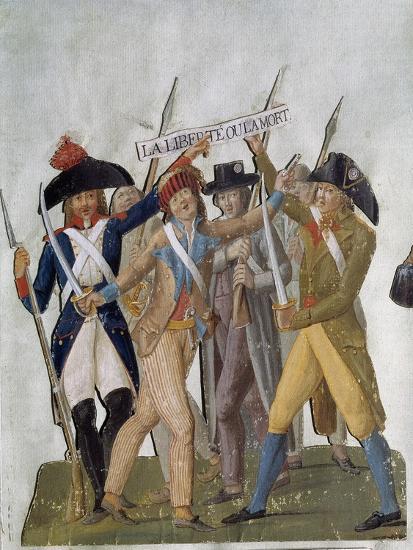
How does this image reflect the rise of modern nationalism?
It shows that people were beginning to see themselves as citizens fighting for their nation rather than subjects serving a king, demonstrating the shift toward national identity.