Ions & Isotopes
Reading Elements
Metal/Nonmetal/Metalloid
Writing Formulas & Naming Compounds
100
A change in the number of neutrons will change the form of an atom
What is an isotope?
100
The number in the upper left hand corner of an element block.

What is the atomic number?
100
Hard, shiny, malleable and ductile, good conductors and usually have a high density and melting point.
What is a metal?
100
I am the type of ion whose symbol goes first in writing formulas.
What is the positive ions?
200
Atoms gain or lose electron to form these
What is an ion?
200
The number located at the bottom of the element block

What is the atomic mass?
200
brittle, non-elastic, dull, poor conductors and usually have a low melting point.
What is a non-metal?
200
Cl- Na+ is written like this.
What is NaCl
300
I am the positively charges atoms
What is a cation?
300
Sometimes I am a single capital letter other times I am a capital letter and a lowercase letter
What is the symbol?
300
Shiny and have a 'metallic appearance' but are semi-conductors and brittle.
What is a Metalloid?
300
I go second in the formula.
What is the negative ion?
400
Unstable form of these isotopes emit radiation to become stable
What are radioactive isotopes?
400
Located in the far right column this group of elements includes Radon (Rn)
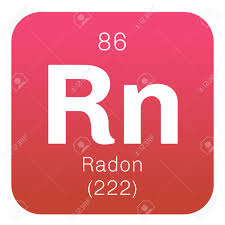
What are noble gases?
400
The six commonly recognized elements of my type are:
Boron, Silicon, Germanium, Arsenic, Antimony and Tellurium.
What is a metalloid?
400
The last step in writing a formula.
What is adding the subscripts to balance the charges?
500
Rounding the atomic mass of the element to the nearest whole number will determine this
What is the most common isotope of an element?
500
I am the mass of the protons and neutrons in an atom.
What is the atomic mass?
500
I am mostly found on the right of the staircase except one of my members?
What are non-metals?
500
NaCl is called this (scientifically)
Sodium Chloride