Lab Safety and Equipment
Atoms and Charges
Macromolecules
Cells and Cell Transport
Photosyn. & CR
100
Tabitha accidentally broke a beaker while in the lab...what should she do first?
Tell the teacher! DUH!
100
What is the charge of electrons?
Negative
100
What is the monomer for carbohydrates?
Monosaccharide
100
What is passive transport?
--Movement of materials in or out of the cell that does NOT require energy
--High to Low
100
What are autotrophs?
Organisms that make their own food.
200
Which lab equipment piece is MOST accurate in measuring liquids in the lab?
Graduated Cylinder
200
What two subatomic particles are found in the nucleus of an atom?
Protons and Neutrons
200
What is the function of nucleic acids?
Provides organisms with genetic code
200
What is the function of ribosomes in the cell?
Synthesis/Create proteins for the cell
200
Where does photosynthesis occur?
Chloroplast
300
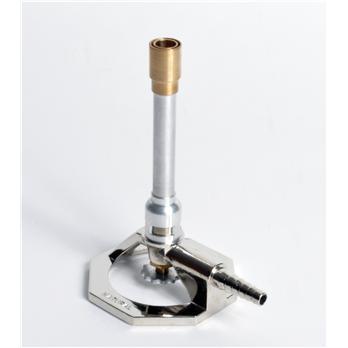
Bunsen Burner
300
What is adhesion? Give an example.
Adhesion is the force of attraction between different molecules or substances.
Insects "walking" on the water is an example.
300
Which TWO macromolecules share the elements 'CHO'?
Carbohydrate and Lipid
300
What type of transport goes from low to high?
Active Transport
300
What is the purpose of Cellular Respiration?
Break down of food (glucose) into usable energy.
400
How do you properly hold a microscope?
One hand on the arm, one hand on the base.
400
What is the name of the structure that electrons float in around the atom?
Electron Cloud/Orbital/Shell
400
What is the function of a lipid?
Storage of LONG term energy
400
What are the THREE modes of passive transport?
Diffusion, Osmosis, and Facilitated Diffusion
400
How many ATP does fermentation alone give us?
2 ATP
500
Professor Mark is experimenting with plant growth. He is testing light color and its effects on plant growth. What is the independent variable? What is the dependent variable?
IV: light color
DV: plant growth
500
Which one of the three subatomic particles makes each element UNIQUE and different from each element?
Protons
500
Give an example of something from EACH macromolecule group.
Carb -- Sugar, Bread, Pasta, Etc.
Protein -- Egg, Meat, Enzymes, Keratin, Etc.
Lipid -- Oils, Waxes, Steriods
Nucleic Acids -- DNA or RNA
500
What is the ONE thing that all bacteria, animal, and plant cells have?
Cytoplasm
500
Name the three steps of Cellular Respiration. Give whether they are "Aerobic or Anaerobic".
Glycolysis - Anaerobic
Kreb's Cycle - Aerobic
ETC - Aerobic