Introduction to CCPO
Information Requirements
Intelligence Disciplines
IPB
Military Briefings
Support to Targeting
Support to Collections
100
The purpose of intelligence is to:
What is support commanders situational understanding of?
1. Threat, Terrain, Weather, and Civil considerations
2. Support planning, preparing, execution, and assessment of operations.
3. Support commanders and decision makers
100
Explain Information Requirements
What are those items of information regarding friendly, enemy, and the environment which need to be collected and processed in order to meet the planning requirements of a commander?
100
Intelligence is the product resulting from...
What is everything the commander needs to know regarding the enemy and the operating environment in order to successfully make decisions and the processes/organizations involved in obtaining this information?
100
Intelligence Preparation of the Battlefield is the process of.
What is analyzing the mission variables of enemy, terrain, weather, and civil considerations in an area of interest to determine their effect on operations?
100
Describe the military briefing steps.
What are?
Step 1 – Plan-Analyze the Situation
Step 2 – Prepare-Construct the Briefing
Step 3 – Execute-Deliver the Briefing
Step 4 – Assess-Follow Up
100
Explain the Targeting process.
What is the process of selecting and prioritizing targets and matching the appropriate response to them, considering operational requirements and capabilities?
100
ISR stands for.
What is Intelligence , and Surveillance, and Reconnaissance?
200
The CCPO is the primary source of ________ and _______ that the company commander needs to make timely, informed decisions.
What are Information and Intelligence?
200
CCIR stands for
What is Commander's Critical Information Requirement?
200
The two intelligence tasks in support of OFFENSIVE operations are.
What are avoid the threat’s main strength and deceive and surprise the threat?
200
Explain each friendly symbol.

What is?

200
Name the four basic types of Army briefings.
What are?
Information briefing
Decision briefing
Mission briefing
Staff briefing
200
The CCPO role in targeting is to.
What is assist the commander in target development to effectively focus lethal and non-lethal effects (actions)?
200
Name the 4 ISR Missions.
What are the Reconnaissance, Surveillance, Security Operations, and Intelligence Operations?
300
Name three of the six key tasks for CCPO operations?
What are?
‒Manage patrol pre-brief and debrief processes
‒Facilitate the exchange of intelligence information flow between company, the BN S-2, and adjacent units
‒Collect data and conduct pattern analysis
‒Synchronize the company’s ISR plan
‒Advise the commander on intelligence-related matters
‒Support the company’s lethal and nonlethal targeting process
300
SIR stands for.
What is Specific Information Requirements?
300
Name some intelligence tasks in support of STABILITY operations.
What are?
1. Maintain or reestablish a safe and secure environment
2. Provide essential governmental services
3. Provide emergency infrastructure reconstruction
4. Assist with humanitarian relief efforts
300
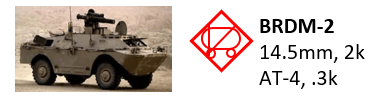
Enemy vehicle description and capabilities.
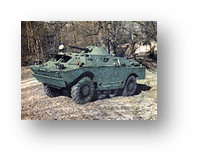
What is?
300
Name four common briefing mistakes.
What are?
Clumsy coordination
Body gestures (dancing around, rigid statue-like appearance or slouching)
Cue cards
Lack of eye contact/staring at one audience member
300
Give three 3 basic concepts of intelligence that are needed for basic targeting analysis.
What are know the terrain, know your enemy, and know yourself?
300
Counterintelligence Agents, Prophets, and Aerostats are assets at _________ (echelon) and higher.
What is Brigade Level?
400
The _____ is responsible for the establishment of a battalion intelligence team.
Who is the Battalion S-2?
400
The Friendly Forces Information Requirements (FFIR) supports the commander's mission how?
What information does the commander and staff need to about the forces available for the operation?
400
Name four of the seven single source intelligence disciplines.
What are Signals Intelligence (SIGINT), Geo spatial Intelligence (GEOINT), Measurement and Signature Intelligence (MASINT), Counterintelligence (CI), Human Intelligence (HUMINT), Technical Intelligence (TECHINT), Open-source Intelligence (OSINT)?
400
Name the four steps of the IPB process.
What is?
Step 1 - Define the Operational Environment
Step 2 - Describe the Environmental Effects on Operations
Step 3 - Evaluate the Threat
Step 4 - Determine Threat COAs
400
Name what type of briefing in the picture.
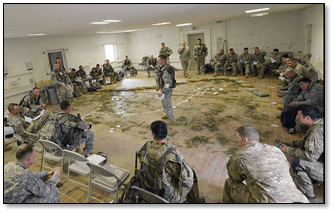
What is staff briefing?
400
BOLO stands for.
What is Be On The Lookout?
400
Describe the eight steps of creating an ISR Plan.
What are?
Step 1: List PIR
Step 2: Determine Indicators
Step 3: Develop SIR
Step 4: Develop SOR (ISR Tasking)
Step 5: Specify NAIs
Step 6: Calculate Start/Stop Times
Step 7: Select Collectors
Step 8: Complete Remarks
500
The Battalion Intelligence Team consists of the ______ and the _______.
Who is the Battalion S-2 section and the CCPOs at each company?
500
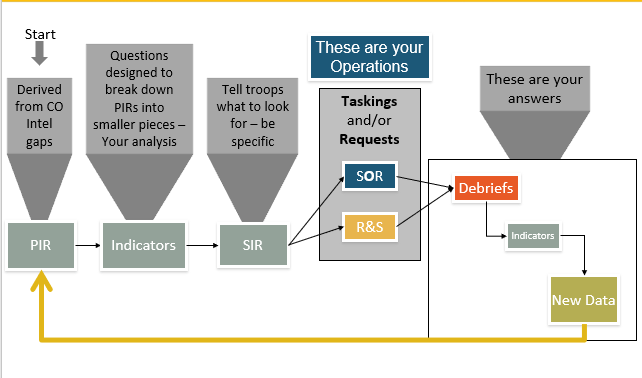
Explain how PIRs are answered.
500
Name the four steps of the intelligence process.
What is Plan and Direct, Collect, Produce, and Disseminate?
500
Define Area of Operations (AO).
What is assigned to a commander with authority and responsibility for the conduct of operations?
500
The purpose of a MISSION BRIEF is to:
What is?
1. Issue an Operations Order (OPORD) or Warning Order (WARNO), or Fragmentary Order (FRAGO)
2. Instill a general appreciation of a mission
3. Review the key points of a forthcoming military operation
500
The three types of threats are.
What are Conventional Threat, Hybrid Threat, and Irregular Threat (Unconventional)?
500
Name and describe the two of the 4 principles for ISR success.
What are?
1.Prioritization – focuses ISR assets/resources on Commander’s priorities.
2.Redundancy – more than one collector is directed on an NAI due to NAI’s size, risk to collector, or priority of requirement.
3.Focus of Effort – Collection efforts are defined and streamlined by creating PIR/SIR (requirements), placing NAIs, and choosing capabilities to answer the PIR/SIR.
4.Flexibility of Assets – Plan contingencies for collections in the event as asset is disabled, has to leave the NAI, or needs to be reassigned.