The UK at Work
So where are the jobs? Where did the UK factory jobs go?
The UK's changing employment structure
Employment Structure in other countries
Random
100
What are goods and services?
goods = items; services = actions
things people want/need
100
Which sector is most likely to heavily rely on the earth's physical features?
Bonus points: why?
the primary sector
raw materials can only be found under certain conditions
100
The primary sector was largest in which time period?
The 1600s
100
What is the most common sector in Ethipia?
the primary sector
100
Which of these is likely to be the economic structure of the US? Explain your answer.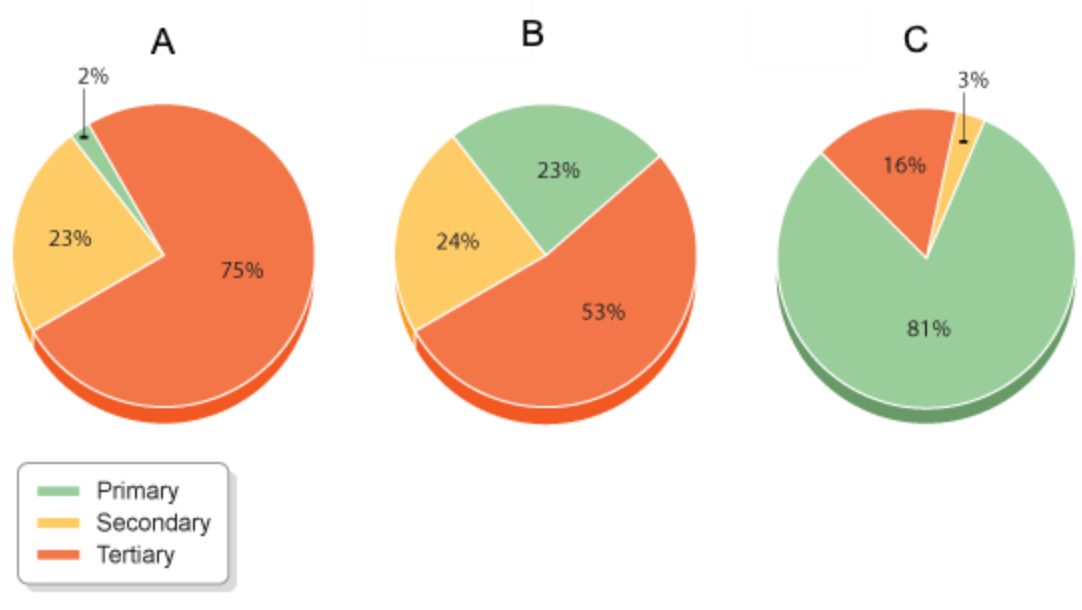
A.
The tertiary structure is generally the biggest in a wealthy nation like the US, as these countries generally import most of their goods.
200
The primary sector deals with what kind of materials?
raw materials
200
What goods and services are you NOT likely to find in the UK? Provide specific examples
oranges, fossil fuels, etc
200
Why did the secondary sector peak around 1850?
Because of the industrial revolution
200
What often determines which sector is most popular?
Resources and development
200
Provide the vocabulary word for this definition:
noun. the way the world is becoming more interconnected; it is getting easier to business all over the world, and move goods and people and money all around
globalisation
300
What sector is largest in the UK?
the tertiary sector
300
Why have so many factory jobs left the UK?
goods can be made cheaper elsewhere making it more profitable to import these goods/services
300
What kinds of work would you find in the secondary sector in the 1600s?
shoemakers, furniture makers, etc.
300
What does it mean for a country to be developed? To be developing?
the range of services, industry/infrastructure, poverty levels and opportunities for employment
300
What does "industrialise" mean?
verb. to build and operate factories and businesses in a city, region, country, etc.
400
Someone works as a salesperson in a department store. Are they in the secondary or tertiary sector?
Tertiary- they did not make the product, so selling it is a service.
400
Why are factories that make things like bread, ice cream, or frozen pizza less likely to move?
Because they produce things that can be made locally and are best fresh or frozen.
400
When did the tertiary sector become the largest sector? What else became mandatory (required) around this time?
the 1970s, education is required until the age of 16
400
If a country has a high amount of primary work, does that mean that they are not developed? Does a country with many tertiary jobs mean it is developed?
Not necessarily! Correlation does not equal causation- look at Seychelles with tourism.
400
Name some countries that are likely to have a very large secondary sector.
Bangladesh, China, Vietnam, etc.
500
About 40% of the food in the UK is imported. What would happen to the primary sector is the UK stopped importing food?
It would get much larger to meet the demands on the Uk population
500
Name things you think help make a place wealthy (see pg. 27 in your workbook for ideas). Name at least 5.
good farmland, flourishing industry, valuable resources like oil, interesting history, tourist attractions, plenty of companies offering high paying jobs, easy access, beautiful countryside
500
If manufacturing jobs returned to the UK, would it provide the same number of jobs as before? Why or why not?
No very likely, as tertiary jobs have risen in popularity.
500
What does Poland's economic structure look like?
Very much like the UK's.
500
What is a common progression of a country's economic structure as it develops?
1. At first, most people farm and over time, farming becomes more efficient.
2. The country begins to industrialise. Factories are set up. The secondary sector grows.
3. As people earn more, they want more services . So the tertiary sector grows. The primary sector keeps shrinking as farming gets more efficient.
4. If cheaper goods are imported from other countries, factories may close. So the secondary sector may get smaller.