STAGES
HISTORY
LIGHTING
DESIGN
COSTUMES
JOBS/ROLES
CONSTRUCTION
100
This is the most common type of stage - where the stage/performance is on one side of an arch/opening and the audience views the show from the other side (as if looking through a picture frame).
Proscenium
100
Considered the first actor to portray a character on stage. The word Thespian comes from his name.
Thespis
100
This color "doesn't exist".
Magenta
100
This is a mark that is greater in length than width.
Line
100
The act of connecting 2 or more pieces of fabric together with thread.
Sewing
100
This person designs the set.
Set Designer
100
Tread, riser, and carriage are all parts of this.
Stair Unit
200
To see the show on this stage, the audience sits on all sides of the stage.
Arena (or in-the-round)
200
The most famous contributor of plays (1500's - 1600's).
William Shakespeare
200
Stage lighting was first recognized in this romantic country due the use of candles.
Italy
200
An artistic representation that is usually drawn.
Rendering
200
The Point
The Shaft
The Eye
Three parts of a needle
200
This person designs the lights.
Lighting Designer
200
A platform must be triangulated/supported when the legs of the platform are at or taller than this height.
18 inches
300
If you are standing in the furthest back, middle area of the stage... you are standing here.
Up Stage Center
300
A movable stage that traveled from one location to another.
Pageant Wagon
300
ERS stands for this ______________.
This lighting instrument is also called a Leko or a Source Four.
Ellipsoidal Reflector Spotlight
300
Part of the design that catches the viewer's eye.
Emphasis
300
A large stiff collar worn during the 1400's-1500's
Ruff
300
Creates the look of each character by designing clothes and accessories.
Costumer Designer
300
Corner blocks, keystones, and stiles are parts of this scenery item that is typically used to create walls on a stage.
Flat
400
This main curtain or drape is the most downstage curtain. Many of these can fly in/out vertically or open/close.
Grand Drape
400
In Latin, this means "God from the Machine".
Deus Ex Machina
400
The four functions of light.
Visibility, Focus, Modeling, mood
400
The surface quality that can be seen and felt.
Texture
400
Crew that is hired during the run of the show to handle emergency costume matters, alterations, in-show changes, and laundry.
Wardrobe Crew
400
The scenic artist is responsible for this.
The application of color and texture to all scenery.
400
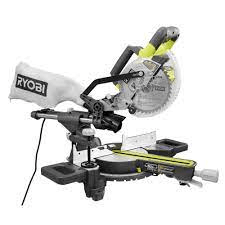 This tool is used to cut lumber and can cut various angles as well as slide for longer cuts.
Sliding Mitre Saw
500
This is the large white (sometimes light blue) fabric that is typically upstage and is used to project image and/or color.
Cyclorama (or cyc)
500
William Shakespeare was part owner of this theatre.
The Globe Theatre
500
The father of modern lighting - known for developing a multi-directional lighting method focused and directed at 45 degrees from the lit position.
Stanley McCandless
500
Analysis, research, incubation/selection, implementation, and evaluation.
The Design Process
500
This is needed on a button in order to make the button more secure as well as to make it easier to use the button.
Shank
500
The ultimate authority in a production.
Producer
500
Typically confused with a drill, this tool is used to properly drive screws into lumber.
Impact Driver