Atomic Structure
Subatomic Particles
Electron Organization and Reactivity
The Periodic Table
Element Families
Bonding & Properties
100
This is the smallest unit of matter that still retains the identity of an element.
What is an atom?
100
This subatomic particle determines an element’s identity.
What is a proton?
100
These electrons are found in the outermost energy level of an atom.
What are valence electrons?
100
The periodic table is organized by increasing number of this particle.
What are protons?
100
These elements have one valence electron and are extremely reactive.
What are alkali metals?
100
This type of bond forms when electrons are transferred between atoms.
What is an ionic bond?
200
This dense central region of the atom contains protons and neutrons
What is the nucleus?
200
These particles add mass to an atom and can vary to form isotopes.
What are neutrons?
200
This principle states that no two electrons can have the same exact energy and position.
What is the Pauli Exclusion Principle?
200
These rows represent increasing energy levels.
What are periods?
200
These elements have two valence electrons and are reactive but more stable than Group 1.
What are alkaline earth metals?
200
This type of bond forms when electrons are shared between atoms.
What is a covalent bond?
300
Scientists describe electrons as existing in this likely region rather than fixed or completely random paths.
What is the probability cloud or probability field
300
This type of particle includes protons and neutrons and is made of quarks.
What is a hadron?
300
This term describes the organized regions where electrons are likely to appear.
What are energy levels?
300
These columns group elements with similar valence electron structures.
What are families?
300
This family has seven valence electrons and is known as “salt formers.”
What are halogens?
300
Ionic bonds typically form between these two types of elements.
What are metals and non-metals?
400
Even though atoms are mostly empty space, matter still feels solid because of this.
What are forces and interactions between atoms?
400
Electrons belong to this category of particles.
What is a lepton?
400
Atoms with 6 or 7 valence electrons are often reactive because of this reason.
What is that they are close to a stable structure and may gain or share electrons?
400
Elements in the same family behave similarly because they share this.
What are the same number of valence electrons?
400
This family is very stable because its outer energy level is full.
What are noble gases?
400
Covalent bonds typically form between these two types of elements.
What are two non-metals?
500
If an atom were the size of Wrigley Field, the nucleus would be about the size of this object.
What is a marble?
500
These particles hold quarks together inside protons and neutrons.
What are gluons?
500
Electron movement appears random, but is actually governed by this type of organization.
What is probability-based organization?
500
This man invented the seed drill in 1701
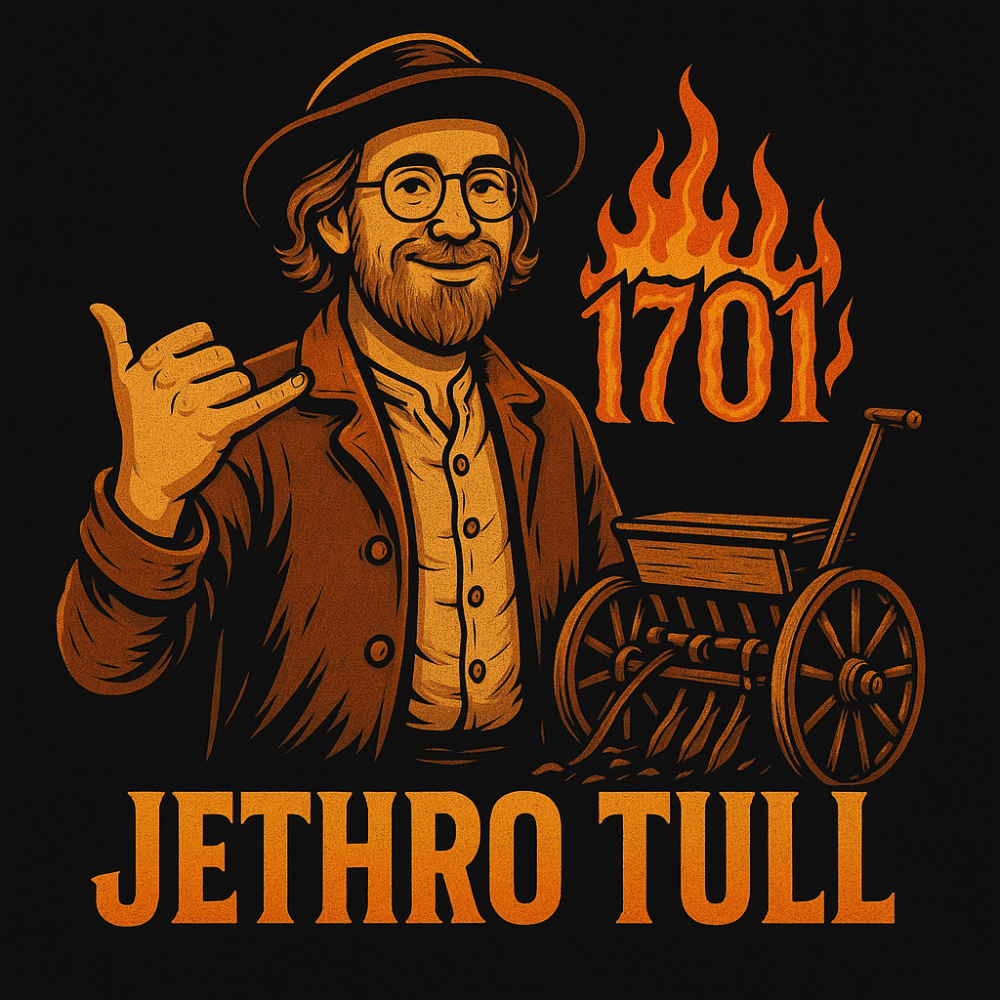
500
These elements are placed separately on the periodic table to save space and include many radioactive elements.
What are lanthanides and actinides?
500
Salt is solid because its ions form this type of repeating structure.
What is a crystal lattice?