Method
Result 1
Result 2
Fun
100
What are the challenges of doing human population genetic research in small, culturally distinct communities?
- Ethical concerns
- Trust and cultural sensitivity
- Small sample sizes
- Population structure
- Privacy concerns
- Interpretation risks
100
What is the Hardy-Weinberg disequilibrium? And in which part of the paper does it show this concept?
"We previously reported that there was Hardy–Weinberg disequilibrium of the codon 129 genotype in a small cohort of older Fore women who had participated in multiple mortuary feasts."
100
What is a prion?
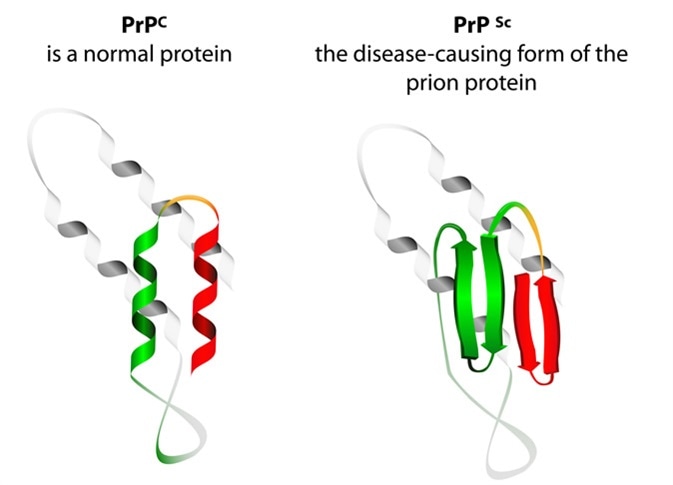
A misfolded protein that induces other proteins to misfold. No DNA or RNA required. It's a protein-protein interaction.
Causes neurodegenerative diseases (e.g., Creutzfeldt–Jakob disease, kuru).
Nearly always fatal once symptomatic.
100
What are mortuary feasts? How do you react to learning about this?
Consumption of deceased relatives
200
Why did the authors test for Hardy–Weinberg equilibrium specifically in elderly exposed women?
Since elderly women survived many years of high exposure, their genotype frequencies reflect who was able to survive. The fact that they showed deviation from Hardy–Weinberg equilibrium suggests that survival was not random, but depended on genotype.
200
When plotting the exposure-index contours, what were the 2 unexposed zones identified?
Two additional unexposed zones: areas of Eastern Highlands Province that are close to the kuru region but have no oral history of kuru and distant regions of Papua New Guinea.
200
What does the Hardy–Weinberg equilibrium assume?
- No selection
- No mutation
- No migration
- Random mating
- Large population
200
Why does Kuru mainly affect women and children? What are the societal impacts?
Men older than ages 6-8 didn't participate in these feasts. decline in birth rates, slower population growth
300
Is it possible to explain what happened in the paper besides natural selection?
Yes it's possible, but it doesn't really fit the data of the paper.
Genetic Drift:
Drift would produce random patterns, not a strong correlation between genotype and disease exposure. The fact that 127V is absent in patients and enriched in highly exposed survivors argues against pure chance.
300
What allele did young people in exposed areas have a high frequency of? And where in the paper can you use as evidence to support your answer
129V
300
Do you think it's possible for the population to reach equilibrium even if they have experienced disequilibrium?
If the evolutionary force causing the imbalance is removed.
In the case of kuru, once selection pressure stopped, genotype frequencies could re-equilibrate through random mating, even though the allele frequencies may remain permanently altered.
300
Why is the incubation period for kuru so long? How does long incubation affect evolution and detection?
Prion diseases are not caused by bacteria or viruses but by misfolded proteins slowly convert normal proteins into abnormal forms. Its like a chain reaction that starts tiny and spreads gradually.
400
In the study, researchers sampled not just kuru patients, but also exposed survivors, low-exposure populations, and distant populations. What do you think would happen if they had only sampled kuru patients?
They couldn’t detect selection: Selection is about differences between survivors and non-survivors.
They could misinterpret allele frequencies
They couldn’t test the Hardy–Weinberg Equilibrium properly: the result would be biased
400
What has resistance to kuru?
Heterozygosity at codon 127 provides strong, and possibly complete, resistance to kuru.
400
What are the two types of selection that the paper mentioned? Can you think of any other examples of the selection of either type or both together?
Balancing Selection:
Sickle Cell and Malaria
- The heterozygote (AS) has the highest fitness in malaria-endemic regions.
- This maintains both alleles in the population.
Directional (Positive) Selection:
Lactase Persistence
- Mutation allows digestion of lactose in adulthood.
- Spread rapidly in pastoral populations.
- Beneficial allele increased in frequency.
400
If 127V had been found in even one kuru patient, how would that change the interpretation?
“127V protects against kuru” -> “127V reduces susceptibility or changes disease progression.”
500
What additional data would strengthen the argument for selection?
Functional assays? Protein folding experiments? Larger control populations?
500
What is population stratification?
Principal com- ponent analysis of 1039 neutral single-nucleotide polymorphisms (SNPs) in 143 patients with kuru, 125 elderly women in midlevel-exposure and high-exposure villages, and 282 young controls from the kuru region showed no evidence of population stratification in the exposed region (P = 0.42 by EIGENSTRAT analysis for the comparison of patients with kuru with elderly women in mid-exposure and high-exposure villages), but persons in the kuru region could be readily distinguished from adjacent unexposed populations (282 persons, P<0.001) (Fig. 3 in the Supplemen- tary Appendix).
500
Does the paper show evidence of Darwin's four postulates? If it does, please find evidence in the paper. If it doesn't, why do you think so?
What we think:
Variation:
Table 1 shows MM, MV, VV genotypes in both patients and survivors.
They also identify the novel 127V variant.
Variation Is Heritable:
- Pedigree section (“Kuru in 127V Pedigrees”)
- 32 families
- Parents of 127V carriers
- Transmission of the allele through generations
- They also discuss shared haplotypes and common ancestry (~10 generations).
More Offspring Are Produced Than Survive:
“A peak annual mortality of more than 2% was recorded…”
“Some villages became largely devoid of young women.”
Survival Is Non-Random:
- Table 1
- 127V absent in patients.
- Heterozygotes enriched in survivors.
- Homozygotes overrepresented in patients.
- Hardy–Weinberg disequilibrium section
- Strong deviation only in exposed groups.
- Not seen in low-exposure groups.
- Pedigree comparison: 1/36 deaths in 127V families vs 33/218 in non-127V families.
500
Did the kuru epidemic accelerate human evolution? If so, is it ethically uncomfortable to think about?
Yes, protective PRNP variants increased in frequency within 10 generations, a tragic epidemic created strong selection pressure.