Astronomy Intro
Galaxies
Star Properties
Star Life Cycle
Big Bang Theory
Big Bang Evidence
100
What does the word "universe" mean?
All that exists everywhere including all matter, energy, and the space between them.
100
What is a galaxy?
A collection of stars, gas, and dust, held together by gravity
100
What is a star and what process does it use to create light and heat energy?
A massive glowing ball of hot gas that produces its own light and energy using nuclear fusion
100
What do all stars start out as?
A cloud of gas and dust called a nebula
100
What is happening to the size and temperature of our universe as time goes on?
Our universe is expanding and getting cooler!
100
Are the most galaxies red shifted or blue shifted?
Red shifted!
200
What is the difference between a solar and lunar eclipse?
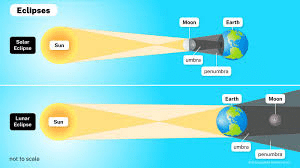
200
Which type of galaxy is our milky way galaxy?
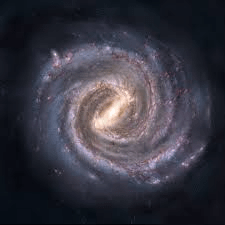
Spiral or barred spiral - looks like a pinwheel with a central bulge and 2-4 arms. Center has older stars while arms have younger ones.
200
Which type of star has a low temperature but a high luminosity?
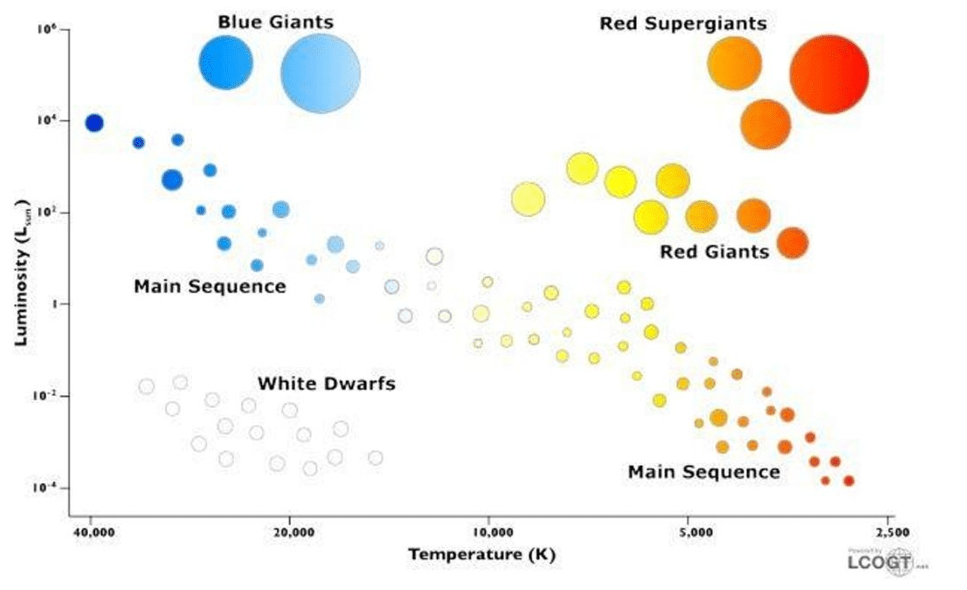
Red super giants and red giants
200
What is a "baby" star called?
Protostar!
200
What did our universe start out as? What is this called?
A hot dense point called a singularity
200
What does it mean if a galaxy is red shifted vs blue shifted?
Red shifted: it is moving away from us!
Blue shifted: it is moving towards us!
300
What is the difference between a constellation and an asterism? Give an example!
A constellation is a group of stars that forms an imaginary outline or pattern typically representing an animal, mythological person or creature, a god, or an inanimate object. Asterisms are smaller groups of stars within constellations. The big dipper is an asterism within the ursa major constellation.
300
What galaxy will eventually collide with our galaxy?
Andromeda
300
In general, what happens to the color and brightness of stars as they get hotter?
Hotter stars are blue and more bright while cooler stars are red and less bright
300
What is a star called once it has "turned on" and is undergoing nuclear fusion?
Main sequence star! Most stars are main sequence stars!
300
How old is our universe? Was matter or energy present at the beginning of our universe?
13.7-13.8 billion years old
Only energy present at first!
300
What is Hubble's Law? How can we model this with an experiment?
Hubble's Law: Galaxies farther away from use are moving away from us at a faster speed
Experiment: Use a balloon! Draw dots on a balloon and notice that the dots farther from the home galaxy move farther away in the same period of time as the closer ones!
400
Using the picture, which planets are terrestrial, which are gas giants, and which are ice giants?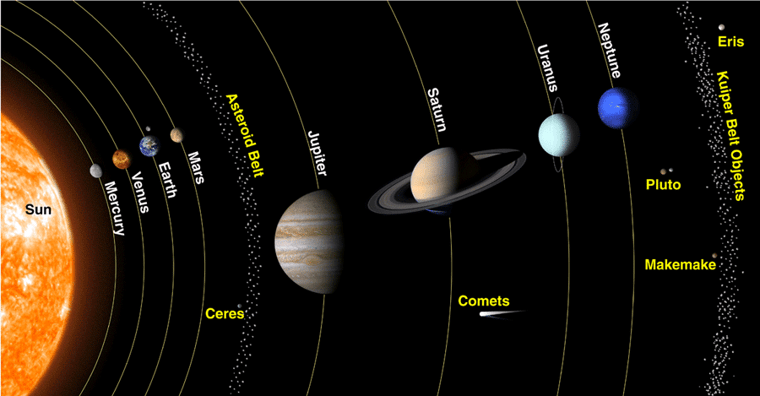
Terrestrial: Mercury, Venus, Earth, Mars
Gas Giants: Jupiter & Saturn
Ice Giants: Uranus & Neptune
400
What type of galaxy is the following: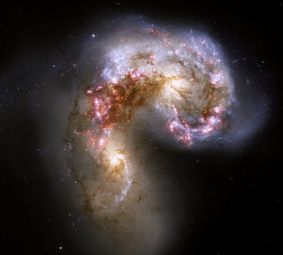
Irregular galaxy - no definitive shape and made of mostly gas and dust
400
Which mystery star most likely contains mercury?
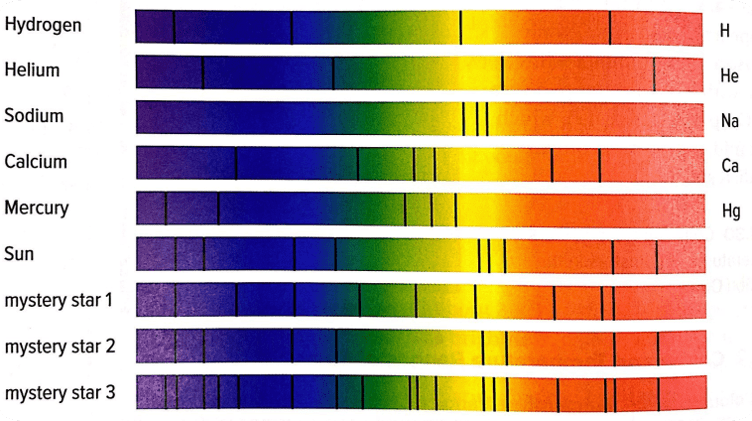
Mystery star 3
400
What is the life cycle of a high mass star? Use the diagram to help you!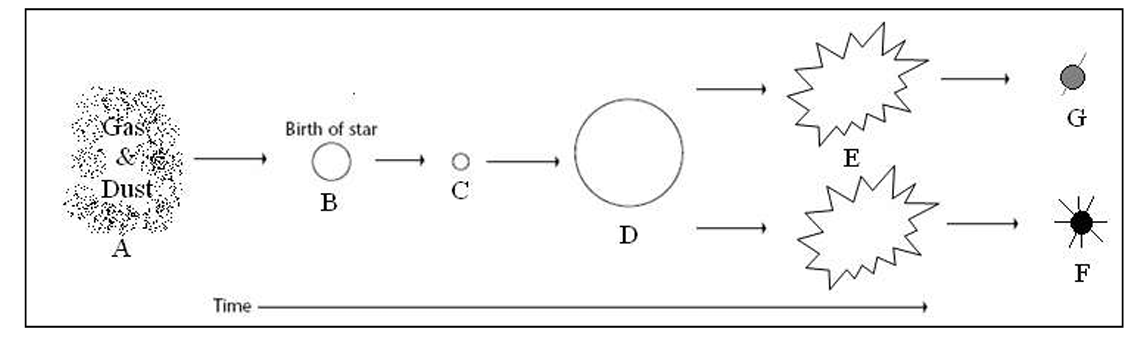
Nebula - protostar - main sequence star - red super giant - super nova - neutron star or black hole if it is a really massive star
400
a) Put the following in order based on when they were created: atoms, subatomic particles, quarks, nuclei
b) What was the first element created?
a) quarks, subatomic particles, nuclei, atoms
b) Helium!
400
How does the red shift of galaxies support the big bang theory?
The red shift of galaxies indicate that they appear to be moving away from us due to their wavelengths of light being stretched. This stretching of light is caused by the expansion of our universe which supports the big bang theory!
500
Which two planets in our solar system do NOT have any moons?
Mercury & Venus
500
What type of galaxy tends to be older with very few young stars?
Elliptical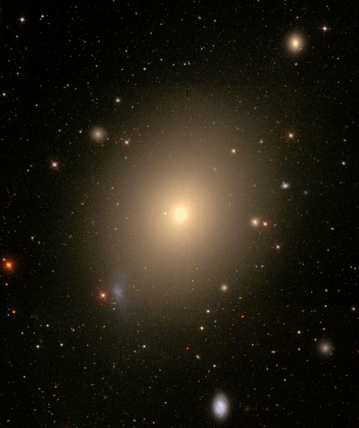
500
How would you classify a star with a temperature of 25 000 K and a luminosity of 0.01?
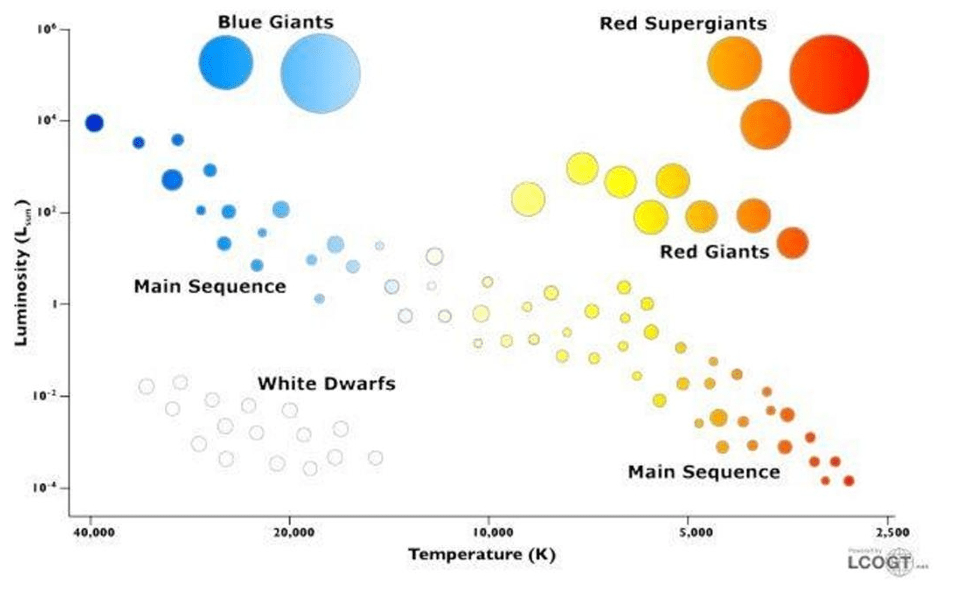
White Dwarf - high temperature but low luminosity!
500
What is the life cycle of a low mass star? Use the diagram to help you!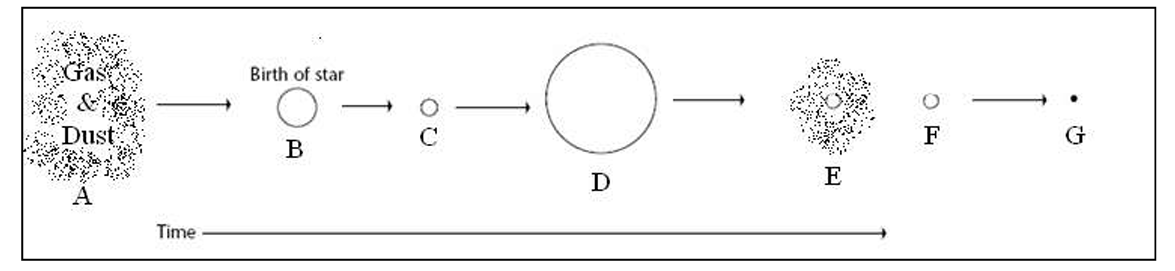
Nebula - Protostar - Main sequence star - red giant - planetary nebula - white dwarf - black dwarf
500
In what order did the 4 forces break apart from the super force?
1. Gravity broke away
2. Strong Nuclear broke away
3. Weak nuclear and electromagnetic split apart
500
What is cosmic microwave background radiation and how does it support the big bang theory?
CMB radiation is radiation leftover from the big bang. As the universe expanded and cooled, the leftover radiation has also stretched and cooled into the microwave section of the electromagnetic spectrum (started as gamma radiation). Scientists predicted that, if there was a big bang explosion, there should be leftover radiation which is what they discovered in the 1960's when they discovered static coming from all directions in the sky!