Absolute value equations
Inequalities
Functions (plug in) / Information from a graph
Finding the equation of a line
Systems of equations
100
|3x−2|=10
x=4,−8/3
100
3x−5>7
{x|x>4}
Draw number line
(4,∞)
100
f(x) = 2x2 - 3x + 1
Find f(4)
21
100
Find the equation of the line passing through
(1,3) and (5,11)
y = 2x + 1
100
2x + 3y = 13
4x − 3y = 5
(3, 7/3)
200
|2x−5|=9
x=7,−2
200
4x+3≤2x+11
{x|x≤4}
Draw number line
(−∞,4]
200
g(x) = 3x2 - 2x
Find g(x+1)
3x2+4x+1
200
Find the equation of the line passing through
(−2,4) and (4,−2).
y = -x + 2
200
y = 2x − 3
3x + y = 9
(12/5, 9/5)
300
|x+2|+3=7
x=2,−6
300
2(3x−4)>5x+1
{x|x>9}
Draw number line
(9,∞)
300
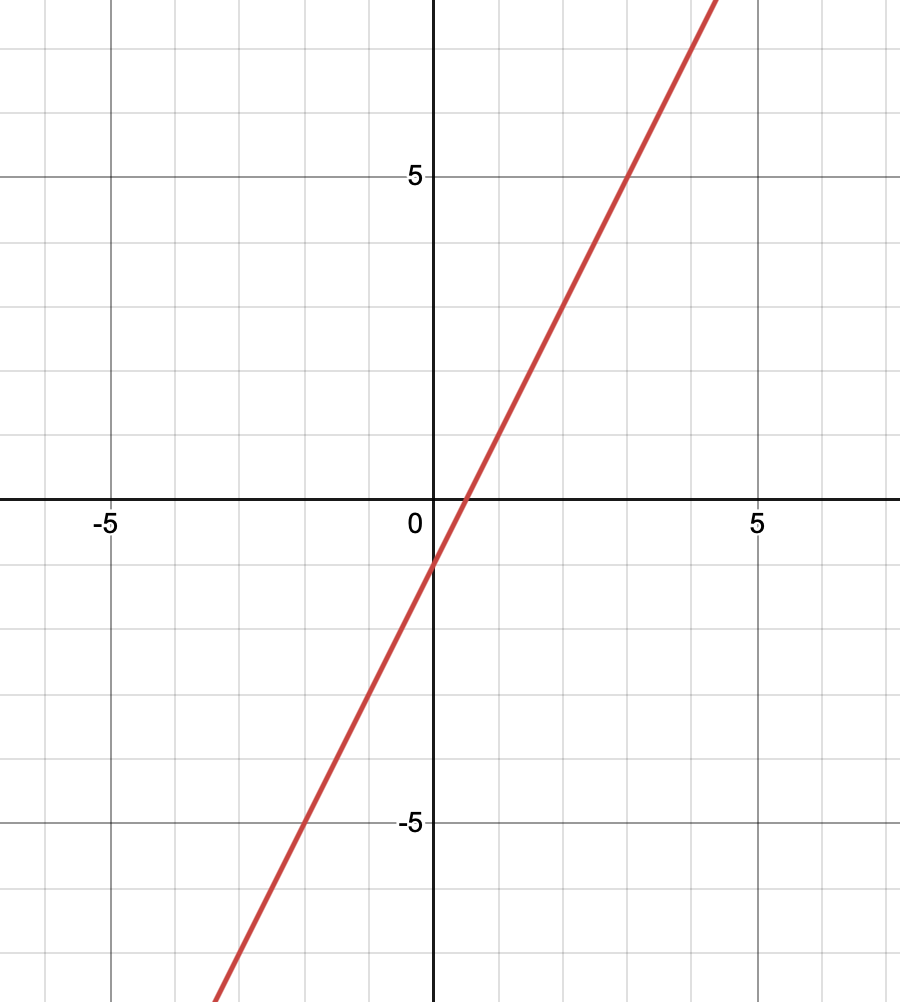
a) What is the domain?
b) What is the range?
c) For what interval of x is the function positive?
d) What is f(3)?
e) For what value of x does f(x)=3?
f) What are the x-intercepts?
g) What is the y-intercept?
a) (−∞,∞)
b) (−∞,∞)
c) (1/2,∞)
d) 5
e) x=2
f) (1/2,0)
g) (0,−1)
300
Given the line y = 3x - 7, find the equation of the line that is parallel to it and passes through the point (2, 5).
y = 3x - 1
300
2x + 4y = 8
x + 2y = 4
Infinite Solutions
400
2|x−1|−5=9
x=8,−6
400
−3≤2x−1<7
{x|−1≤x<4}
Draw number line
[−1,4)
400
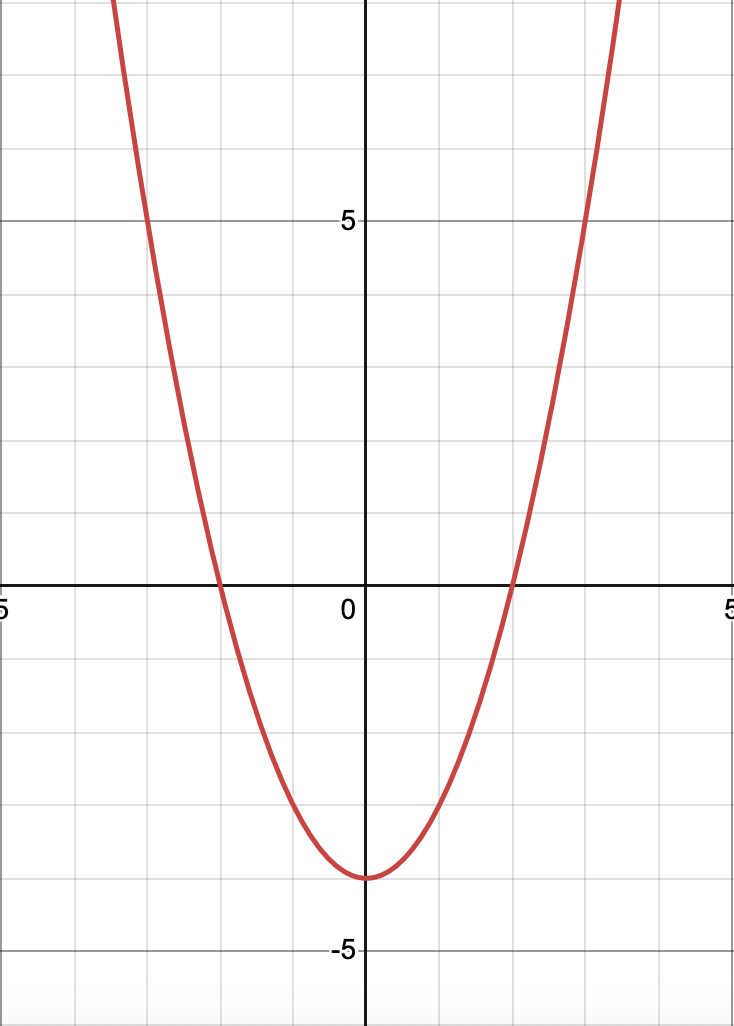
a) What is the domain?
b) What is the range?
c) For what interval of x is the function positive?
d) What is f(-1)?
e) For what value of x does f(x)=0?
f) What are the x-intercepts?
g) What is the y-intercept?
a) (−∞,∞)
b) [−4,∞)
c) (−∞,−2)∪(2,∞)
d) -3
e) x=−2,2
f) (−2,0),(2,0)
g) (0,−4)
400
Given the line 2x - 3y = 6, find the equation of the line that is parallel to it and passes through the point (4, 1).
y = 2x/3 - 5/3
400
3x + 6y = 9
x + 2y =5
No Solutions
500
|2x+1|/3 − 4=2
x=17/2,-19/2
500
5x−2≤8 or 3x+4>13
{x|x≤2 or x>3}
Draw number line
(−∞,2] ∪ (3,∞)
500
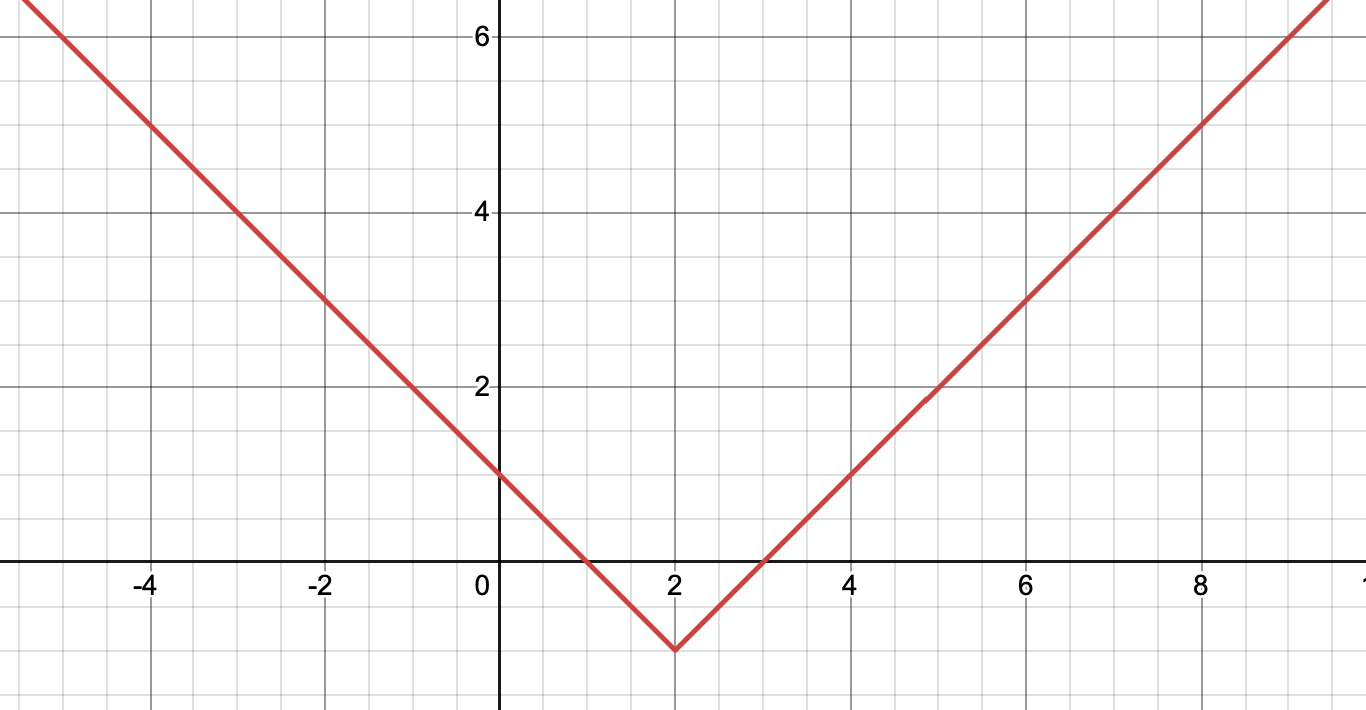
a) What is the domain?
b) What is the range?
c) For what interval of x is the function positive?
d) What is f(-1)?
e) For what value of x does f(x)=0?
f) What are the x-intercepts?
g) What is the y-intercept?
a) (−∞,∞)
b) [−1,∞)
c) (1,3)
d) -1
e) x=1,3
f) (1,0),(3,0)
g) (0,1)
500
Given the line 4x + y = 9, find the equation of the line that is perpendicular to it and passes through the point (1, -2).
y = x/4 - 9/4
500
3x − 4y = 5
5x + 2y = 1
(7/13, -11/13)