Building Language and Knowledge
Shared Reading
Vocabulary
Phonics Awareness
Writing Workshop
Independent and Collaborative Work
Differentiation
Assessment
100
Name one way to build background knowledge before you or the students read a new book.
1. Ask questions about the topic
2. Watch a video on the topic
3. Build a theme in the classroom using examples and visuals
100
Is it bennificial to use the same text books for each of your reading groups? explain why.
No, students are at various levels of reading development. (beginning, emergent, proficient, or exceeding)
100
When do I introduce new vocabulary, before, during, or after reading a story?
Before you read a new story, it is always wise to first inroduce vocabulary and discuss their meaning. You may also revisit during and after.
100
I follow a daily phonics and sight word routine, even if I need to teach math or science. Yes or No.
Yes! It takes a village. Sight words should preceed all classes.
100
What are the four parts of a paragraph, in order? (state the colors in order and what do they stand for?)
*Remembr there are two parts for the first green.
(Green) Title, Intro. sentence,
(Yellow) Slow and give one detail
(Red) Stop and tell more (explain, evidence, excitement, elaboration)
(Green) Go back to the intro. sentence and state it in past tense.
100
There is no need for students to work independently? true or false
False. There is a time where each student should be able to work independently with no interruptions, preferably on Wednesdays when it is important to complete all work in portfolio.
100
How do you group students for small group reading ?
According to the current data or ability acheived from week to week ie. test scores.
100
It is a good practice to use weekly formative assessments such as Exit tickets, Rubrics, Oral response 'What I learned', running records? Yes or No
Yes!
200
Is it okay to use visuals and examples to support understanding? Yes or No
Yes, students get a better understanding by including visuals for support.
200
There are three Mini-lessons on Monday which are focused, detailed, and last 15 or more min. each. True or false
False, there are four mini-lessons should be detailed focused with examples only lasting 10 min. each or less.
200
Name two ways to further expose students to new vocabulary words.
Ways to expose students to new vocabulary are, games, writings, discussion, movement, flash cards, drawings, center 3 activities.
200
Explain Syllabication to read the word:
Banana
Rabbit
Syllabication divides words based on vowel sounds, requiring at least one vowel per syllable. Key rules include breaking between two consonants (rab-bit), before a single consonant if the first vowel is long (ba-sin), and after it if the vowel is short (cab-in). Keep consonant blends/digraphs (sh, ch) and affixes together.
200
Should students have a sustained independent writing time?
Yes, usually students can sustain 5 min. of independent writing upon entering the class after lunch, recess, or going home for the day.
200
How do you promote teamwork in center based tasks so that students remain on task, keep voices at a min. help a buddy instead of doing the work for them ?
Answers may vary.
200
Name one way you differentiate instruction between stuggling readers and advanced readers?
Flexibility grouping, targeted intervention, scaffolding, chunking, leveled tests.
200
Can we use the exit tickets, oral responses, rubrics and running records as a daily formative assessment?
Yes, the best practice is to have daily mini assessments formal or informal.
300
Name two ways you create opportunities for
speaking and listening.
1.Presentations
2. Pair-share
3. Classroom discussions
300
Name 2 ways you teach or model decoding, fluency, and other reading strategies.
Close reading, sounding the first and ending sound to see if they can figure out the word, syllablecation, modeling during pre-read how to look at pictures to figure out words etc.
300
Should students use new vocabulary in writing, speaking and reading tasks?
Yes, it is a quick assessment to show they understand the meaning.
300
Name one thing you do to build fluency in reading.
The best way to build fluency is to read, read, read! Choral reading, paired reading, echo reading, reader's theater etc.
300
I provide and model clear details of a paragraph including punctuation, capitals, correct letter spacing and correct lettering ie. (tall letters touch the top and bottom lines, short letters touch the bottom line, monkey-tail letters touch the bottom line and swing below the bottom line). 1)yes or no 2) What day is this done? 3) for how long?
*You must get each part correct to get the points.
Yes, Monday is time to lay the foundation in a 10 min. or less minilesson.
300
Name one way you promote healthy discussion between peers within literature centers.
Answers will vary but must be part of the overall Classroom Management System.
300
How do you assess advancements in leveled texts?
By using weekly running records. If a student makes four or more errors in one reading, he has not advanced and needs intervention.
300
How do you monitor student progress in reading?
Graphing 1 min. reading (WCPM), running records, rubrics, phonics assessment, MAPS testing. (Measure of Academic Progress)
400
Name a way that you include content knowledge from English, Language Arts across subjects such as science, social studies, math etc.
Sight words at the beginning of all classes, word wall with all sight words so students can Read the Room, letting students read their own instructions, etc.
400
Any question is a good question to promote reasoning and engagement about text. True or False
False, questions should be high quality and focused.
400
How often do you check for understanding of the new vocabulary words?
As many times as you see fit but typically, before, during and after a lesson.
400
Name one way you can provide ongoing quick-checks to monitor foundational skills such as phonics, chunking, digraphs, phonemes, blends.
Weekly assessments on 100 sight word recognition, individualized phonics checks, basic reading checks.
*Remember, what students do not know is now telling you what you must teach.
400
On what day do students get a chance to share their writing with the class and reflect on their presentation skills?
Friday is presentation day. Each child has two min. or less to share writing or whatever they would like.
400
I check to make sure each center's objective was acheived. How?
Yes, Answers may vary
400
How long does a student remain in a group?
Answers may vary. As long as it takes them to progress.
400
Name one wasy students can keep track of their own reading progress?
Rubrics, Leveled reader advancement, group placement, classroom graphs on a poster, 1-1 weekly conferences using Rubrics.
500
Can KWL also be used to introduce a new book before reading?
YES
500
Why is shared reading important?
Answers may vary.
500
on the 1st page, what was the childs percentage, 100,97,93, 90?
93%
500
Name it! What technique can you use in your classroom?
Answers may vary
500
What did the teacher do to make the paragraph a bit longer?
She added more yellow and red.
500
Why use a rubric?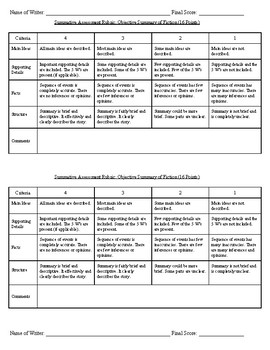
ensuring consistent, objective grading while providing clear expectations to students regarding performance criteria. They save instructors time and offer detailed feedback, helping students understand how to improve their work and fostering self-assessment
500
Watch the video and tell something you learned.
answer will vary
500
Watch and apply to your minilesson on Monday. Yes or No
Yes