1850's Politics
Key People
Who said it?
Important Places
1860 Election
Random
100
What party was formed when Antislavery Whigs and Democrats joined with Free-Soilers to promote banning slavery in new territories?
Republican
P. 501: "THE 1854 CONGRESSIONAL ELECTIONS: Antislavery Whigs and Democrats joined with Free-Soilers to form the Republican Party. One of the party's major goals was the banning of slavery in new territories."
100
An abolitionist who was tried and convicted of treason and murder for his raid on Harpers Ferry, Virginia
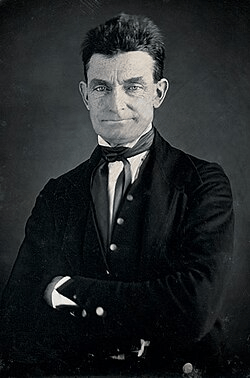
John Brown
P. 505: "On October 16, 1859, the abolitionist John Brown led a group on a raid on Harpers Ferry, Virginia."
100
"But in the right to eat the bread... which his own hand earns, [an African American] is my equal and the equal of [Senator] Douglas, and the equal of every living man."
Abraham Lincoln
(P. 505) Lincoln said this in one of his debates with Stephen Douglas when he was campaigning for senator of Illinois in 1858. He lost the election.
100
This state was the first to secede from the union in late December 1860.
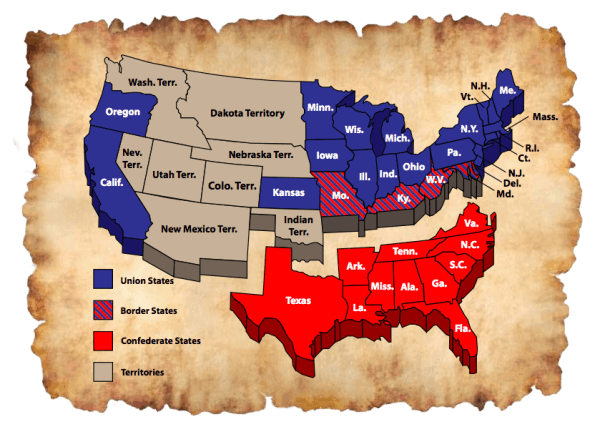
South Carolina
P. 508: "On December 20, 1860, South Carolina voted to secede from the Union." Other southern states soon followed, and by February 1861, Texas, Louisiana, Mississippi, Alabama, Florida, and Georgia had joined South Carolina and seceded.
100
Who was the Republican candidate in the 1860 presidential election?
Abraham Lincoln
NOTE: Even though he lost the Illinois Senate race to Stephen Douglas a couple years earlier, Lincoln had "gained a national reputation as a man of clear thinking who could argue with force and persuasion" (p. 505).
100
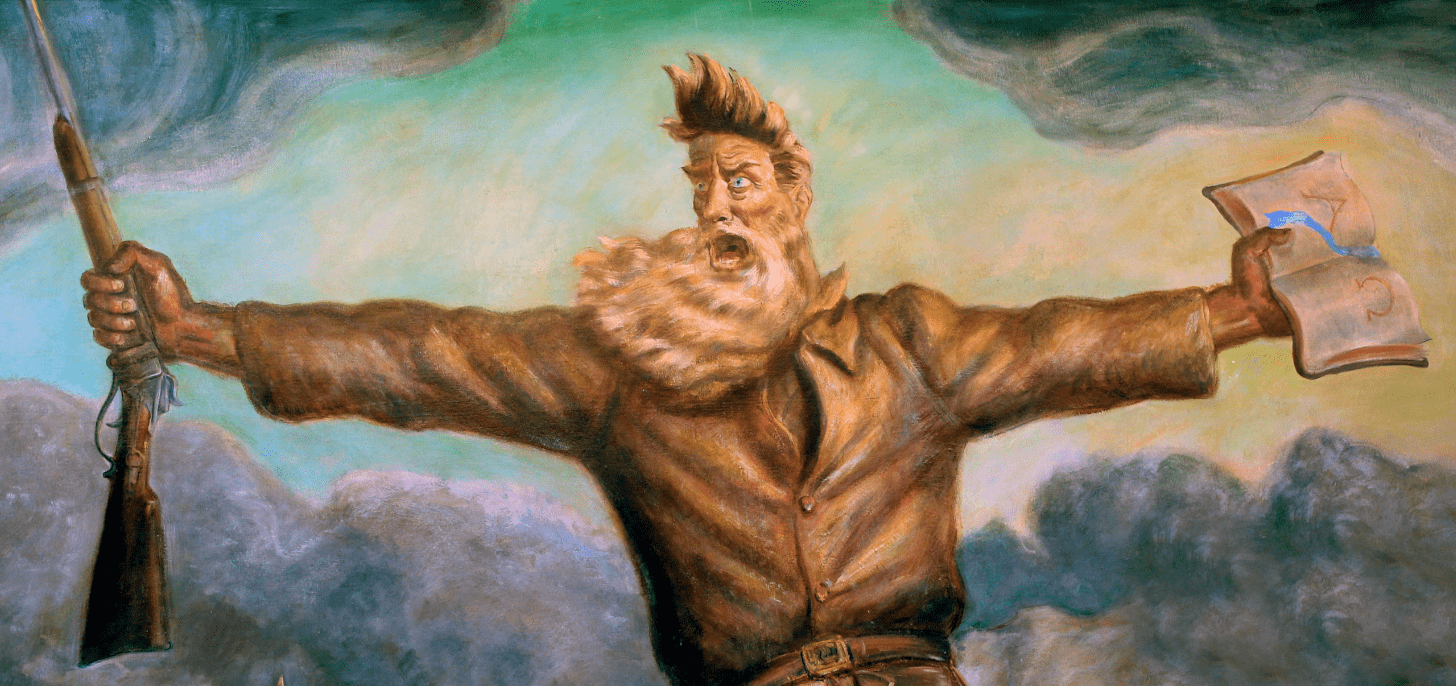
What is a martyr?
Someone who dies for a cause
200
In the 1850's, this party increasingly became the party of the South, attracting pro-slavery politicians from other parties.
Democrats
P. 501: "In contrast, the Democrats, having lost members in the North, were becoming a largely Southern party. This division would be even more apparent in the presidential election of 1856."
200
Candidate who won the 1858 election for Illinois Senator
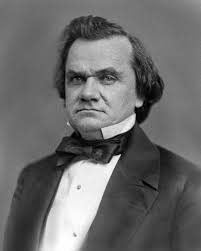
Stephen Douglas
P. 505: "Following the debates, Douglas won a narrow victory in the election. Lincoln lost but did not come away empty-handed. He gained a national reputation as a man of clear thinking who could argue with force and persuasion."
200
"You can have no conflict without being yourselves the aggressors.... We are not enemies, but friends. We must not be enemies. Though passion may have strained, it must not break our bonds of affection."
Abraham Lincoln
(p. 512) Lincoln said this in his famous 1st Inaugural Address, the speech he gave when he was sworn in as president in 1861.
200
Abraham Lincoln and Stephen Douglas both ran for Senator of this state in 1858.
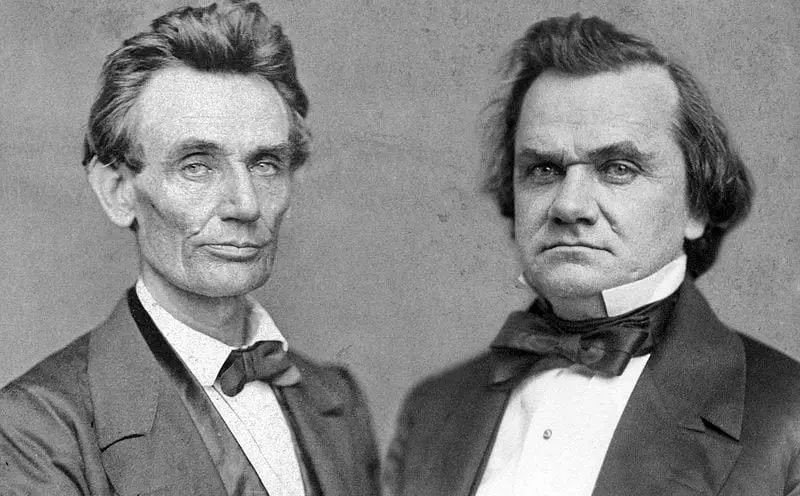
Illinois
P. 504: "The Illinois Senate race of 1858 was the center of national attention. The contest pitted the current senator, Democrat Stephen A. Douglas, against a rising star in the Republican Party named Abraham Lincoln."
200
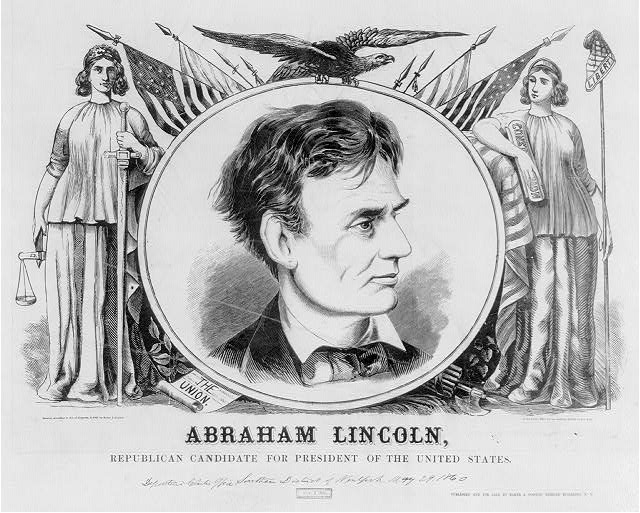
Which political party's platform in 1860 called for leaving slavery where it already existed but banning it in new territories?
the Republican Party
P. 508: "The Republicans nominated Abraham Lincoln. They wanted to leave slavery alone where it existed-but also to ban it in the territories."
200
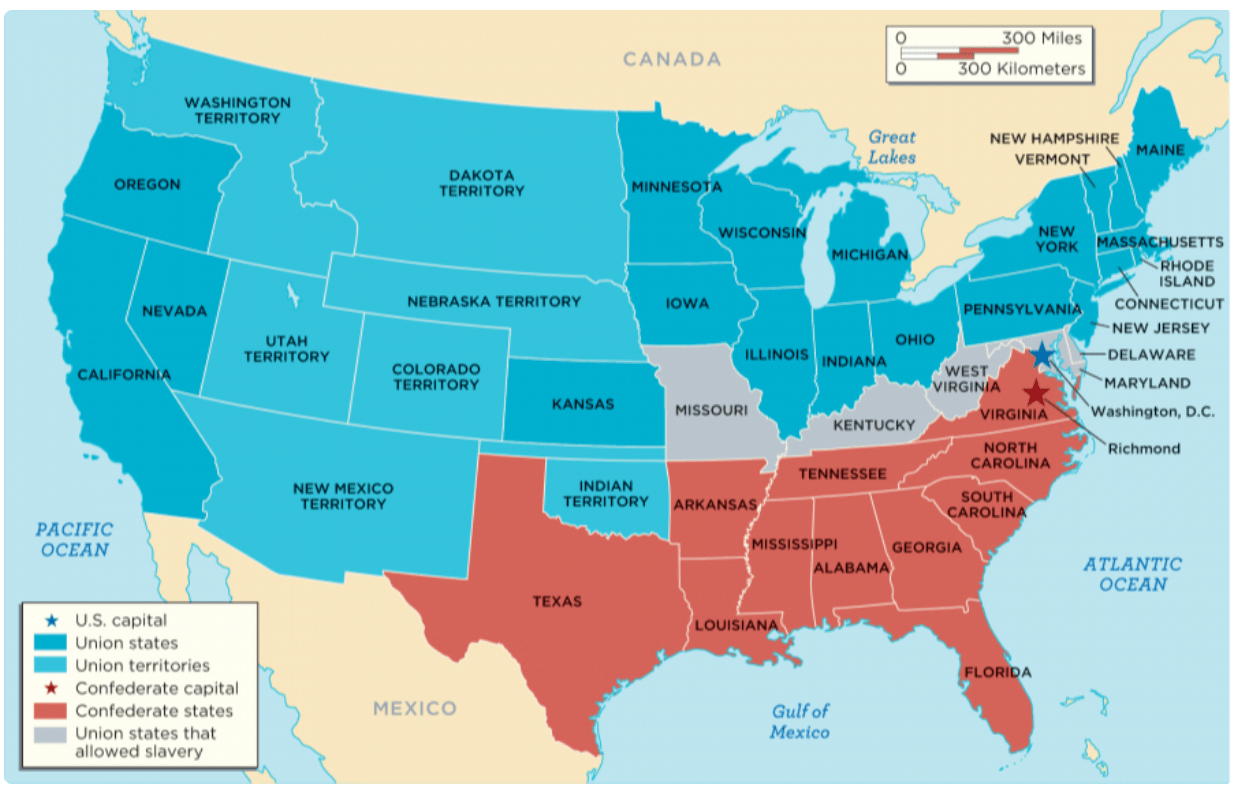
Which of these states did NOT join the CSA, or Confederate States of America: Alabama / Texas / Missouri / Louisiana
Missouri
300
Who won the 1856 presidential election, and what party was he from?
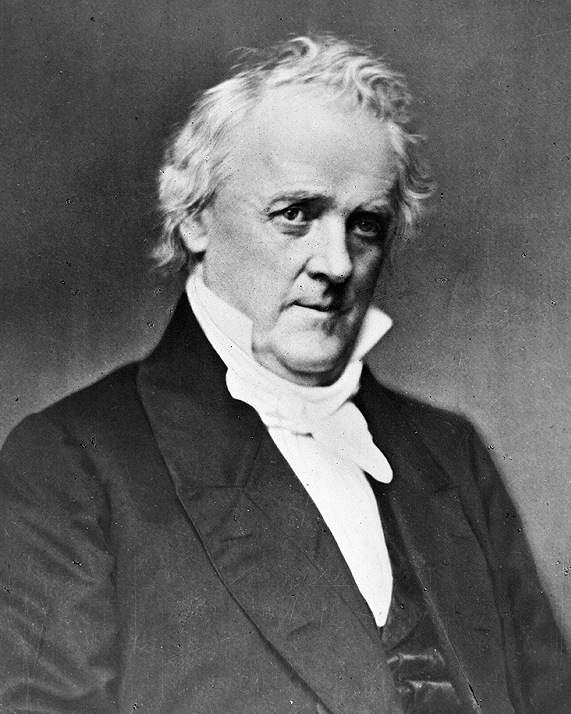
James Buchanan, Democrat
P. 502: "The vote in 1856 was divided along rigid sectional lines. Buchanan took all Southern states except Maryland.... With 174 electoral votes compared to 114 for Frémont and 8 for Fillmore, Buchanan won."
300
An enslaved African American bought by a doctor in Missouri, and taken to Illinois, a free state.
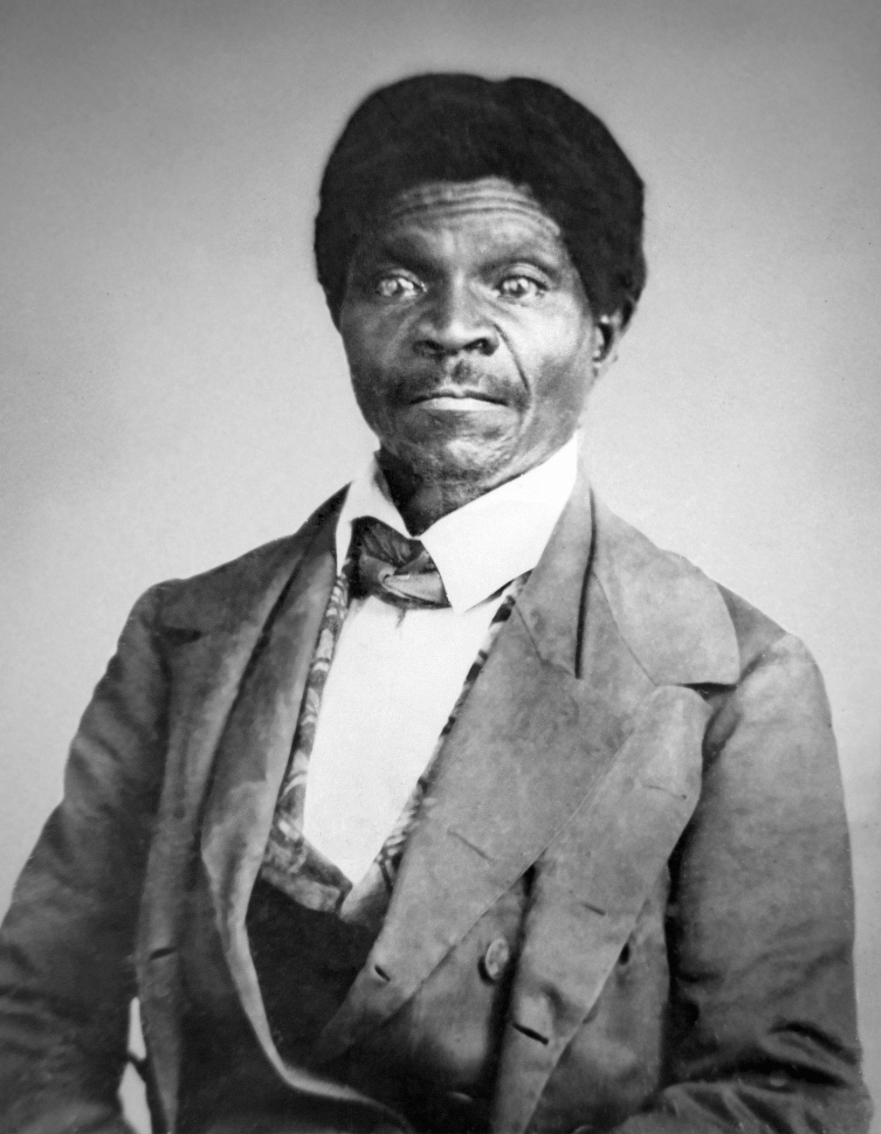
Dred Scott
P. 502: "Dred Scott was an enslaved African American bought by a doctor in Missouri, a slave state. In the 1830s, the doctor moved with Scott to Illinois, a free state, then to the Wisconsin Territory. The Northwest Ordinance of 1787 banned slavery there. Later the doctor returned with Scott to Missouri."
300
"Now if... I should forfeit my life for the furtherance of the ends of justice and MINGLE MY BLOOD . . . with the blood of millions in this slave country whose rights are disregarded by wicked, cruel, and unjust enactments–I submit; so LET IT BE DONE."
Abolitionist John Brown
(p. 505) This famous quote is from Brown's last speech, delivered in a courtroom in Virginia just before his execution.
300
What was located at Harpers Ferry, Virginia?
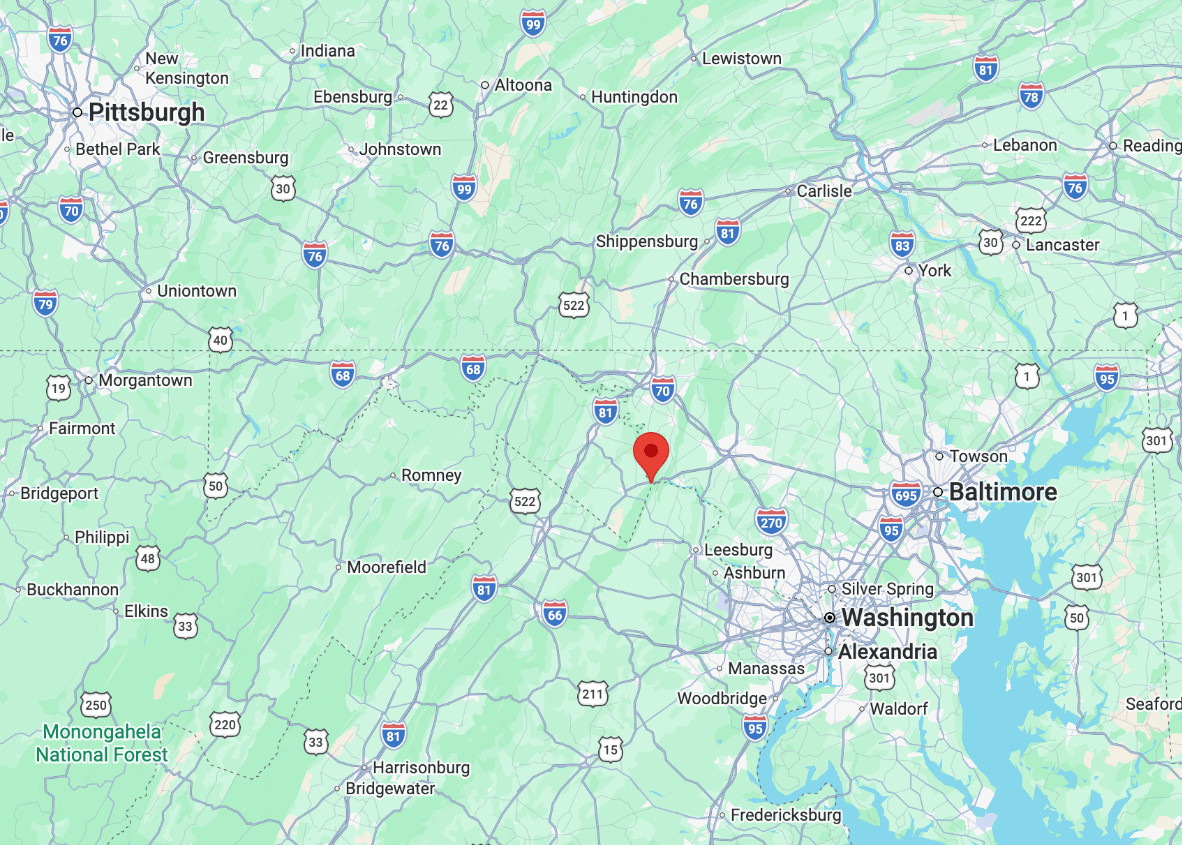
a federal arsenal, or storage site for weapons
P. 505: "John Brown led a group on a raid on Harpers Ferry, Virginia. His target was a federal arsenal, a storage site for weapons. Brown hoped to arm enslaved African Americans and start a revolt against slaveholders. Abolitionists had paid for the raid."
300
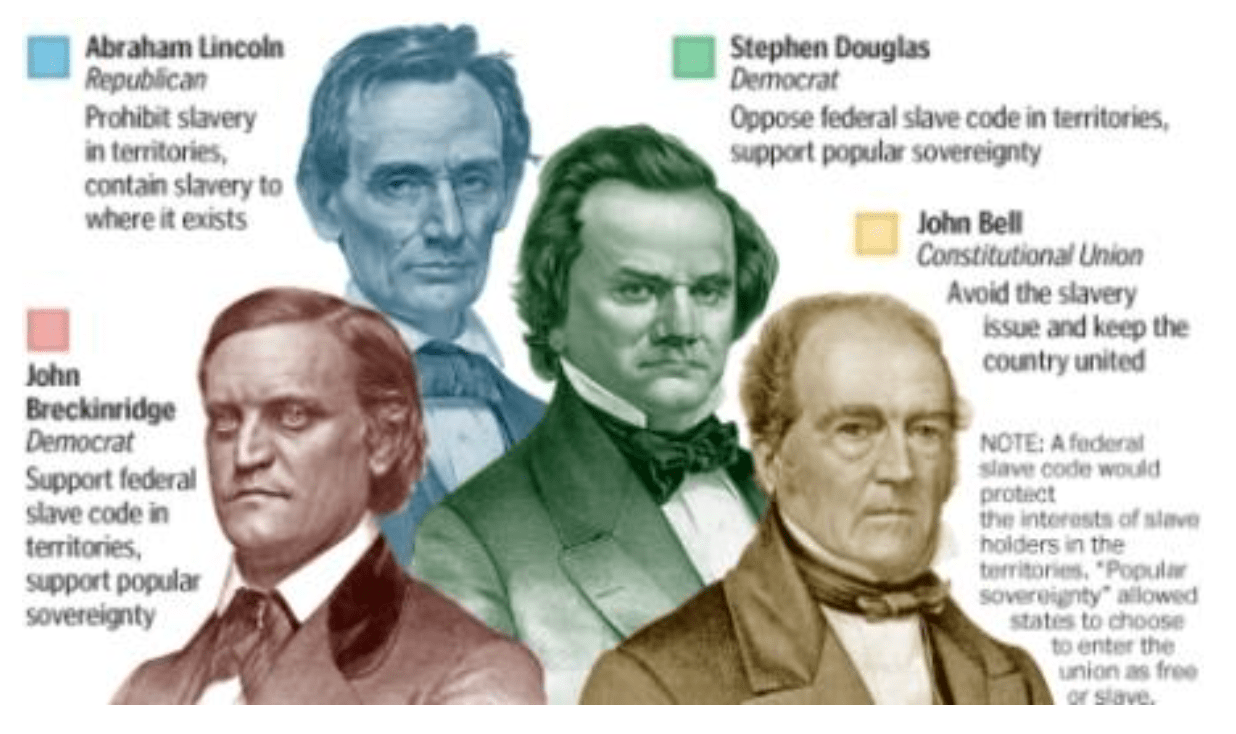
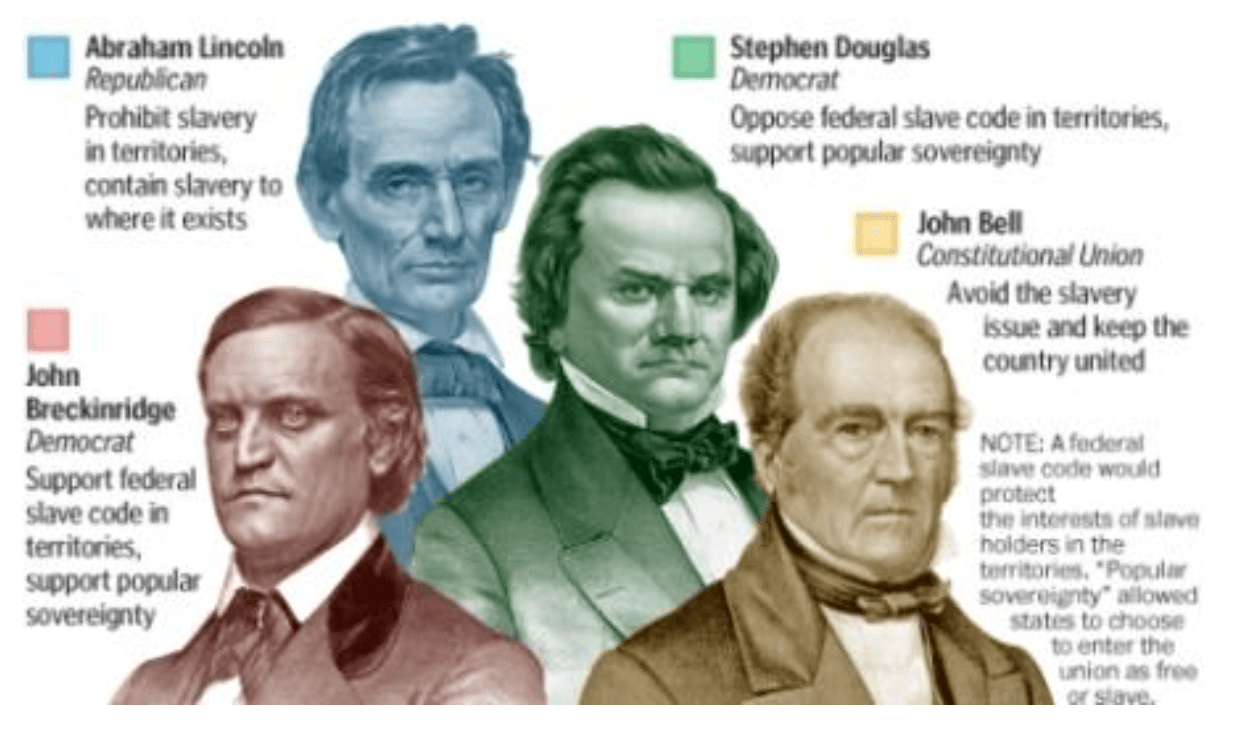
How did the Democrats help Lincoln (a Republican) win the election of 1860?
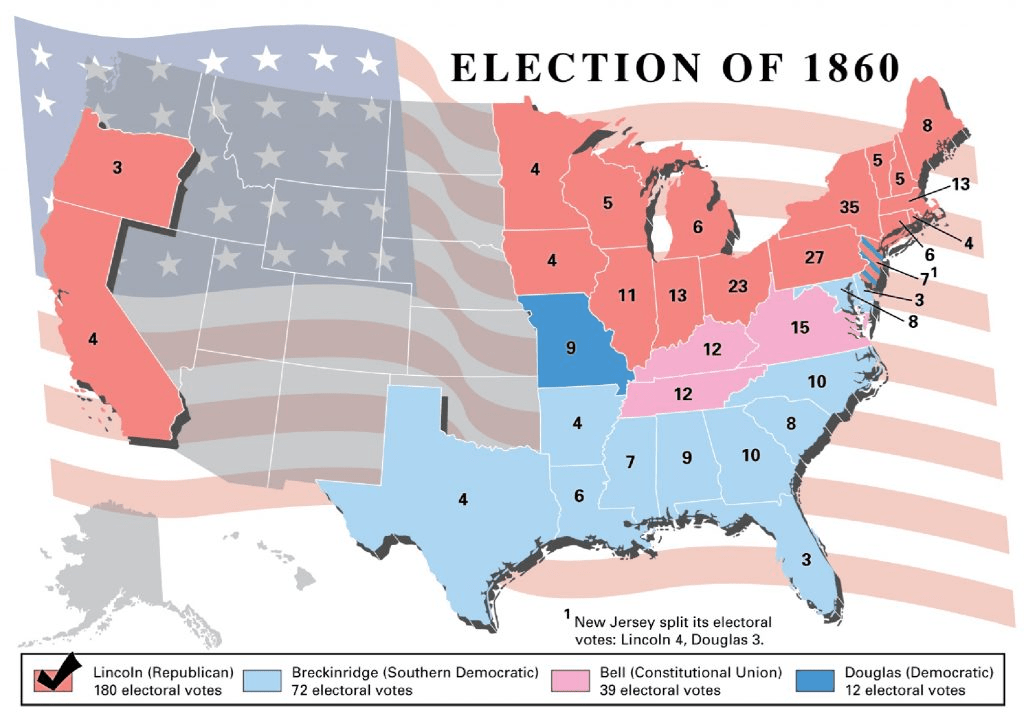
The Democratic Party was divided. Northern Democrats supported popular sovereignty. Southern Democrats vowed to uphold slavery.
P. 508: "With the Democrats divided, Lincoln won a clear majority of electoral votes."
300
Why did Dred Scott sue for his freedom?
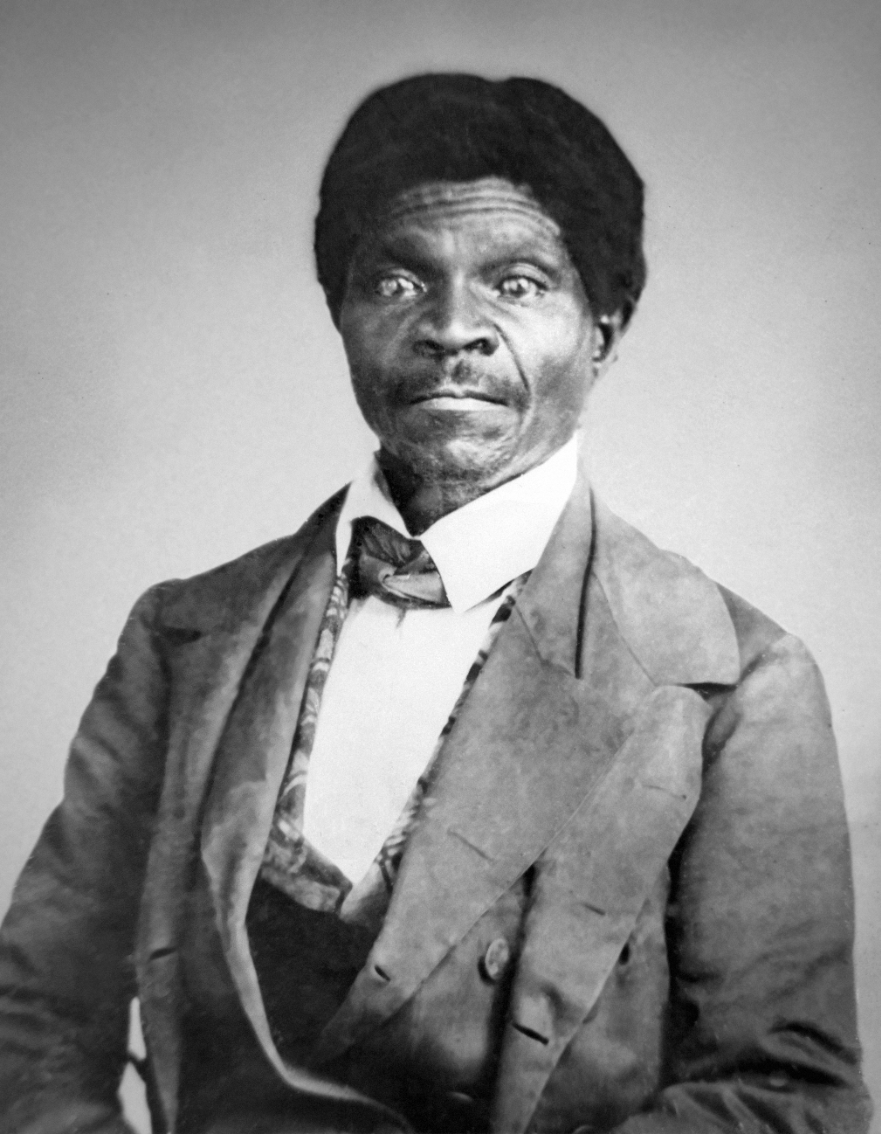
Dred Scott sued for his freedom because he had lived in areas where slavery was illegal, and he believed this should make him free.
400
This party grew by attacking immigrants and nominated former president Millard Fillmore as its candidate for president in 1856.
The American Party, or Know-Nothings
P. 501: "The American Party, or Know-Nothings, grew quickly between 1853 and 1856 by attacking immigrants. The party nominated former president Millard Fillmore as its candidate."
400
Supreme Court Justice who ruled that Congress had no power to ban slavery and declared the Missouri Compromise unconstitutional
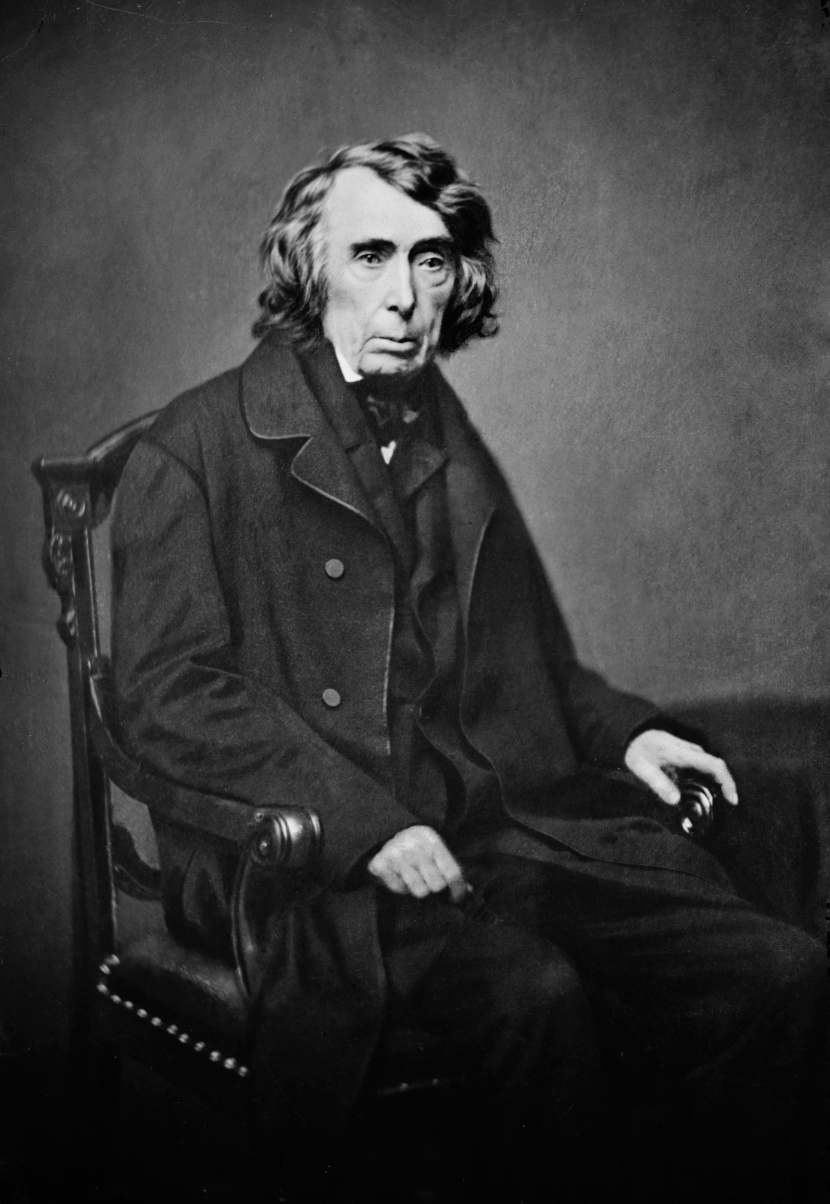
Chief Justice Roger B. Taney
P. 503: "Taney wrote that living on free soil did not make Scott free. A slave was property. The Fifth Amendment prohibited the taking of property without 'due process.' Finally, Taney wrote that Congress had no power to ban slavery."
400
"neither the class of persons who had been imported as slaves, nor their descendants, whether they had become free or not, were then acknowledged as a part of the people, nor intended to be included [in the Declaration of Independence or Constitution]."
Supreme Court Chief Justice Roger B. Taney
(p. 503) The was what Taney wrote when he denied that enslaved people like Dred Scott could be a citizen.
400
Confederate guns opened fire here on April 12, 1861, beginning the Civil War.
Fort Sumter (in Charleston Harbor, South Carolina)
P. 513
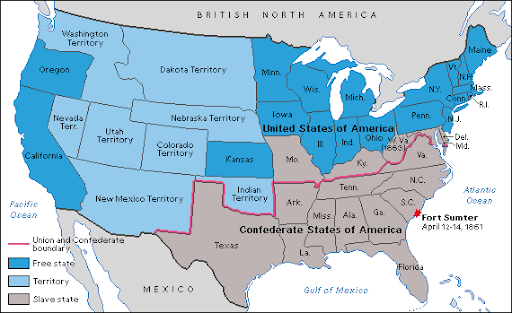
400
Who was the Northern Democrat candidate in the election of 1860, who supported popular sovereignty?
Stephen Douglas
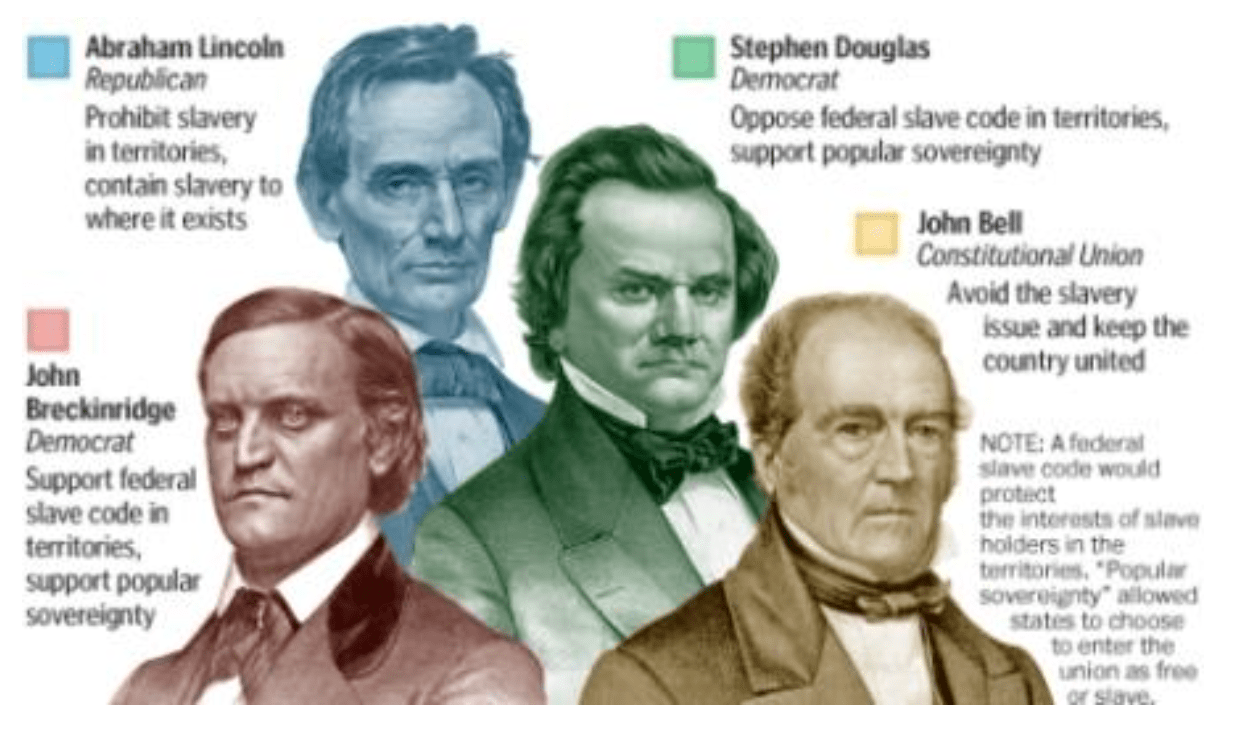
400
What did the Supreme Court rule regarding Dred Scott's freedom?
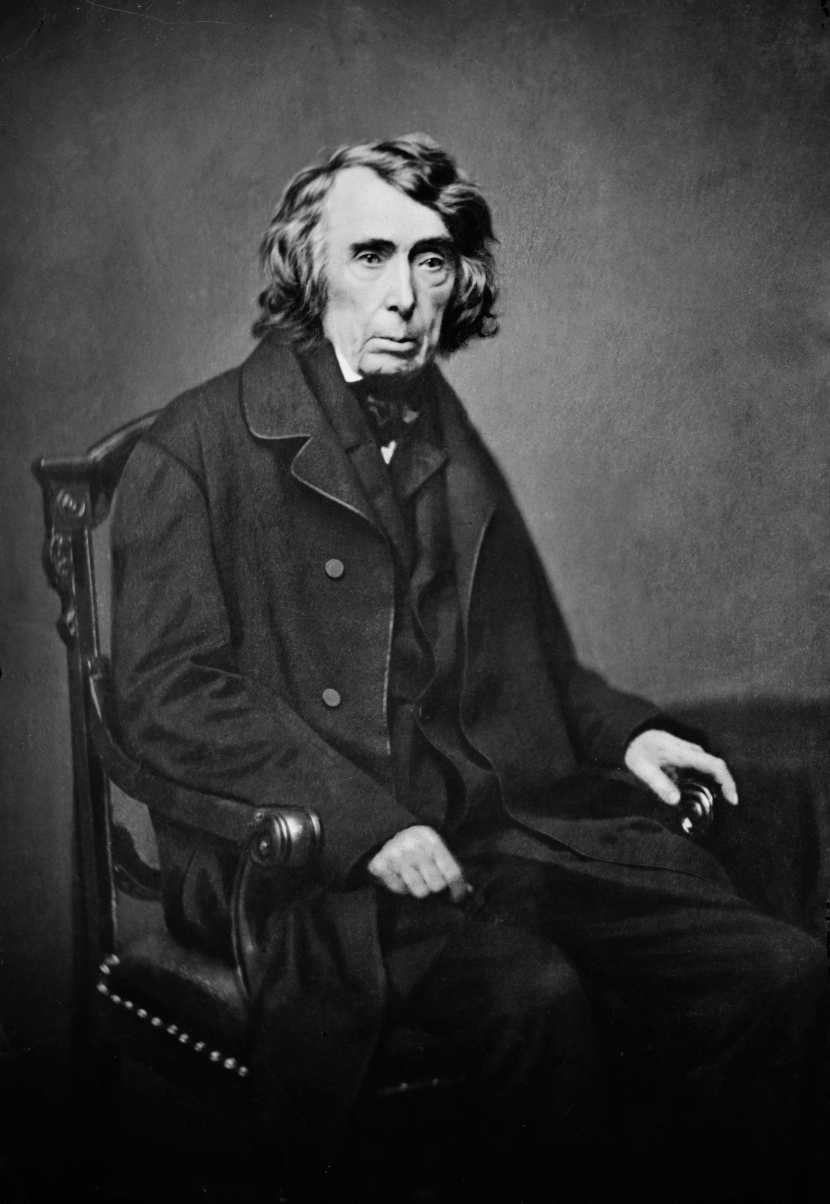
The Supreme Court ruled that living on free soil did not make Scott free, and he remained an enslaved person.
500
Who was the Republican candidate in the 1856 presidential election?
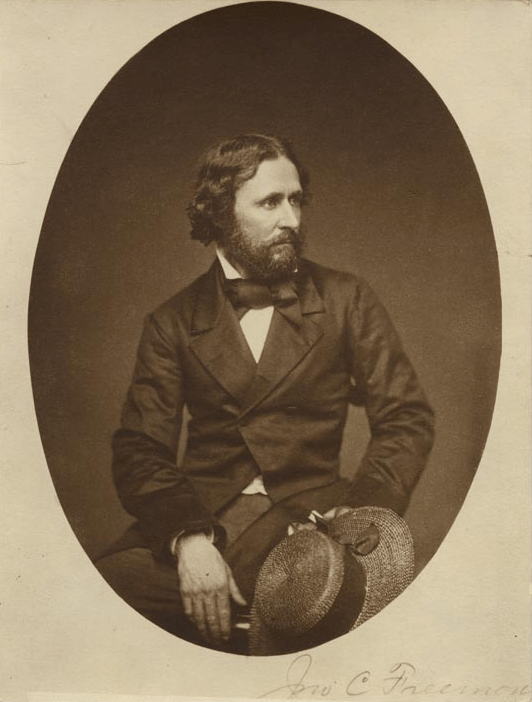
John C. Frémont
P. 501: "Republicans chose Californian John C. Frémont, a famed western explorer."
500
President of the CSA, or Confederate States of America
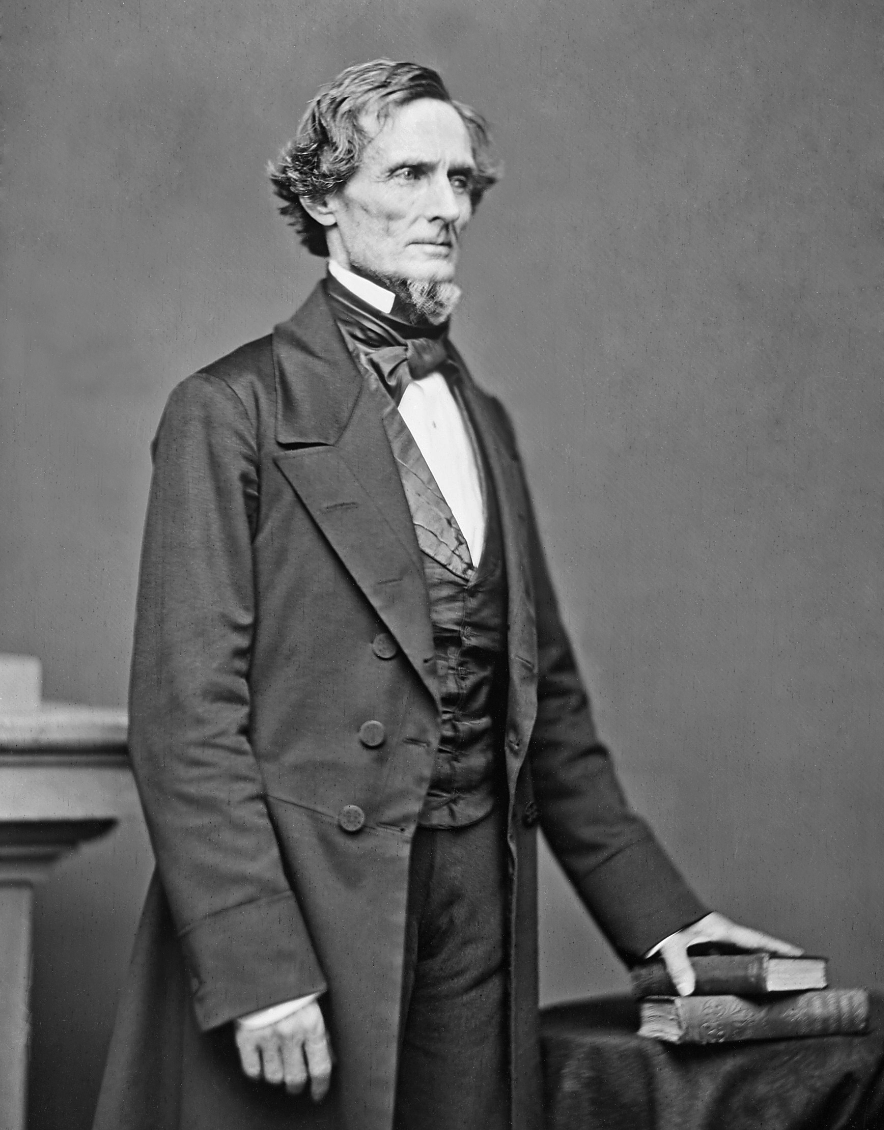
Jefferson Davis
P. 509: "Calling themselves the Confederate States of America, they chose Jefferson Davis as their president."
500
"The true question is, Did John Brown draw his sword against slavery and thereby lose his life in vain? And to this I answer ten thousand times, No! No man fails, or can fail who so grandly gives himself and all he has to a righteous cause."
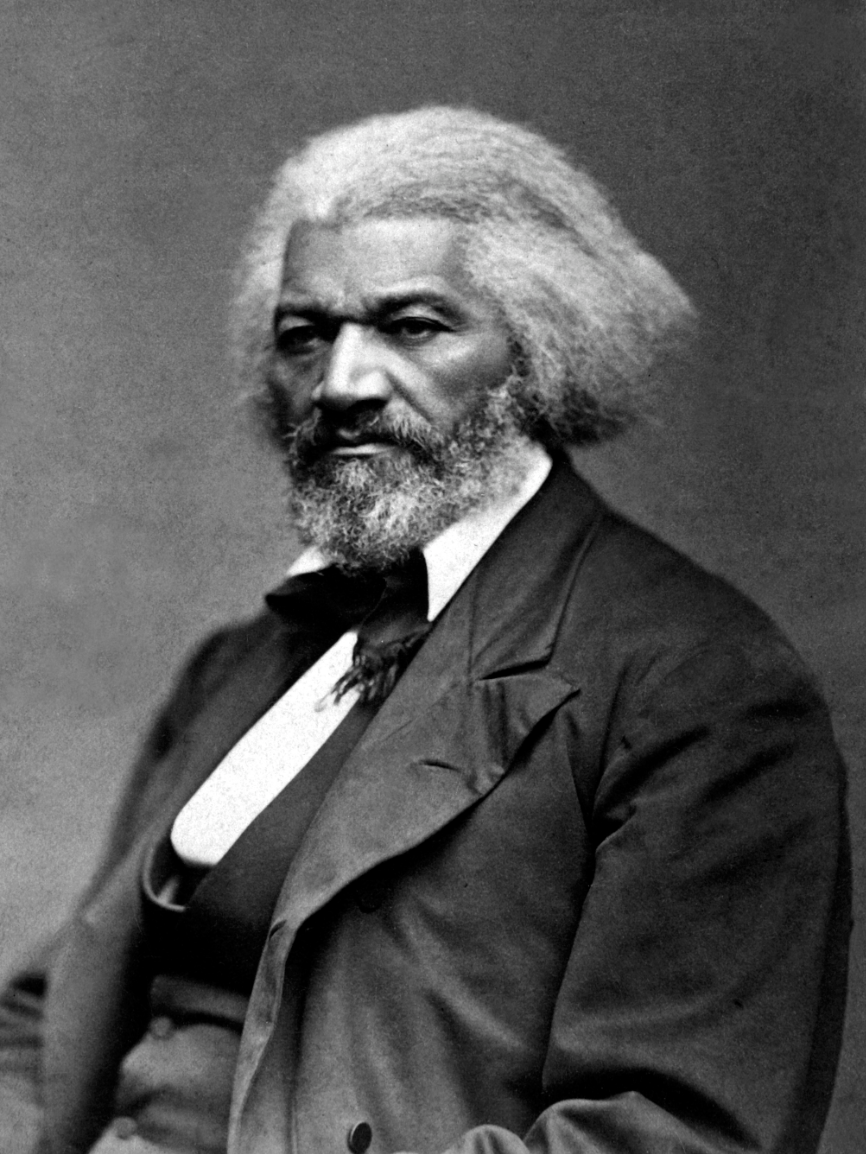
Frederick Douglass
(p. 500)
500
What state declared this when they seceded from the Union? "Our position is thoroughly identified with the institution of slavery—the greatest material interest of the world. Its labor supplies the product which constitutes by far the largest and most important portions of commerce of the earth."
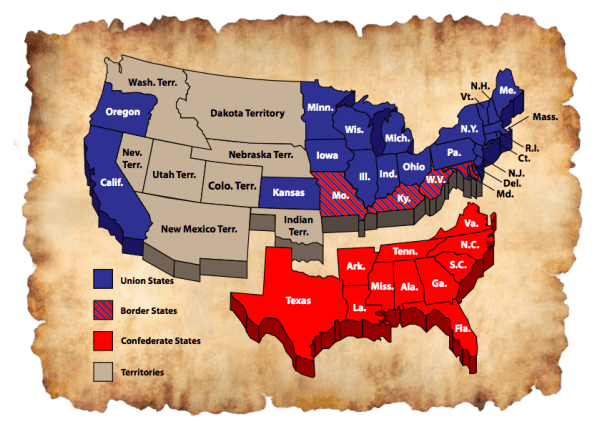
Mississippi
NOTE: Mississippi was the second state to secede from the Union, doing so on January 9, 1861, following South Carolina.
500
Who was the Southern Democrat candidate in the election of 1860 who vowed to support slavery (and won the majority of southern states)?
John C. Breckinridge
500
After Lincoln's election, this Kentucky senator suggested a last-minute compromise to amend the Constitution to restore the 36°30' Missouri Compromise line for all territories. But it was too late; leaders from both North and South rejected his plan.
John Crittenden
Pp. 508-9: "In other Southern states, leader debated the question of secession, or withdrawal from the Union. Meanwhile, members of Congress tried to find ways to prevent it. Senator John Crittenden of Kentucky suggested a series of amendments to the Constitution."