short form
I Say, I Say...
Preferably...
漢字
何か
100
Make the following sentence into short form and translate:
としょかんでともだちに会って、いっしょにべんきょうします。
としょかんでともだちに会って、いっしょにべんきょうする。
I meet my friends at the library, and we study together.

100
Translate the following:
アーニャさんはろくさいだと言っていました。
Anya said that she's six years old.

100
Translate the following
おそくならないでください。
Please do not be late.
100
Read Aloud + Translate:
新しい新聞を読んでいます。
あたらしいしんぶんをよんでいます。
I'm reading a new newspaper.

100
Translate the following:
I did not clean anything.
何もそうじしませんでした。
200
In what social situations is it okay to use short form?
With Close Friends and Family!
Do NOT use short form with strangers or superiors.
(Superiors meaning bosses, teachers, and generally those who are older or in a higher position than you.)
200
Translate the following:
サマンサさんのせんこうはコンピューターじゃないと思います。
I don't think Samantha's major is computer (science).
200
Translate the following
このがくせいはレポートをかくのがきらいです。
This student dislikes writing reports.
200
Read Aloud + Answer in short form
今日、次のクラスは何?
きょう、つぎのくらすはなに?
Potential Answers:
[class]。
次のクラスは[class]。
あとで、クラスがない。
200
Translate
A:パーティーにトムさんが何かもってくる?
B:トマトをもってくると思う。
A: What did Tom bring to the party?
B: I think he brought tomatoes.

300
Take the following words and fill the short form conjugation chart.
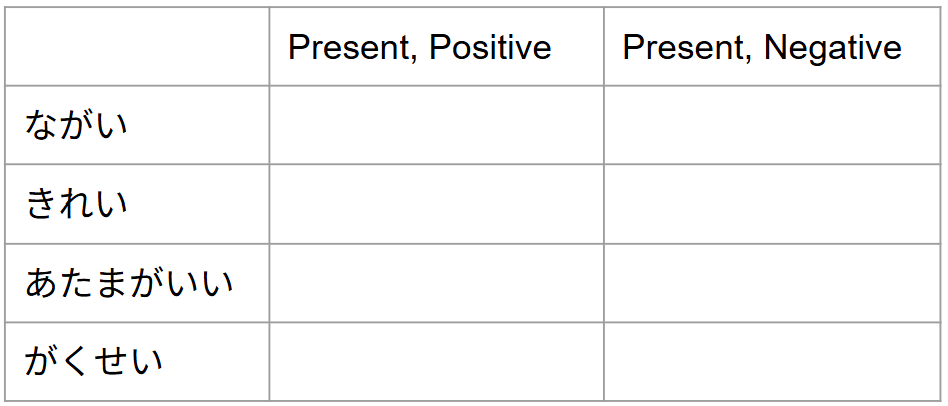
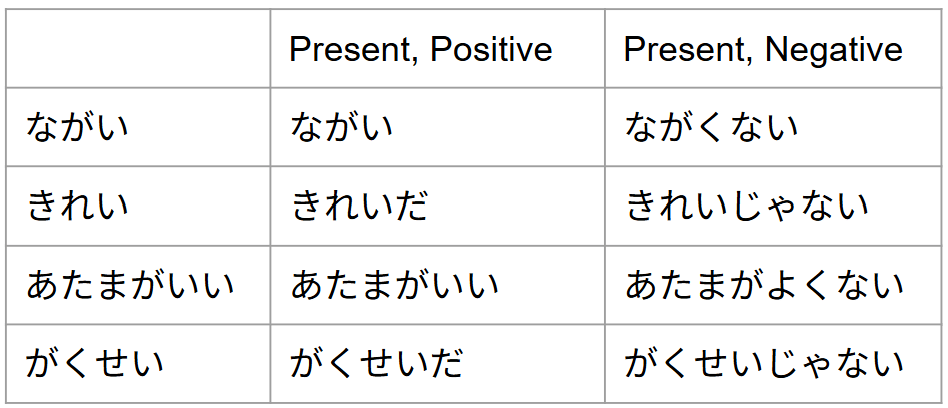
*technically きれい and がくせい (な-adj and nouns) in short form can end in だ/な/X, depending on the situation.
300
Fill in the missing particle and Translate
A: だれ__はなこさんとけっこんしていますか。
B: たろうさん__はなこさんとけっこんしています。
Particle: が
A: Who's married to Hanako?
B: Tarou is.
300
Translate what the office worker said:
いしゃ:まいにち、このくすりをのんでください。
かいしゃいん:しごとでたばこをすわないでください。
べんごし:けいさつとはなさないでください。
Please do not smoke at work.
300
Match the following verbs to their definitions.
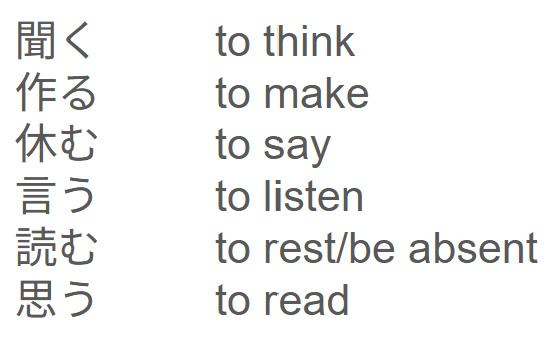
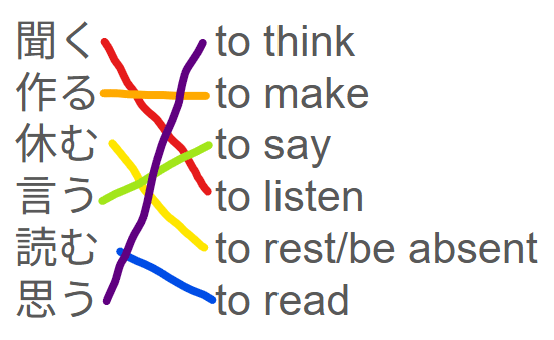
300
Translate:
てんきよほうはけさははれで、きおんはろくじゅうどだと言っていました。
The weather forecast said this morning would be sunny with a temperature of 60 degrees.

400
Translate the following interaction between close life-long friends.
A: Got class Friday?
B: Nah, I don't.
A: きんようびにクラスがある?
B: ううん、クラスがない。
400
Translate:
I think Saiki likes to eat coffee jelly.
(coffee jelly: コーヒーゼリー)

さいきさんはコーヒーゼリーを食べるのが好きだと思います。
400
Translate:
My older brother is good at taking pictures.
My younger brother is bad at cooking.
あにはしゃしんをとるのがじょうずです。
おとうとはりょうりするのがへたです。
400
Read Aloud + Translate:
お母さんはかぞくの車をつかわないでくださいと言っていました。うんてんするのがへただと思いますから。
My mom said to not use the family car because she thinks I'm bad at driving.
400
Translate:
Mai said that every week, on Thursday, she always does her laundry, and takes a bath.

まいさんはまいしゅうもくようびにいつもせんたくしていて、おふろにはいっていると言っていました。
500
Take the following verbs and fill the short form conjugation chart (7 verbs; scroll)
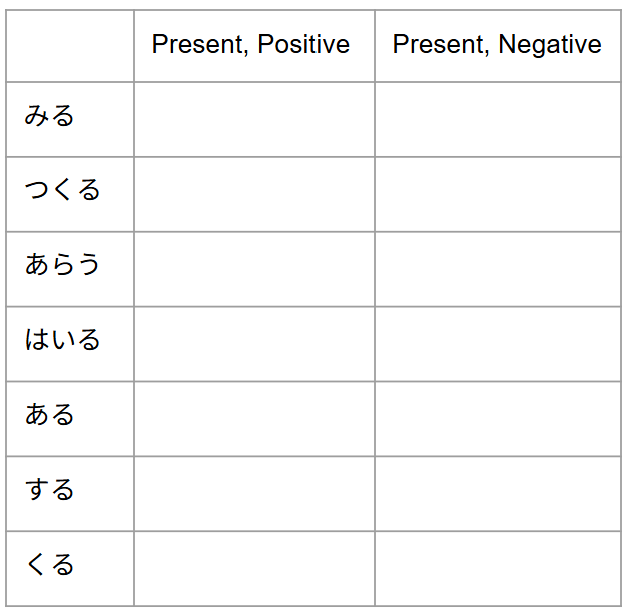
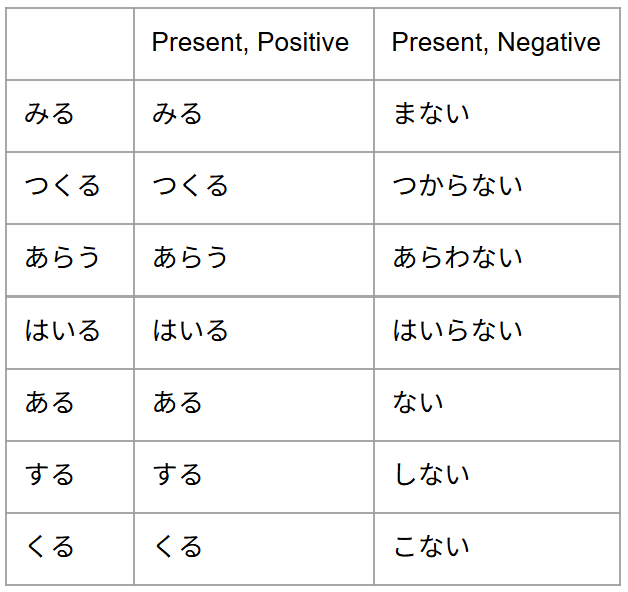
Present, Positive: Dictionary Form
Present, Negative: ない-form
500
Translate the following:
Tanaka said he thinks his older sister is not good at driving.

たなかさんはおねえさんはうんてんするのがじょうずじゃないと思うと言っていました。
500
Answer the following in one sentence (in Japanese):
What is one thing you like to do? What is one thing you dislike doing?
_____________(short verb)のがすきで/すきじゃない/きらいで、_____________(short verb)のがすき/すきじゃない/きらいです。
Ex. うたうのがすきで、コーヒーをのむのがすきじゃないです。
500
Read Aloud + Translate
毎日この会社員は電車にのって、仕事に行っています。
まいにちこのかいしゃいんはでんしゃにのって、しごとにいっています。
Every day, this office worker rides the train and goes to work.

500
Translate the following into Japanese + short form:
I have four siblings.
I have an older brother, an older sister, a younger brother, and a younger sister.
My older brother works at the library.
My older sister is smart and funny.
My younger brother likes to read manga.
My younger sister is a college student, and good at swimming.
きょうだいがよにんいる。
あにがひとり、あねがひとり、おとうとがひとり、いもうとがひとりいる。
あにはとしょかんではたらいている。
あねはあたまがよくて、おもしろいです。
おとうとはまんがを読むのがすきです。
いもうとはだいがくせいで、およぐのがじょうずです。