Vocabulary 1
Air Pressure
Isotherms
Isobars
Vocabulary 2
100
Define "weather map".
A map that shows different weather conditions across a large area.
100
Describe how the movement of air differs between high and low pressure systems.
In a high pressure system: cool, dense, air sinks toward Earth.
In a low pressure system: warm, less dense, air rises away from Earth.
100
What is the approximate air temperature in Florida according to this map?
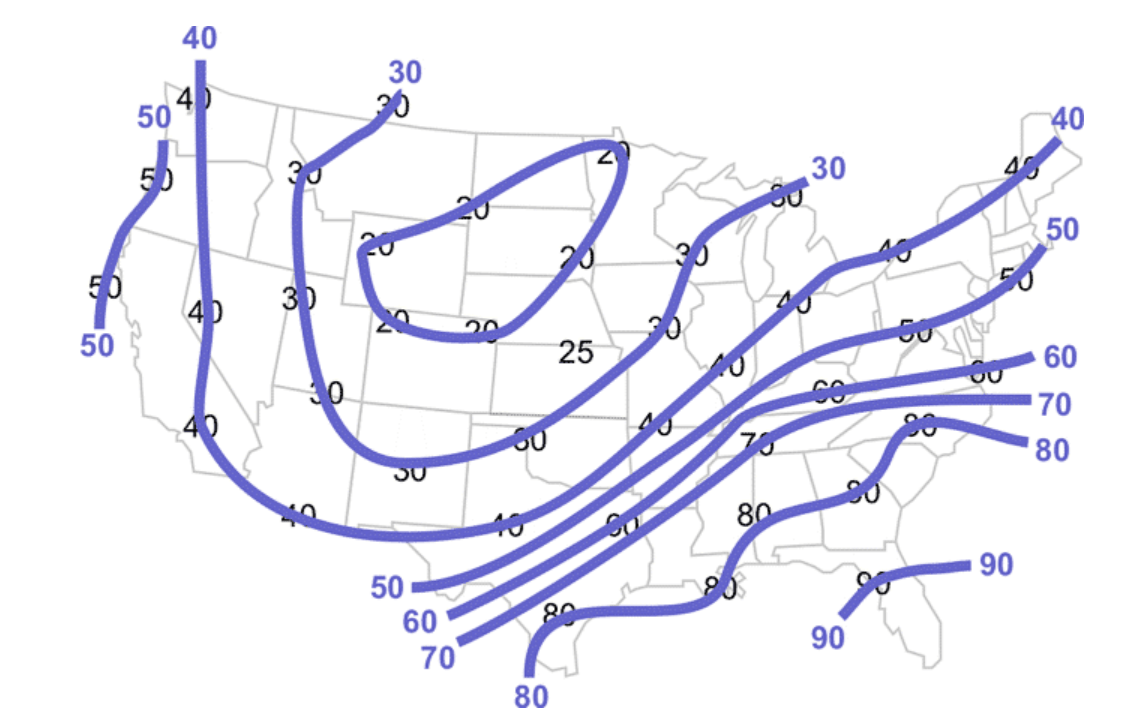
About 90°F
100
According to this map what type of pressure system is Georgia experiencing?
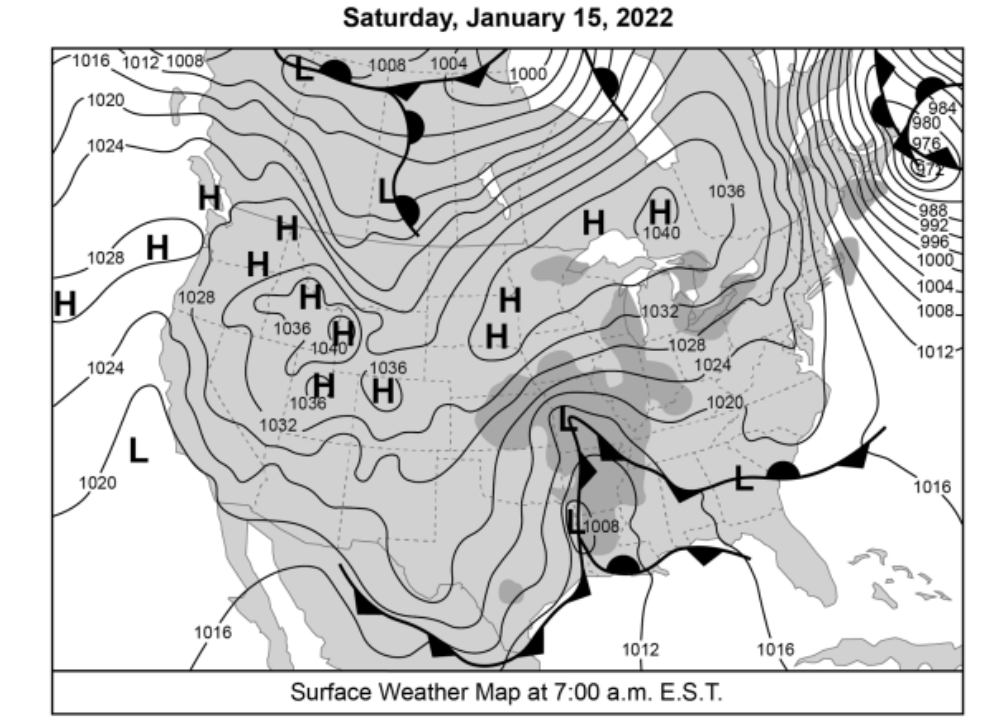
Low pressure system
100
Complete the sentence below with the appropriate vocabulary word:
A line on a weather map that connects places with the same temperature is called an ____________________.
Isotherm
200
Define "isobar".
A line on a map connecting places with the same air pressure.
200
Based on the picture below, what type of air pressure do you predict this area is experiencing? 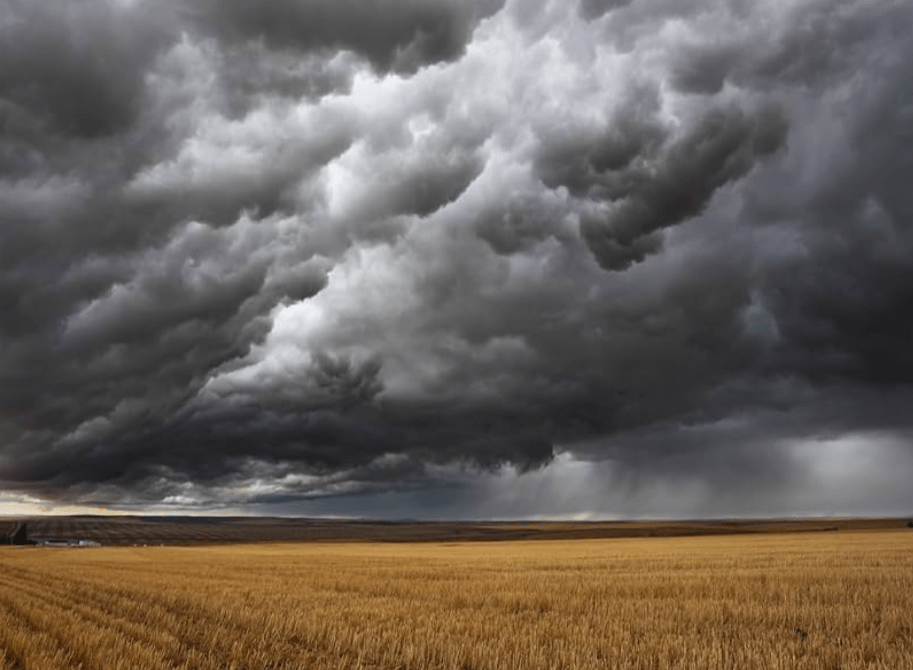
Low air pressure
200
What is the approximate air temperature in Utah according to this map? 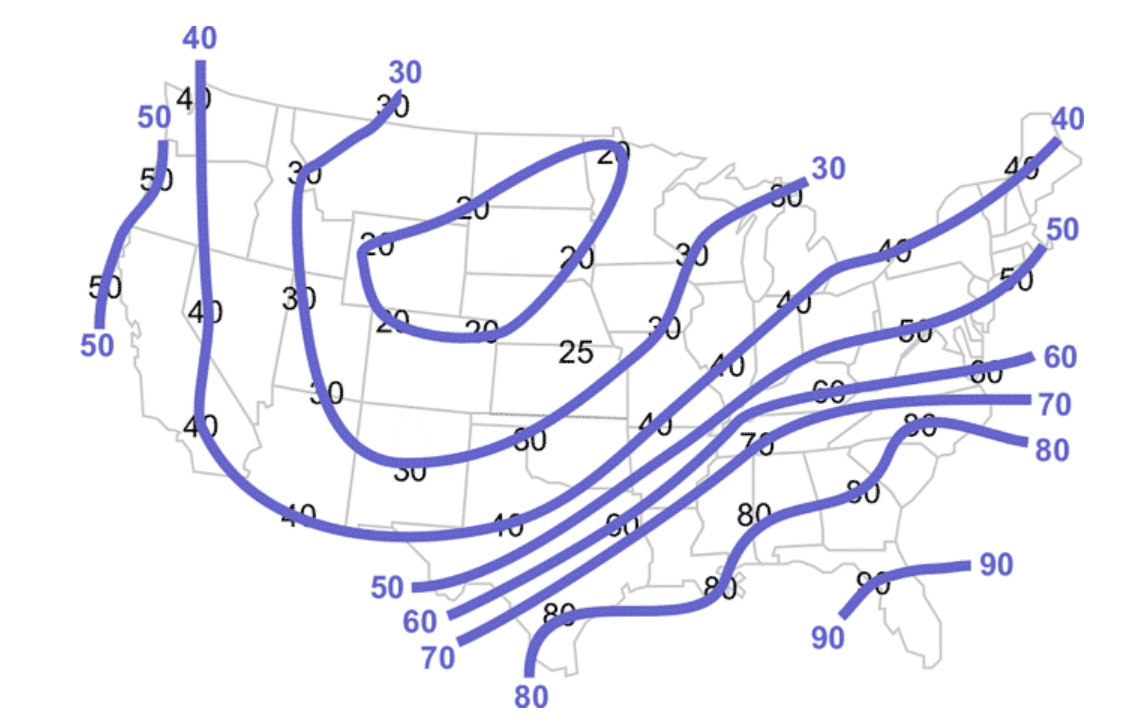
About 30°F
200
According to this map, what is the approximate air pressure (mb) of Kansas?
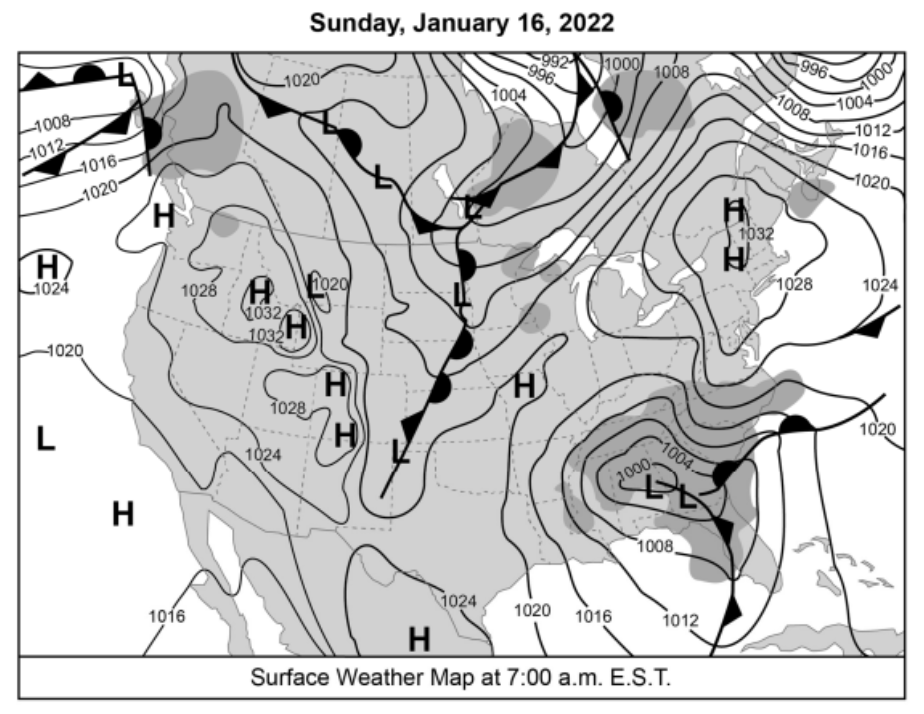
About 1020 mb
200
Complete the sentence below with the appropriate vocabulary word:
When water vapor cools and changes into liquid water, ____________________ occurs.
Condensation
300
Define "air pressure".
The force of air pushing down on Earth’s surface.
300
Based on the picture below, what type of air pressure do you predict this area is experiencing?
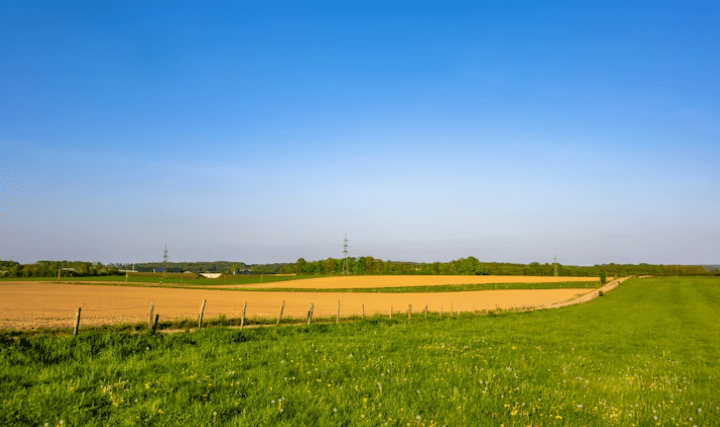
High air pressure
300
According to this map, what is the approximate temperature of Nebraska?
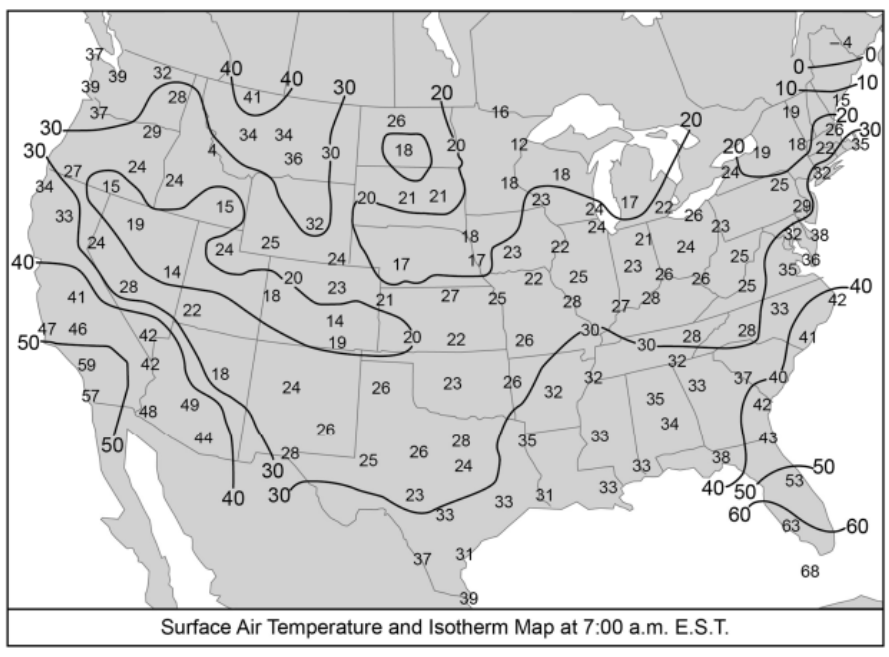
About 20°F
300
According to this map, what would you expect the weather to be like in Idaho?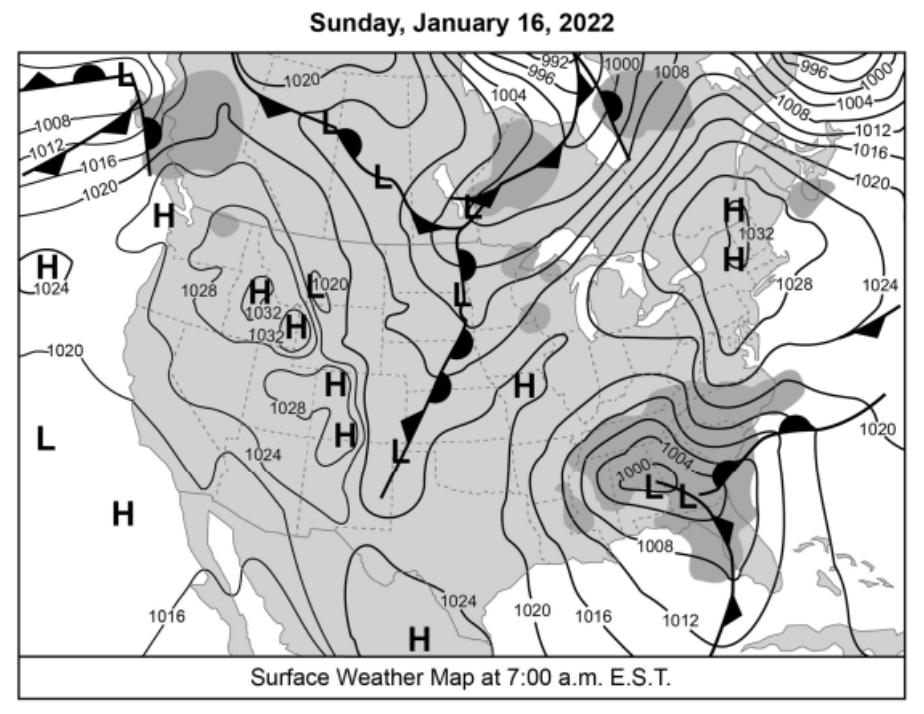
Clear, sunny, dry weather
300
Complete the sentence below with the appropriate vocabulary word:
An area with sinking air that usually brings clear, dry weather is called a ____________________.
High pressure system
400
Define "precipitation".
Any form of water that falls from clouds (rain, snow, sleet, hail).
400
Explain why areas near the equator generally have lower air pressure than areas near the poles.
Response must mention temperature of air, density of air, and if air is rising or sinking at both locations!
The equator receives large amounts of solar energy, causing the air to be warm. This warm air is less dense and rises away from Earth, creating low pressure.
The poles receive small amounts of solar energy, causing the air to be cold. This cold air is more dense and sinks toward Earth's surface, creating high pressure.
400
According to this map, if it were to precipitate in New York, what type of precipitation would be expected? Why?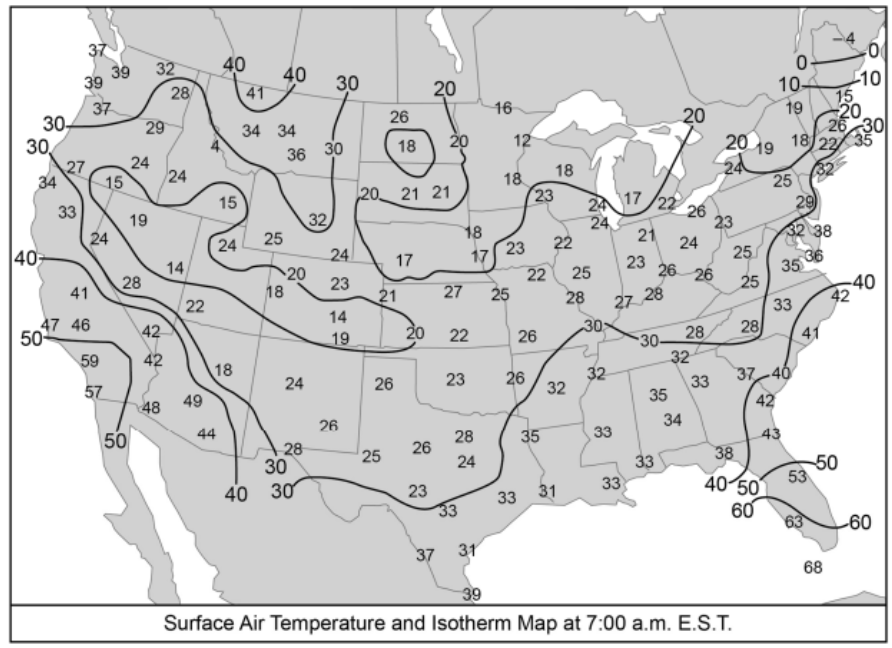
Rain because the temperature is above 32°F
400
According to this map, what would be the range of air pressure values across California? (______ - ______)
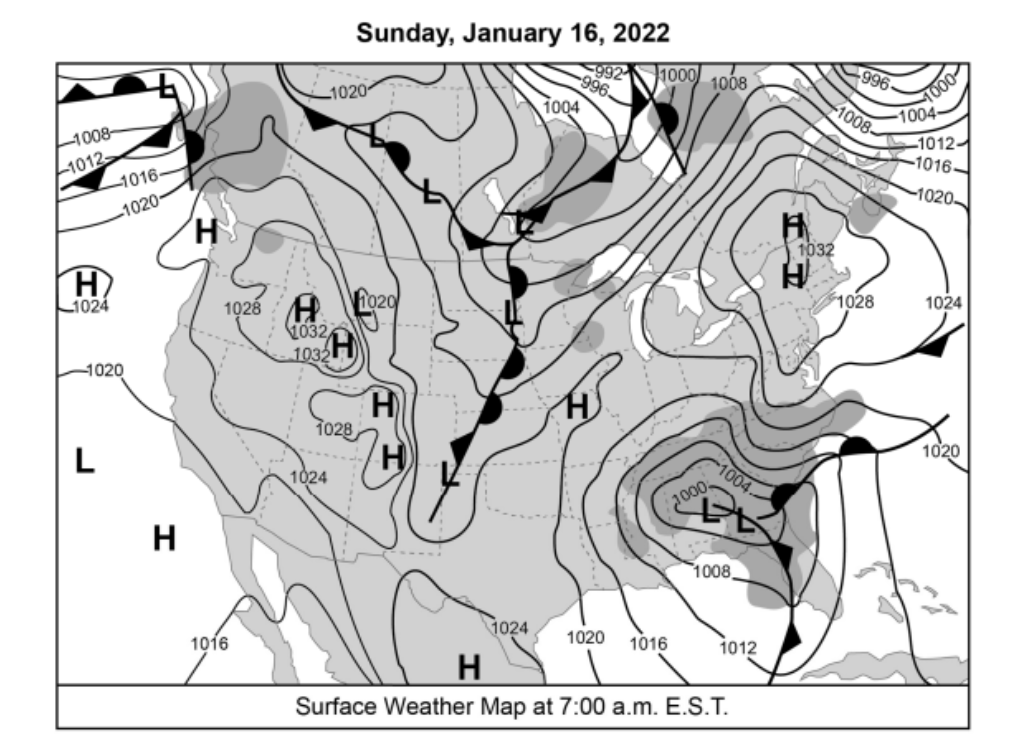
about 1020 mb - 1024 mb
400
Complete the sentence below with the appropriate vocabulary word:
Water in gas form found in the air is called ____________________.
Water vapor
500
Define "low pressure system".
An area where air is rising; usually brings clouds, storms, and precipitation.
500
Explain why clouds can form in a low pressure system, but not in a high pressure system.
In a low pressure system: air rises into the upper atmosphere where water vapor condenses into clouds.
In a high pressure system: air sinks toward Earth's surface, keeping water vapor out of the upper atmosphere - so it does NOT condense into clouds.
500
According to these maps, what type of precipitation would you predict is falling in Minnesota? Why?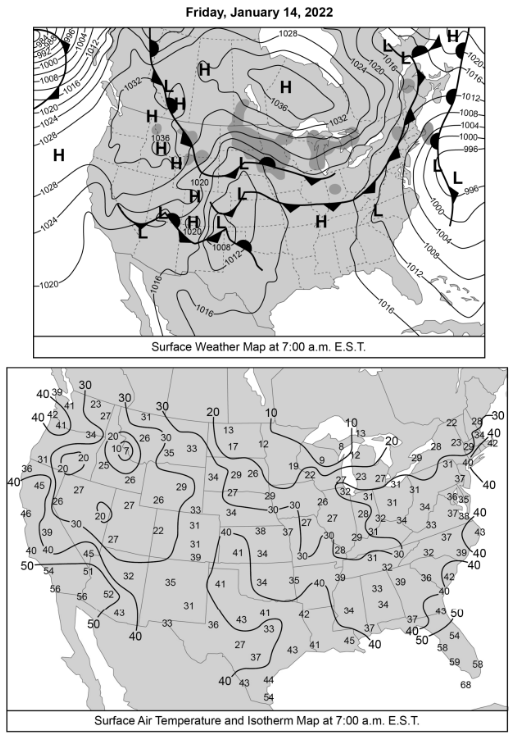
Snow because the temperature is below 32°F
500
According to this map, what would be the range of air pressure values across Texas? (______ - ______)
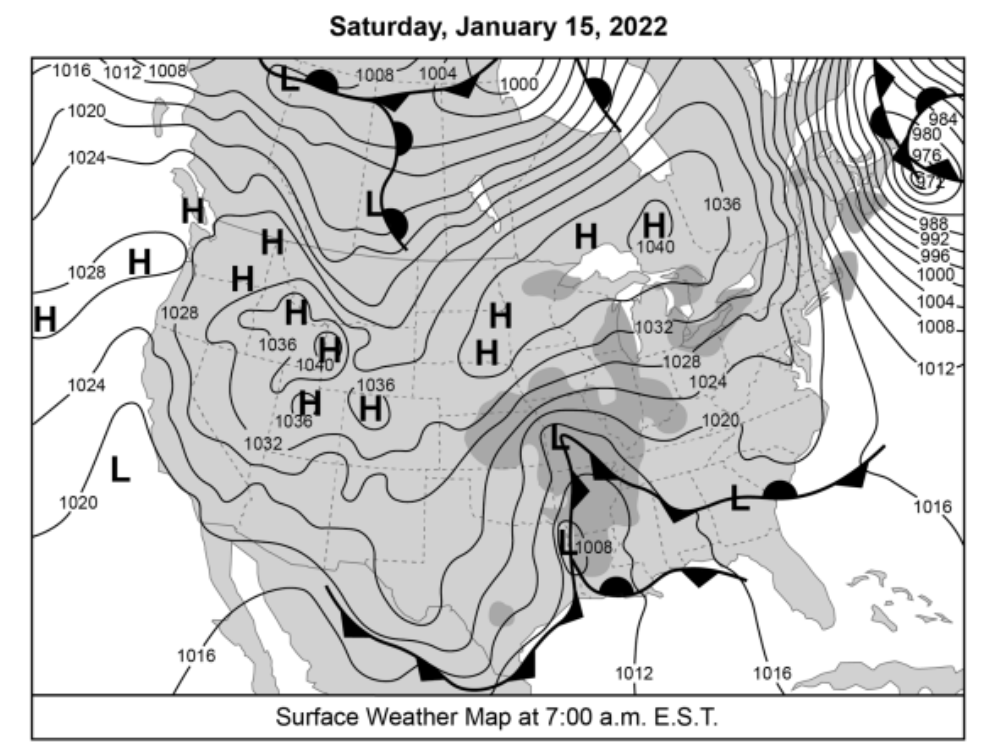
about 1012 mb - 1028 mb
500
Complete the sentence below with the appropriate vocabulary word:
The movement of heat where warm air rises and cool air sinks is called ____________________.
Convection