Classification
History of Fishes
Cranium
Post-cranium
Gas transport
Surprise Questions
100
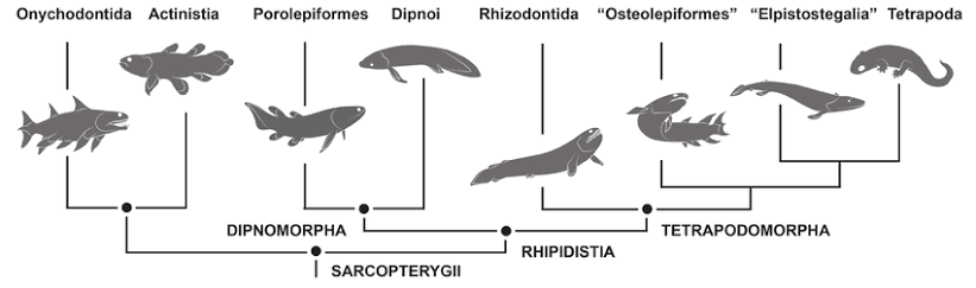
This is the term for the major clade of lobe-finned fishes including tetrapods.
Sarcopterygii
100
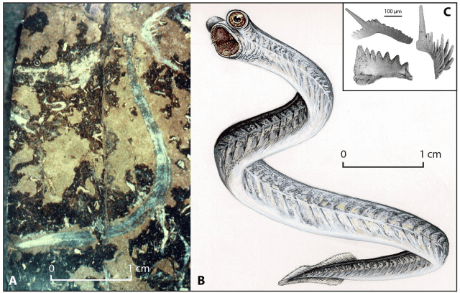
These enigmatic true chordates are abundant in fossil record due to their calcified toothlike structures and persisted for a relatively long time in the fossil record from 600-200 mya.
Conodonts
100
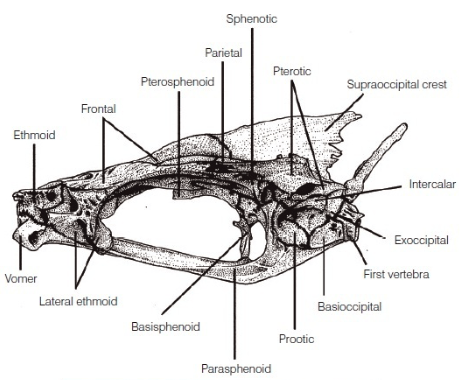
The cranial skeleton is divided into two major parts the _________ and the branchiocranium
Neurocranium
100
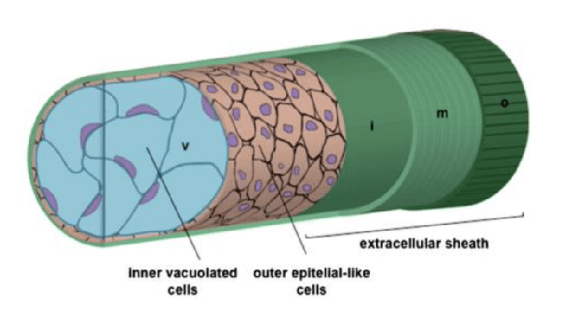
___________ is a longitudinal support rod filled with pressurized cells that provides rigidity and support for an elongated body while swimming.
Notochord
100
In fish, blood travels only once through the heart per circuit around the body, therefore it is considered a _______ _______ system.
Single pump/circuit system.
100
_________ apparatus is made up of four pairs of flat dermal bones that protect gills and assist in respiration/feeding.
Opercular
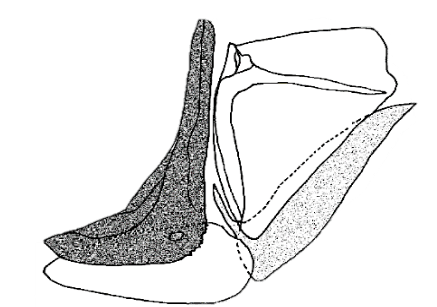
200
A complete duplication of the nuclear genome occurred at the base of the ray-finned fish evolutionary tree leading to _____________, in which fish, having duplicate copies of genes relaxes selection pressure, allowing redundant genes to develop novel functions or double the capacity of metabolic pathways.
Neofunctionalization
200
Heterostracans are a subclass of Pteraspidomorphi (jawless filter feeding fish living from the Silurian to the Devonian). They are characterized by dermal armor extended from the head almost to the tail and swam by lashing their ________ tail (notochord extending into the lower lobe) to plow through sediments and filter digestible material.
hypocercal
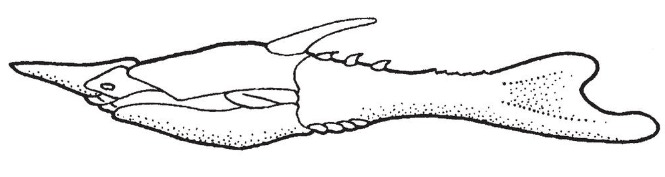
200
The ________ is a chain of bones including the hyomandibula and the quadrate, attaching the lower jaw and operculum to the skull. These are critical for enlargement of the mouth cavity and can even open laterally via the levator arcus palatini muscles.
Suspensorium
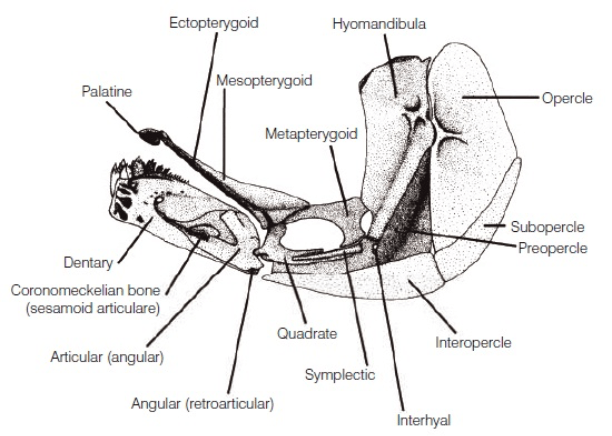
200
________ are skeletal muscle arranged in W-shaped segments. They are separated by a horizontal septum into epaxial (upper) and hypaxial (lower) muscle masses. They generate force by alternating contractions which push back against the water, generating forward thrust.
Myomeres
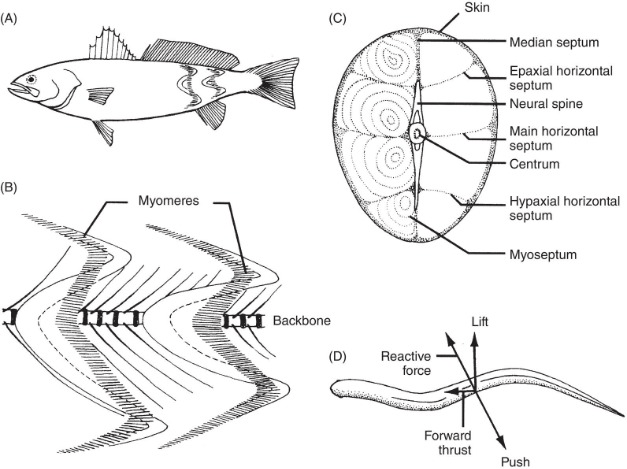
200
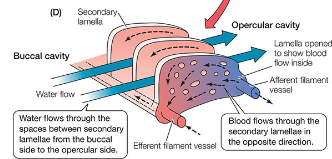
_________ _________ are microscopic, plate-like folds on a fish's gill filaments where oxygen and carbon dioxide pass between the water and the blood.
Secondary lamellae
200
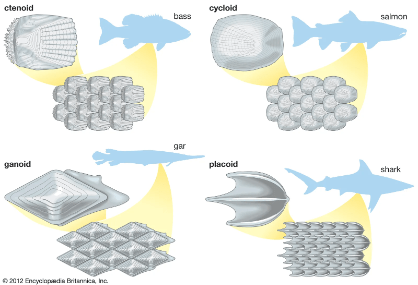
_______ scales are hard and heavy, diamond-shaped scales found in (gars, bichirs, sturgeons).
Ganoid
300
________ analysis in cladistics is a statistical method that uses probability to find the most likely evolutionary phylogeny by combining DNA data with with observed traits.
Bayesian
300
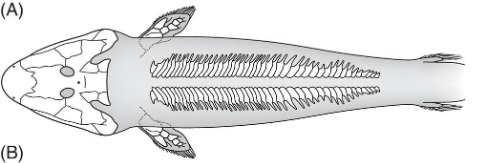
This fossil finding from Late Devonian strata bridged an anatomical gap between lobefin fishes and stem tetrapods, possessing the following features: tetrapod-like mobile neck, shortened skull, and functional wrist joint, transverse joints capable of flexion and extension, and interlocking ribs suggest the presence of a functional lung cage.
Tiktaalik roseae
300
This form of jaw suspension is found in most cartilaginous and all ray-finned fishes in which the jaws suspended via the hyomandibula, allowing high jaw mobility during feeding.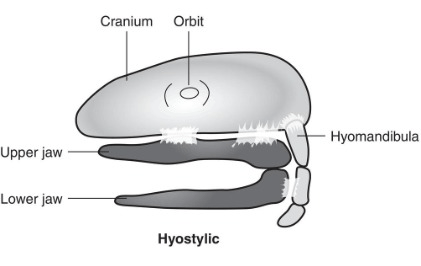
Hyostylic
300
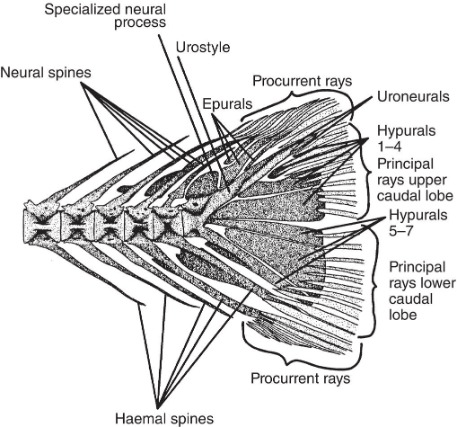
_______ are strong flattened plate-like bones extending in the posterior direction that are derived from modified hemal spines and support the principal branched of the caudal tail. They are often fused together in advanced fishes to form a stronger plate for high-speed mobility.
Hypurals
300
_________ (C₃₀H₅₀) is a naturally occurring, oily organic compound classified as a polyunsaturated triterpene hydrocarbon that is stored in massive livers of sharks to regulate buoyancy at extreme ocean depths.
Squalene
300
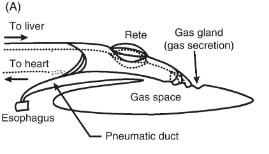
__________ fishes (ancestral, e.g., salmon) retain a pneumatic duct connecting the bladder to the gut and can directly gulp air or release excess gas via the esophagus.
Physostomous
400
The Louvar is a clear example of convergen evolution demonstrating that ___________, which are shared biological traits or similarities in species that evolved independently in separate lineages rather than being inherited from a common ancestor, lead to the presence of phenotypes associated with the organisms' ecological niche.
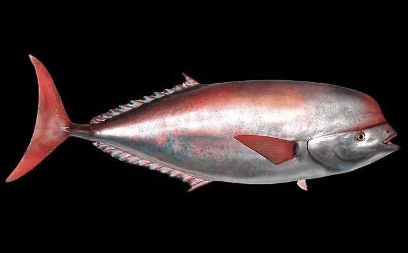
homoplasy/homoplasies
400
These were the largest order of placoderms and some were found with silver and red fossil pigments in suggest countershading and early color vision by 350mya.
Arthrodires 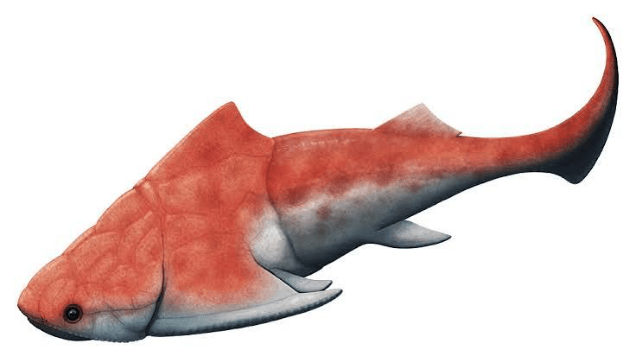
400
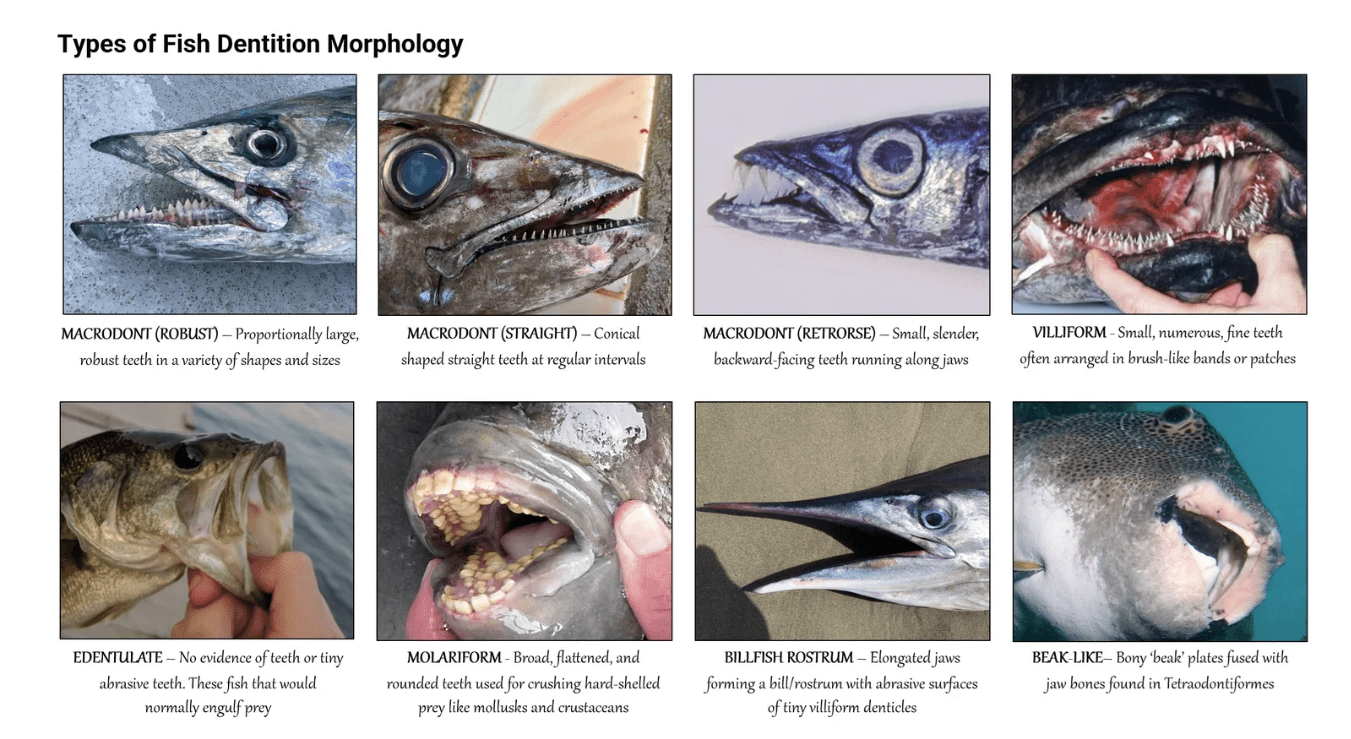
This dentition type is characterized by numerous small, needlelike teeth for gripping. This is typical of gars and lizardfish
Villiform
400
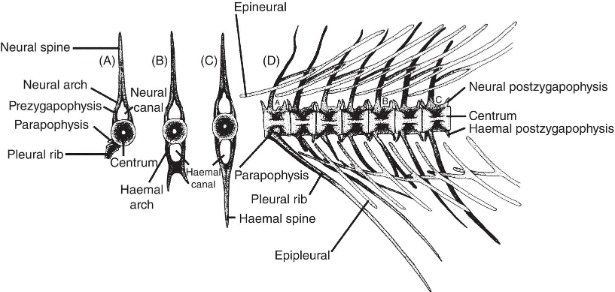
Although many advanced teleosts have lost their intermuscular bones, the epineurals, epicentrals, and _________ are all associated with the musculature along the abdominal cavity in conjunction with the pleural ribs.
Epipleurals
400
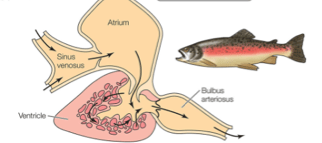
In fishes the highly elastic ________ _______ is the last of the 4 chambers of the heart, and functions to dampen pressure oscillations for consistent blood flow to the gills.
Bulbus arteriosus
400
The postcardinal vein is the major return route of blood from most of the body empties into the _____ __ ______ which then bring the deoxygenated blood into the Sinus Venosus.
Ducts of Cuvier
500
Mitochondrial genome sequencing confirms ________ as the oldest extant group of ray-finned fishes.
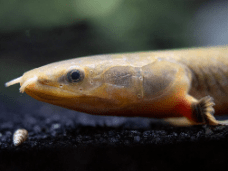
Polypteriforms (bichirs/reedfish)
500
This early group of Actinopterygians flourished from the Mid-Devonian through the late Paleozoic and are characterized by a single triangular dorsal fin, a heterocercal caudal tail, paired fins featuring narrow, non-fleshy bases, and heavy ganoid scales joined by a peg-and-socket arrangement. Many morphologies highlight convergence with modern Actinopterygians.
Palaeoniscoids
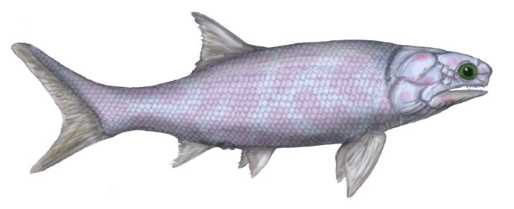
500
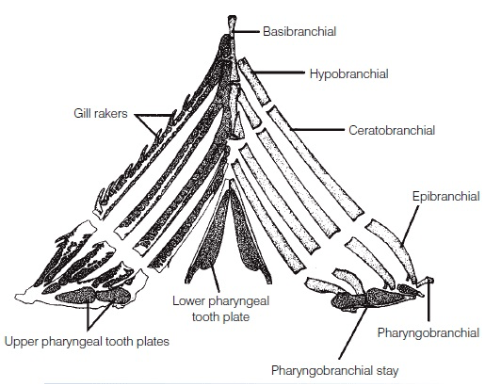
The pharyngeal jaws represent a highly evolved anatomical feature in advanced fishes that allows the the fish to rake prey into the esophagus, reposition, immobilize, or crush/disarticulate hard-bodied items. These first evolved from modified gill arches, forming the lower jaw from the 5th ___________. 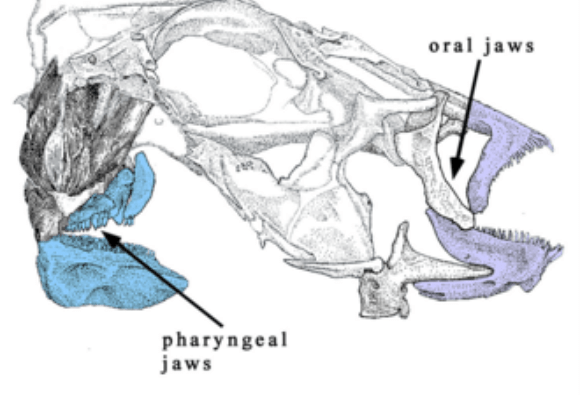
Ceratobranchial
500
_________ are primitive, paired cartilaginous structures that serve as the precursors to true vertebrae. These cartilaginous blocks forming around the center rod expand, meet, and eventually fuse together, turning into the solid centra of modern vertebrae.
Arcualia
500
Many teleosts also have a _______ rete behind the eye to maintain high oxygen levels for the retina.
Choroid
500
___________ are the first advanced jawed fishes, emerging in the Late Ordovician. They were streamlined, water column swimmers with cartilaginous skeletons, otoliths, lateral line canals, and an ossified operculum. 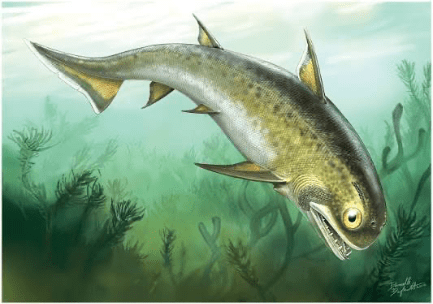
Acanthodians