Water
Water properties
DNA structure
DNA ORGANIZATION & FUNCTION
CONDENSATION OF POLYMERS
100
Water molecules are described as polar. What does this mean?
The molecule has an uneven distribution of electrical charge, with oxygen being partially negative and hydrogen partially positive.
100
What type of intermolecular attraction forms between neighboring water molecules?
Hydrogen bonds.
100
What are the three components of a DNA nucleotide?
A phosphate group, deoxyribose sugar, and nitrogenous base.
100
What is the shape of a DNA molecule?
A double helix.
100
What type of reaction joins monomers together to form a polymer while releasing a molecule of water?
A condensation reaction.
200
A drop of water forms a rounded shape on a surface. Which property of water causes water molecules to attract one another?
Cohesion, caused by hydrogen bonding between water molecules.
200
Why can water dissolve many ionic and polar substances?
Because water is polar. Its partial charges can interact with ions and polar molecules.
200
Name the four bases found in DNA.
Adenine, thymine, cytosine, and guanine.
200
What type of bonds holds the two DNA strands together?
Hydrogen bonds between complementary bases.
200
A student says, "During condensation, water is added to join two monomers." Is this correct?
No. During a condensation reaction, water is released when monomers join.
300
A water molecule sticks to the wall of a plant's xylem. Is this cohesion or adhesion? Explain.
Adhesion. It is the attraction between water molecules and another surface, such as the xylem wall.
300
Blood plasma is mostly water. Explain why water is useful as a transport medium for glucose.
Glucose is polar/hydrophilic, so it can interact with and dissolve in water, allowing it to be transported in the blood.
300
If one DNA strand has the sequence: A – T – G – C – C – A What is the complementary sequence?
T – A – C – G – G – T
300
Why are the two strands of DNA described as complementary rather than identical?
The bases on one strand determine the bases on the other through complementary base pairing: A pairs with T and G pairs with C.
300
Two monosaccharides join to form a disaccharide. What type of bond is formed?
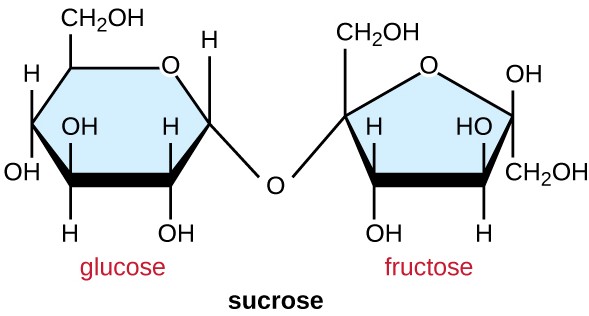
400
A student says: "Cohesion is what allows water to stick to the xylem walls." Is the student correct? Explain.
No. Adhesion is responsible for attraction between water and the xylem wall. Cohesion is attraction between water molecules themselves.
400
A student says: "Because water is a good solvent, it dissolves every substance." Why is this statement incorrect?
Water does not dissolve every substance. It is particularly effective at dissolving ionic and polar substances. Non-polar substances generally do not dissolve well in water.
400
A student says: "Adenine forms three hydrogen bonds with thymine." What is wrong with this statement?
A–T pairs form two hydrogen bonds, while G–C pairs form three hydrogen bonds.
400
The bases on one strand determine the bases on the other through complementary base pairing: A pairs with T and G pairs with C.
No. The backbone consists of alternating deoxyribose sugars and phosphate groups, connected by covalent bonds. Hydrogen bonds occur between complementary bases.
400
A polymer is made by joining 6 monomers through condensation reactions. Assuming one molecule of water is released for every bond formed between adjacent monomers, how many molecules of water are produced?
5 molecules of water.
500
A plant's leaf lose water through transpiration. Explain how cohesion between water molecules helps maintain the movement of water through the xylem.
Water molecules form a continuous column because of cohesion. As water is lost from the leaves through transpiration, tension can pull the cohesive column of water upward through the xylem.
500
Water has a relatively high specific heat capacity. Explain why this property is biologically important for organisms living in environments where temperature changes rapidly.
Water requires a relatively large amount of energy to change temperature. Therefore, water helps resist rapid temperature changes and contributes to temperature stability in organisms and aquatic environments.
500
A DNA molecule contains 32% adenine. What percentage of the molecule is guanine?
18%
500
DNA has a stable structure, but its two strands can separate when necessary. Explain how this is possible.
Strong covalent bonds hold the sugar-phosphate backbones together, while the two strands interact through hydrogen bonds between complementary bases. The hydrogen bonds can be disrupted, allowing the strands to separate while the individual backbones remain intact.
500
Explain why condensation and hydrolysis can be considered opposite types of reactions in polymer metabolism.
Condensation joins monomers and releases water, whereas hydrolysis breaks bonds between subunits by using water.