It's the thing
Angles
Lines
Shapes
Proofs
100
Infinitely long but only in one dimension
What is a line?
100
Formed by intersecing lines, share a vertex, are congruent
What are vertical angles?
100
Lines that don't touch
What is parallel
100
This quadrilateral is often called a "diamond"
What is a rhombus?
100
Technically not the same as equal, but geometrically equivalent
What is congruent?
200
Like a line but in two dimensions
what is a plane?
200
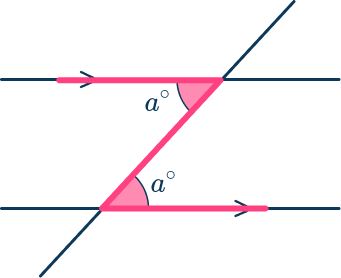
What are alternate interior angles?
200
Lines that intersect to form a 90 degree angle
What is perpindicular?
200
This type of triangle has an hypotenuse
What is a right triangle?
200
This property to states that two things equal to the same thing are also equal to each other
What is the transitive property
300
A Dimensionless Singularity
What is a Point?
300
What are Corresponding Angles?
300
This line intersects two other lines
What is a transversal?
300
The US military headquarters is named and shaped like this 5 sided shape.
What is a pentagon?
300
These properties allow us to perform algebra to solve equations
What are properties of equality?
400
This point joins two rays to create an angle
What is a vertex
400
These angles aren't congruent, but they are this c word that can mean "in a row"
What are consecuttive angles?
400
With an endpoint it's not quite a line, but if you look at the other side you can't tell a difference
What is a ray?
400
A cirlce encompasses an angle of this measure
What is 360?
400
States that vertical angles are congruent
What is the Vertical Angle Congruence Theorem
500
1-D is length, 2-D is area, 3-D is this measurement for the amount of space something takes up
What is Volume?
500
These angles are on the same side of a straight line and add up to 180
What is a linear pair?
500
"There's two of them I swear"
What are Coincident lines?
500
6 sides is a hexagon, 8 sides an octagon, 7 sides is this
What is a heptagon/septagon
500
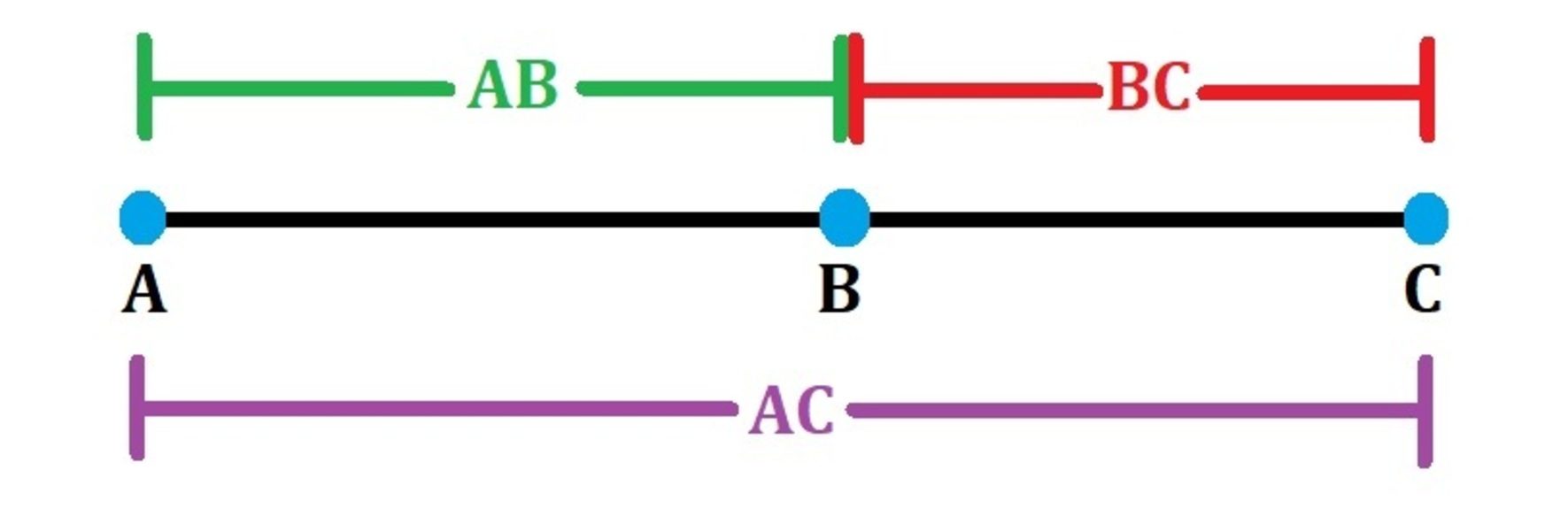 By stating AB+BC=AC, I'd be using this
What is the segment addition postulate?