Lunar Phases
Eclipses: How does the Sun, Earth, and Moon positions create solar and lunar eclipses?
Seasons: Why does Earth have different seasons throughout the year?
Eclipses: What would happen to eclipses if the moon's orbit or distance from earth changed?
Seasons: What would happen to seasons if Earth's tilt were greater, smaller, or nonexistent?
100
What are the two lunar phases that have a chance of an eclipse?
The New moon position has a possibility for an eclipse, because during that position it is the celestial body casting a shadow on the earth, during a solar eclipse.
100
If the Moon were moved to half its current distance from Earth, solar eclipses would happen much more often, and this fiery alternative type of solar eclipse would disappear.
What is an annular solar eclipse?
100
Earth’s axial tilt is this many degrees.
Earth’s axis is tilted at exactly 23.5 degrees.
100
What moon phase can cause a solar eclipse?
New Moon
100
What is the vertical line called that runs through the center of the Earth?
This line is called Earth’s axis, and its tilt is approximately 23.5 degrees.
200
the days in a full revolution of the moon around earth is...
What is
200
If the Moon's orbit was not tilted 5 degrees and instead lay flat on Earth’s orbital plane, this type of event would happen every single new moon and full moon.
What is a solar or lunar eclipse?
200
If the northern hemisphere is tilted away from the sun, what season is it in the southern hemisphere?
If the northern hemisphere is tilted away from the sun, meaning it gets indirect sunlight, the southern hemisphere will be experiencing summer, since it’s getting direct sunlight.
200
How long does a lunar eclipse last?
3-4.5 hours.
200
How does Earth’s tilt affect the seasons?
Earth's tilt affects the seasons because it means that different hemispheres will experience different phases of direct and indirect sunlight, called seasons.
300
What is this phase? 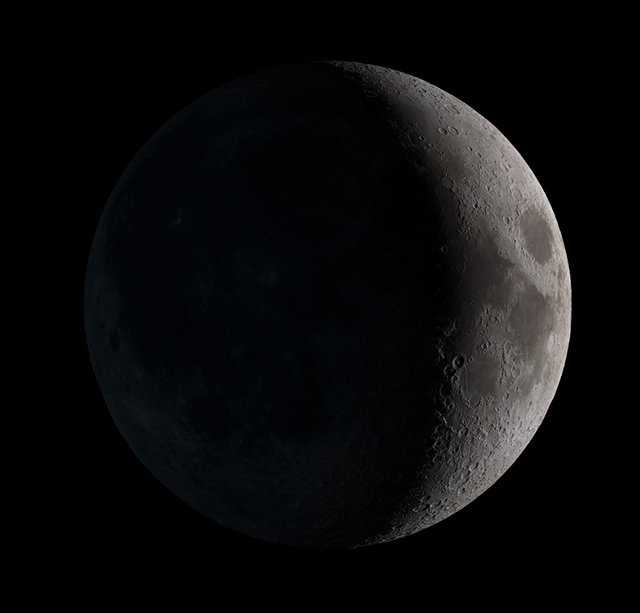
Waxing crescent.
300
Because the Moon is slowly moving away from Earth at a rate of nearly 4 centimeters per year, scientists estimate that this type of solar eclipse will eventually go extinct.
What is a total solar eclipse?
300
What word is derived from the Latin term ‘Equal night’, and what two dates does it occur on?
The answer is equinox.
300
Why do solar eclipses happen?
The Moon moves directly between the Earth and the Sun during a new moon.
300
What would happen if Earth’s tilt were greater?
If Earth’s tilt were greater, there would be a much more drastic difference between the seasons, summers would be much hotter, and winters would be extremely cold.
400
What percentage of sunlight is reflected off the moon?
12%.
400
If the Moon were positioned significantly closer to Earth during a lunar eclipse, it might fail to fit entirely inside this inner, darkest part of Earth's shadow.
What is the umbra? The umbra is a smaller section of the penumbra, which in the umbra a smaller amount of people experience eclipses.
400
Due to Earth’s elliptical orbit, our planet reaches perihelion during this season.
The answer is winter.
400
If you are standing inside the lighter, outer part of the Moon's shadow, you will see a partial eclipse instead of a total one.
The penumbra.
400
What would happen if Earth’s tilt were smaller?
If Earth’s tilt decreases, we would have much less extreme weather conditions, as well as warmer winters and colder summers, while spring and autumn would go unnoticed.
500
How many centimeters is the moon moving away from the earth a year?
3.78 centimeters.
500
A Moon much farther away from Earth would appear smaller in the sky, casting a weaker shadow and causing these Earth-based ocean events to shrink in size.
What are tides? Two high and low tides happen a day when the moon's gravitational pull pulls the ocean a certain way which shrinks the ocean and expands it, low tides make the ocean smaller because the shore line is farther into the ocean. and high tides expand the ocean because they come farther up on the shore.
500
What is the difference between meteorological seasons and astronomical seasons?
In short, the deciphering factor between the two is that one is based on Earth’s position around the sun, while the other is based around the actual climate and something called the Gregorian calendar.
500
How far away is the moon from the earth when a solar eclipse occurs?
221,000-252,000 miles.
500
What would happen if Earth’s tilt were non-existent?
If Earth’s tilt were 0/non-existent, we would have no seasons, and almost a constant temperature all year round.