Chapter 1/2
Chapter 3/4
Chapter 5
Chapter 6/7
Special SARA questions
100
What are the three major research methods used in psychology, and what is the primary purpose of each?
Descriptive research: Describes behaviour or characteristics
Correlational Research: Examines relationship between variables
Experimental research: Tests hypotheses about cause-and-effect relationships
100
What is the difference between a fMRI and MRI?
fMRI (functional magnetic resonance imaging): Measures changes in blood oxygenation associated with brain activity.
MRI (magnetic resonance imaging): Produces detailed images of brain structure and anatomy
100
The brain waves observed during REM sleep most closely resemble those seen during which state?
Stage 1
100
Define encoding, storage, and retrieval.
Encoding: Converting information into a form that can be stored.
Storage: Maintaining information over time.
Retrieval: Accessing stored information when needed.
100
What is my favourite colour?
pink
200
Name the nine perspectives of psychology discussed in your textbook (Hint= there are 9). The team that identifies the most correct perspectives earns an additional 10 points.
Evolutionary, Cultural, Cognitive, Emotional, Biological-Perspective, Developmental, Personality, Social, Clinical
200
Explain the difference between the sympathetic and parasympathetic divisions within the nervous system

200
What are two major differences between rods and cones in the retina?
Rods: Highly sensitive to dim light; important for night and peripheral vision; do not support colour vision.
Cones: Function best in brighter light; enable colour vision and high visual acuity; concentrated in the fovea.
200
What is the difference between associative and nonassociative learning?
associative learning --> making connections between different events and our behavioural responses to them (classical conditioning, operant)
non associative learning --> a change in how much or how little we respond to a single event or stimulus within experience (habituation/sentiization)
200
What is my favourite game ever?
ROBLOX
300
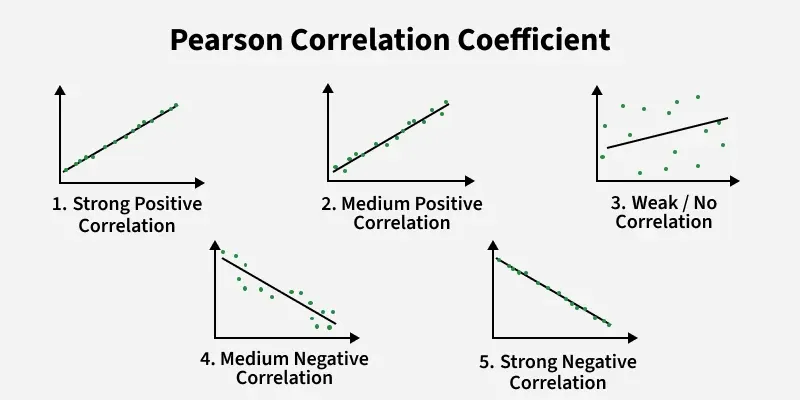
Define the correlation coefficient (r). What value would mean a strong positive, weak positive, strong negative, weak negative, and zero correlation
(OR DRAW IT OUT!)
300
Draw the graph of an action potential in the correct order and label it!
300
What are the three levels of consciousness in Freud's model? Define each. (Bonus points for correctly naming all three without hints)
Conscious: Thoughts and feelings currently in awareness.
Preconscious: Information not currently in awareness but that can be brought into awareness.
Unconscious: Thoughts, memories, wishes, or conflicts presumed by Freud to exist outside conscious awareness.
300
Explain the difference between positive reinforcement, negative reinforcement, positive punishment, and negative punishment.
Positive reinforcement= Add a stimulus to increase behaviour
Negative reinforcement= Remove a stimulus to increase behaviour
Positive punishment= Add a stimulus to decrease behaviour
Negative punishment= Remove a stimulus to decrease behaviour
300
Where was I born (Hint, not Canada)
Qatar!
400
Identify three strengths and three limitations of experimental research.
Strengths
Can establish cause-and-effect relationships when properly designed.
Allows researchers to control variables and reduce confounding influences.
Can be replicated to test the reliability of findings.
Limitations
Not all variables can be manipulated ethically or practically.
Experiments can be time-consuming and expensive.
Artificial experimental settings may limit generalizability to real-world situations.
400
What are three major classes of neurotransmitters discussed in your textbook? (Bonus points if you can identify the six neurotransmitters covered)
amino acids
- glutamate
- GABA
monoamines
- norephinephrine
-dopamine
- serotonin
acetylcholine
400
Explain the difference between manifest content and latent content hypothesis for dreaming
Manifest content: The remembered storyline and events of a dream.
Latent content: The hidden symbolic meaning that Freud proposed underlies a dream.
400
Define acquisition, generalization and discrimination.
Acquisition: Initial learning of an association.
Generalization: Responding to stimuli similar to the conditioned stimulus.
Discrimination: Learning to distinguish the conditioned stimulus from other stimuli
400
When is my birthday? (Closest Wins)
May 4th
500
What does a low p-value indicate statistical significance?
<0.05
500
what neurodegenerative disease can demyelinatoin cause?
MS (Multiple Sclerosis)
500
Psychedelic drugs such as LSD are chemically similar to which neurotransmitter?
serotonin
500
Define the primacy and recency effects?
Primacy effect: Better recall of items at the beginning of a list, often associated with rehearsal and long-term memory.
Recency effect: Better recall of items at the end of a list
500
What do you think I will eat for dinner tonight? (Two potential answers)
Pasta with chicken OR wingstop YASS!!!! so excited to go home