War Stories
We Don't Like This!
Who Am I?
The Declaration of Independence
Wild Card
100
The first shots of the Revolutionary War were fired HERE -
Lexington, Massachusetts
(Battles of Lexington & Concord)
100
The colonists used boycotts to protest against taxation without representation.
What is a boycott?
A boycott is an organized refusal to buy goods from a country or company that is acting unfairly.
100
He is honored as the Father of the American Navy because he won naval battles against the British during the American Revolution.
John Paul Jones
100
Who wrote the Declaration of Independence
Thomas Jefferson
100
He wrote 'Common Sense' to persuade others to join the patriot cause.
Thomas Paine
200
How was the Battle of Saratoga a Turning Point of the American Revolution?
The American victory at Saratoga convinced the French to support the United States as allies.
200
The Boston Tea Party was an act of Civil Disobedience in protest against mercantilism and the unfair tea tax.
What is Civil Disobedience?
Civil Disobedience is the peaceful, intentional violation of an unjust or unlawful law.
200
She encouraged leaders of the new United States to consider women's rights when she said, "Remember the Ladies!"
Abigail Adams
200
What are Unalienable Rights?
Natural Rights belonging to all humans
God-given Rights
200
How did George Washington use the weather to evacuate his troops from Long Island?
As daylight dawned, he used the fog on the river to conceal the men escaping Long Island by boat.
300
George Washington was so concerned about his men, that he told Congress that without help, the army would either starve, dissolve or be dispersed from his winter headquarters in THIS Pennsylvania village -
Valley Forge
300
The Navigation Acts were used to enforce economic policies under THIS economic system -
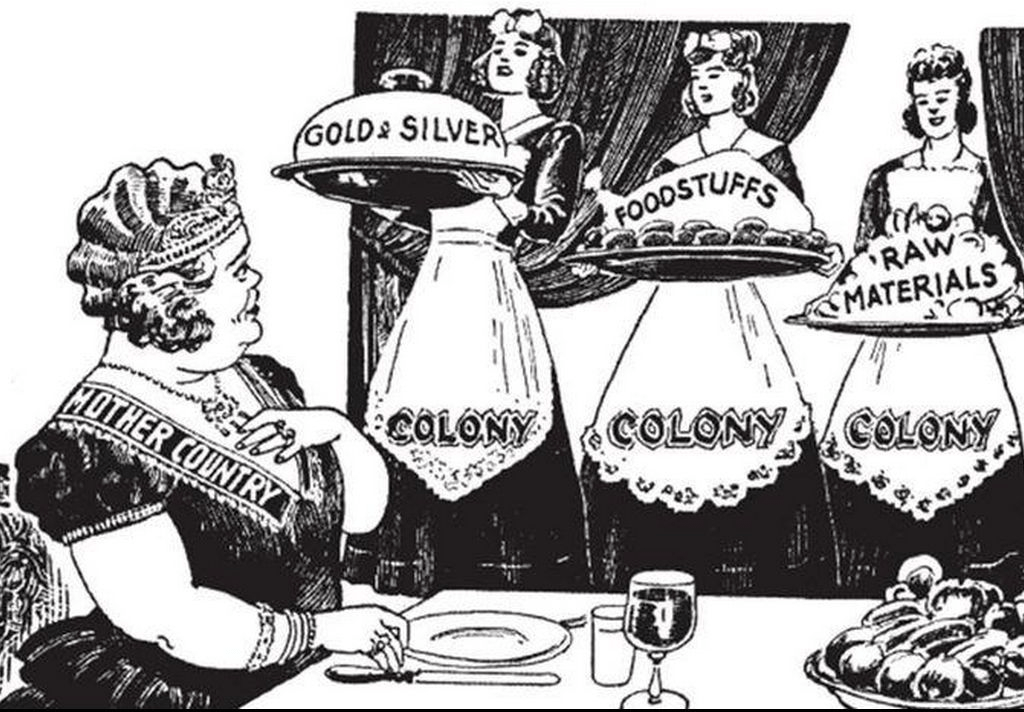
Mercantilism
300
This young French aristocrat commanded American troops in battle against the British.
The Marquis de Lafayette
(Lafayette)
300
What are the three unalienable rights listed in the Declaration of Independence?
Life
Liberty
The Pursuit of Happiness
300
Daily Double!
One of these men spied on the British and the other was the first to die for the cause at the Boston Massacre and one was the first black man elected to public office in America. Which is which?
Crispus Attucks - James Armistead - Wentworth Cheswell
James Armistead spied on the British and passed that information on to Lafayette.
Crispus Attucks was killed at the Boston Massacre.
Wentworth Cheswell was the first of his race elected to public office in America.
400
What are TWO things accomplished by the Treaty of Paris (1783) ?
1. Recognized the U.S. as independent from British rule.
2. Ended the war.
3. Transferred land from Britain to the U.S.
400
The British passed the Intolerable Acts to punish the colonists for the Boston Tea Party.
How did the colonies respond to the passage of these Intolerable Acts?
The colonies held the First Continental Congress to discuss unified resistance to the Intolerable Acts.
400
She wrote one of the earliest histories of the American Revolution.
Mercy Otis Warren
400
Why did Jefferson include 27 grievances against King George III in the Declaration of Independence?
The grievances are a list of the reasons the colonies decided to break up with (declare independence from) Great Britain.
400
How did the Great Awakening contribute to the rise in revolutionary feelings in colonial America?
The focus on religion, and equality in the eyes of God, caused colonists to question authority.
500
Explain how this event was a contributing cause of the American Revolution -
Proclamation Act of 1763
The king restricted westward expansion. Colonists were prohibited from settling west of the Appalachian Mountains. Colonists questioned their loyalty to the king.
500
Explain how the following was a contributing cause of the American Revolution -
Lack of Representation in Parliament / Unfair Taxation
Colonists had to pay taxes created by a government in which they had no representation. They believed this was a violation of their rights as Englishmen.
500
Samuel Adams organized protests against the Stamp Act.
Explain how the Stamp Act (1765) was a contributing cause of the American Revolution.
All colonists had to pay taxes on documents and paper. The stamp tax had to be paid in silver coins which were hard to get in the colonies. It was a tax passed without their consent.
500
Explain two big ideas Thomas Jefferson borrowed from John Locke when composing the Declaration of Independence.
1. Natural Rights - All men are created equal and possess unalienable (God-given) rights.
2. Government is supposed to protect our rights. When it doesn't do its job, the people have the right to fix or replace that government.
500
Explain how the following was a contributing cause of the American Revolution -
British Economic Policies following the French & Indian War
The British used taxation and mercantilism to raise money to pay the cost of defending the colonies.