Motion
Neuroscience
Personality
Scientific Method
100
Two students are in a tug-of-war, fighting over a dynamics cart for a Physics CAT. One student pulls the cart to the right, exerting 300 N of force. The other pulls in the opposite direction with 170 N of force.
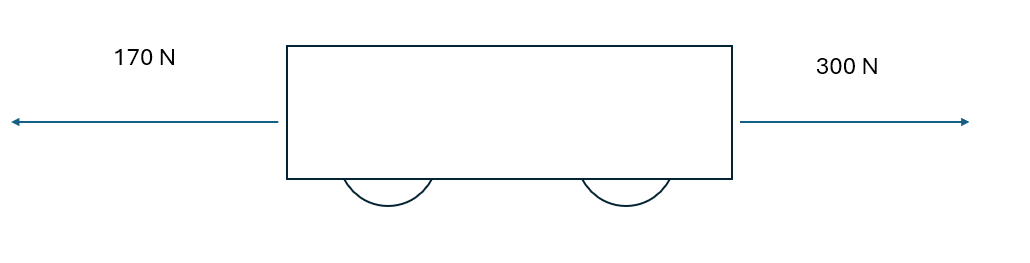
Give the net force and direction in which the cart will move.
130 N to the right
100
State which organ(s) belong in the Central Nervous System
Brain & Spinal Cord
100
Describe what is contained in a person's "id" layer, according to Freud's Psychoanalysis Theory
Basic instincts and urges
100
Define the term 'accuracy' in science.
How closely a measurement is to the 'true', 'correct', or 'accepted' value.
200
In year 10, Garv has a period 0 maths class in P8, followed by a chemistry class in S5 (across the campus).
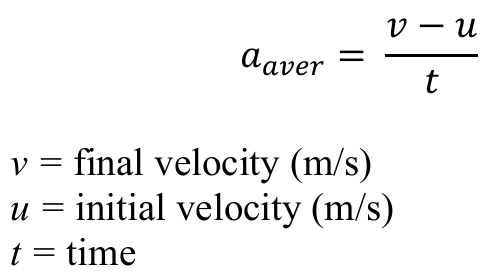
One morning, he sprints between each class. During a 10 second interval of his run, he has an initial velocity of 7 m/s and a final velocity of 2 m/s.
Calculate Garv's average acceleration during this 10-second interval.
-0.5 m/s
200
Name the section of the brain that is responsible for coordination in complex motor movement (such as running) and balance.
Cerebellum
200
Describe or name an example of a projective personality test.
Rorschach Inkblot
Handing a participant a pattern made of an inkblot and asking them to interpret the image
Thematic Apperception Test
Participant interprets a random set/series of ambiguous images
200
Suggest a way that you can minimise the affects of uncontrolled variables in any experiment.
Run the experiment multiple times/multiple trials.
300
his free time, Mr Young practises karate.
He measures the striking force of his kick using a 'PowerKube', a machine that can measure the force exerted by anyone that hits it.
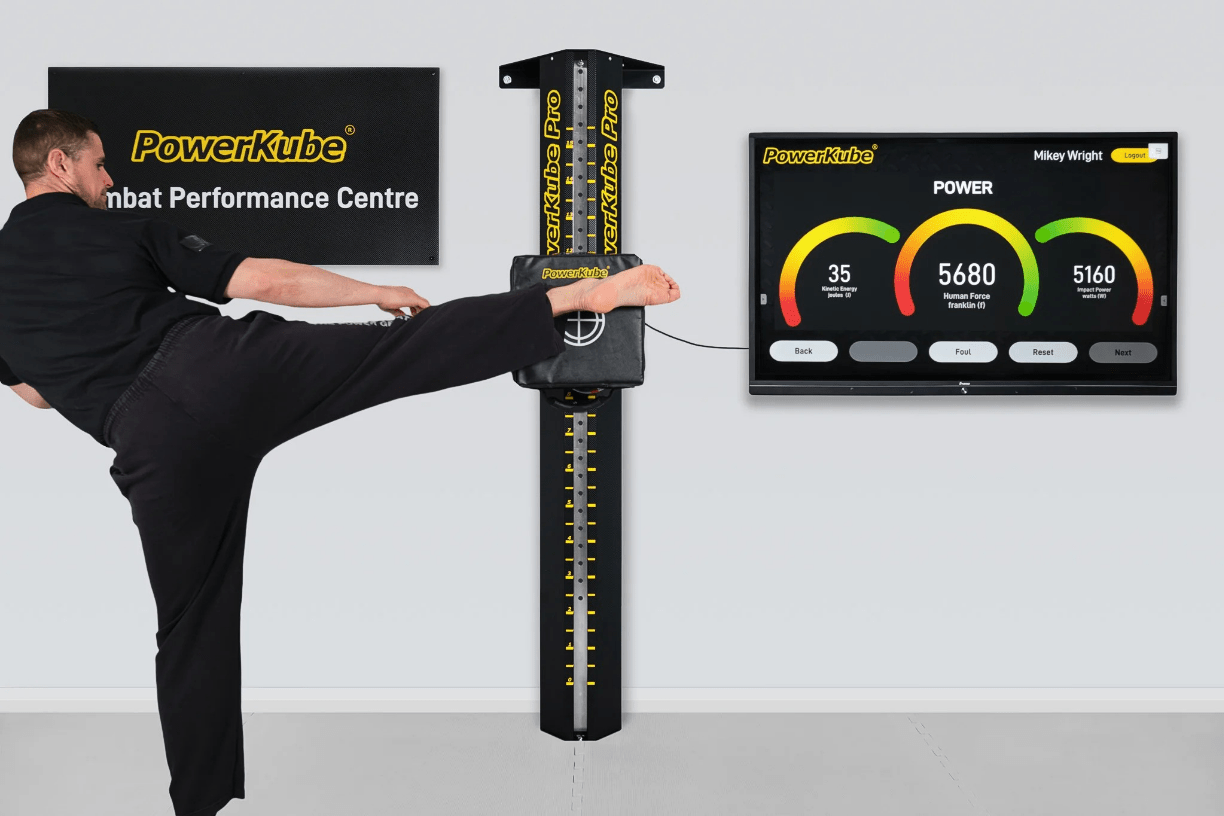
After kicking it, the powerkube measures that Mr Young's kick had an impact force of 1200 N. Given that Mr Young's leg has a mass of 15 kg, calculate the acceleration of his kick (in m/s).
80 m/s
F = ma
a = F/m
a = 1200/15
300
Parkinson's disease can be diagnosed through motor symptoms, such as difficulty performing basic movements and tremors in hands.
Which branch of the nervous system is producing the motor skill symptoms of Parkinson's Disease?
Somatic
Motor skills are being affected, somatic nervous system controls these
Central
Parkinson's involves neuron death in the brain
300
Describe the three assumptions made by the Trait Approach to Personality
1) A person's traits persist/are consistent over time
2) A person's traits persist/are consistent across situations
3) People will vary in the combination/extent of traits that they express
300
Alex and Henry are testing if increasing sugar supplied to yeast will affect the rate of cell respiration.
They prepare 5 flasks with varying amounts of sugar: 1g, 3g, 5g, 7g, and 9g. All flasks contained 3g of yeast. They pour warm water into the flasks and seal them with a balloon. The flasks are then placed in a water bath, maintaining a temperature of 30 degrees Celsius.
Give a control variable for this experiment.
- Amount of yeast in each flask
- Temperature of water
400
The movement of a possum, moving right (+) to left (-), was recorded on the following velocity-time graph.
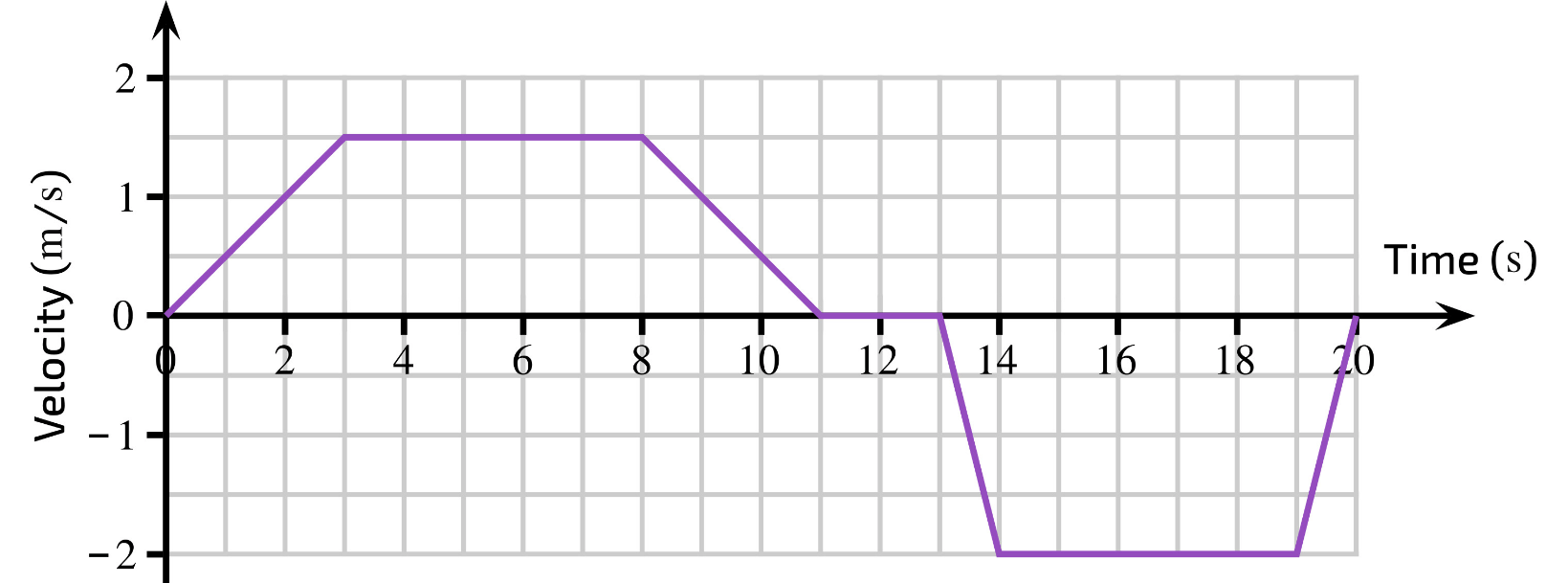
Between which times was the possum:
a) Stationary
b) Travelling at a constant speed, in a constant direction
c) Accelerating towards the left (-)
a) between 11 - 13 seconds
b) between 3 - 8 seconds, & between 14 - 19 seconds
c) between 13 - 14 seconds
400
Draw and label all parts of the neuron.
Correct labels for:
Dendrite
Cell Body
Nucleus
Axon
Myelin Sheath
Axon Terminal
400
"Iron rusts from disuse; water loses its purity from stagnation... even so does inaction sap the vigour of the mind." - Leonardo da Vinci
We are often encouraged to change as persons and individuals, with some arguing that staying the same in a rapidly changing world will leave us behind.
a) Which personality approach(es) states that change in personality is not possible or out of our control?
b) Which approach(es) allow for choice and control in our own personalities?
Does not allow for change
Trait
First and Second assumptions state that traits are stable across time and scenarios
Psychodynamic
States that all personality (behaviours, thoughts & feelings) are a result of an "id" that is determined in childhood and biological instincts (i.e., out of our control)
Allows for change
Social Cognitive
Describes personality as a learned process - behaviour, thought, and emotional patterns can be learnt, if one chooses to
400
A researcher wanted to see the affects of caffeine on reaction time. He divides his group of participants into 2 groups. Group A drinks a cup of coffee 5 minutes before attempting a digital reaction time test. Group B does not drink any coffee before their reaction time test.
What is the dependent and independent variable of this experiment?
Dependent Variable: Reaction time/Scores on digital reaction time test
Independent Variable: Coffee