Burns
O2
ABGs
Shocking
Heart Stopper
100
This assessment tells us if fluid resuscitation has been adequate in burns
What is BP?
100
This is your priority assessment if your patient has a change in neuro or LOC
What is pulse ox
100
These two VS alterations can signal neuro shock
What are bradycardia and hypotension?
100
This is your priority assessment with any cardiac rhythm change?
Check responsiveness and pulse
200
This type of burn is painful, red, no blisters, supple skin
What is a Superficial Partial-Thickness Burn?
200
True or false: all thermal or smoke burn injury pts need to be placed on oxygen
True
200
This neuro finding suggests high CO2 level
What is decreased LOC
200
This type of shock should not receive boluses
What is cardiogenic shock?
200
Contrast defib vs cardioversion
Defibrillation is used for unstable ventricular rhythms, such as v fib.
Cardioversion is used for atrial dysrhythmias, such as a-flutter
300
This type of burn is Painless, leaves eschar, Tough texture
What is a Full Thickness Burn?
300
a patient with ARDS can be placed in this unorthodox position
What is prone?
300
How should the nurse interpret these ABG findings:
pH-7.3
PaCO2-52
HCO3-24
respiratory acidosis
300
This is the hallmark of spinal shock
What is decreased reflexes
300
Name this rhythm
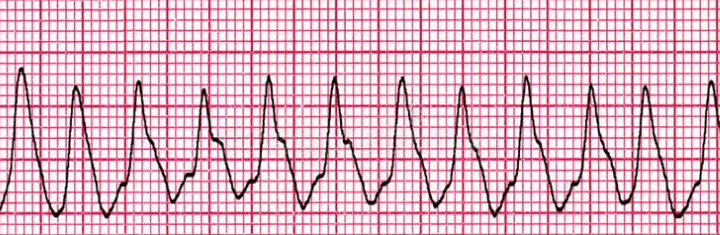
V tach
400
This electrolyte is released with electrical burns
What is potassium
400
True or false: patients on a vent and sedated should have reflexes
True
400
Name 3 risks for metabolic acidosis
Low GFR/ renal failure, diarrhea, shock, DKA
400
These 3 s/s suggest what stage of shock
Elevated lactate,
Elevated ammonia
Hypercapnia
What is the irreversible/ refractory stage of shock?
400
This med is given for non-sustained v tach
What is amiodarone?
500
This intervention helps with burn wound outcomes and prevents translocation of bacteria
What are enteral feedings?
500
These signs indicate you are suctioning the ETT deep enough
What are insert until resistance is met or pt coughs
500
pH-7.36
PaCO2- 50
HCO3- 29
Fully compensated respiratory acidosis
500
Your patient presents with hypotension, weak pulses, narrow pulse pressure, & cool skin. You believe they are experiencing this kind of shock
What is cardiogenic shock?
500
Name this rhythm
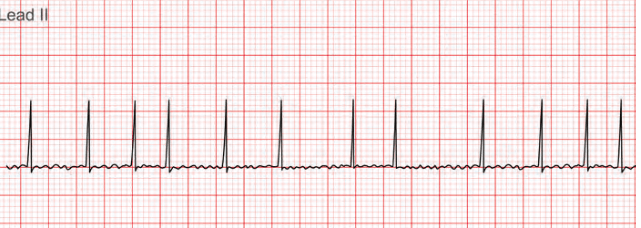
A fib
600
These s/s on a burn pt indicate emergent intubation might be needed (name at least 3)
What are decreased lung sounds, inability to maintain airway, increasing amounts of facial edema, increasing hoarseness, decreasing LOC, decreasing SpO2, decreased wheezing
600
hold position, create a seal, and prevent aspiration
what are the objectives of the balloon on the ETT.
600
Your pt is tachycardic, tachypneic, with a fever, vomiting x3d. What ABG results do you expect?
alkalosis
600
The patient is in NSR then pulse goes to 50- what are your 2 priority assessments
Responsiveness and BP
700
The MD orders your patient to start an IV Heparin drip at 12 units/kg/hr and to administer a loading bolus dose of 40 units/kg IV before initiation of the drip. The patient weighs 215 lbs. Your supplied vial of heparin is 10,000 units in 10 mL. How many mL will you give for the bolus dose?
3.91 mL
700
Correctly order the colors for triage system by number of priority
Red, yellow, green, blue, black
700
Your pt has this rhythm and is symptomatic. Your intervention is 
Apply pacer pads and administer atropine