Respiratory
Neuro
Abdominal
Sterile Dressing/Enema
Head to Toe/Blood Glucose
Vital Signs
100
When inspecting the chest for shape and configuration, what is the normal ratio and what is it called?
Bonus 50pts for abnormal shape names and ratio.
1:2 Anteroposterior to transverse Ratio
Bonus = 1:1 Barrel chest.
100
There are 11 items needed for the Neuro Assessment, name 4 items required, what they assess and how to use them.
Penlight
Tongue Blade
Cotton Ball
Tuning fork
Percussion Hammer
Aromatic Susbtances (Peppermint, offee, vanilla)
Snellen chart
Ophthalmoscope
Test Tubes - 2 (Hot/cold)
Key, Paper clip, Coin
Pen
100
Name the Contours of the Abdomen.
Bonus 50pts for pointing out which is abnormal and how to measure.
Flat, Scaphoid, Round, Protuberant.
Bonus: Protuberant - if abd distention is suspected, measure abd @ umbilicus level for girth.
100
What position do you put the pt in for an Enema?
Lt Sims
100
What fingers should be used when taking Blood Sugar?
2nd or 3rd
Ring or Middle
100
What is the normal temperature range for the average adult?
36.5 - 37.5
200
Name the lung fields and their locations.
Anterior - (Apex is 3-4 cm above the inner 1/3 of the clavicles) and the base or lower border (rests on diaphragm 6th rib midclavicular line)
Lateral - lung tissue extends down from the apex of the axilla and down to 7th or 8th rib
Posterior - (c7 is the apex and the base isT10 - T12)
200
How do you Assess CN 3,4,6?
PERRLA - Pupils, Equal, Round/Regular reactive to light, Accomodation
Ptosis (eye drooping)
6 Cardinal Positions of Gaze.
200
When listening to BS where should you start, why?What order do you listen in.
RLQ as ileocecal valve is located there, BS usually found at that valve. Clockwise.
200
How long is recommended to hold in the solution for the enema?
(15 -30 minutes) or as long as possible.
200
True or False? It's ok to scan the first drop of blood.
False
200
What is the normal ranges for BP.
90/60 - 138/88
300
What is tactile fremitus and how do you assess for it?
Palpate entire chest - pt says "99" and should be palpable symmetrically. Feeling for vibration - detect changes in the intensity of vibrations.
300
How do you assess CN 5?
Trying to separate clenched jaw, palpate temporal and masseter muscles with teeth clenched.
300
What are the 5 pulsation points on the abdomen?
Aortic, Renal rt and lt, Iliac rt and lt.
300
How high should you place the enema bag during the procedure?
12-18 inches above pts waist.
300
During your head to toe assessment, when looking at the eyes, which 4 things should be noted about the structure of the eye?
Conjunctivae - Transparent
Sclera - Tough White Covering
Cornea - Transparent Covering
Discharge.
300
What is the normal respiration Rate for the average adult?
12 to 18 breaths per minute.
400
What are the breath sounds and where would you find each of them ?
Bronchial breath sounds - over trachea and larynx.
Broncho Vesicular - Over major bronchi where fewer alveoli are present. (Posterior between scapulae)
Vesicular - Over peripheral lung fields, where air flows through smaller bronchioles and alveoli.
400
How do you assess CN 7?
Smile, Lift eyebrows, wrinkle face, puff cheeks, bare teeth.
400
How do you test for appendicitis?
Rebound/Tenderness/Blumber's sign.
Iliopsoas muscle test
Obturator test.
400
What is the cleaning method used when cleaning a sterile dressing? What is the order, does it change with length?
If long = Middle, up, Middle down, then each ind. stitch one side at a time.
If short = Top to bottom then each ind. stitch one side at a time.
400
Explain General Survey and it's 4 Parts.
Physical Appearance
Body Structure
Mobility
Behavior
400
Name the first and second sounds you hear when taking BP.
First - Systolic
Second - Diastolic
500
Name 5 questions you'd ask a pt when performing respiratory assessment.
Resp: Cough, SOB, Chest pain with breathing.
Hx resp: Infections
Smoking: Environmental exposure.
Self-Care: Behavior, in elderly ask of recent changes. Physical Activity.
Hx Resp: Conditions; chest pain with breathing.
500
How do you assess CN 11?
Shrug Shoulders
500
What technique is used to palpate for the liver?
Hooking Technique.
500
How long is Saline good for after it's been opened?
24 Hours
500
Name 3 safety's in pre-procedure.
BIF- bed raised.
Washed Hands
Check patient ID band.
500
Where can you take temperatures?
Orally, Axilla, Tempanic, Rectal.
600
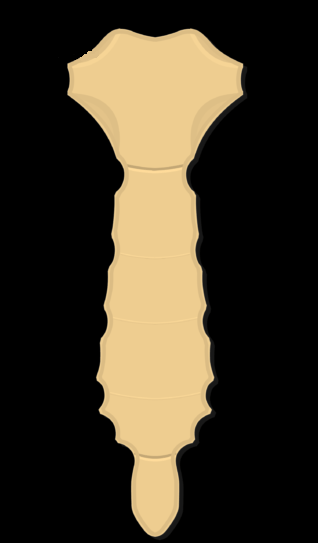
Label 2 points of this diagram

600
How do you assess Romberg's test?
Stand straight, arms at side, eyes closed. Pt should not sway, maintain posture and balance even with visual orienting blocked.
600
You hear a dull sound when percussing over the abdomen, what does that indicate?
You hear a Tympany sound when percussing over the abdomen, what does that indicate?
Dull- Solid organ (full bladder)
Tympany- Hollow Organ (Stomach, intestines)
600
What are the 4 types of drainage?
Sanguineous
Serous
Serosanguineous
Purulent
600
3 Things to help assess a cough
Congested, Dry
Productive, non productive
Frequent, Occasional.
600
What is the normal Pulse Rate for the average Adult?
60-100
700
How many points are you auscultating on the anterior chest, posterior chest and lateral chest?
2 - Anterior
3 - Lateral
8 - Posterior
700
Name the Cranial Nerves 1- 12
1-Olfactory
2-Optic
3-Oulomotor
4-Trochlear
5-Trigeminal
6-Abducens
7-Facial
8-Vestibulocochlear
9-Glossopharyngeal
10-Vagus
11-Spinal Accessory
12-Hypoglossal
700
Before starting the abdominal assessment, what are 3 things that you should take into consideration to help aid in comfort for the patient.
Empty Bladder, Room temp is warm, pain -PQRSTU, ticklish, pillow under knees, hands at sides or across the chest but not over their head, warm your hands and stethoscope before touching the pt.
700
When removing the tape of a dressing, which direction do you pull?
Towards the wound.
700
What is Babinski Reflex?
Pen scraped on lateral aspect of foot, toes should not curl but fan out.
700
Name all the pulse points.
Temporal
Apical
Carotid
Brachial
Radial
Femoral
Popliteal
Posterior Tibial
Dorsalis Pedis