A
B
100
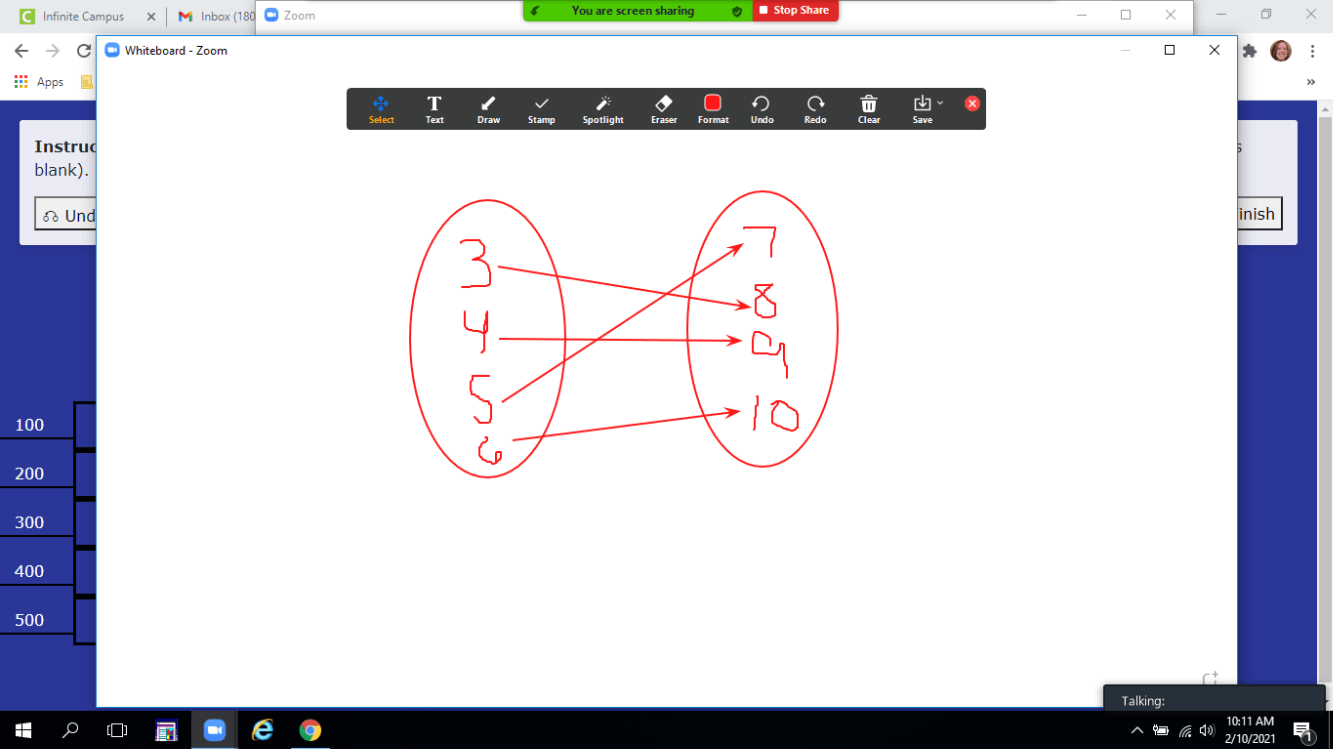 Is this relation a function? Explain
Yes all Input values are mapped to one input value. The x-values do not repeat.
100
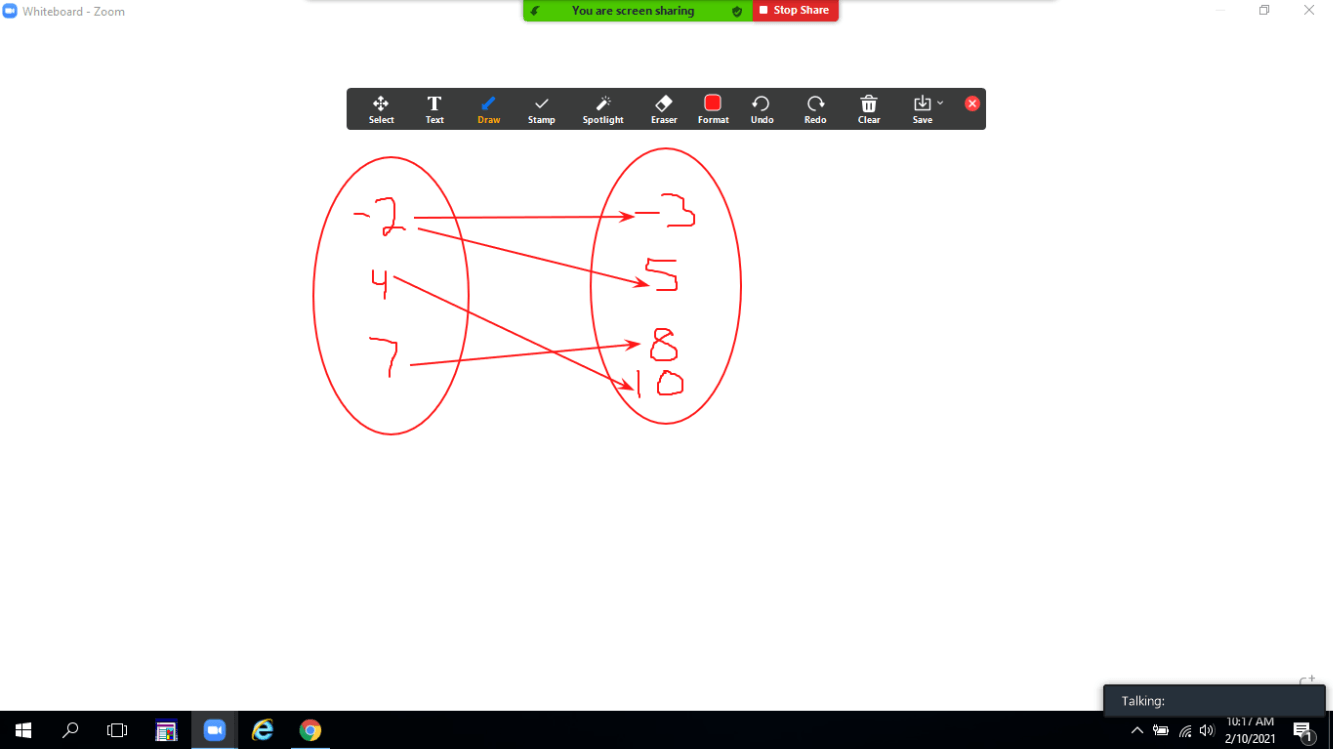 What are the x and y-values. List the ordered pairs
x-values: -2, -2, 4, 7
y-values: -3, 5, 8, 10
Ordered pairs: (-2, -3), (-2, 5), (4, 10), (7, 8)
200
 What is the input values and what are the output values?
Input: 3, 4,5, 6
Output: 7, 8, 9, 10
200
Given these ordered pairs create a mapping. Is the relation a function? Explain.
(0,3), (2, 4), (3, 7), (5, 7)
Yes it is a function. Each input is mapped to one output. The x-values do not repeat. 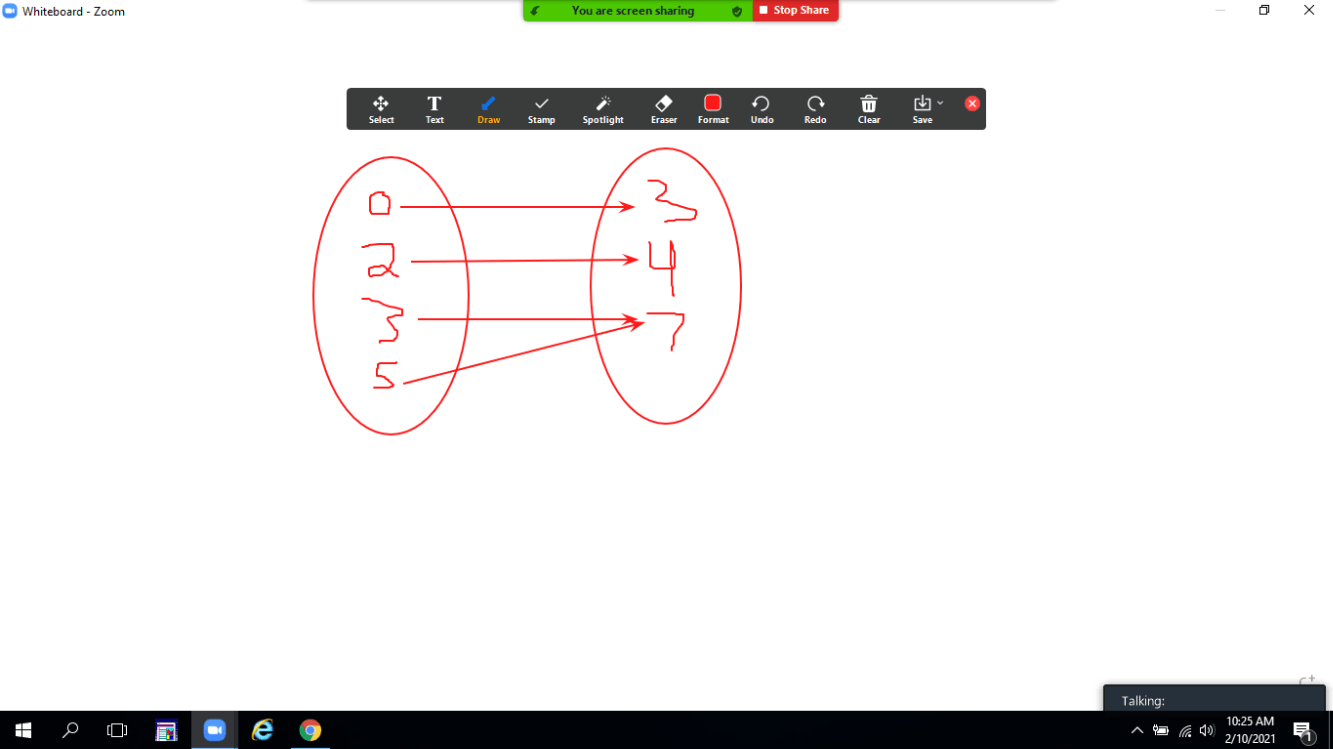
300
What is the x-values and y-values? Write down the ordered pairs.
x-values: 3, 4, 5, 6
y-values: 7, 8, 9, 10
Ordered pairs: (3,8), (4, 9), (5,7), (6, 10)
300
From the given table is the relation a function? Explain. List the ordered pairs.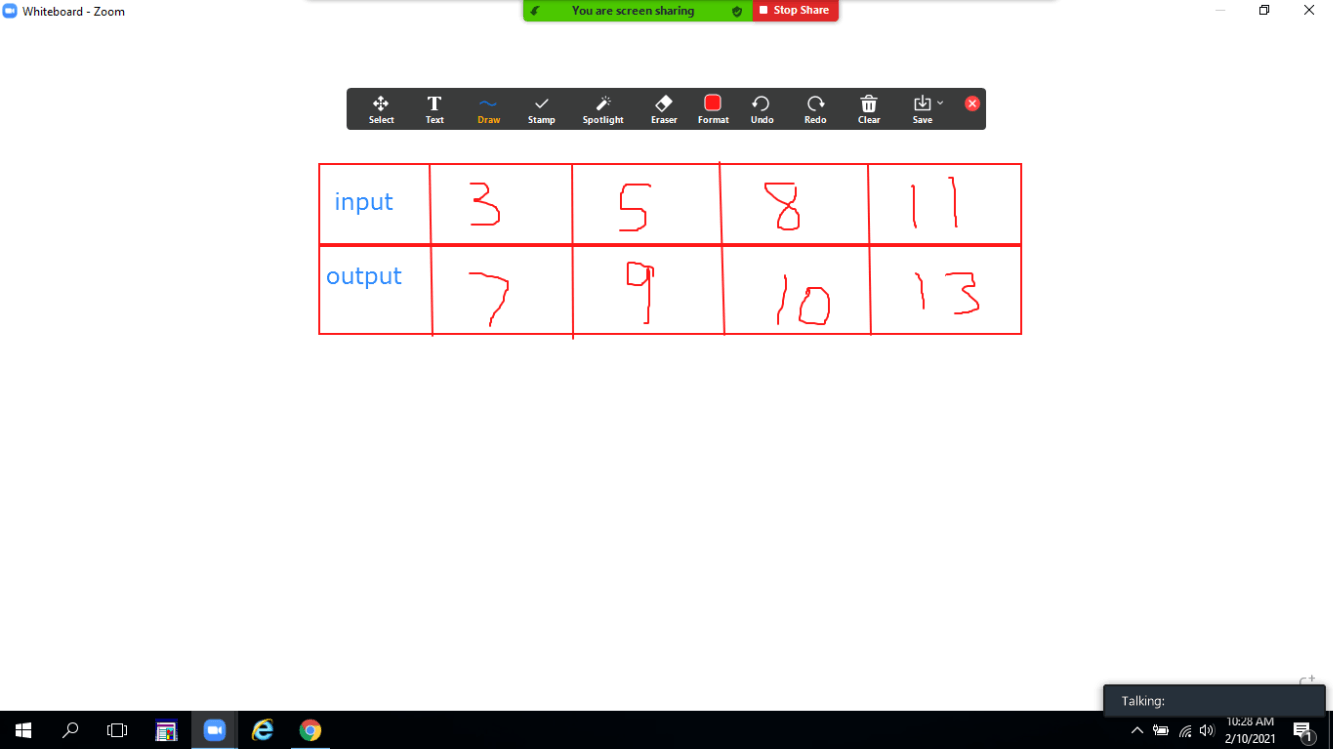
Yes for each input there is one output, the x-values do not repeat.
Ordered pairs: (3, 7), (5, 9), (8, 10), (11, 13)
400
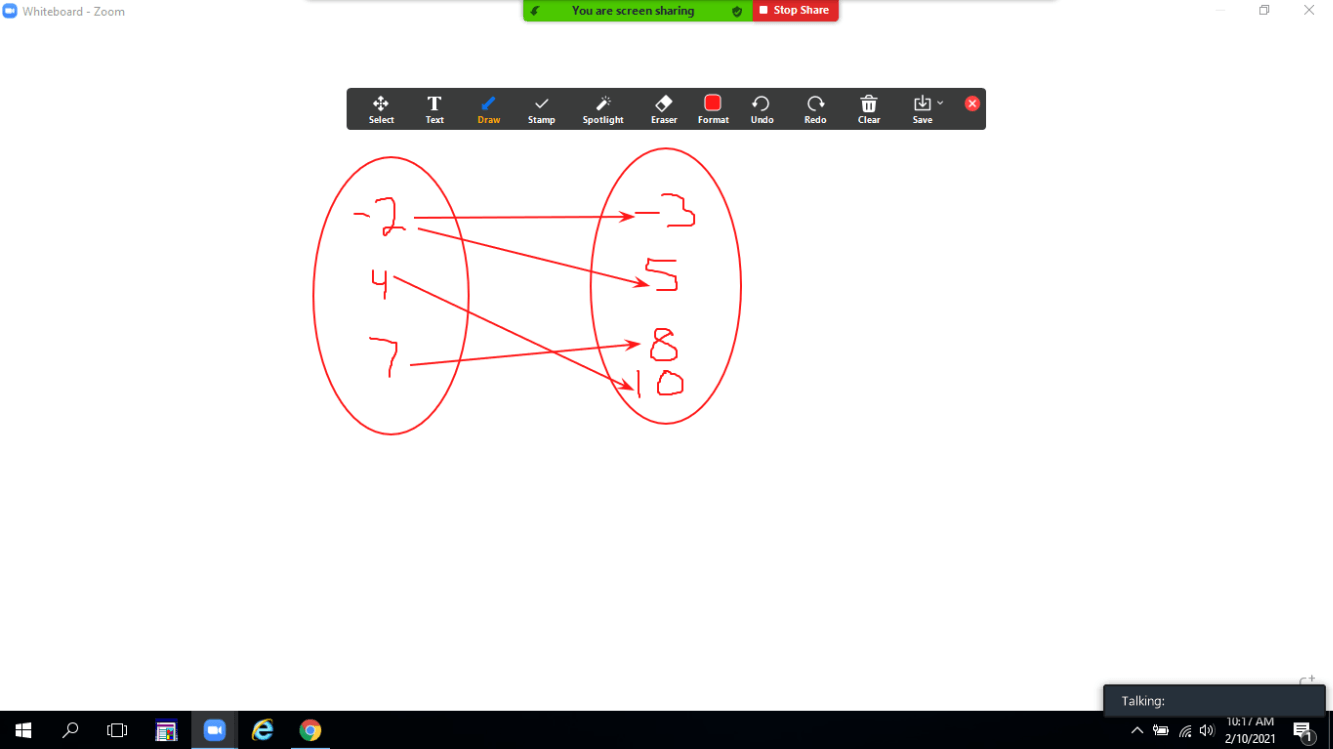 Is this relation a function? Explain
No, the x-value -2 repeats. Or the input -2 is mapped to two output values of -3 and 5.
400
From the given table is the relation a function? Explain. List the ordered pairs.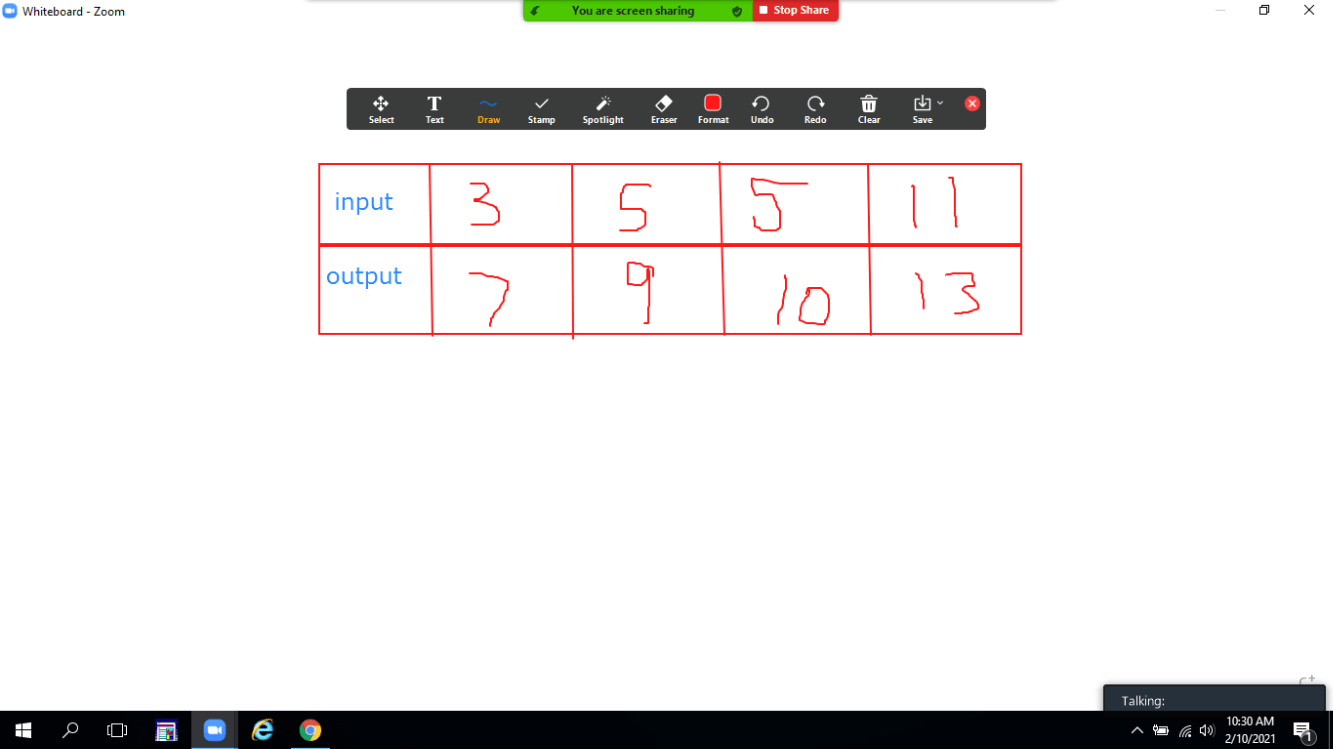
No the relation is not a function. The input 5 is mapped to two input values 9 and 10. The x-values repeat.
Ordered pairs: (3, 7), (5, 9), (5, 10), (11, 13)
500
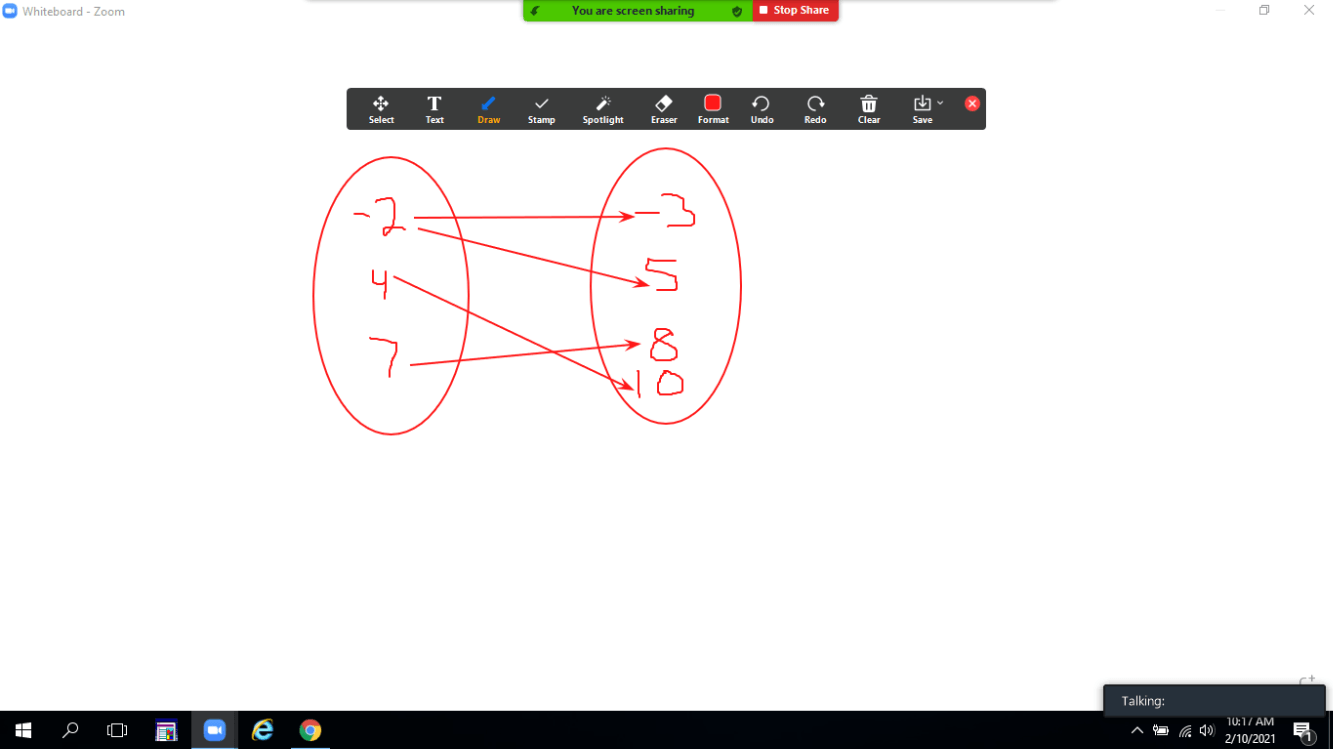 List the input and output values
Input values: -2, -2, 4, 7
Output values: -3, 5, 8, 10
500
Is time a function of cost? Explain. Is cost a function of time? Explain.
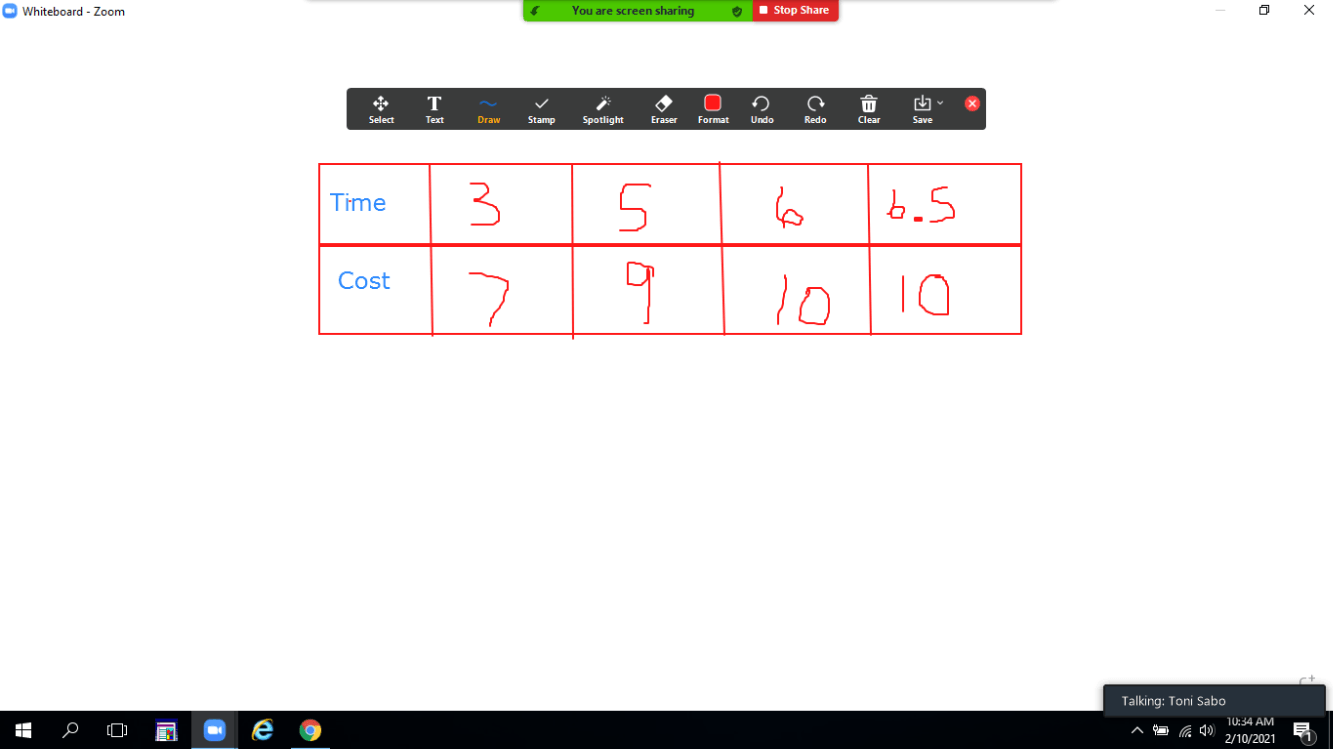
Time is not a function of cost because $10 is mapped to two different time values of 6 and 6.5
Cost is a function of time is mapped to one cost.