Order of Operations
Removing Fractions from Equations
Function or not a Function
literal equations
100
Which comes first in the order of operations, multiplication or division
They hold an equal status in order of operations. You should approach multiplication by giving precedent to the operations on the left going right.
100
What is the first step to removing fractions from equations?
Find the Least Common Multiple (LCM) of the denominators in the equation.
100
Given the following relation, is it a function?
(9, -4), (3, 2), (0, 5), (2, 5), (-1, -8)
Yes, if each input has only one output, it is a function. This relation is a function.
100
Solve for t
tw = z
t = z/w
200
Which comes first in the order of operations? Exponents or parenthesis?
Parenthesis always goes first.
200
What is the second step to removing fractions from equations?
Multiply the whole equation by the LCM.
200

Not a function
200
solve for x
(2 - x)/5 = -2
x = 12
300
Resolve the following:
3[4 - 8 + 42(2 + 5)]
324
300
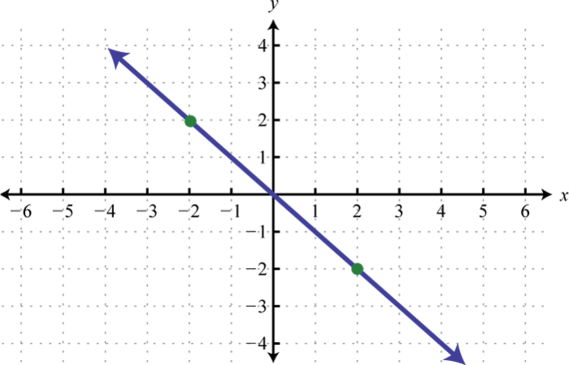
Function
300
(pyz)/q = 7f
q =(pyz)/(7f)
400
What test do we apply when looking at the graph of a relation to determine wether or not it's a function?
The Vertical Line Test