Think Like a Scientist
Big Ideas
Main Ideas
Show What You Know
100
Climate change means that temperatures around the world are warming. The increased temperatures affect the ocean and the land, as well as the temperature of the air. Seas turtles spend most of their lives in the ocean, but the females dig nest holes and lay their eggs on sandy beaches.
Scientists asked the following question: What is the effect of warmer beach sand temperatures on hatching eggs? To find out, they visited green sea turtle nests and measured the temperature of the sand around the nests. They also counted the number of baby turtles that hatched compared to the total number of eggs that were in the nest. The graph shows some of their results.
At what temperatures did the most and least number of seas turtles hatch? 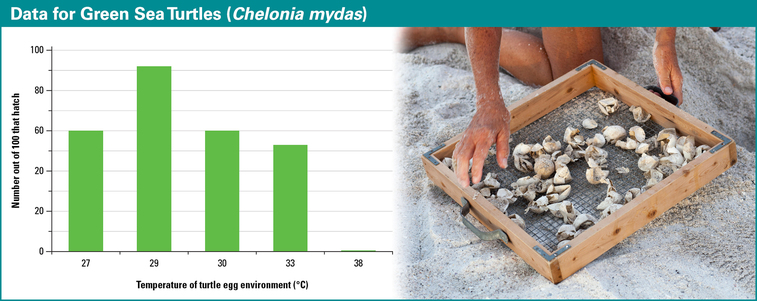
a. The most: 29 degrees Celsius; the least: 38 degrees Celsius
b. The most: 30 and degrees Celsius; the least: 27 degrees Celsius
c. The most: 33 degrees Celsius; the least: 38 degrees Celsius
d. The most: 38 degrees Celsius; the least: 27 degrees Celsius
a. The most: 29 degrees Celsius; the least: 38 degrees Celsius
100
A natural change to an ecosystem occurs when ____
a. a severe drought causes plants to die.
b. trees are cut down to make paper.
c. roads are built through a forest.
d. a dam is constructed to hold back water.
a. a severe drought causes plants to die.
100
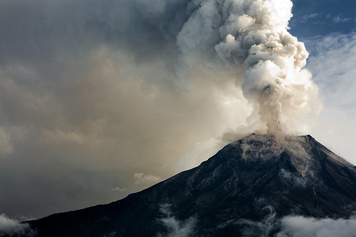
This volcano in Ecuador is erupting, shooting ash into the air. Burning hot gases and bits of rock flow down the side of the mountain. What is the most likely way the eruption will disturb the ecosystem around it?
a. This is a slow change to the ecosystem, but the effects will last for a long time.
b. This is a fast change to the ecosystem and the effects will last for a long time.
c. This is a slow change to the ecosystem but the effects will last a short time.
d. This is a fast change to the ecosystem and the effects will last a short time.
b. This is a fast change to the ecosystem and the effects will last for a long time.
100
Which of the following is a long-term effect of climate change that happens over many years?
A. Rising sea levels that flood coastlines and islands as glaciers and ice sheets melt
B. A thunderstorm with lightning and heavy rain lasting a few hours
C. A snowstorm that brings heavy snow to a city in winter
D. A volcano erupting and sending ash into the atmosphere
A. Rising sea levels that flood coastlines and islands as glaciers and ice sheets melt
200
A group called “Protect the Sea Turtles” wants to sell stickers with a message about climate change. Which message best communicates how seas turtles are affected?
a. “Climate change: good news for sea turtles!”
b. “Climate change: seas turtles won’t care!”
c. “Climate change: seas turtles may disappear!”
d. “Climate change: sea turtles change with the seasons!”
c. “Climate change: seas turtles may disappear!”
200
What kinds of changes take place during succession?
a. Animals move from one ecosystem to another.
b. One or more species die out and no longer exist on Earth.
c. Species slowly replace each other as the landscape changes.
d. Plants stop growing and making food when days get shorter and colder.
c. Species slowly replace each other as the landscape changes.
200
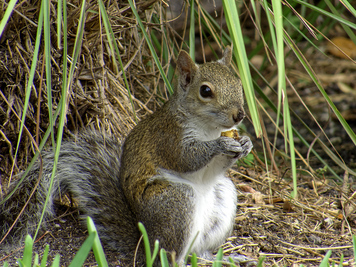
This eastern grey squirrel lives in the temperate climate of Midwest states such as Ohio. The squirrel collects nuts and buries them in preparation for the winter. How do seasonal changes explain the squirrel’s behavior?
a. There will be more plants to eat in the spring.
b. There are more plants available to eat in the winter.
c. There is less food available to eat during the winter.
d. There is less food available to eat during the summer.
c. There is less food available to eat during the winter.
200
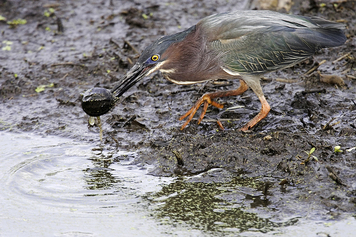
Herons will sometimes stand motionless in their habitat for an hour, waiting to catch their prey. They’ve even been known to swallow turtles whole. What would happen to the herons if the number of turtles decreased in this habitat?
a. The turtles’ food supply would decrease.
b. The herons would become prey to other predators.
c. Herons would eat the turtles’ food instead and remain healthy.
d. The herons’ food supply would decrease and hurt their survival.
d. The herons’ food supply would decrease and hurt their survival.
300
Look at the picture of the polar bear standing on a small patch of sea ice surrounded by dark water and scattered ice floes. What would most likely happen to the polar bear if the sea ice continued to melt and disappear?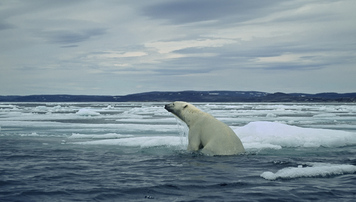
A. The polar bear would quickly adapt and learn to hunt fish in the water instead of seals.
B. The polar bear would have less ice to stand on and hunt for seals, making it harder to survive.
C. The polar bear would have more food to eat because seals would move closer to the shore.
D. The polar bear would move to a warmer place where it would be more comfortable living.
B. The polar bear would have less ice to stand on and hunt for seals, making it harder to survive.
300
After a forest fire, new plants and those that were not burned will ______ because the fire released nutrients into the soil.
a. slowly die
b. grow faster
c. stop growing
d. become extinct
b. grow faster
300
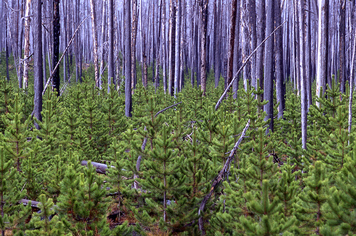
In 1988, one of the largest wildfires in Yellowstone National Park took place. The burned area of the park included a forest of tall pine trees. The photo shows how the forest looked in 1999, about ten years after the fire. Using evidence from the photo, what claim can you make about the stage of succession in 1999?
a. An ecosystem disturbance occurred in 1999.
b. It took only ten years for pine trees to start to grow again.
c. After ten years, only wildflowers and grasses grew where the fire had burned.
d. The 1988 fire destroyed or removed the soil needed for trees to survive.
b. It took only ten years for pine trees to start to grow again.
300
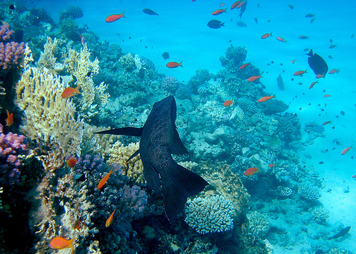
There are many species found in this coral reef ecosystem, such as algae living inside and outside the coral. You can see a variety of fish that eat the coral and the sharks that eat the fish. Which of the following claims about this ecosystem is supported by the evidence?
a. It is unhealthy because fish have to compete to use the same resources.
b. It is healthy because there are more prey than predators found here.
c. It is healthy because there are many producers and consumers that can meet their needs.
d. It is unhealthy because there are no predators, but there are many kinds of producers and prey.
c. It is healthy because there are many producers and consumers that can meet their needs.
400
In a healthy ecosystem,
a. there is one large group of a single type of organism.
b. many different kinds of organisms can meet their needs.
c. organisms never have to compete to use the same resources.
d. there are no consumers so producers can grow without being eaten.
b. many different kinds of organisms can meet their needs.
400
Some animals hibernate during the winter because they _____
a. lay eggs that need to be kept warm.
b. need to avoid predators.
c. change from one form to another.
d. cannot find enough food.
d. cannot find enough food.
400
You have learned that some changes to ecosystems are caused by humans and others have natural (non-human) causes. The chart below models this idea. On which side of the chart would you place a wildfire started by lightning?
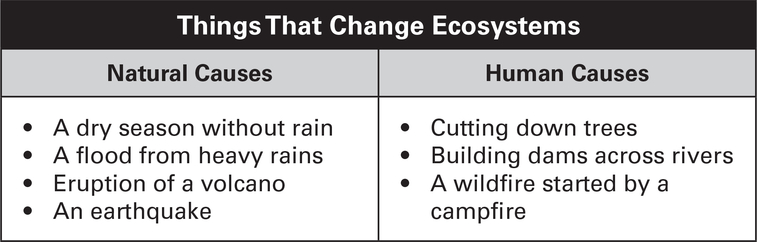
a. on the “Natural Causes” side
b. on the “Human Causes” side
c. on both sides of the chart
d. It does not belong on either side.
a. on the “Natural Causes” side
400
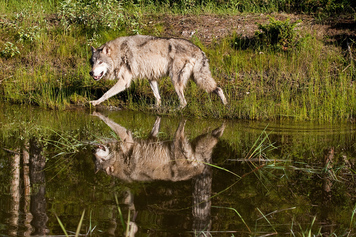
The wolves of Isle Royale kill and feed on the moose that live there. The moose eat trees, like fir and birch. During a rainy year, the moose and wolves are plentiful. Which of the following explanations BEST accounts for these results?
a. Moose eat more fir than birch trees.
b. The ecosystem on Isle Royale is not in balance.
c. Wolves are the only predator of moose in this ecosystem.
d. Both predator and prey have enough to eat and survive.
d. Both predator and prey have enough to eat and survive.
500
On the island of Isle Royale, the wolves only kill and eat moose. They chase after moose in wolf groups called packs. The wolves will only attack the slower, more vulnerable moose. Due to their close relationship, the wolves and moose affect each other’s growth and decline. Other random events like disease, ticks, weather, and wolf immigration have also affected their relationship over time.
Scientists have tracked the wolves and moose on the island for about seventy years. This is one of the longest research studies of a predator and prey system. Graph A shows the changing wolf population size over time. Graph B shows the changing moose population over the same period of time.
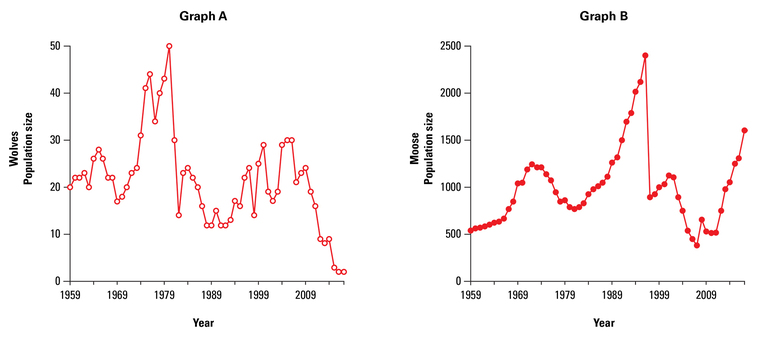
Based on the graphs, during which time period did the wolf population show its first major decline in population size?
a. 1959–1969
b. 1969–1979
c. 1979–1989
d. 1989–1999
c. 1979–1989
500
Climate change can cause changes to ecosystems. What can happen to organisms that do not change with their ecosystems?
a. They can disappear from Earth.
b. They can stop the ecosystem from changing.
c. They can form new ecosystems.
d. They can be unaffected by the change.
a. They can disappear from Earth.
500
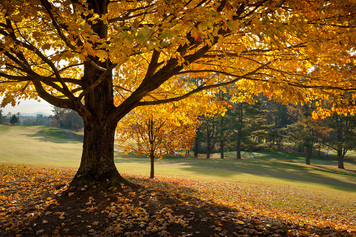
This tree is losing its leaves during the fall. After all its leaves fall to the ground, the tree branches will be bare for the winter. Then new leaves will grow in the spring. How can scientists predict these events will happen?
a. The climate is changing quickly.
b. The tree is going into hibernation.
c. Seasonal changes occur in a cycle.
d. An ecosystem disturbance has happened.
c. Seasonal changes occur in a cycle.
500
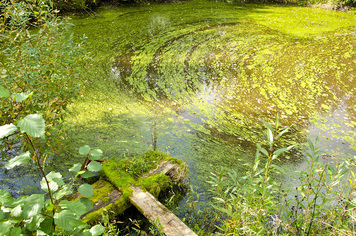
This pond ecosystem has become unhealthy. You investigate the pond and discover that most of the pond’s fish and turtles are dead. The local birds are also starving. What caused this ecosystem to become unhealthy? Use evidence from the picture to make your claim.
a. Introduced fish outcompeted the native fish and this led to starving birds.
b. Too much green algae grew in the pond and this led to lower oxygen levels over time.
c. Tadpole populations increased in the pond and this immediately led to greater oxygen levels.
d. The green algae died in the pond and this eventually led to greater oxygen levels.
b. Too much green algae grew in the pond and this led to lower oxygen levels over time.