Crop Pests and Diseases
Plant Breeding (aka Breedin' for Seedin')
Herbicide Modes of Action
Extreme Agriculture
Farming in Popular Culture
100
These little varmints are actually grasshoppers that have experienced density-dependent phenotypic plasticity; when reared around many others, the visual and chemical cues trigger a difference in development, as well as their famous swarming behavior. They preferentially go for salt and protein, and will cannibalize each other (you either keep marching or you die). If only Pharaoh and the Egyptians had IPM...
Locusts
100
This is the breeding method of selecting the best plants from a field and combining them for planting the following year. It is one of the oldest and least complex methods of plant breeding.
(Pros are that is is practical and inexpensive, and maintains a genetically diverse stock. Cons are that it fails to distinguish between homozygous and heterozygous plants, and struggles to breed for low heritability traits (such as yield), and for the most part only looks at phenotype.)
Mass selection
100
This herbicide group disrupts the shikimate pathway, responsible for biosynthesis of the aromatic amino acids in plants (animals do not have this enzyme in their genome) and is a broad spectrum contact herbicide.
[Unused in agriculture for ~30 years after its discovery because it killed crops as well, the first herbicide tolerant GM crops had a soil bacteria gene that broke down the molecule in an attempt to outgrow the herbicide. The most famous trade name is Roundup.]
EPSPS - Group 9 (Glyphosate)
100
Grown in extreme high-altitude regions like Peru and Bolivia, this pseudo-cereal grain was declared a "superfood" by NASA for space missions due to its complete amino acid profile.
Quinoa (Chenopodium quinoa)
100
The earliest variant of this song was written in 1706 by Thomas d'Urfey for his opera, and was titled, and begins, "In the fields of frost and snow". It went on to have several traditional English and Ozark variants, one about MacDougal, and the other about "Old Missouri". The 1st recorded version was by the Sam Patterson Trio on Thomas Edison’s label in 1925.
Old Macdonald (Had a Farm)
200
Coined as the "billion-dollar bug" for its severe impact on U.S. maize crops, this destructive pest damages roots as larvae and has evolved resistance to both crop rotation and multiple Bt traits.
One variant evolved extended diapause, and another adapted by laying eggs in soybean fields.
Corn Rootworm (Diabrotica spp.)
(Northern and Western respectively)
200
This is the practice of using Colchicine on gametes to achieve homozygosity much faster than repeated self-crossing.
[Because plants possess totipotency (breeders can lose 95-99% of cells and regenerate full plants from the remainder - Numbers Game), can handle polyploidy and genome shenanigans better, and (some species) through self pollination have already filtered out many lethal recessives, and don't rely on genome imprinting like we do, this cannot work for humans like it does for plants :( ]
Doubled haploids
200
Herbicides like trade name Liberty cause a rapid, toxic accumulation of ammonia in plant tissues by blocking this vital nitrogen-assimilating enzyme
Glutamine synthetase
(Glutamine synthesis inhibitor) (Group 10)
200
Measuring up to 2.2 million Scoville Heat Units, this pepper grown in South Carolina was officially crowned the world's hottest chili pepper by Guinness World Records in 2013.
Carolina Reaper (Capsicum annuum)
200
This is a farm life simulation game released in 2016, made largely by one guy ( Eric "ConcernedApe" Barone), and credited with revitalizing the genre. Players plant and sell crops; interact with the townspeople; and build skill level in farming, foraging, fishing, mining, and combat. It is cited as one of the greatest games of all time and has sold over 50 million copies, putting it tied for 13th all time.
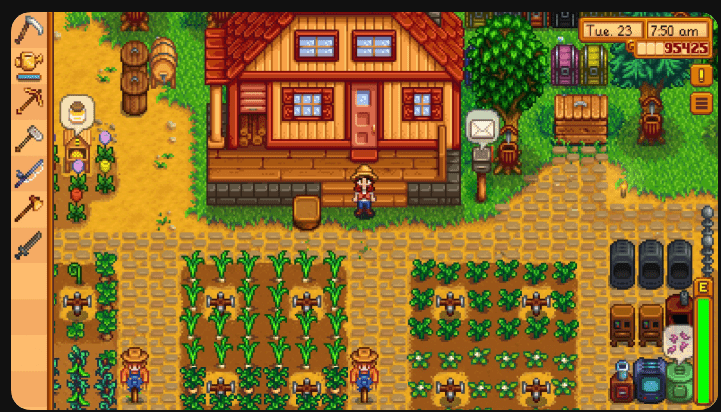
Stardew Valley
300
There are microscopic animals, some (but not all of which) are a pest / disease of plants. They are unique among animals that affect plants in that they are treated with the diseases normally. Some major examples include root-knot, reniform, and cyst. They often attack roots and clog up vascular tissues, but some are predatory and beneficial.
Nematodes (aka Roundworms)
300
Unlike mass selection, this breeding method relies on detailed genealogical records to track specific desirable traits across parental lines and offspring over multiple generations.
Pedigree Selection / Pedigree Breeding
300
These herbicides cause a buildup of highly reactive oxygen species that rapidly destroy cell membranes by inhibiting this enzyme in the chlorophyll biosynthesis pathway. Symptoms include bronzing of leaves.
PPO (Protoporphyrinogen oxidase)
PPO inhibitors - Group 14
300
Situated deep inside an Arctic mountain on a Norwegian island, this subterranean facility stores over 1 million back-up seed samples at a permanent -18oC (0oF)to safeguard global agriculture against catastrophic loss.
Svalbard Seed Vault
300
This was a famous novel written by John Steinbeck in 1939, as well as a famous film starring Henry Fonda and directed by John Ford in 1940 (which I cannot recommend enough). Driven from their Oklahoma home by drought, economic hardship, and bank foreclosures during the Dust Bowl, a family of evicted tenant farmers migrates along the "Mother Road" (Route 66) to California, in search of opportunity and dignity (but not finding it).
The Grapes of Wrath
400
This was the first of all viruses discovered. It causes mottling and discoloration on the leaves on a wide range of crops but especially ones from the Solanaceae (tomato/potato family).
It has a rod-like structure and is made up of 2130 coat proteins arranged helically on a single RNA molecule 6400 bp long. 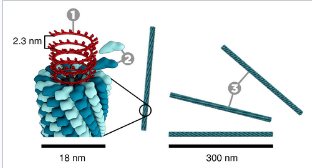
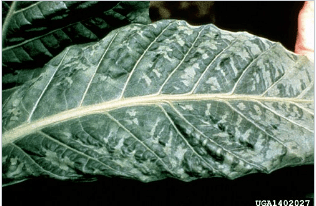
Tobacco Mosaic Virus
400
Created by crossing two distinct homozygous parents and self-pollinating the offspring for several generations through single-seed descent, these immortal plant populations are essential tools for mapping complex quantitative trait loci (QTLs).
Recombinant Inbred Lines (RILs)
400
Classic herbicides like atrazine bind to the D1 protein in chloroplasts, halting electron transport by disrupting this crucial light-dependent complex. It's name is reminiscent of a early 2000's video game console.
[As opposed to the "90's console", which blocks the transfer of electrons to the next carrier, this one affects the light harvesting array (located on the thylakoid membrane) itself.]
Photosystem II (PS II) - Groups 5 & 6
400
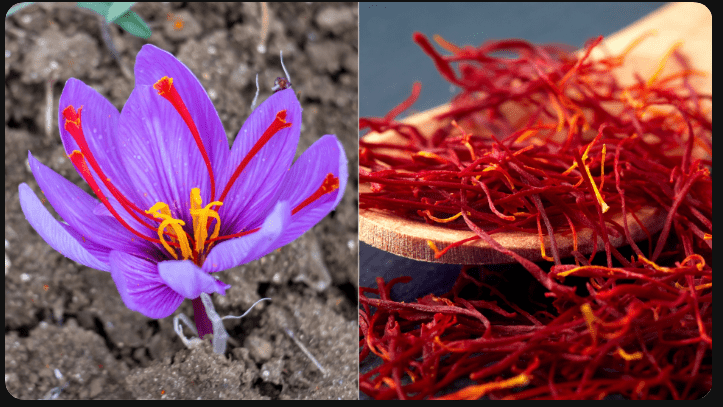
Known as the world's most expensive spice by weight, harvesting just one pound of this product requires hand-extracting the delicate red stigmas from roughly 75,000 crocus flowers.
Saffron (Crocus sativus)
400
This was a TV show that ran from 1965-1971, about a New York lawyer and his socialite wife who move to the countryside. He dreams of the quiet, hardworking farm life; she absolutely does not; hilarity ensues. Despite it pulling good ratings over its six-year run, it was cancelled in 1971 as part of the "rural purge" by CBS (the mass cancelation of many rural-themed shows in the early-1970s).
Green Acres
(I'll show y'all the theme song - 1min)
500

Capable of destroying enough grain annually to feed over 60 million people, this destructive fungal pathogen uses a specialized dome structure called an appressorium to generate up to 8 megapascals (~80 atm) of turgor pressure to physically rupture the plant cuticle.
The fungus is known to occur in 85 countries worldwide and continued consensus is that it's the most devastating fungal plant pathogen in the world.
Rice Blast (Magnaporthe oryzae / Pyricularia oryzae)
500
Developed by repeatedly backcrossing a hybrid to a recurrent parent, these paired genetic lines differ at only a single targeted gene or genomic region, making them ideal for pinpointing the exact effect of an individual gene.
Near-isogenic lines (NILs)
500
Often referred to as "bleachers," herbicides targeting these specific pathways turn susceptible plants stark white by halting the production of protective carotenoid pigments
DOXP inhibitor (Group 13)
HPPD inhibitor (Group 27)
500
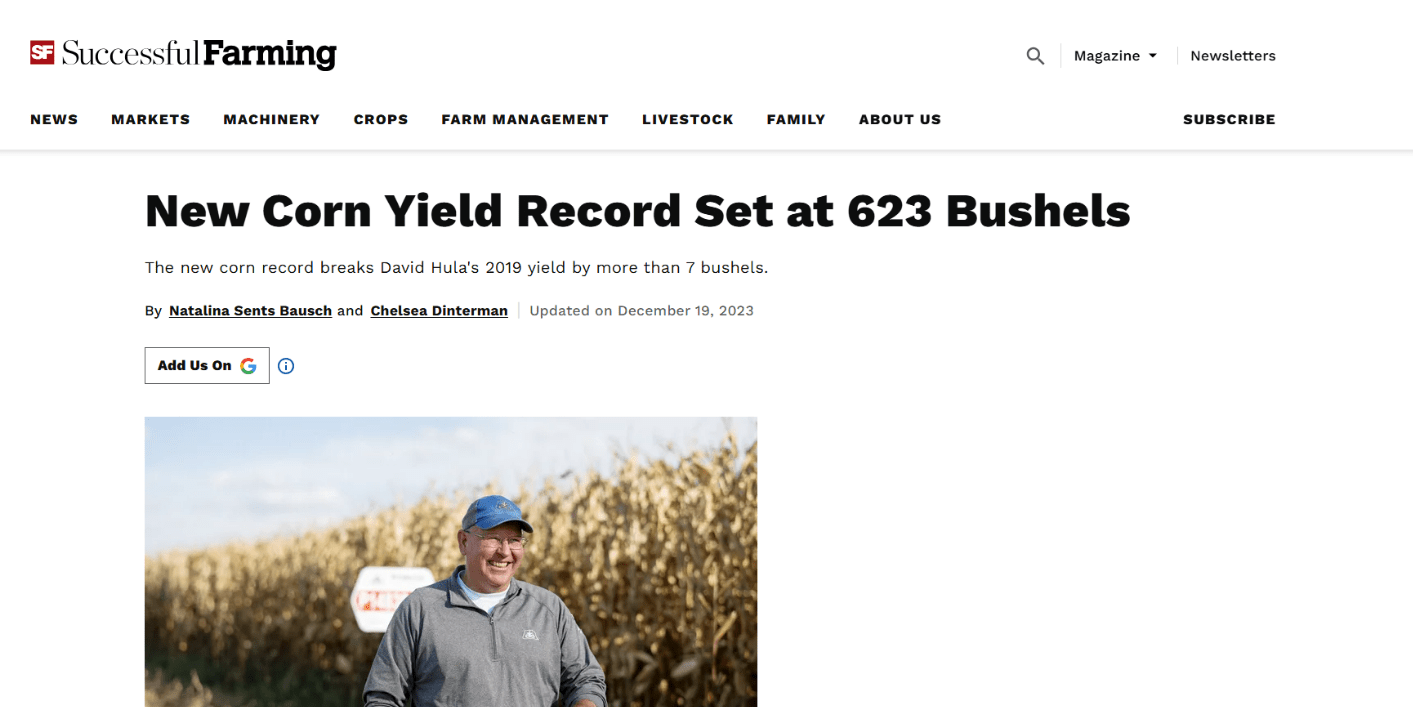
David Hula, a Virginian corn farmer, set the yield per acre record in 2023, beating the previous record (also set by him, in 2019) by about 7 bushels. What is the new record? (closest guess gets it)
623.8439
500

After dying of an illness, the protagonist of this anime series is reincarnated into the Forest of Death with an indestructible, shape-shifting "Universal Farming Tool" gifted to him by a deity.
This is a Japanese light novel series written by Kinosuke Naito from 2016-present, where the main character gets isekai-ed (or taken to another world) (Isekai being a major genre). It has two seasons of an anime adaptation (2023 & 2026).
Farming Life in Another World