Firsthand/Secondhand
Main Idea
Academic Words in Text
Text Structure
100
Passage 1
Dear Grandpa,
- You are never going to believe what happened to me last Thursday. I decided to go for a walk after dinner just like always. I strolled down my street and then took a left at the white house with the blue shutters. It’s a dead-end street, so I decided to take a break before heading back. I plopped down on the curb to rest for a bit. That’s when I saw it. Out of the corner of my eye, I saw something fluttering in the breeze. When I looked down, I realized it was cash. I don’t mean like a dollar. I mean like a bundle of green dough. I quickly started to look around. I felt like I was on one of those television shows where they set people up to see what they would do in certain situations. I knew right away that I had to find who the money belonged to, so I sprinted home to tell mom and dad.
- Mom and dad were shocked. We laid the money on the table and counted it. I had never seen that much money at one time. There was $550.00 wrapped in a bundle. I really wanted to keep it. I’ve had my eye on a pair of shoes that for a while, but I knew it wasn’t mine to keep. My parents suggested that we put it on social media to see if someone might have lost it. My fingers were crossed. I didn’t want anyone to claim it. It didn’t take long before my mom got a response to her post. She asked the about the exact amount he lost to make sure the money belonged to him. He knew exactly how much he had lost. It turns out that the money had fallen out of his car when he went to see his aunt who lived right on the street where I found it.
- The middle-aged man came to the door later that afternoon to claim the money. I’m not going to lie. I was kind of bummed. Turns out, he was a nice guy and very appreciative. And guess what, grandpa? He gave me half of it! I got $225.00. It was more than enough money to buy my shoes and take mom and dad out to eat. He even called the local news and told them all about me. They came to my house and everything. All my friends saw me on the news. It was wild. I guess honesty is the best policy.
- I can’t wait until you come down for the holidays.
Passage 2
- Channel 8 NEWS – Last Thursday afternoon, an eleven-year-old boy named Andy Pingleton did the unthinkable. While strolling through his neighborhood, he discovered a bundle of cash lying on the ground. Instead of keeping the money for himself, he wanted to find its rightful owner. Andy’s mom made a post on social media in an attempt to find who the money belonged to.
- Nathan Roberts had been frantically looking for his lost cash when he saw a post on social
 media about the money. He immediately responded and was able to give the exact amount that he had lost. He couldn’t believe that someone would try to find the owner and not keep it for themselves. Because Nathan was so grateful for what Andy had done, he gave him half of the money. We could all learn something from Andy Pingleton.
roblem
Which sentence BEST states a point of view shared by BOTH passages?
- A
Andy should have kept the money instead of finding the owner.
- B
Andy did the right thing by finding the owner of the money.
- C
Andy’s mom and dad should not have gotten involved.
- D
Nathan should not have shared part of the money with Andy.
- B
Andy did the right thing by finding the owner of the money.
100

- Kites have been around for more than 2,000 years. People believe that the first kite came from China. A farmer tied his hat to a string to keep it from being blown away in the wind. That is believed to be the very first kite.
- A European explorer named Marco Polo first wrote about making flying kites. That was in 1295. Kites became more popular. In 16th century, kites were sold as children's toys. Then, scientists began using kites in the 18th century.
- One example is, Alexander Wilson used a kite to measure air temperature in 1749. He attached a thermometer to a kite and recorded air temperatures at 3,000 feet. In 1752, Ben Franklin proved that lightning was electricity. He used kites to prove it. Kites have been useful in many ways.
Problem
Which details are important to include in a summary of the passage? (Select two.)
- A
Ben Franklin proved that lightning was electricity.
- B
Kites first came from China more than 2,000 years ago.
- C
Kites have been used in science and as kids’ toys.
- D
Other things, like hats and balloon, are flown like kites by attaching strings to them.
B and D
100
Masks
- Wearing a mask over your nose and mouth helps to protect you against certain illnesses. It creates a barrier between you and other people. Thus, it protects you while protecting them as well.
- When you cough or sneeze, tiny droplets fly through the air. If those droplets are not stopped, they could enter the nose or mouth of another person. If the person who coughed or sneezed is sick, they could make others sick, too.
- Wearing a mask into stores and restaurants helps to protect you when you shop and enjoy dinner with your family. It’s an easy solution to help stop the spread of disease and keep us all healthy.
Problem
In paragraph 1, what is the meaning of barrier?
- A
passage
- B
opening
- C
wall
- D
assistance
- C
wall
100
The History of the Bicycle
- We do not know who first invented the bicycle. We do know early bicycles were used in 1800s. We know more about the bicycle after this date.
- In 1817, a guy named Charles designed a front wheel that one could steer. He lived in Sauerbrun, Germany. This vehicle had a padded saddle and an armrest. This invention was first called Draisienne. Later, the vehicle was called velocipede in France. This type of bicycle was popular in France and England.
- Around 1868, the word “bicycle” was used. In 1869, the bicycle was improved in New York. Then, carriage makers started making bicycles. Many riding schools came to be. A lot of college students started using the bicycle. Around this time, the bicycle was called bone-shaker. The name is because of the rough ride. The bicycle was iron-framed. The wheels were wooden. The bicycles today have come a long way.
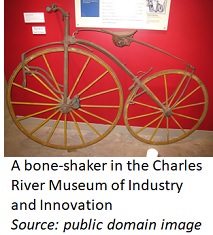 1800s- early bicycles
1817-Draisienne invented in Germany
1868- the term "bicycle" was used
1869-the bicycle was improved in New York
Problem
The author organizes ideas in this article by—
- A
listing all the people who improved the bicycle.
- B
explaining why the bicycle was invented.
- C
comparing different kinds of bicycles.
- D
describing how the bicycle developed over time.
- D
describing how the bicycle developed over time.
200
Passage one:
Dear Grandpa,
- You are never going to believe what happened to me last Thursday. I decided to go for a walk after dinner just like always. I strolled down my street and then took a left at the white house with the blue shutters. It’s a dead-end street, so I decided to take a break before heading back. I plopped down on the curb to rest for a bit. That’s when I saw it. Out of the corner of my eye, I saw something fluttering in the breeze. When I looked down, I realized it was cash. I don’t mean like a dollar. I mean like a bundle of green dough. I quickly started to look around. I felt like I was on one of those television shows where they set people up to see what they would do in certain situations. I knew right away that I had to find who the money belonged to, so I sprinted home to tell mom and dad.
- Mom and dad were shocked. We laid the money on the table and counted it. I had never seen that much money at one time. There was $550.00 wrapped in a bundle. I really wanted to keep it. I’ve had my eye on a pair of shoes that for a while, but I knew it wasn’t mine to keep. My parents suggested that we put it on social media to see if someone might have lost it. My fingers were crossed. I didn’t want anyone to claim it. It didn’t take long before my mom got a response to her post. She asked the about the exact amount he lost to make sure the money belonged to him. He knew exactly how much he had lost. It turns out that the money had fallen out of his car when he went to see his aunt who lived right on the street where I found it.
- The middle-aged man came to the door later that afternoon to claim the money. I’m not going to lie. I was kind of bummed. Turns out, he was a nice guy and very appreciative. And guess what, grandpa? He gave me half of it! I got $225.00. It was more than enough money to buy my shoes and take mom and dad out to eat. He even called the local news and told them all about me. They came to my house and everything. All my friends saw me on the news. It was wild. I guess honesty is the best policy.
- I can’t wait until you come down for the holidays.
Love,
Andy
Passage 2:
Honesty is the Best Policy
- Channel 8 NEWS – Last Thursday afternoon, an eleven-year-old boy named Andy Pingleton did the unthinkable. While strolling through his neighborhood, he discovered a bundle of cash lying on the ground. Instead of keeping the money for himself, he wanted to find its rightful owner. Andy’s mom made a post on social media in an attempt to find who the money belonged to.
- Nathan Roberts had been frantically looking for his lost cash when he saw a post on social media about the money. He immediately responded and was able to give the exact amount that he had lost. He couldn’t believe that someone would try to find the owner and not keep it for themselves. Because Nathan was so grateful for what Andy had done, he gave him half of the money. We could all learn something from Andy Pingleton.
What is true about the passage called “Honesty is the Best Policy”?
- A
It’s written from a secondhand account by Nathan Roberts.
- B
It’s written from a secondhand account by a news reporter.
- C
It’s written from a firsthand account by Andy Pingleton.
- D
It’s written from a firsthand account by Andy’s grandpa.
B
It’s written from a secondhand account by a news reporter.
200
- In Japan, there is a special day to announce kids have now become grown-ups. In other words, they have come of age. On the second Monday of January, the Japanese celebrate Coming-of-Age Day. It is a national holiday. Dr. Igoshi, a professor, says "Coming of age is when a child changes into an adult."
- The 20-year-olds in the country celebrate the special day. The men wear suits to the ceremony. The women wear a special kimono. It is called furisode. Many gather near a government building. They listen to speakers, like in a graduation ceremony. The "new" grown-ups also get presents.
- The men and women feel respected at the ceremony. "It is fun because lots of people see us at once as grown-up,” said Sayaka. She was a new grown-up a the celebration last year. “My favorite part is dressing up and the presents," Sayaka added.
Problem
Which choice BEST summarizes the passage?
- A
In Japan, it is announced that kids have now become grown-ups. That is called a Coming-of-Age Day. It is on the second Monday of January.
- B
In Japan, 20-year-olds celebrate Coming-of-Age Day to officially become an adult. They gather near a government building wearing traditional clothes, get presents, and feel respected.
- C
Furisode is a special Japanese outfit or a kimono. This is what Japanese women wear to a special ceremony when they are twenty years old. The day is on the second Monday of January.
- D
Japanese women wear furisode on the Coming-of-Age Day while the men wear suits. They listen to speakers, like they would do in a graduation ceremony. Then they become adults.
- B
In Japan, 20-year-olds celebrate Coming-of-Age Day to officially become an adult. They gather near a government building wearing traditional clothes, get presents, and feel respected.
200
Mnemonic devices
- Many clever tricks can make learning easier. One such trick is a mnemonic device. Mnemonic is pronounced ni-mon-ik. You can use time-tested memory tricks. You can make up your own tricks.
- These are especially helpful in some disciplines. Students of science have to learn a lot of facts by heart. For example, a mnemonic device about foot injury is RICE. It teaches you how to take care of an injured foot. It stands for Rest, Ice, Compress, Elevate.
- You probably know about “My Very Excited Mother Just Served Us Nachos.” Each first letter of the word stands for a planet in the Solar System: Mercury, Venus, Earth, Mars, Jupiter, Saturn, Uranus, and Neptune. You probably know a lot of these tricks.
Problem
What does disciplines mean in this passage?
- A
Areas of study
- B
Studies of punishment
- C
Strict studying
- D
Studies about facts
A
Areas of study
200
Masks
- Wearing a mask over your nose and mouth helps to protect you against certain illnesses. It creates a barrier between you and other people. Thus, it protects you while protecting them as well.
- When you cough or sneeze, tiny droplets fly through the air. If those droplets are not stopped, they could enter the nose or mouth of another person. If the person who coughed or sneezed is sick, they could make others sick, too.
- Wearing a mask into stores and restaurants helps to protect you when you shop and enjoy dinner with your family. It’s an easy solution to help stop the spread of disease and keep us all healthy.
Problem
Which sentence best describes how information is presented in the passage?
- A
It describes the cause and effects of wearing a mask.
- B
It compares wearing a mask to other types of protection.
- C
It focuses on diseases that can be prevented
- D
It uses personal stories to support opinions.
A
It describes the cause and effects of wearing a mask.
300
- Dear diary,
- Yesterday was the most important day of my life. I ran a marathon! I cannot believe I get to write this sentence. I became the first kid in my town to run a marathon.
- I am so glad I listened to all of my family’s advice. I also “listened” to my body. I paid attention when my body told me to stop. I ran lightly. I was gentle on the ground. And my reward for being active, the perfect shoes, really helped. Most of all, running in the backyard barefoot helped my foot muscles. I am so proud of doing everything my mother asked me to do so I could take part in the big race. She had told me that if I did everything right, I could do it again next year. It looks like I can.
- Even kids can run marathons. You can do anything you set your mind to. Oh, I am so very happy. Maybe I will be a great runner one day. Maybe I will win a marathon like Papa. Maybe sissy will also want to run with me. Who knows! I am just happy.
- Nila
Problem
The newspaper article is an example of a secondhand account because
- A
it uses facts and details about the marathon.
- B
it includes Nila’s thoughts and feelings.
- C
it shares the views of people at the race.
- D
Leah Spear was not present at the marathon.
- D
Leah Spear was not present at the marathon.
300
Time Travel Through a Tree
- Trees can tell stories of the past through fossils. Paleobotanists (pa-leo-bot-a-nists) are scientists who study plant fossils.
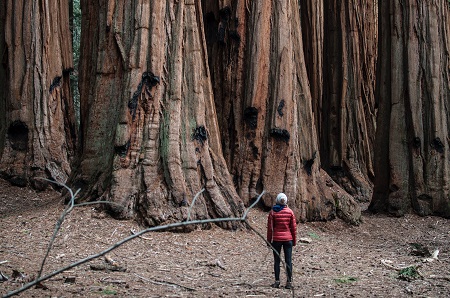 Giant Sequoia by Vitto Sommella on Unsplash
 - Paleobotanists can learn about the time a tree existed by looking at its fossil. They learn about other living things that lived at the time. For example, they learn about tiny amoebas (uh-mee-buh-s) and giant argentinosauruses (ar-jen-ti-no-sau-rus-es). They understand how the universe and the Solar System formed. They also try to figure out how life began on Earth by studying a tree fossil.
The Story Began16 Million Years Ago - One such fossil lies at the National Museum of Natural History. It came from a giant sequoia tree growing in what is now Oregon. The tree lived 16 million years ago. The fossil shows 260 rings. It means that the tree lived for 260 years. If humans had been living at that time, their three generations would have seen it. The tree grew fast for the first 100 years. Then, its growth slowed down.
- After the tree fell, it started its journey to become a fossil. Silica and other minerals in water coated the log. This protected the log and its history.
Hall of Fossils – Deep Time - The giant fossil arrived at the museum as a gift. Paleobotanists took time to carefully look at it. They recorded the important information it showed. It was then polished and put up in the Hall of Fossils – Deep Time display.
- The display invites human beings to explore how Earth’s past is tied to the present. It helps them think about their place in the universe. Museum visitors enjoy learning about ancient times from the fossil.
Problem
Which of these statements BEST reflects the key idea of the article?
- A
The Museum of Natural History has an exhibition about fossils called Deep Time. Visitors enjoy knowing about Earth’s history.
- B
Fossils inform human beings about the past, such as how the universe and the Solar System came into being.
- C
Millions of years ago, a giant sequoia tree turned into a fossil. Paleobotanists studied the fossil and learned important facts about it.
- D
Tree fossils, such as the giant sequoia fossil, encourage human beings to think how time is part of life.
D
Tree fossils, such as the giant sequoia fossil, encourage human beings to think how time is part of life.
300
Understanding Fables
- A fable is a fictional, or made-up, tale. The author’s purpose in writing a fable is to teach a lesson. Often, the moral or message is obvious in a fable. A character’s actions make the lesson clear. For example, a fable may show a character being too proud. Then, the character might fail at something and learn that he or she should not be too proud.
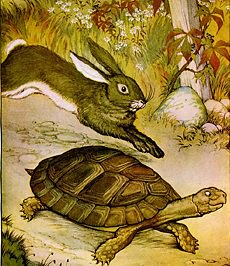
- In the past, authors wrote many fables. They included animals that could talk. The tale of the tortoise and the hare is a fable. It teaches the reader about the importance of hard work. The tortoise works hard on his goal and wins the race. The lazy hare is too proud, naps in the middle of the race, and loses to the tortoise. The story is old, but the lesson is still important.
Problem
In paragraph one, what does obvious mean?
- A
Pride
- B
Actions
- C
Moral
- D
Clear
- D
Clear
300
Time Travel Through a Tree
- Trees can tell stories of the past through fossils. Paleobotanists (pa-leo-bot-a-nists) are scientists who study plant fossils. Giant Sequoia by Vitto Sommella on Unsplash
- Paleobotanists can learn about the time a tree existed by looking at its fossil. They learn about other living things that lived at the time. For example, they learn about tiny amoebas (uh-mee-buh-s) and giant argentinosauruses (ar-jen-ti-no-sau-rus-es). They understand how the universe and the Solar System formed. They also try to figure out how life began on Earth by studying a tree fossil.
The Story Began16 Million Years Ago - One such fossil lies at the National Museum of Natural History. It came from a giant sequoia tree growing in what is now Oregon. The tree lived 16 million years ago. The fossil shows 260 rings. It means that the tree lived for 260 years. If humans had been living at that time, their three generations would have seen it. The tree grew fast for the first 100 years. Then, its growth slowed down.
- After the tree fell, it started its journey to become a fossil. Silica and other minerals in water coated the log. This protected the log and its history.
Hall of Fossils – Deep Time - The giant fossil arrived at the museum as a gift. Paleobotanists took time to carefully look at it. They recorded the important information it showed. It was then polished and put up in the Hall of Fossils – Deep Time display.
- The display invites human beings to explore how Earth’s past is tied to the present. It helps them think about their place in the universe. Museum visitors enjoy learning about ancient times from the fossil.
Problem
What text structure does the author use in the article?
- A
The author solves the problem of carefully studying fossils and keeping them safe in a museum.
- B
The author organizes events in the lifetime of a giant sequoia tree that lived millions of years ago.
- C
The author describes fossils and how they are useful in understanding the connection between time and life.
- D
The author compares and contrasts fossils of giant sequoia trees and giant dinosaurs.
C
The author describes fossils and how they are useful in understanding the connection between time and life.
400
- Dear Principal, respected teachers, and my fellow students,
- My name is Alexis Smith. I would like to thank you all for taking a few minutes of your lunchtime to listen to me. First of all, I would like to say how happy I am to be in a school that really cares. It is because of my confidence in the school that I am able to bring up an important issue.
- In my classroom, there have been reports of bullying. Some of my friends have missed school because they do not want to face their bullies. The victims say the bullying happens online and through texts. The teachers cannot know anything if it happens outside of class. My friends do not want to report to the teachers. I want the bullying to stop.
- I want to ask the bullies to come talk to me. If they need a friend, I will be a friend. If they need help with schoolwork, I will help. Please let my friends enjoy being kids who love school. Please let my friends enjoy coming to school again. If you stop bullying now, maybe the past does not matter. Maybe we can start fresh as friends again.
- Again, thank you for your time. May we all get to learn and enjoy being kids at a school we all love.
Passage 2
he newspaper article is an example of a secondhand account because
- A
Carlos Vega was not present during the speech.
- B
Carlos Vega interviews the bullies and victims.
- C
Carlos Vega is a student reporter.
- D
Carlos Vega shares his thoughts about bullying.
A
Carlos Vega was not present during the speech
400
The Best Season of All
- Autumn is the best season of all. It’s not too hot or too cold. It’s the perfect weather for football season. The sounds of the band and the cheerleaders are a delight. Chilly Sundays
 on the couch watching football on TV is my favorite.
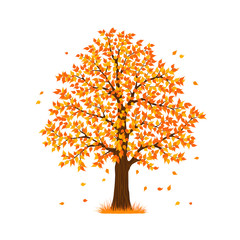
- The leaves turn colors and start to fall. The red, orange and yellow piles are a sight to see. The best part is that two holidays are celebrated in the fall, Halloween and Thanksgiving. It’s fun to dress up and carve pumpkins for Halloween and then to spend time with family at Thanksgiving.
- Let’s not forget pumpkin spice everywhere. Everything you see at the grocery store is pumpkin spice. Pumpkin spice cookies, pumpkin spice cereal, pumpkin spice candles. I can’t get enough. Without a doubt, autumn is the best season.
Problem
What is the main idea of paragraph 2?
- A
Two holidays are celebrated in fall.
- B
The weather starts to get cooler in autumn.
- C
Football is played in autumn.
- D
Pumpkin spice is found everywhere.
- A
Two holidays are celebrated in fall.
400
Popcorn
- Popcorn is an essential snack while at the movies or the circus. It’s a crowd favorite at football games and baseball stadiums. What makes popcorn the go to snack? Is it the sound it makes when it pops? Is it the aroma it creates that cannot be mistaken for anything else or is it the buttery taste that consumes your taste buds?
- Whatever the reason, popcorn is not only a tasty snack, but also an interesting one. Popcorn really is corn that pops. The small kernels are hard when they are on the cob. Don’t try to eat these or you might break a tooth. However, when it’s heated to the right temperature, the outer shell bursts, and the soft white inner goodness is exposed.
- Popcorn has been around since the 1820s and was called Pearl or Nonpareil. It wasn’t until 1848 that the word popcorn came to be. One of the first recipes came from Daniel Brown in the 1840s. His simple recipe called for Pop Corn, slightly buttered. Then, the recipe called for holding the corn over a frying pan, constantly shaking the corn and waiting for the kernels to pop. However, this way of making popcorn caused the butter to burn. In the second half of the 19th century, popcorn was available in boxes of tight wire gauze attached to a long handle. This made it easier to hold over the flame without getting burned.
- Today, popcorn can be made in a variety of ways. Different items can be added to it such as nuts or candy. Or it can be eaten with just a drizzle of butter. The possibilities are endless.
Problem
What does the word essential mean in paragraph 1?
- A
unpopular
- B
unwanted
- C
needless
- D
important
- D
important
400
The Giant Squid
- The giant squid lives deep underwater which makes them rarely seen by humans. Scientists study them when they die and float to the surface. However, in 2006, a group of scientists from Japan were able to catch a giant squid using bate they dropped deep into the water. The cameras were rolling when a 24-foot squid was caught and pulled to the surface.
- The giant squid has two eyes, a beak, eight arms, two feeding tentacles and a funnel. They can catch food from up to 33 feet away by shooting out their two feeding tentacles which have hundreds of sharp-toothed suckers on the ends. The sharp beak is used to slice the prey into bite-sized pieces. Its eyes are the size of dinner plates. This helps them see predators in the dark. The squid is a sight to see.
- The giant squid are thought to swim in the oceans worldwide. However, they are rarely found in tropical and polar areas.
Problem
Fill in the graphic organizer below with the correct answer choice.
Cause Effect The giant squid lives deep underwater.
- A
They swim in oceans worldwide.
- B
The cameras filmed the squid being caught.
- C
It is difficult for scientists to study them.
- D
They have two feeding tentacles.
C
It is difficult for scientists to study them.
500
passage 1
- Dear Principal, respected teachers, and my fellow students,
- My name is Alexis Smith. I would like to thank you all for taking a few minutes of your lunchtime to listen to me. First of all, I would like to say how happy I am to be in a school that really cares. It is because of my confidence in the school that I am able to bring up an important issue.
- In my classroom, there have been reports of bullying. Some of my friends have missed school because they do not want to face their bullies. The victims say the bullying happens online and through texts. The teachers cannot know anything if it happens outside of class. My friends do not want to report to the teachers. I want the bullying to stop.
- I want to ask the bullies to come talk to me. If they need a friend, I will be a friend. If they need help with schoolwork, I will help. Please let my friends enjoy being kids who love school. Please let my friends enjoy coming to school again. If you stop bullying now, maybe the past does not matter. Maybe we can start fresh as friends again.
- Again, thank you for your time. May we all get to learn and enjoy being kids at a school we all love.
Passage 2
Galaxy Tribune
by Carlos Vega, Student reporter
- DALLAS—Students and teachers of Learning Inc had an unusual lunch yesterday. A fourth-grader, Alexis Smith, requested a gathering of all teachers and students at lunch to give a short speech. Smith reports that although it was an unusual request, the principal made it happen.
- The 10-year-old spoke about bullying happening to his friends. He spoke because the victims did not want to come forward. He offered help and friendship to the bullies and requested them to stop their bullying.
- Stephan Lozano, a fourth-grade teacher, said, “We had no idea about the seriousness of bullying. If it happens through the computer or the phone, how can we tell? I am thinking about having an office hour during lunch. It will be an open invitation for students to come talk to me about anything that is bothering them. I think we need to get to know kids better, so they are not afraid to come talk to us. Maybe other teachers will do the same.”
- Learning Inc sounds like a great school where students and teachers want to solve any problems.
he speech is an example of a firsthand account because
- A
it includes what Alexis feels about bullying in his classroom.
- B
it shows Alexis is not experiencing bullying himself.
- C
it mentions what his teachers think about the bullying.
- D
it mentions that teachers do not know about the bullying.
A
it includes what Alexis feels about bullying in his classroom.
500
Dear Diary,
I hate school. Well, I don’t really hate it, but I am not happy right now without any new friends at my new school. I ate lunch by myself. I sat alone without talking to anyone all day. I thought Tiesha could be my friend. I thought she smiled at me at lunch. But she sat with her friends and not me. Why is it so hard to make a new friend? Why does everyone have a friend but me? I wish Mama could get her old job back and move to Michigan. I know it won’t happen, but I will keep on wishing.
Sad,
Latoya
Problem
Which choice BEST summarizes the passage?
- A
Latoya wishes her mother could get her old job back and move back.
- B
Latoya wishes kids will sit with her during lunch at her new school.
- C
Latoya is not happy at her new school because she does not have friends yet.
- D
Latoya thinks Tiesha could be her friend one day at her new school.
Submit Answer
- C
Latoya is not happy at her new school because she does not have friends yet.
500
Popcorn Popping Machine
- Popcorn has been a popular snack for centuries. Its buttery goodness can be found in movie theaters and at circuses, as well as in homes across the country. Popcorn started gaining popularity in the 1820’s. People would hold the kernels over a hot flame and watch them pop to expose the white, fluffy middle. As popcorn became more popular, a need to mass produce the snack became greater.
- In 1885, a businessman named Charles Cretors built the first popcorn popping machine. He was a candy store owner who was not happy with the machines he had purchased to roast the nuts in his shop. After a couple of years of working with the machines, he came up with new and improved machines. The new machines were powered by steam and would heat the kernels evenly. He could also add different seasonings to the mix to change the flavor. By 1900, Cretors introduced a horse-drawn popcorn wagon. Customers would buy the popcorn from the wagon that would parade down the street.
- The first microwave popcorn bag that we use today was made in 1981. People could now enjoy popcorn in their homes whenever they wanted it. The popularity of popcorn skyrocketed after the invention and is still just as popular today. You can eat it alone or combine with nuts, candy, or any seasoning you like.
Problem
What does skyrocketed mean in paragraph 3?
- A
flew in the sky
- B
grew quickly
- C
launched
- D
decreased
- B
grew quickly
500
Feelings
- Experts say there are five basic human emotions. These main emotions are happy, sad, angry, afraid, and ashamed. These are what people feel. Remember no feelings are good or bad. Try to notice and feel your, and others’, emotions. Try not to judge feelings. Some feelings are easy or comfortable, like happiness. Some feelings are complex or difficult, like sadness or fear. These might make you feel uncomfortable.
- When you know your emotions, you can try to understand why you may act the way you do. For example, if you are happy, you may want to do things you like to do. You may want to sing, eat something good, or hang out with someone you like. When you feel sad, you might want to cry. You may want someone to comfort you or make you feel better. When you are angry, you may say or do things you feel bad about later.
- It is helpful to know what you are feeling to figure out what to do about the feeling. For example, learning to keep cool while angry is helpful. Once you understand your feelings better, you can understand others better, too.
Problem
The author organizes ideas in paragraph 2 to discuss emotions by using
- A
cause and effect.
- B
compare and contrast.
- C
chronology.
- D
problem and solution.
A
cause and effect.