Sink or Swim Showdown
Energy Unleashed
Feel the Heat
Cosmic Clues
Real or Reaction
WHAT’S REALLY HAPPENING?
100
An object has a mass of 40 g and a volume of 20 cm³. Will it sink or float in water? Explain why.
Density = 2 g/cm³ → sinks (greater than water)
100
What type of energy does a moving car have?
Kinetic energy
100
Heat transfer by direct contact is called?
Conduction
100
What causes seasons?
Earth’s tilt and revolution
100
Is melting ice physical or chemical?
Physical
100
A balloon shrinks when placed in a freezer.
What is happening to the particles?
They slow down and move closer together
200
Two objects have the same mass, but one has a larger volume. Which is more dense and why?
Smaller volume object is more dense
200
Where does a roller coaster have the MOST potential energy?
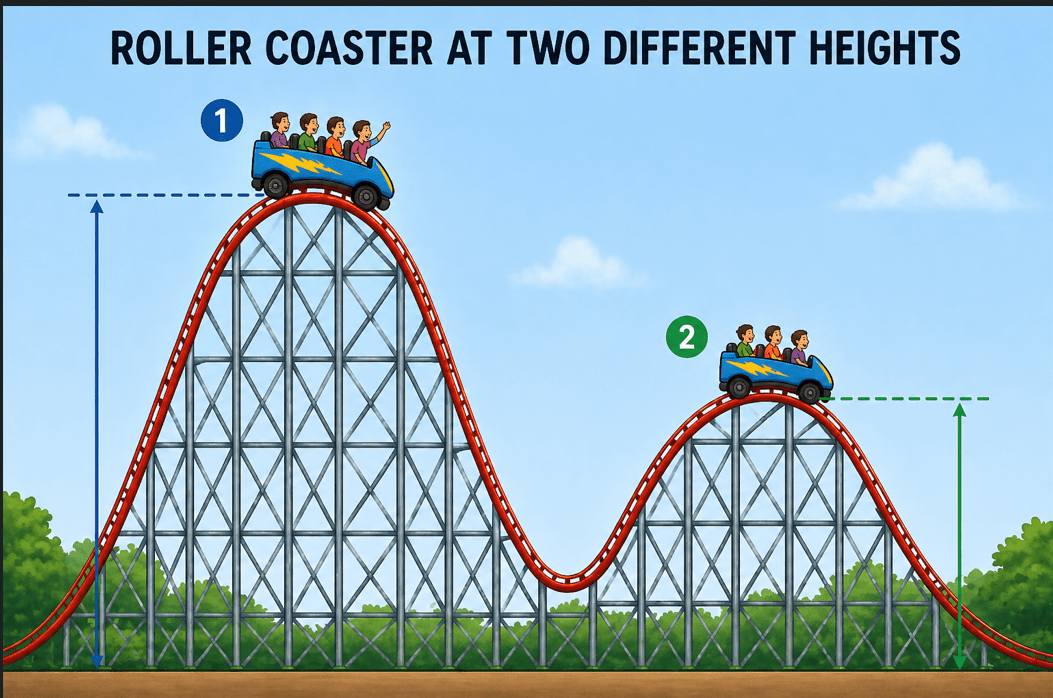
At the highest point
200
Why does warm air rise?
Convection currents (less dense)
200
Why is summer hotter than winter?
More direct sunlight
200
What indicates a chemical change?
Gas, color, temperature change, precipitate
200
A student says: “Heavy objects sink because they weigh more.”
What is the correct explanation?
Density determines sinking, not weight
300
A large wooden log floats while a small metal nail sinks. Explain why using density.
Density matters, not size; wood < water, metal > water
300
A ball is dropped from a height. Describe how KE and PE change.
PE decreases, KE increases
300
A metal spoon gets hot in soup. Which transfer type and why?
Conduction
300
If Earth had no tilt, what would happen to seasons?
No seasons (same all year)
300
A student mixes vinegar and baking soda. What type of change and why?
Chemical (gas forms)
300
A puddle disappears after a hot day.
What process occurred AND what caused it?
Evaporation caused by heat energy
400
Which has the greatest density?
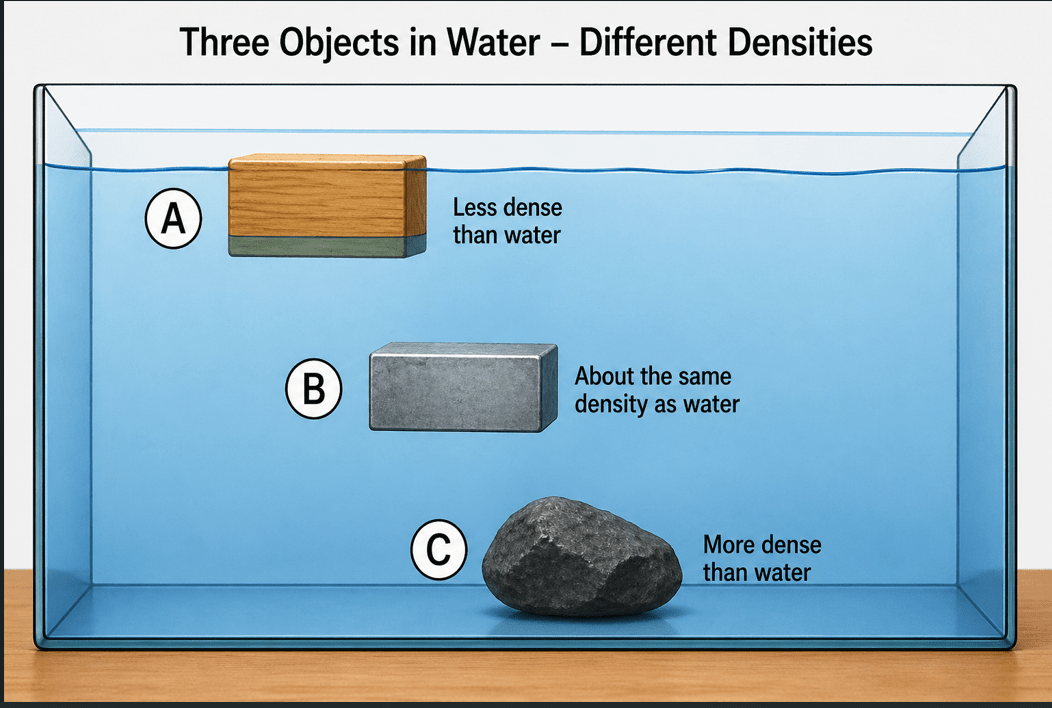
C
400
Question: Where is KE greatest?
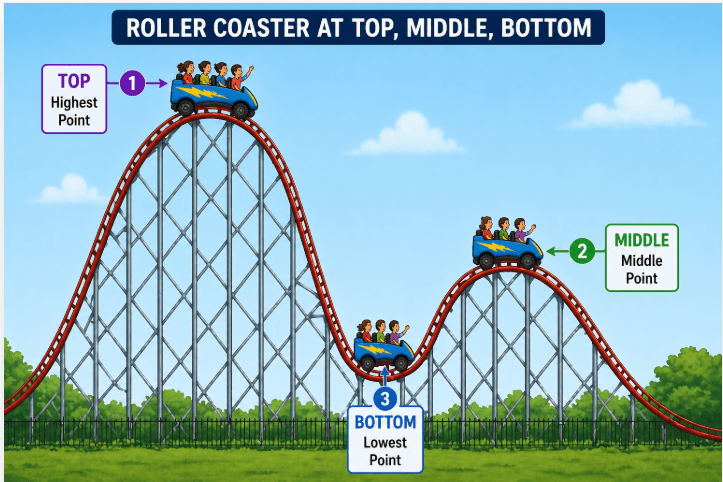
Bottom (Lowest Point)
400
What type of heat transfer is shown?
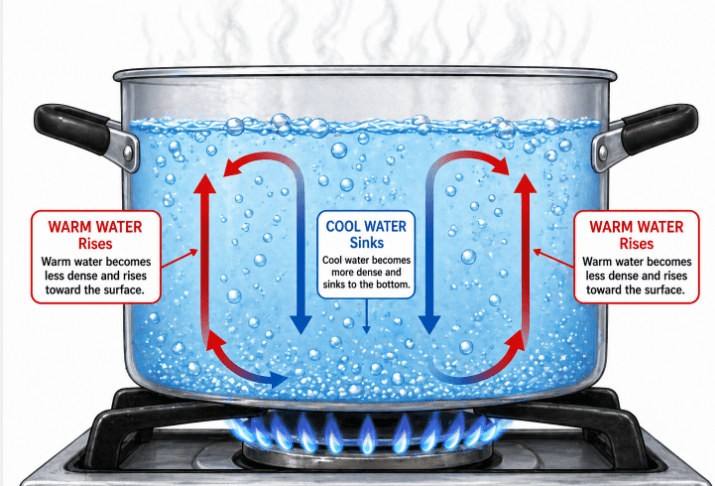
Convection
400
Question: Which hemisphere is experiencing summer?
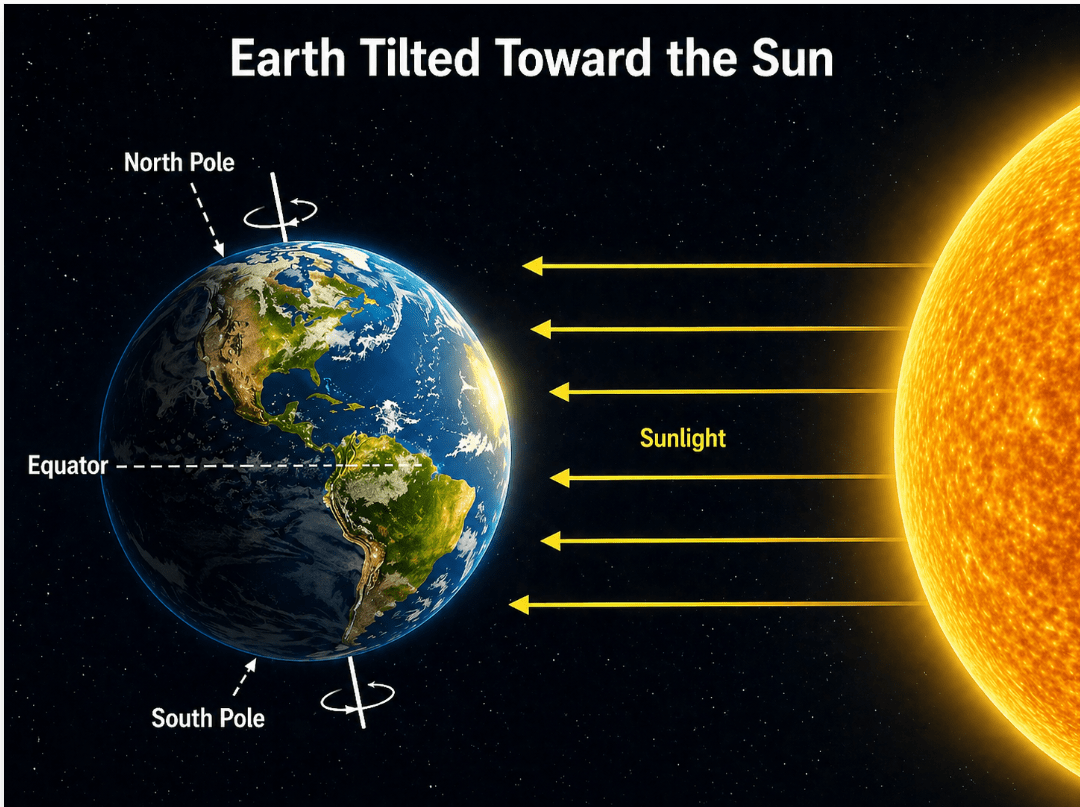
The one tilted toward Sun
400
Why is tearing paper NOT a chemical change?
No new substance
400
What does this tell you about the object’s density compared to water?

It is less dense than water but close in density
500
Why might a ship made of metal float?
Overall density (including air) is less than water
500
Explain why an object at rest can still have energy.
It has potential energy
500
How does the Sun heat Earth through space?
Radiation
500
Why do tides happen twice daily?
Earth rotates through gravitational bulges
500
Explain why rusting is a chemical change.
New substance (iron oxide) forms
500
A rock sinks in water but floats in saltwater.
Explain WHY using density AND how the water changed.
Saltwater is more dense, increasing buoyancy