Earth Systems Take
Igneous
Sedimentary
Metamorphic
Processes of the Rock Cycle
Earth Systems Take 2
100
Geologic processes change the surface of Earth _____________
a. quickly
b. gradually
c. over various time periods
c. over various time periods
100
Igneous rock is formed when what cools?
What is magma
100
Sedimentary rock forms when what collects and hardens into new rock?
What is sediment
100
Metamorphic means to?
What is change.
100
True or false: Any type of rock can go through the rock cycle and change into a different type of rock.
True
100
Material on Earth __________ (stays the same/is constantly cycled/is exchanged with materials in space). This process is driven by energy from the _________ (Sun/ waves/wind) and Earth’s hot interior.
A. stays the same.....waves
B. is exchanged with materials in space.....wind
C. is constantly cycled......Sun
C. is constantly cycled......Sun
200
Geoscience processes on Earth result in changes to Earth’s surface. Continents on Earth’s crust are __________ because of convection currents.
a. moving quickly
b. moving slowly
c. staying in place
b. moving slowly
200
Liquid rock found inside the earth is called what?
What is magma
200
Sediment stacks up in layers that are ______________ together.
What is cemented.
200
Metamorphic rock is formed by heat and what?
What is pressure.
200
Which of the following is an example of a rapid catastrophic event that results from energy transfer within Earth’s systems?
A. The gradual formation of the Rocky Mountains over millions of years in Yellowstone National Park.
B. The slow cooling of magma in the Earth’s crust.
C. The long-term process of plate tectonics shifting continents that lead to significant changes to Earth’s surface.
D. The eruption of a supervolcano like Yellowstone, which releases massive amounts of energy and leads to sudden and dramatic changes to Earth’s surface.
D. The eruption of a supervolcano like Yellowstone, which releases massive amounts of energy and leads to sudden and dramatic changes to Earth’s surface.
200
Which of these does NOT explain how energy from the Earth’s interior drives the cycling of matter within Earth’s systems?
A. The Earth’s interior creates heat which changes the atomic structure and composition of rocks and other materials.
B. The Earth’s hot interior creates pressure which can cause volcanic eruptions and the creation of new igneous rock.
C. The gravity from Earth’s interior draws all material towards its center of mass.
D. The heat from Earth’s interior creates convection currents in the mantle which pushes material toward the surface where it will be weathered into new material.
C. The gravity from Earth’s interior draws all material towards its center of mass.
300
Earth is 4.5 billion years old. There is very little crust that is older than 280 million years. Which of these best explains this phenomenon?
A. The Earth is a young planet.
B. Old crust usually dissolves over time.
C. The Earth’s crust is recycled at ocean trenches.
D. We have no way to determine the age of crust that is older than 280 million years.
C. The Earth’s crust is recycled at ocean trenches.
300
Magma that is pushed to the earth's surface is called what?
What is lava
300
Sedimentary rock often forms at the bottom of _____________ as it is depostited by rivers and streams.
What is lakes or seas.
300
Metamorphic rock can be formed only where on the Earth? Inside/outside/either
What is inside.
300
Grains of rock are removed from their source by what?
What is erosion.
300
How does energy from the Sun drive the cycling of geologic matter within the Earth system?
The Sun creates __________ heating of air and water which causes wind and water to move in predictable ways. These predictable movements often cause weathering and erosion.
A. Equal
B. Unequal
B. Unequal
400
The Mesosaurus fossils can be found on many of the continents because of _____
A. migration
B. plate tectonics
C. climate change
B. plate tectonics
400
The Yellowstone supervolcano has had significant effects on Earth’s surface over time. Which of the following best explains how volcanic activity at Yellowstone contributes to the cycling of matter through the rock cycle?
A. The supervolcano creates mountains through plate tectonics, which recycles into new formations.
B. Volcanic eruptions at Yellowstone form large volcanic craters, and lava and ash deposition contribute to the rock cycle by cooling and solidifying into igneous rock.
C. Yellowstone’s eruptions are responsible for forming new sedimentary rock layers through the deposition of volcanic ash over time.
D. The supervolcano triggers the melting of sedimentary rocks, turning them directly into metamorphic rock without involving an igneous processes.
B. Volcanic eruptions at Yellowstone form large volcanic craters, and lava and ash deposition contribute to the rock cycle by cooling and solidifying into igneous rock.
400
Sediment is usually formed by ____________ and erosion.
What is weathering.
400
Where does the pressure come from that causes metamorphic rock to form?
What is the weight of the rock above it.
400
Water, wind, heat and ice break down rocks by what process?
What is weathering.
400
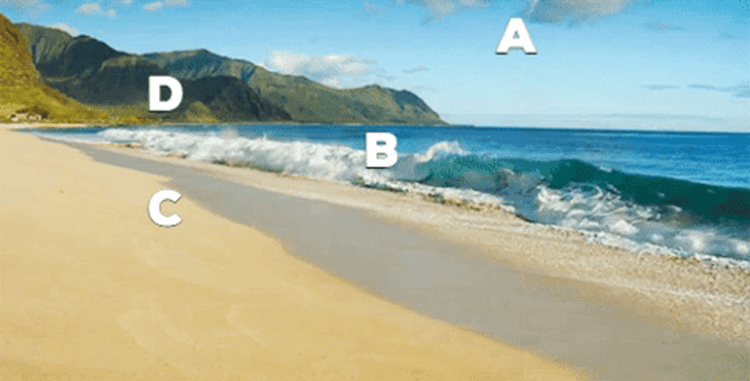
It is most likely that the material in letter C was ____________ right before it changed into what it is in this image.
A. Magma
B. Lava
C. Solid Rock
D. Water
C. Solid Rock
500
Millions of years ago when the Mesosaurus lived, many of the continents were joined together. We know this because several pieces of evidence. For example, if you look at South America and Africa, they look like they fit together and when you fit them together, the places where the _____ were found match up. This means that they were most likely attached at some point. They are no longer attached due to the _____ moving apart.
A. weather patterns and fault lines
B. fossils and plates
C. mountains and volcanoes
B. fossils and plates
500
Lava cools at a faster/slower/the same rate as magma?
What is faster.
500
Sedimentary rocks that have the shape of once living things.
What are fossils.
500
What do foliated metamorphic rocks have?
What is bands.
500
Water, ice, and wind drop newly formed sediments by what process?
What is deposition.
500
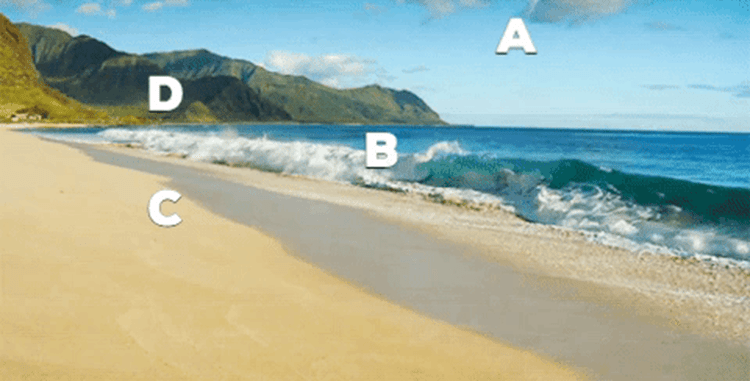
In the system pictured above, the direct energy is provided by the ocean waves. What type of energy drives the movement of ocean waves?
A. Energy from the Sun
B. Energy from Earth’s Interior
C. Energy from volcanoes
D. Energy from frequent small earthquakes
A. Energy from the Sun